

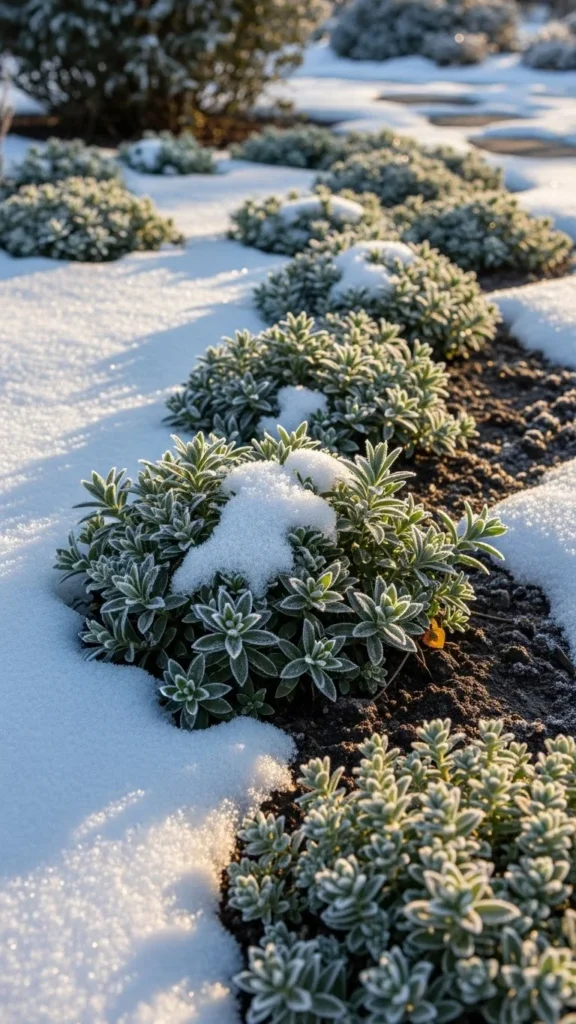
Winter doesn’t have to leave your garden looking empty. Many groundcovers stay green even under heavy snow, holding structure through freezing days and long, dark nights. These hardy plants spread easily, fill bare patches, and tolerate cold weather with almost no fuss. Below, you’ll find practical ideas, realistic maintenance tips, and affordable ways to grow groundcovers that remain alive and attractive through winter. Each option helps you keep your garden lively while everything else rests.
1. Creeping Thyme
Creeping thyme stays close to the soil, which protects it during harsh winter storms. The foliage often remains green under snow, and the low growth habit keeps it insulated. It works well between stepping stones, along borders, or as a filler where grass struggles.
Keep watering light in fall to harden growth. Add a thin layer of mulch around the edges if your area experiences sudden cold snaps. You can also trim lightly in late autumn to remove weak stems. For small patches, plant nursery plugs instead of seeds because they root faster and cost less time.
If you want this plant to handle foot traffic, let it grow thick before winter arrives. Once established, creeping thyme spreads on its own, covering dry or rocky spots with ease. It’s an easy pick for gardeners who want something green without constant attention.
2. Snow-in-Summer
Snow-in-summer forms soft silver mats that lightly shimmer under winter frost. Its velvety leaves hold their shape through storms, making the plant useful as a winter accent. The silver tone adds contrast to dark soil or evergreen shrubs.
To keep it thriving, plant it in well-drained areas. Heavy, wet soil can cause stems to rot. If your garden collects water, mound the soil first or mix in grit. This small adjustment helps a lot during freeze–thaw cycles.
Once winter arrives, the plant mostly cares for itself. Any stem damage can be trimmed back during early spring. Snow-in-summer spreads quickly, so even a single tray of starters can cover a wide patch within a year. It’s practical for budget gardeners or anyone trying to fill awkward spaces.
3. Creeping Jenny
Creeping jenny brings golden color to winter landscapes. It stays low, weaves between rocks, and often holds its glow even after heavy snowfall. The color shift in cold weather—from bright lime to deeper tones—adds interest without extra effort.
Plant creeping jenny in spots where some moisture remains in winter. It dislikes completely dry soil during cold months. Add a thin compost layer in fall to help retain a bit of moisture without making the ground soggy.
If you’re covering a slope or walkway edge, plant rooted cuttings every few inches. Each piece spreads fast, saving money on full-size pots. Once established, you can lift a section and divide it to cover new areas at no cost. This groundcover works well around ponds, stone paths, or shady winter corners.
4. Ajuga (Bugleweed)
Ajuga keeps its colorful foliage through the cold months, adding purple, bronze, or dark green tones to winter beds. Dense leaves hug the soil, helping the plant stay protected under freezing temperatures.
To help it thrive, avoid planting ajuga in areas that stay wet all winter. Slightly raised beds or spots with afternoon sun are ideal. Once the first hard frost hits, the plant naturally compresses and hardens, needing little care until spring.
Ajuga spreads through short runners. If you want a fuller patch, press the runners lightly into the soil so they root faster. Use small starter packs to keep costs low. This groundcover works nicely near stone borders or under shrubs where color helps brighten winter views.
5. Hens and Chicks
Hens and chicks are cold-tolerant succulents that stay firm even under snow. Their tight rosettes shed moisture naturally, which helps them survive freezing nights. They keep their shape during winter, giving rock gardens a structured, tidy look.
Plant them in sandy or gritty soil for best results. Poor drainage is the only real problem for these succulents. If your garden soil holds water, fill a shallow bowl or tray with gritty mix and use it as a zero-maintenance winter display.
You can stretch your budget by dividing offsets in late summer. Each “chick” grows into its own rosette and multiplies. The plants rarely fade in winter unless covered by thick, wet snow for long periods. They stay attractive, simple, and practical for busy gardeners.
6. Bearberry
Bearberry is a tough evergreen groundcover that handles long, snowy winters with no trouble. The small leathery leaves stay green, and the red berries add color during the dullest months.
Plant bearberry in poor, sandy soil for best performance. Rich soil isn’t necessary. A starter tray or even a few plugs can eventually fill a wide area, though growth is slow at first. Once it takes root, the plant spreads steadily with almost no effort.
To help young plants settle before winter, water lightly during early fall. After that, simply leave them alone. Bearberry works well on slopes, around driveways, or in woodland settings where winter interest matters.
7. Pachysandra
Pachysandra forms dense mats that remain green all year. Its thick foliage holds up well under snow, making it a dependable winter groundcover for shady spots. The leaves stay upright, giving structure even during heavy storms.
For easiest planting, use plugs spaced a foot apart. They knit together within a year, filling empty beds without much cost. Water lightly in fall, then let the natural moisture of winter do the rest.
If you’re planting under trees, clear fallen leaves before snowfall so the plants don’t get smothered. Pachysandra handles cold weather well and stays attractive even when everything else is sleeping. It works beautifully around pathways, fences, or foundation beds.
8. Lamium
Lamium offers silver and green foliage that brightens gloomy winter days. The leaves often stay intact through snow, creating soft mounds of color in shady corners.
Plant lamium in partial shade for best winter performance. Keep the soil lightly moist in fall, then stop watering once cold arrives. Add a small ring of compost around each plant to help it settle before winter.
Lamium spreads quickly, so you can start with just a few pots. Trim long runners in late autumn to encourage thicker, tighter growth for the cold months. This groundcover suits woodland gardens, north-facing beds, and small city yards with limited light.
9. Creeping Phlox
Creeping phlox keeps its evergreen mats through winter, even when buried under drifts. The foliage stays firm and grassy, making slopes and borders look structured when snow recedes.
Plant in well-drained soil with good sun exposure. If your garden gets winter shade, phlox still holds color, but spring growth improves with more light. Add a thin gravel layer around the crowns in fall to protect them from freeze–thaw cycles.
To cover a large area on a budget, buy smaller starter pots and space them widely. Creeping phlox fills gaps over time, especially in rocky or sloped locations. It’s a long-lasting option that stays alive through harsh winter weather.
10. Vinca Minor (Periwinkle)
Vinca minor stays green year-round, even after being buried under deep snow. Its trailing vines spread quickly, forming thick mats that stay attractive through winter.
It handles shade well, which makes it practical under trees or beside fences. Once planted, vinca requires very little care. Water lightly in early fall, then let winter moisture maintain it.
If you’re expanding your patch, take cuttings from established vines and root them in small pots. After a few weeks, they’re ready to plant. This simple trick saves money and grows your groundcover much faster.
11. Wintergreen
Wintergreen is a small evergreen groundcover known for glossy leaves that stay firm through freezing weather. Red berries remain visible in winter, giving gardens a splash of color.
Plant wintergreen in acidic, well-drained soil. Add pine needles or shredded oak leaves in fall to create the right soil conditions without spending much. Once established, it grows slowly but stays dependable.
Use wintergreen under conifers, around stone edges, or in shaded woodland beds. Its evergreen color stands out beautifully after snow melts.
12. Sedum ‘Angelina’
Sedum ‘Angelina’ keeps its golden hue through winter, even in freezing temperatures. Snow may flatten it slightly, but the plant springs back once weather warms.
Plant it in rocky soil or raised beds where drainage is strong. Sedums dislike soggy winter soil. For a low-cost start, divide one mature clump into small pieces and spread them across your bed.
During fall, trim any long, floppy stems so the plant stays compact. This helps it resist snow weight better. Sedum ‘Angelina’ brightens dull winter corners with its warm tones.
13. Siberian Carpet Cypress
Siberian carpet cypress stays green through the coldest winters. Its fern-shaped foliage spreads gently, making it useful for covering large areas or softening steep slopes.
Plant it in full sun or light shade. Once rooted, it handles wind, cold, and deep snow without care. Add a bit of compost in fall to help young plants settle, but avoid heavy mulching.
If you’re working with a tight budget, buy smaller nursery pots. This plant grows steadily and adapts well to poor soil, so fancy amendments aren’t needed.
14. Woolly Thyme
Woolly thyme forms a dense, fuzzy carpet that handles cold temperatures surprisingly well. Its fine leaves trap heat, helping the plant stay alive even during deep freezes.
Plant it in rocky soil or between stepping stones. It’s sturdy enough for occasional foot traffic. Keep watering light before winter, then let natural moisture take over.
To save money, divide established clumps every year. Each small piece roots quickly and spreads. Woolly thyme brings a soft, textured look to winter gardens.
15. Sweet Woodruff
Sweet woodruff stays green through most winters, especially in shaded beds. Its whorled leaves add lovely patterns when snow melts and reveals the foliage beneath.
Plant sweet woodruff in moist but well-drained soil. It spreads fast once settled, so a few starter pots can fill a wide area. Add leaves or light compost in fall to help protect thin stems.
This groundcover works well under trees or near walkways where a soft, natural look fits the landscape.
16. Dragon’s Blood Sedum
Dragon’s blood sedum turns vivid red in cold weather, creating striking winter color. It stays alive under snow thanks to its thick stems and drought-tolerant nature.
Use gritty soil for best health. Wet conditions cause damage during winter. Plant clippings directly into the soil in fall—they often root before the first freeze.
Budget gardeners love this sedum because just a few pieces quickly expand into full groundcover. Its winter red tones bring warmth to frozen landscapes.
17. Moss
Moss remains green all year and looks beautiful against white snow. It thrives in shade and handles freezing weather without trouble.
You can grow moss almost anywhere: on stone, soil, logs, or pathways. Mist lightly in fall to encourage spreading. Moss needs little attention; it simply sits and stays green, even during long cold spells.
To grow it on a budget, collect small patches from your yard and press them into new locations. They attach quickly and form natural winter carpets.
18. Liverwort
Liverwort stays green through winter in damp, shaded areas. It forms smooth mats that cling to soil or rocks. The foliage remains alive under snow, making it useful for naturalistic garden settings.
Plant liverwort where moisture remains year-round. Avoid dry slopes or exposed areas. It spreads on its own once conditions suit it.
If you like a wild, woodland look, liverwort adds charm without requiring heavy care or cost.
19. Purple Wintercreeper
Purple wintercreeper changes color in winter, shifting from green to rich purple tones. The evergreen leaves stay alive even under thick snow.
Plant it in well-drained soil with moderate sun. Trim long vines in late autumn so they lie flat during winter storms. This helps them avoid breakage.
Wintercreeper spreads steadily but not too fast, making it simple to maintain. It suits foundation beds, walkway borders, and mixed evergreen gardens.
20. Corsican Mint
Corsican mint forms a fragrant carpet that often stays green through winter in milder zones. Even in colder climates, it survives beneath snow as long as the soil doesn’t freeze too deeply.
Plant in moist, rich soil. Keep it out of heavy foot traffic. Add a thin compost layer in fall to help roots settle.
This mint spreads quickly from small starter pots, making it budget-friendly. It works well between stepping stones or around patio edges.
21. Rockfoil (Saxifraga)
Rockfoil forms tight rosettes that stay alive under snow thanks to their compact shape. They fit nicely into rock gardens and alpine beds.
Plant rockfoil in gritty or sandy soil. Use small crevices or raised areas so drainage stays strong. Water sparingly in fall. Snow acts as insulation during winter, helping the plants rest safely.
Rockfoil is easy to divide, so one pot can fill several spots. It’s a simple way to bring texture to winter beds.
22. Candytuft (Evergreen Variety)
Evergreen candytuft keeps its dark green leaves all year. The plant forms tidy mounds that stay intact after storms, giving borders a clean look.
Plant in full sun with good drainage. Add gravel around the crown to assist with winter drying. Trim lightly after flowering in spring to keep mounds compact.
Candytuft works well along driveways, fences, or edges where you want something neat that handles cold weather.
23. Irish Moss
Irish moss forms cushion-like mounds that stay green in winter. It thrives in well-drained, lightly moist soil. Snow helps insulate the plant during long cold spells.
Start with small plugs spaced close together. Irish moss fills gaps quickly. Mist lightly during fall if the soil dries out too fast.
This groundcover fits beautifully between stepping stones or along garden paths.
24. Blue Star Creeper
Blue star creeper stays low and green through winter. It handles cold weather well and spreads into tidy mats.
Plant in sunny or lightly shaded areas. Keep watering minimal in fall so roots firm up before winter. Divide older patches to expand your groundcover without buying more plants.
This plant works well in small yards, around patios, or between pavers.
25. Iberis Sempervirens
Iberis sempervirens is another evergreen groundcover that keeps its structure in winter. The narrow leaves stay firm under frost, helping the plant look tidy year-round.
Plant in sunny spots with gritty soil. It dislikes heavy clay. You can prune gently in fall to shape the mounds.
Even one small pot can spread into a wide mat over time, making it a practical choice for larger beds.
26. Feather Moss
Feather moss has a delicate texture that stays green through snow. It works beautifully in shaded woodland settings or rock gardens.
Place it where soil stays slightly moist but not waterlogged. Press small patches into the soil and mist them during fall. They attach quickly and form thick, soft carpets.
This moss adds a natural, calming feel to winter gardens without requiring much upkeep.
27. Spotted Dead Nettle
Spotted dead nettle stays semi-evergreen in cold climates and fully evergreen in milder ones. The silver patterns on the leaves stand out in winter and brighten dark corners.
Plant it in partial shade with loose, well-drained soil. Add a little compost in fall to help the roots settle. Trim long runners to create a neat winter shape.
It spreads quickly, making it a good option for filling tricky spaces on a small budget.
Conclusion
Winter groundcovers add color, structure, and life when most plants are resting. With the right selections, your garden can stay interesting even after heavy snowfall. Choose a few hardy varieties that match your soil and light conditions, start with small pots or cuttings to save money, and let these plants slowly knit your garden together. A winter landscape filled with evergreen mats feels calm, alive, and ready for the seasons ahead.

Leave a Reply