

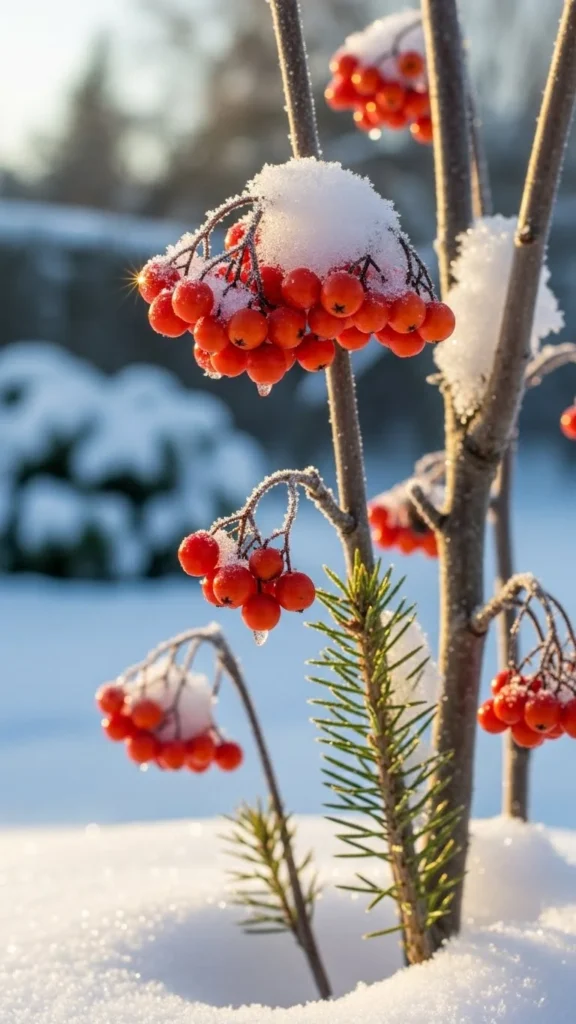
Winter landscapes often turn muted, but berry shrubs break the quiet with bold color. These plants offer structure, wildlife interest, and eye-catching clusters that stay visible long after leaves drop. This list gives simple, doable ideas for gardeners who want more brightness in snowy months. Each shrub works in cold climates, adds texture, and requires only small seasonal tasks. You’ll find ideas for tight spaces, borders, privacy screens, and even container corners. Pick one or combine a few to create a yard that feels alive when everything else rests.
1. Winterberry Holly
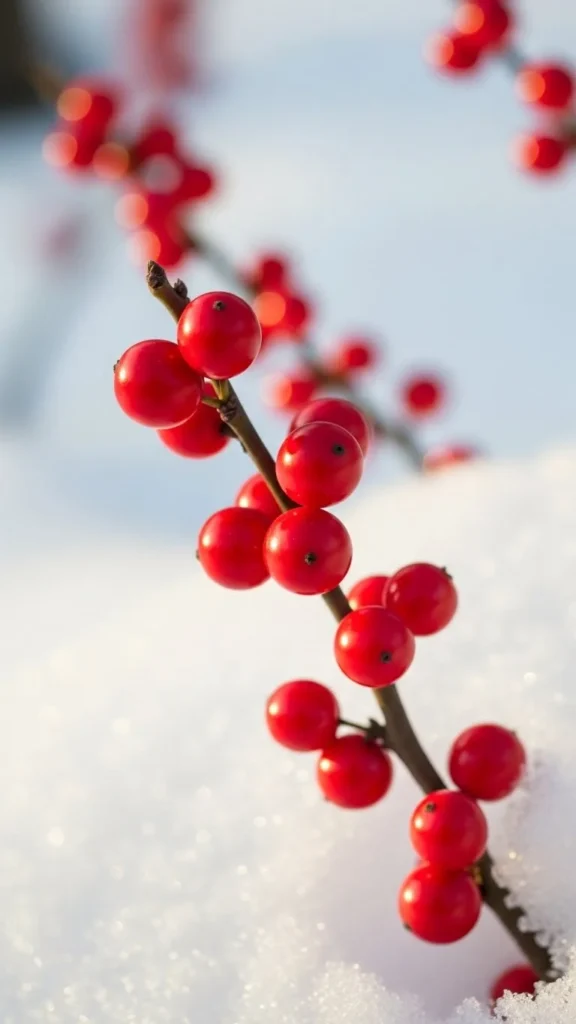
Winterberry Holly is one of the strongest berry producers for cold months. It drops its leaves early, leaving long stems covered in glowing red clusters. This makes even a simple corner of the yard stand out. Plant two shrubs, one male and one female, for berry formation. Space them along a fence or near a walkway so the color sits at eye level.
Keep the soil moist during the first year. Add a thin layer of compost in spring to support growth. For a budget tip, divide larger clumps from a neighbor’s plant and tuck the offshoots into small empty spots. Prune only lightly in late winter. If birds snack early, cut a few berry stems and place them in a simple vase indoors for natural winter decor. It keeps its color surprisingly long inside.
2. Red Chokeberry
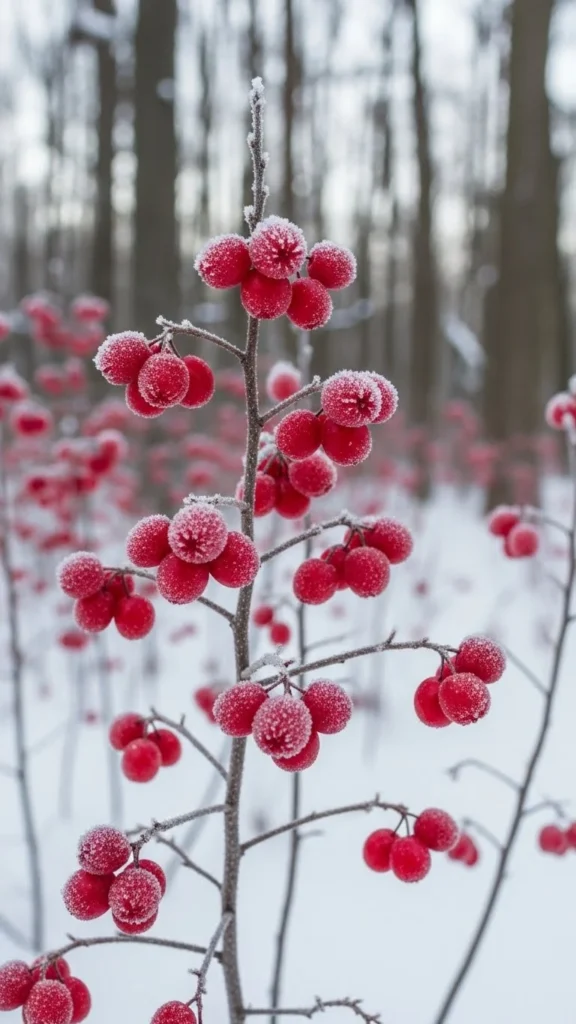
Red Chokeberry brings strong color well into late winter. The berries hang in loose clusters that stay firm even after heavy snow. This shrub handles wet areas, so it works near drainage lines or low points in the yard. Keep it in a place where sunlight reaches it for part of the day, as this helps fruit production.
For an easy DIY idea, plant three in a row to form a loose hedge. Leave enough space for air to flow between them. Mulch with shredded leaves instead of buying bags; it helps soil hold warmth. Trim back older stems in early spring to renew growth. If you enjoy watching wildlife, this shrub attracts birds throughout the cold season. Use a simple bowl feeder nearby to encourage them to stay longer.
3. Cotoneaster
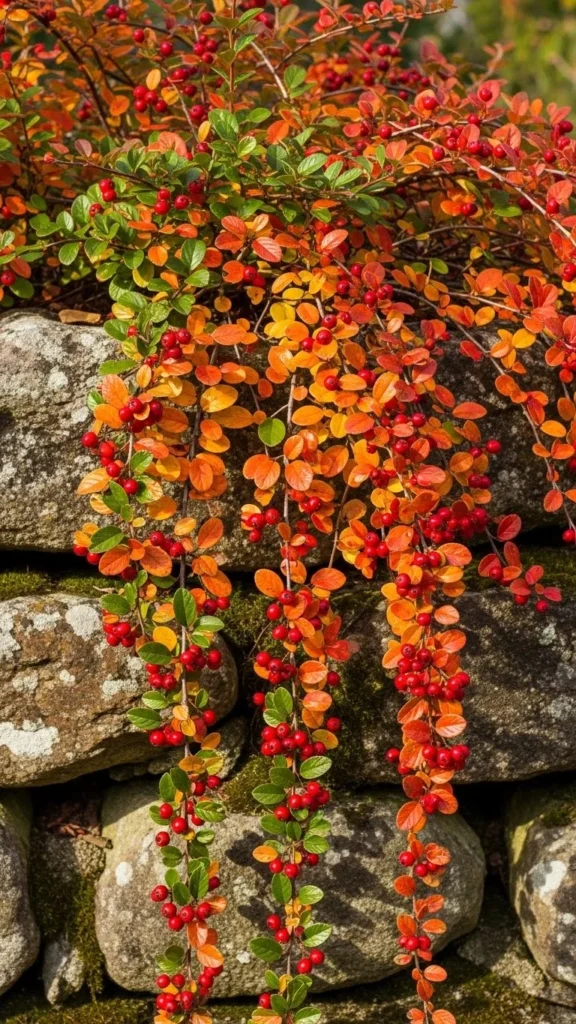
Cotoneaster grows in graceful arches that look beautiful when outlined by snow. Its bright berries sit along thin stems, creating a patterned effect that reads well from a distance. This shrub stays low, making it great for borders, slopes, and entry areas. Once established, it handles dry spells better than many berry shrubs.
Plant several along a walkway to form a simple winter ribbon of color. Leave room at the edges so snow can settle naturally around them. Add compost once a year to keep growth steady. Use hand pruners to clean out crossed stems if needed. For a budget tip, select smaller nursery pots; Cotoneaster fills out quickly. If you want a layered look, pair it with evergreen groundcovers so the berries sit above a dark green base.
4. Firethorn (Pyracantha)
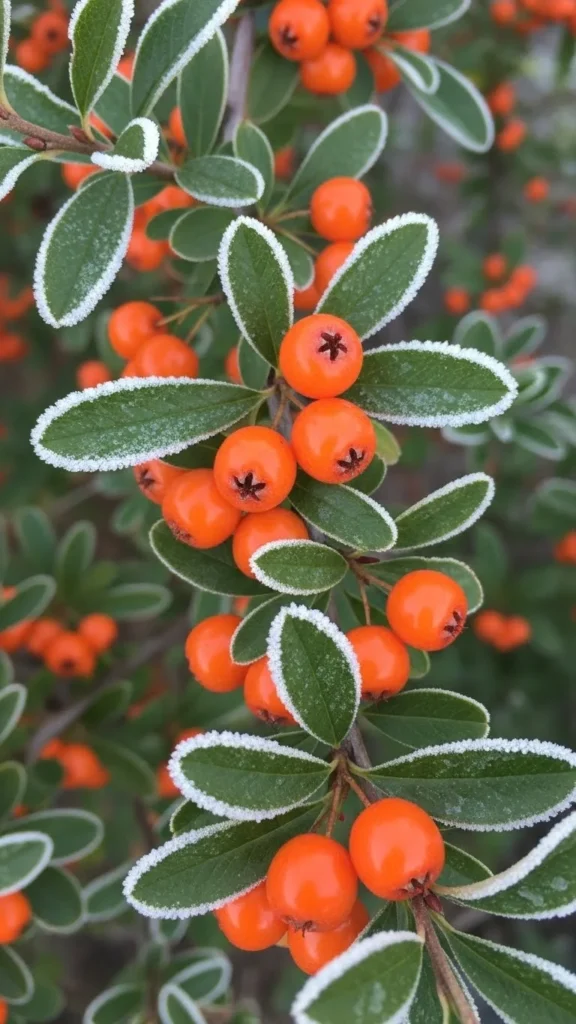
Firethorn produces some of the brightest berries seen in winter gardens. Shades range from yellow-orange to deep red, depending on the variety. The branches grow thick and strong, making it ideal for covering blank walls or fencing. It also grows well in large containers, which helps if you’re working with a small yard.
Use gloves during pruning because the shrub has sharp thorns. Trim lightly after flowering so berries set well. Place it where sunlight reaches it for at least half the day. To save money, train one plant along a wall instead of buying several. Secure branches with simple ties to guide growth. The berries stay firm well into late winter, giving your outdoor space a strong splash of color when everything else looks quiet.
5. Nandina (Heavenly Bamboo)
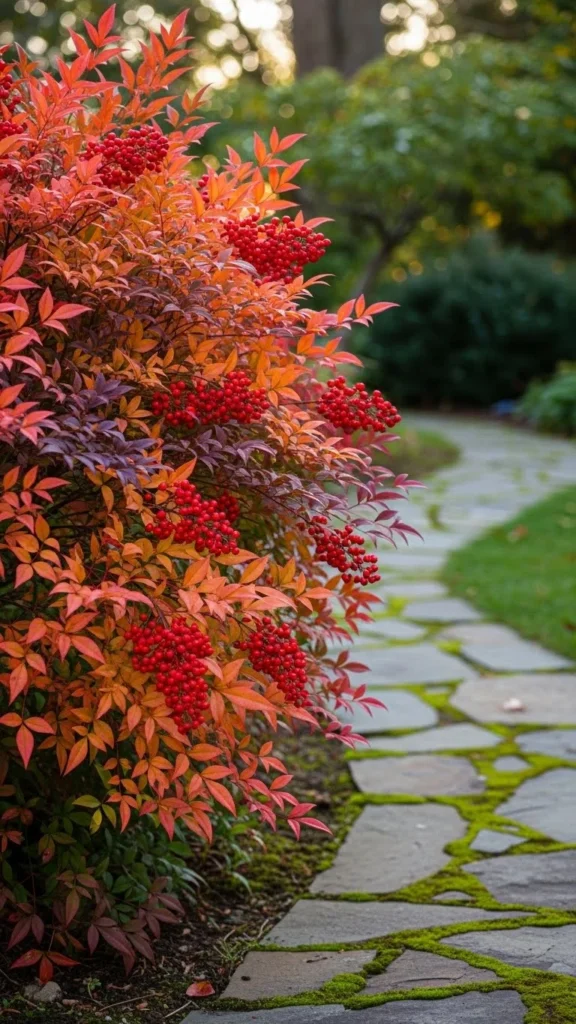
Nandina holds both green foliage and red berries through winter, which adds layered color. Its upright form makes it helpful for narrow spaces or corners that need height. The berries form in tight clusters and often last past the coldest weeks. Plant several in a group for a fuller look, or use one as a taller accent in a container.
Water regularly during the first season. Add mulch around the base to help protect the roots from freezing temperatures. For a low-cost idea, clip berry stems and mix them with pine branches for a small porch arrangement. Trim only older canes in spring to keep the shape relaxed. This shrub works well near patios where winter sunlight can hit the berry clusters in the afternoon.
6. Coralberry
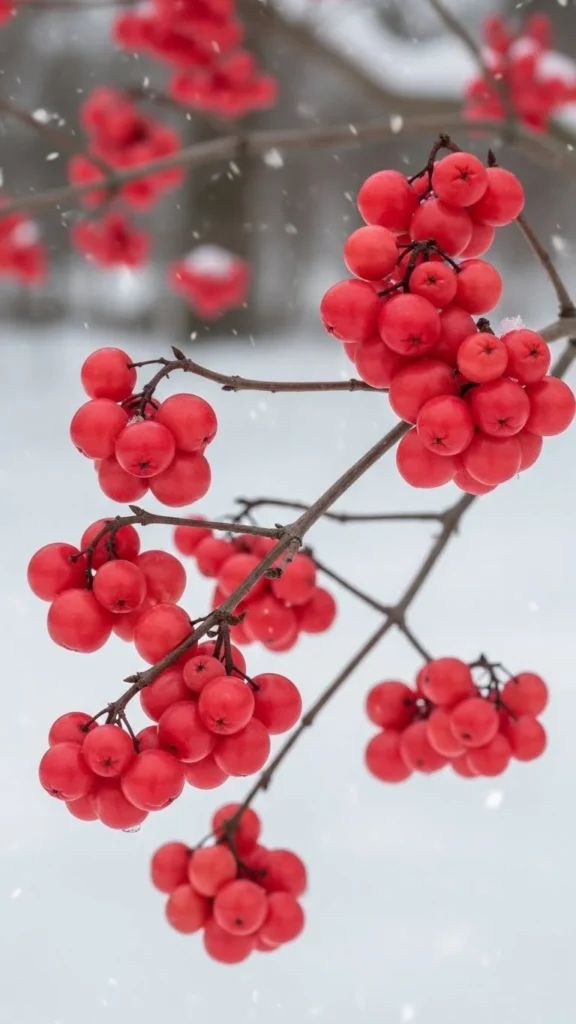
Coralberry stands out with berries that look almost pearl-like. They form in round clusters and stay bright even after snowstorms. This shrub grows naturally in woodsy areas, so it adapts well to partial shade. If you have an area with filtered light, it’s a strong choice.
Plant it in a loose group of three for the best visual impact. Use leaf mulch or chipped branches around the base to keep soil cool in summer and insulated in winter. Keep pruning simple; just remove any stems that look weak. For a budget-friendly touch, use Coralberry branches in indoor winter vases. They hold color well and don’t drop easily. Birds visit often, adding motion to your garden during cold weather.
7. Snowberry
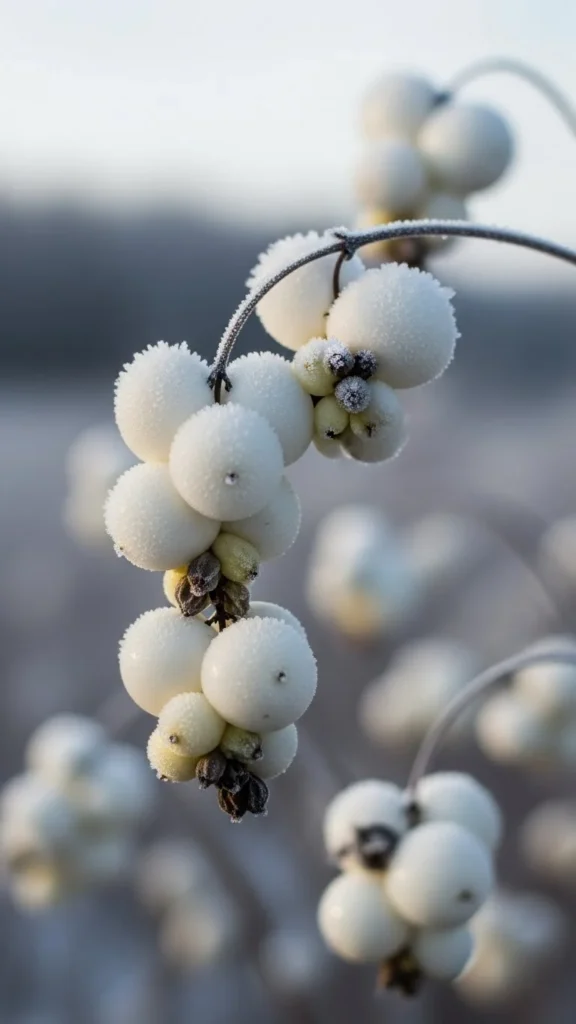
Snowberry adds soft white berries that glow gently in winter landscapes. The berries form in rounded shapes that almost look decorative. Because the shrub spreads through underground runners, it fills empty areas quickly. This makes it a good option for slopes, large borders, or spots where other plants struggle.
Water it during dry stretches and add mulch to hold moisture. Trim in late winter to keep the shape open and tidy. If you want a natural look, let the shrub spread slightly and remove only what you don’t want. For a wallet-friendly tip, dig and replant extra shoots in bare patches. Snowberry pairs well with berry shrubs in deeper colors, creating a calm winter palette.
8. American Cranberrybush Viburnum
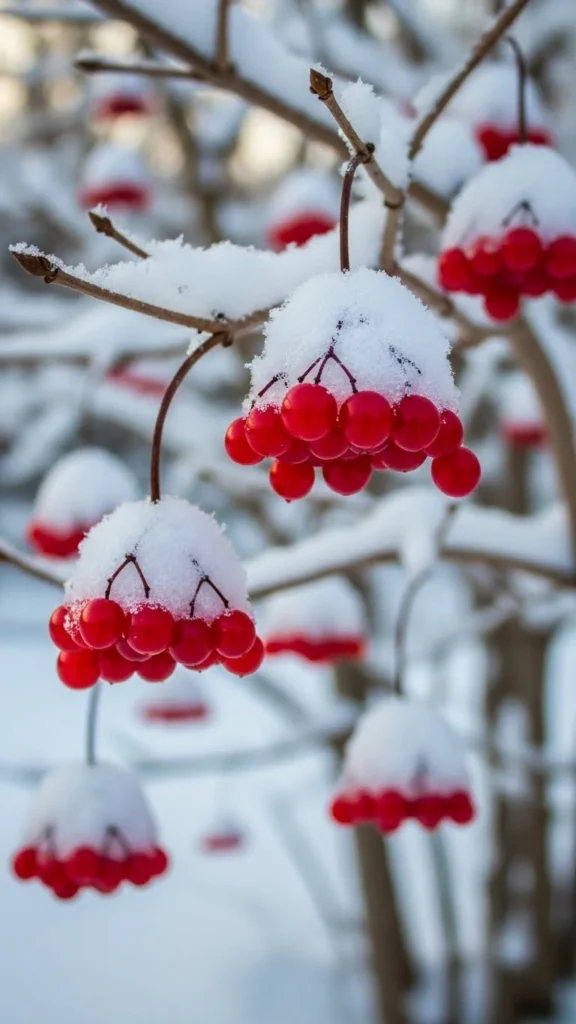
American Cranberrybush Viburnum produces large, bright clusters that stay visible for months. The berries soften over time, which draws in winter birds. This shrub grows naturally in northern climates, making it reliable in freezing temperatures. It forms a medium-sized hedge if planted in a row.
Choose a spot with morning sun to help berries set well. Add compost in spring to support new wood. Trim only after fruiting. For an easy DIY approach, plant three shrubs in a triangle to create a simple winter focal point. If your yard has heavy snow, do not compact it around the base; let it melt naturally. You can also let berry clusters dry on the branches for late-season wildlife snacks.
9. Red Twig Dogwood (Berrying Varieties)
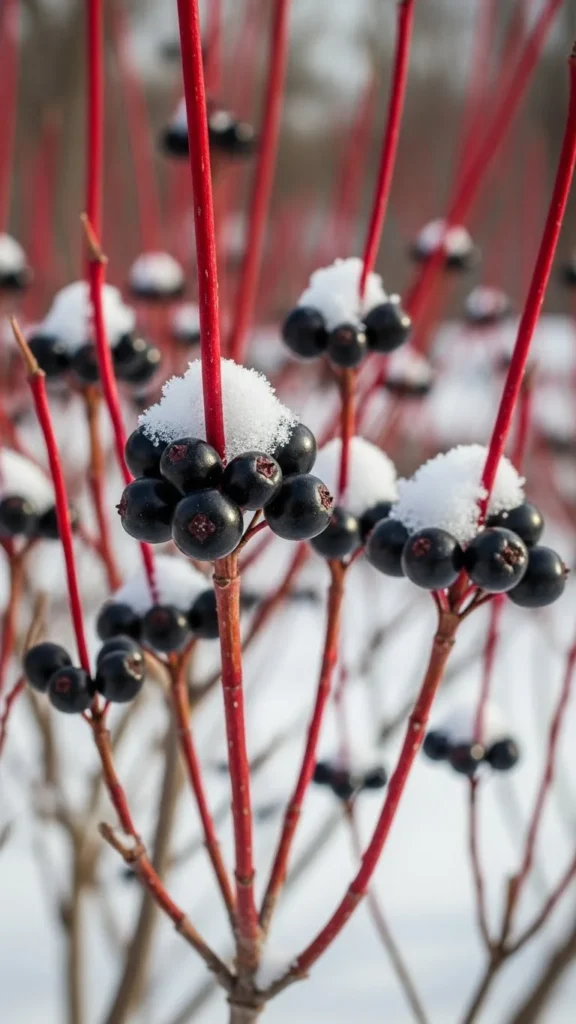
Red Twig Dogwood is known for its bold stems, but its berrying forms offer added winter interest. When leaves drop, the stems show strong color that works beautifully with snow. The berries appear in small clusters and feed local birds. This shrub grows well in areas with wet soil or spots that freeze hard.
Plant in groups for a strong visual effect. Mix red and yellow stem varieties for extra contrast. Mulch with shredded leaves to help retain moisture. Prune a few older stems every spring to keep color young. For a budget tip, cut stems in early winter and place them in porch pots. They hold their color for weeks and add height without extra cost.
10. Beautyberry (Callicarpa)
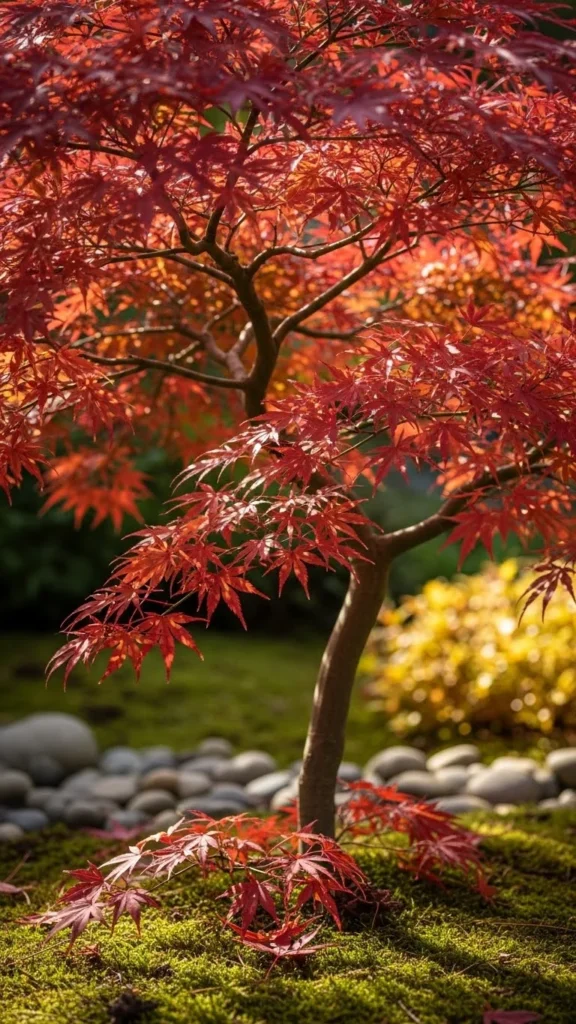
Beautyberry brings one of the most surprising winter colors: bright purple. The berries form in tight lines along each stem, which makes them easy to spot from across the yard. This shrub grows best in full sun but still performs in partial shade. In very cold zones, it may die back, but it returns strong each year.
Plant one near an entry walkway so the purple color is easy to enjoy. Water consistently the first season and mulch in winter to protect the root zone. Trim back old wood in spring to encourage new growth. For a simple DIY project, clip a few branches and place them in clear jars for a one-of-a-kind winter display.
11. Holly (Berrying Varieties)
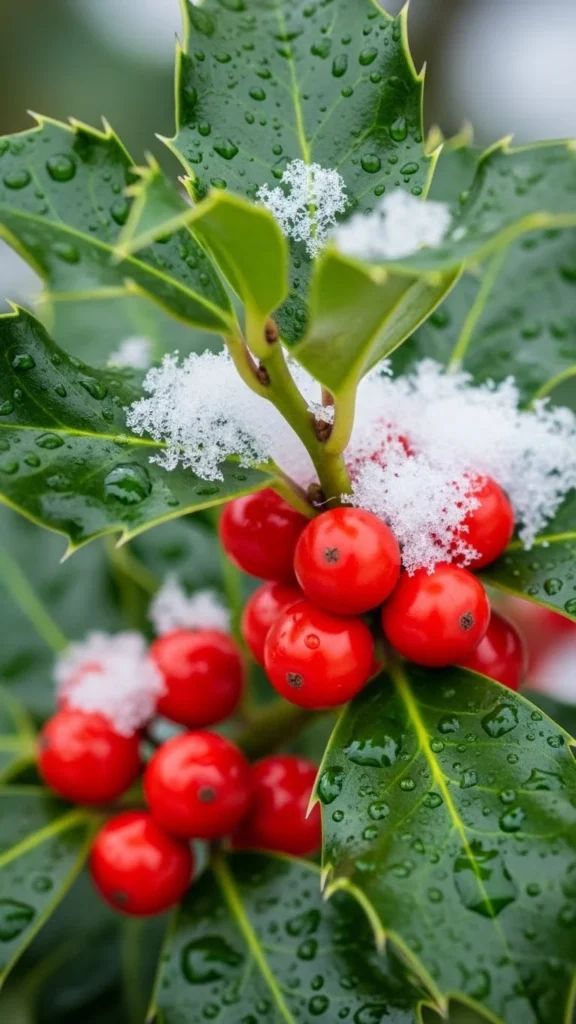
Berrying holly varieties bring classic winter color. Their glossy leaves add structure while the red berries offer bright contrast. Plant them as privacy shrubs, foundation plantings, or accents near patios. Many varieties keep their foliage all winter, giving your yard long-lasting color.
Keep soil slightly moist and mulch the roots in fall. Some holly types require a male pollinator for berry production, so check your variety. For a low-cost trick, pick up smaller nursery plants; holly grows slowly but steadily. Clip berry stems for porch arrangements or indoor decor. Birds often visit, bringing life to the garden even on cold mornings.
12. Barberry (Berrying Types)
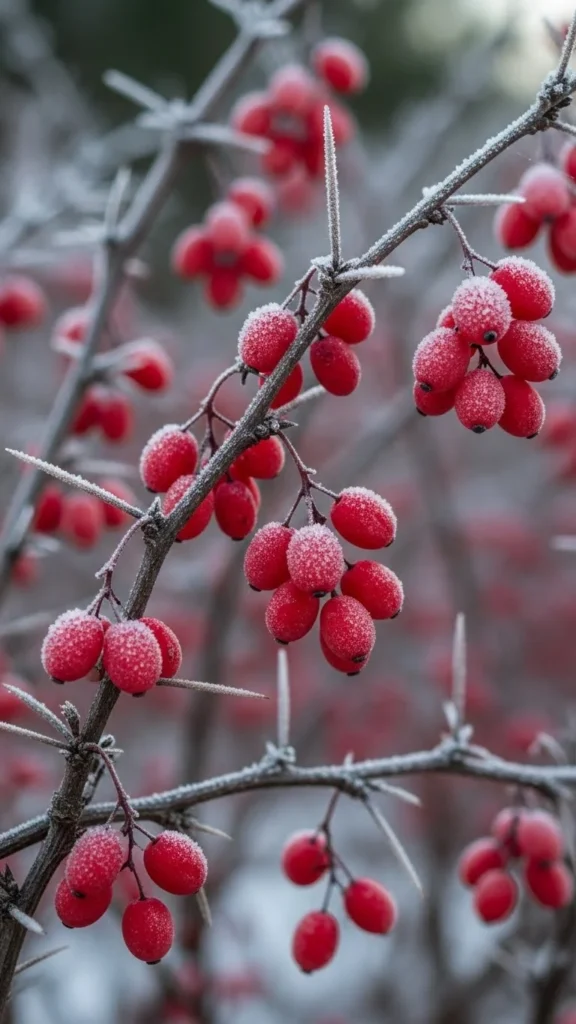
Barberry shrubs carry small red berries that stay attached well into winter. Their thin, arching stems create a textured look, especially when snow settles around them. These shrubs tolerate poor soil and dry conditions once established, making them a flexible choice for many yards.
Plant them as border accents or along slopes. Keep pruning light; remove only what blocks pathways. Add a mulch layer in early winter to help protect the roots. For an easy money-saving tip, look for barberry in compact forms so you can place them closer without overcrowding. The berries hold color for months, giving your garden steady interest.
13. Mahonia
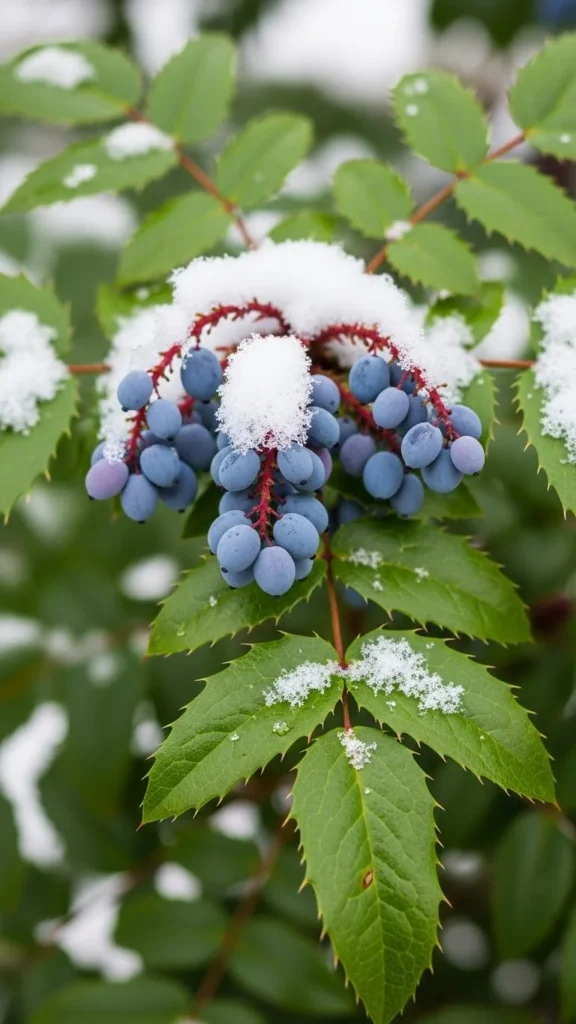
Mahonia produces clusters of blue-purple berries that stand out in colder months. Its evergreen leaves keep their shape all winter, making the shrub feel full even in deep snow. Plant it in partial shade for best results. It works well under tall trees or near north-facing walls.
Water during long dry periods and cover the soil with mulch to protect the shallow roots. Trim only when needed to shape the plant. For a simple DIY idea, plant two Mahonias side by side to fill a shady corner that needs color. The berries near midwinter draw birds and add lively movement to still spaces.
14. Hawthorn
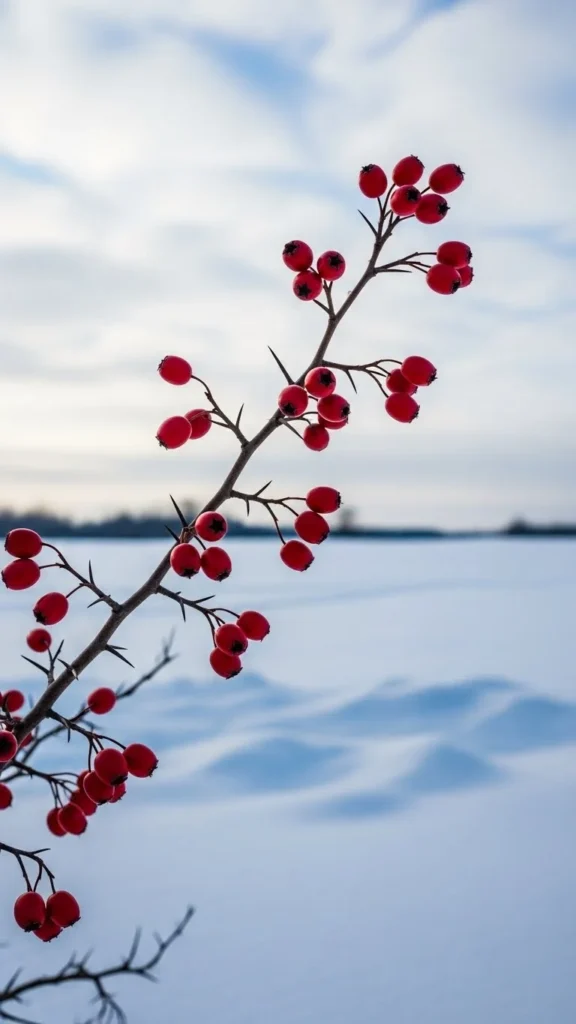
Hawthorn trees and shrubs produce bright red berries that cling through winter. The branches form a strong silhouette, making the plant a standout feature once leaves drop. Hawthorn tolerates tough conditions, including wind and cold, so it works well in exposed areas.
Plant one as a statement piece in the yard. Give it space to spread naturally. Water regularly during the first year and prune lightly in late winter. For a budget-friendly idea, choose a younger tree; it grows well and costs far less. Birds rely on the berries in late winter, so leave clusters in place for natural feeding.
15. Viburnum ‘Winterthur’
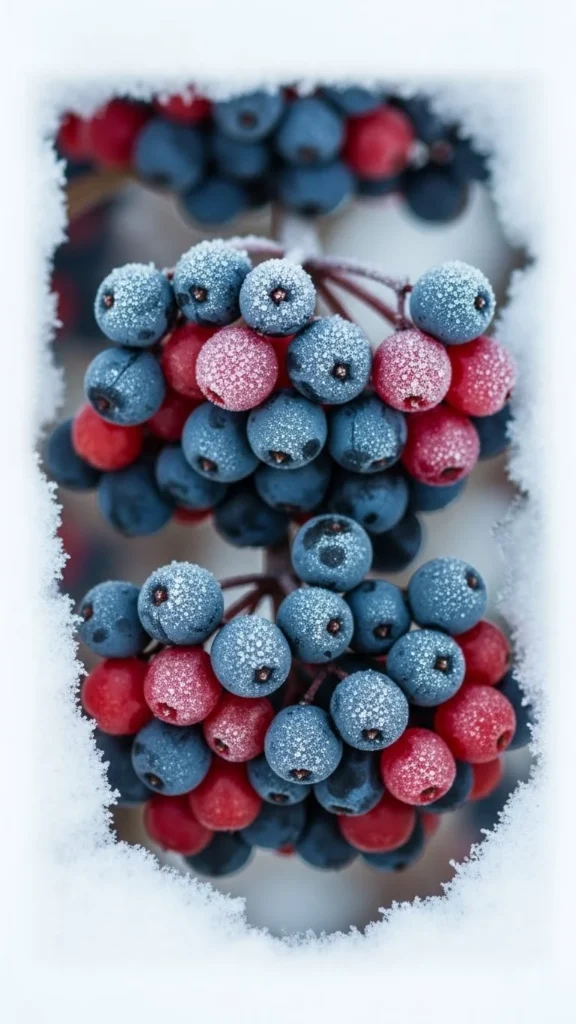
Winterthur Viburnum carries berries that shift from red to deep blue as the season cools. The clusters last well into winter, offering layered color. This shrub grows upright and works well along fences or mixed borders. It handles cold climates reliably.
Plant two varieties together for stronger berry formation. Keep the soil evenly moist the first season. Mulch in late fall to protect the base. Trim only older stems after fruiting. For a simple project, place three shrubs along a pathway to create a winter corridor of color. The berries shift tones through the season, giving your landscape a soft, changing palette.
16. Toyon (Christmas Berry)
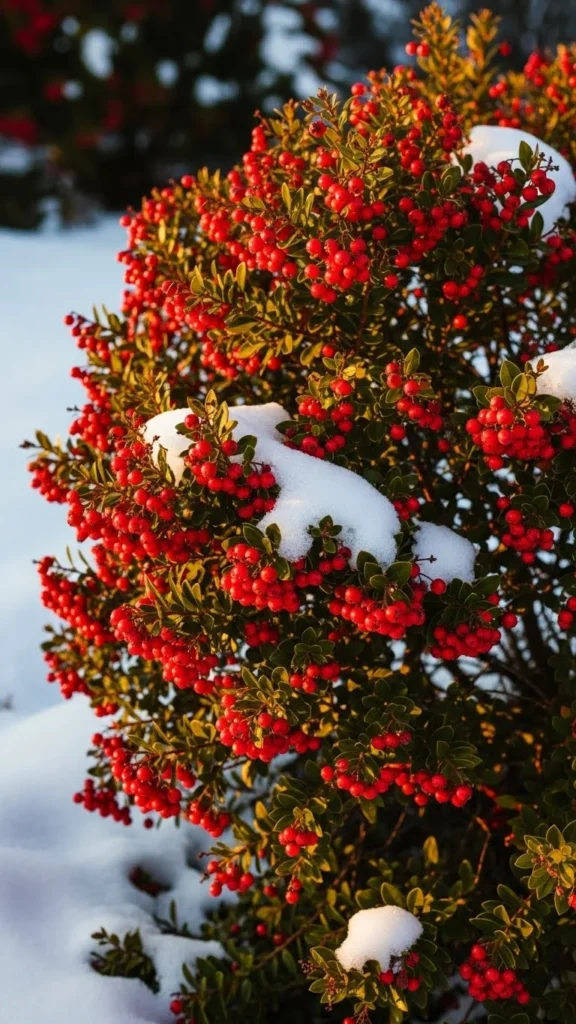
Toyon produces heavy clusters of red berries that stay bright for months. This shrub grows naturally in mild regions but also handles surprising cold. Its broad leaves stay on the plant, giving it a full appearance through winter.
Plant Toyon in sunny spots for the best berry load. Water consistently until roots settle. Add mulch to keep moisture inside the soil. Cut only broken or crossing branches. For a budget tip, start with small-sized nursery plants; Toyon grows quickly. Use clipped berry clusters for simple porch decor or table arrangements that last throughout the season.
17. Buckthorn (Berrying Types)
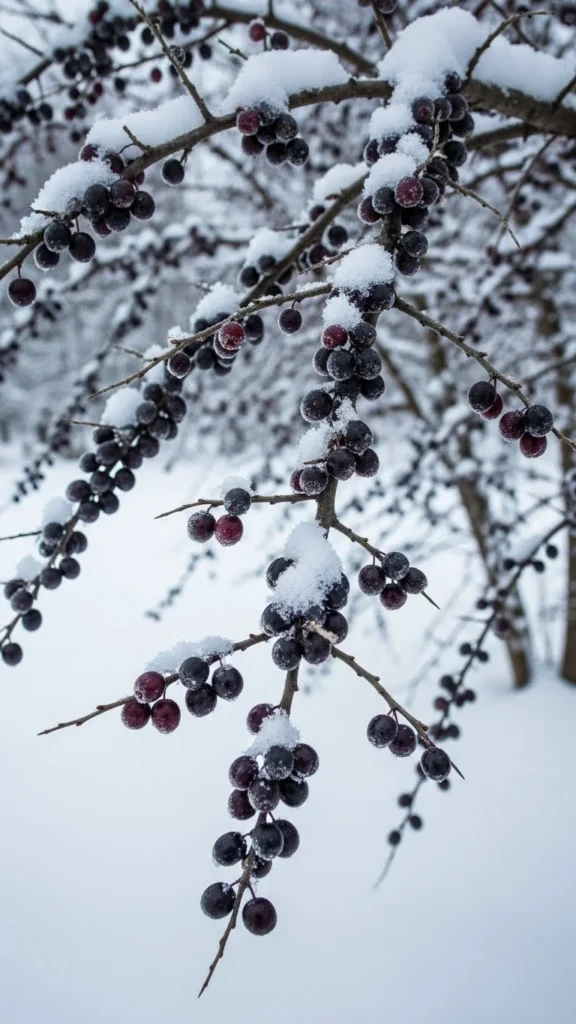
Berrying buckthorn varieties hold dark berries well into cold months. These berries form tight clusters that contrast nicely with snow. The shrub handles poor soil and exposed areas, making it useful for difficult yards.
Plant in a row for a natural hedge. Keep irrigation light once established. Add mulch to reduce weed growth. Trim only in late winter if branches look tangled. For a thrifty idea, pair buckthorn with one red-berried shrub so you get two colors without buying many plants. Birds often feed on the berries, adding movement to your garden.
18. Japanese Skimmia
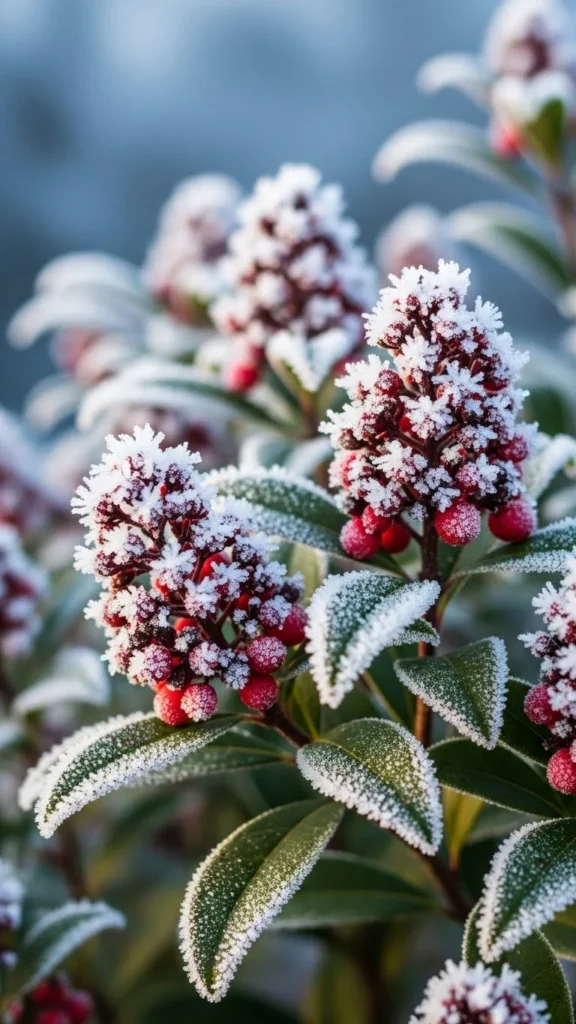
Japanese Skimmia carries glossy evergreen leaves and red berries that stay bright through winter. Its compact size makes it great for patios, pathways, and containers. Female plants produce berries, so check tags at purchase.
Give the shrub partial shade and moist soil. Add mulch to protect roots in colder zones. For an affordable idea, place two Skimmia plants in matching containers at your entryway. Trim lightly only if needed. The color stays strong even in low light, making it ideal for winter porches.
19. Mountain Ash (Rowan)
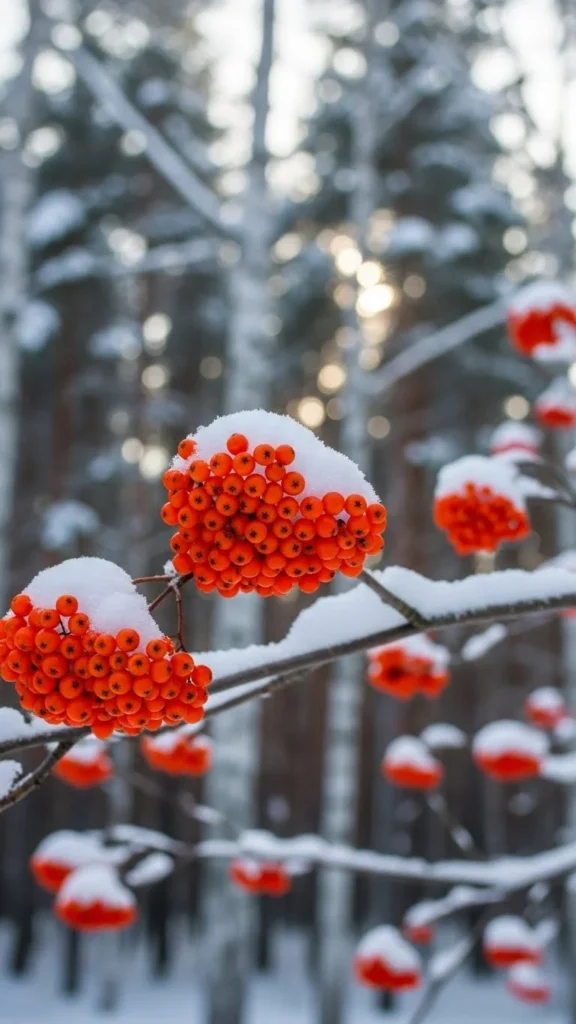
Mountain Ash trees carry some of the brightest berry clusters seen outdoors in winter. These hang in large bunches that stay visible from far away. The tree handles cold climates well and grows with a graceful shape.
Plant it where it has room to spread upward and outward. Water regularly the first season. Add compost around the base each spring. Prune lightly to remove damaged branches. For a thrifty approach, plant one tree as a centerpiece instead of several shrubs. The berries draw winter birds, adding sound and activity to quiet days.
20. Oregon Grape
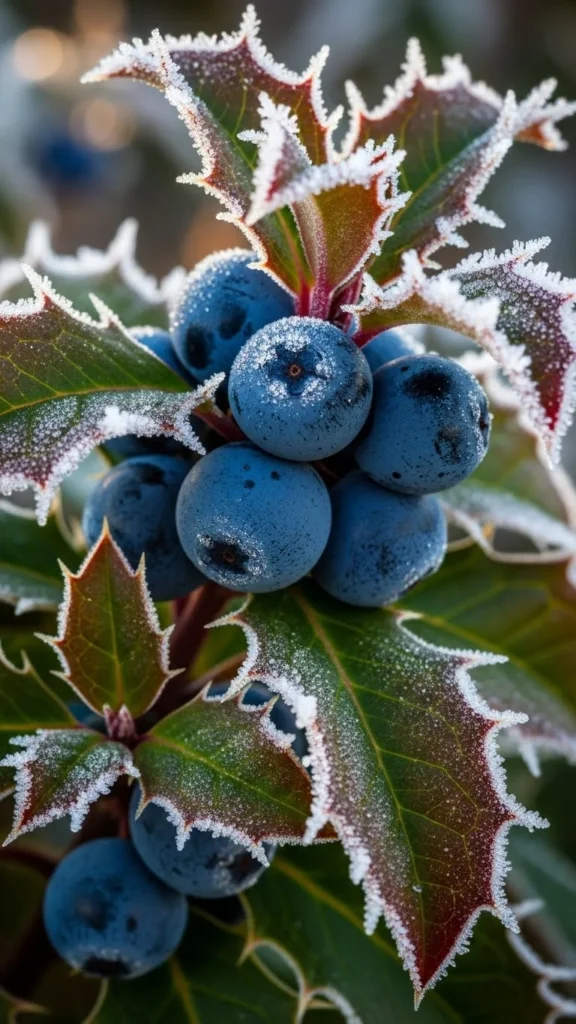
Oregon Grape produces blue berries that show beautifully in winter light. The evergreen leaves shift shades in the cold, adding more depth to the scene. This shrub tolerates partial shade and works well under taller evergreens.
Keep soil slightly moist and mulch in fall. Trim only to manage shape. For a budget-conscious idea, use Oregon Grape on slopes where other plants fail. It spreads slowly and fills space without much upkeep. Birds enjoy the berries, bringing small bursts of motion to still winter spaces.
21. Lingonberry
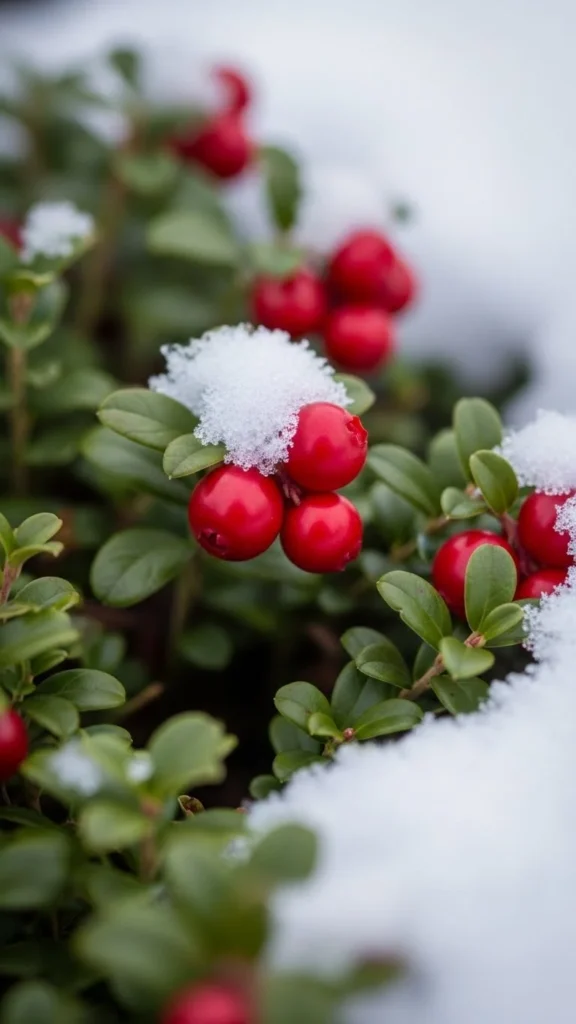
Lingonberry grows close to the ground and carries bright red berries through winter. It works well as a low edging plant or groundcover. The berries stay vibrant even after heavy snowfall. This shrub thrives in acidic soil, similar to blueberries.
Plant in clusters for the best effect. Keep the soil moist but not soggy. Add pine needle mulch for a low-cost solution that also supports acidity. For simple upkeep, trim only to shape edges. Lingonberry brings a soft, cheerful color that brightens small garden paths.
22. Bearberry
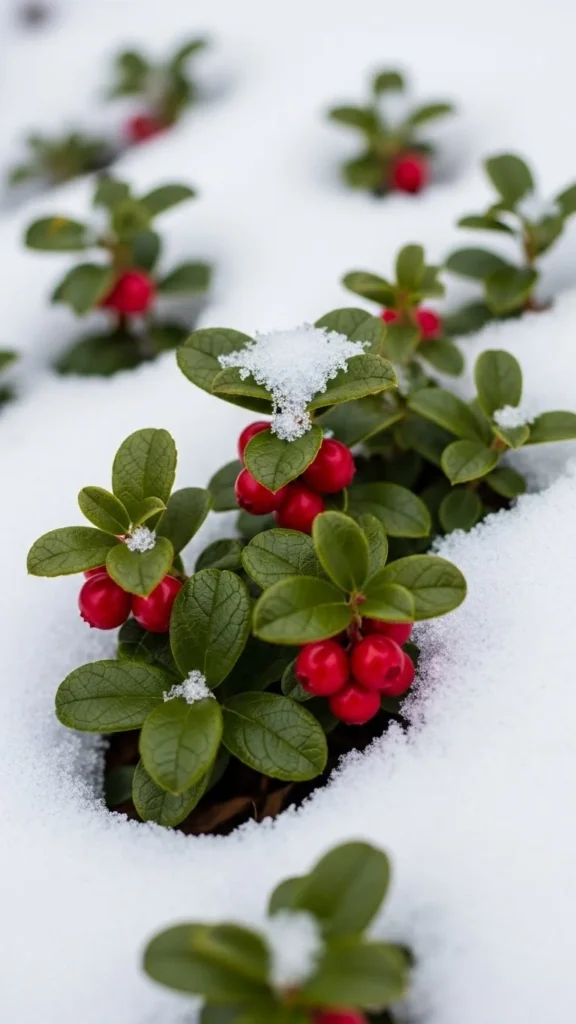
Bearberry forms low mats of evergreen leaves with bright red berries tucked between them. It handles sandy soil and exposed areas very well, making it ideal for slopes and dry corners. Snow settles gently across the foliage, creating a calm winter pattern.
Water young plants until established. Add mulch to help roots settle. Prune minimally. For a thrifty idea, plant Bearberry near stones or pathways where its spreading habit fills gaps naturally. The berries stand out even from afar, giving your yard a soft winter accent.
23. Black Chokeberry
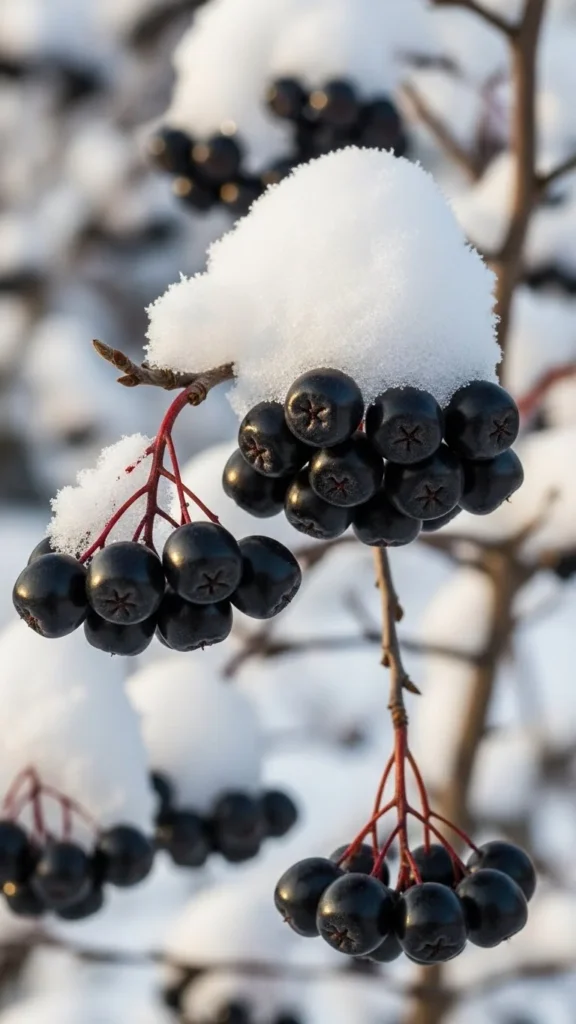
Black Chokeberry carries dark berries that hold firmly through much of winter. The color contrasts sharply with snow, creating a polished look. This shrub handles many soil types and grows well in sun or partial shade.
Plant as a mixed border shrub. Water during dry spells and mulch before winter. Trim in early spring to renew older stems. For a budget idea, plant younger shrubs close together for a fuller look within a year. The berries draw winter birds, helping maintain motion in your outdoor space.
24. Inkberry Holly
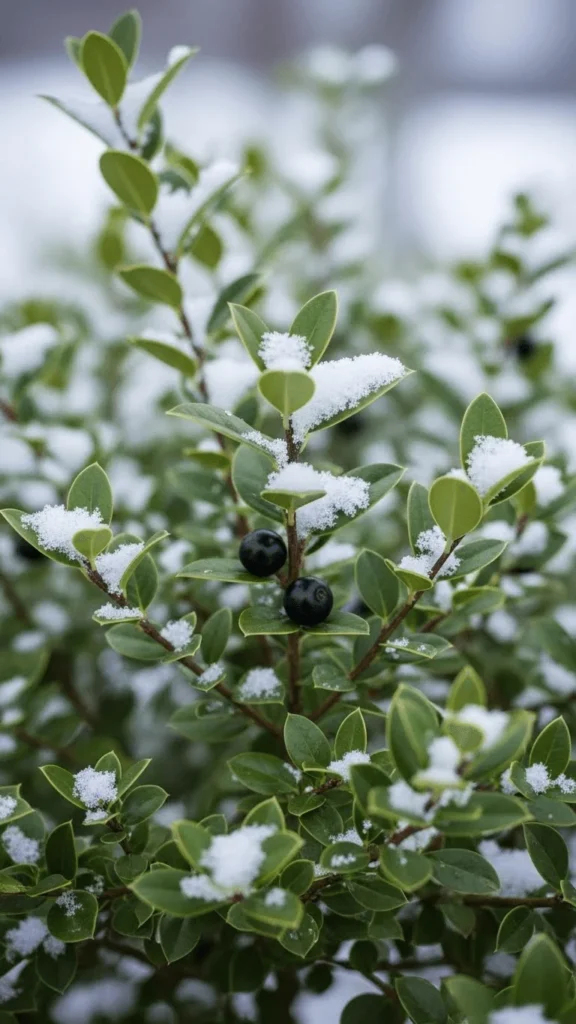
Inkberry Holly is a compact evergreen with dark berries that sit neatly against its rounded leaves. It stays green all winter and works well in foundation beds, borders, or containers. The berries are subtle but striking in snowy settings.
Give the shrub moist soil and partial sun. Add mulch in fall. Trim lightly after winter to keep the shape tidy. For a simple DIY approach, plant a small row along your entry walkway for consistent winter greenery. The shrub maintains its form with little effort.
Conclusion
Winter doesn’t have to feel colorless. These berry shrubs offer long-lasting brightness, simple upkeep, and steady seasonal interest. With just a few well-placed plants, you can create a garden that stays lively even in deep snow. Pick a mix of colors—reds, blues, purples, and whites—to build a landscape that feels warm and inviting all winter long.

Leave a Reply