

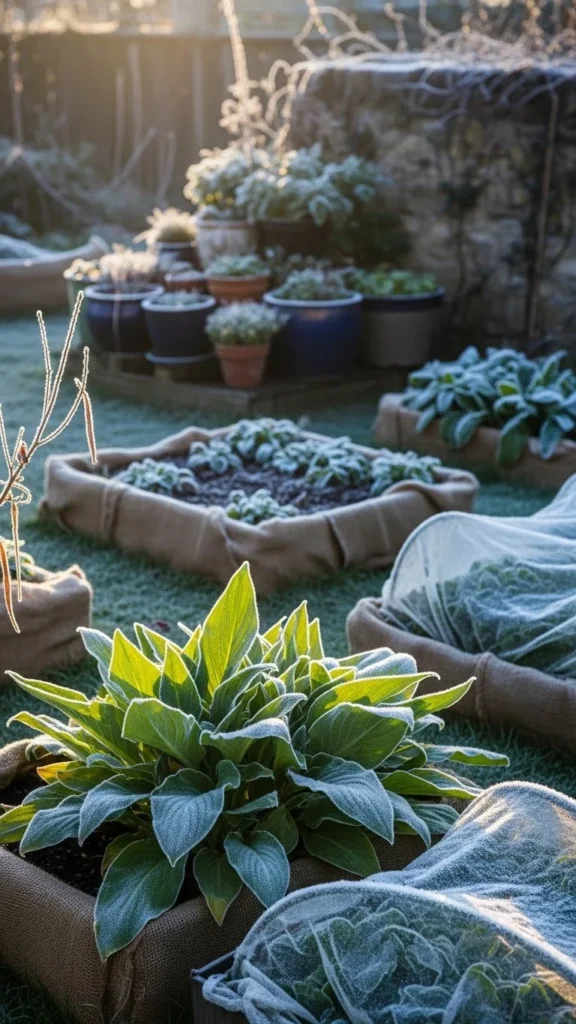
Cold nights can catch gardeners off guard. One unexpected frost can burn leaves, weaken roots, and undo weeks of care. The good news is that protecting plants from frost does not require expensive tools or complicated systems. Simple materials, smart placement, and a little timing can make a big difference. The ideas below focus on practical actions you can take quickly using items you already own or can find cheaply. These plant protection hacks work for garden beds, raised planters, containers, and even small trees, helping plants survive cold snaps with less stress.
1. Old Bed Sheets as Overnight Covers
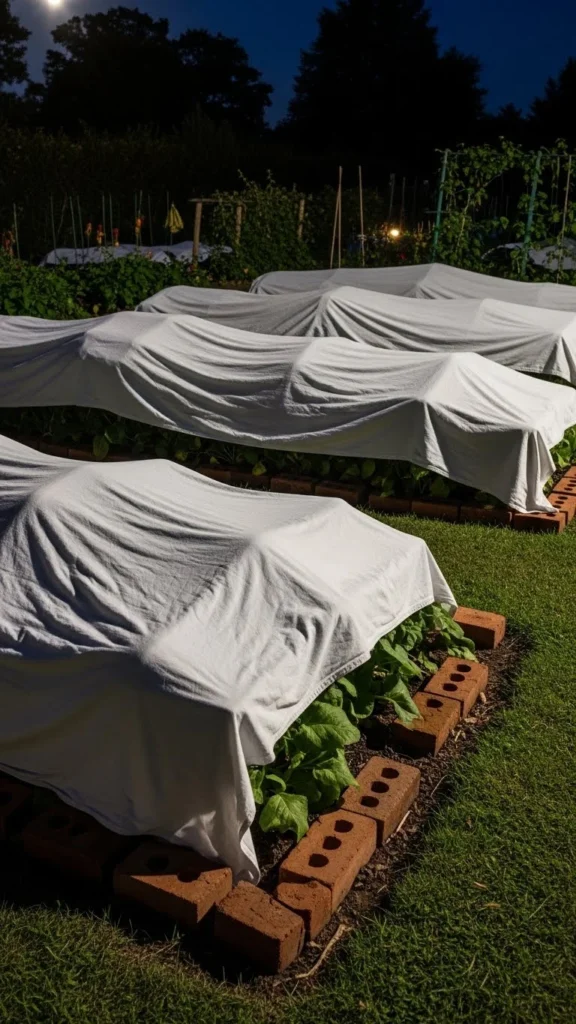
Old bed sheets work well as frost covers. They trap ground warmth while still allowing air to move. Drape the sheet loosely over plants before sunset. Let it touch the soil so heat rising from the ground stays inside.
Avoid stretching fabric tight. Tight fabric presses cold directly onto leaves. Use bricks, stones, or small logs to hold the edges down. Remove the sheet in the morning once temperatures rise.
This method works well for vegetables, herbs, and flowers. Cotton sheets breathe better than plastic and reduce moisture buildup. If you only expect light frost, one layer is often enough.
For taller plants, use sticks or garden hoops to lift the fabric. This keeps leaves from bending or snapping. Store used sheets in a dry bin so they stay ready for the next cold night.
2. Upside-Down Buckets for Small Plants
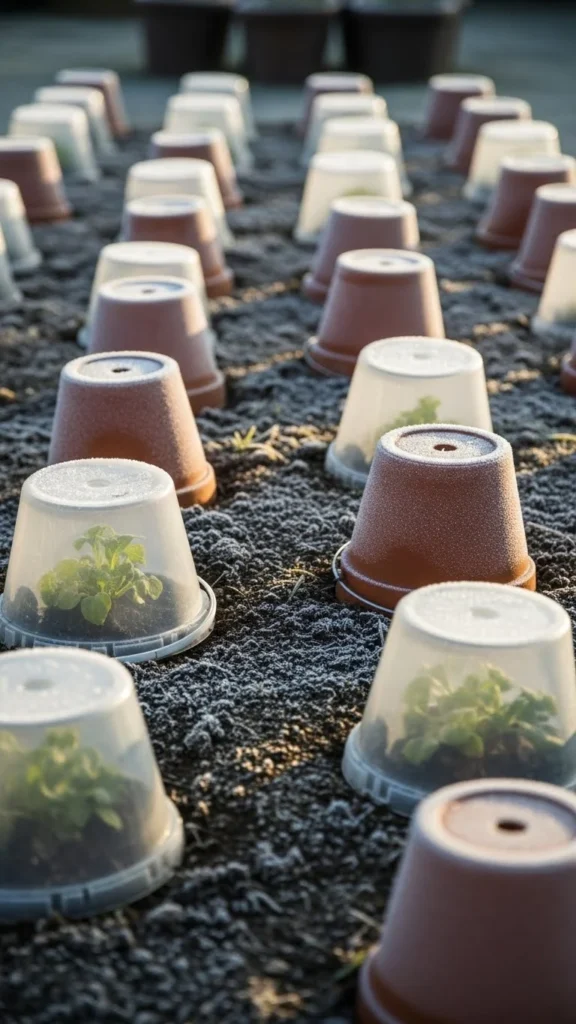
Buckets and large pots create a simple shield for young plants. Place them upside down over seedlings before nightfall. This traps warm air close to the soil surface.
Choose containers without cracks. Even small gaps allow cold air inside. If the container has drainage holes, cover them with tape or cloth.
Remove the bucket in the morning to let light and air reach the plant. This method works best for short plants like lettuce, peppers, or new transplants.
Keep a stack of buckets near your garden during cold seasons. This saves time when temperatures drop quickly. Even sturdy cardboard boxes can work in a pinch, as long as they stay dry overnight.
3. Mulch Thickly Around Roots
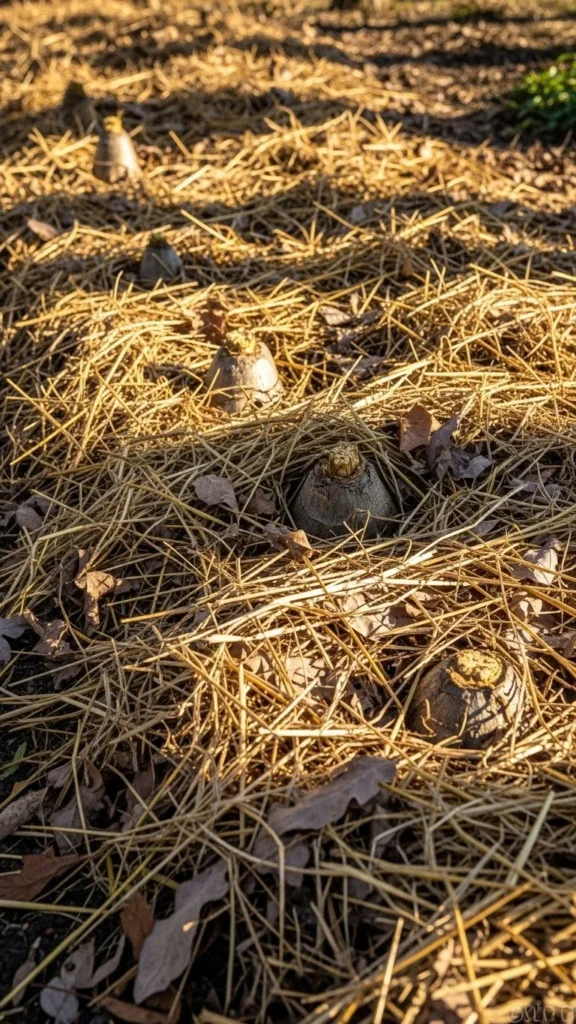
Mulch acts like a blanket for the soil. A thick layer helps hold warmth and slows temperature drops around roots.
Use straw, shredded leaves, pine needles, or wood chips. Spread mulch 2 to 4 inches deep around plant bases. Keep it slightly away from stems to prevent moisture issues.
This method works well for perennials, shrubs, and overwintering vegetables. Mulch also helps soil hold moisture, which releases warmth slowly overnight.
If frost is coming suddenly, even dry leaves gathered from the yard can help. After cold nights pass, pull mulch back a little so soil warms during the day.
4. Water Soil Before a Frost
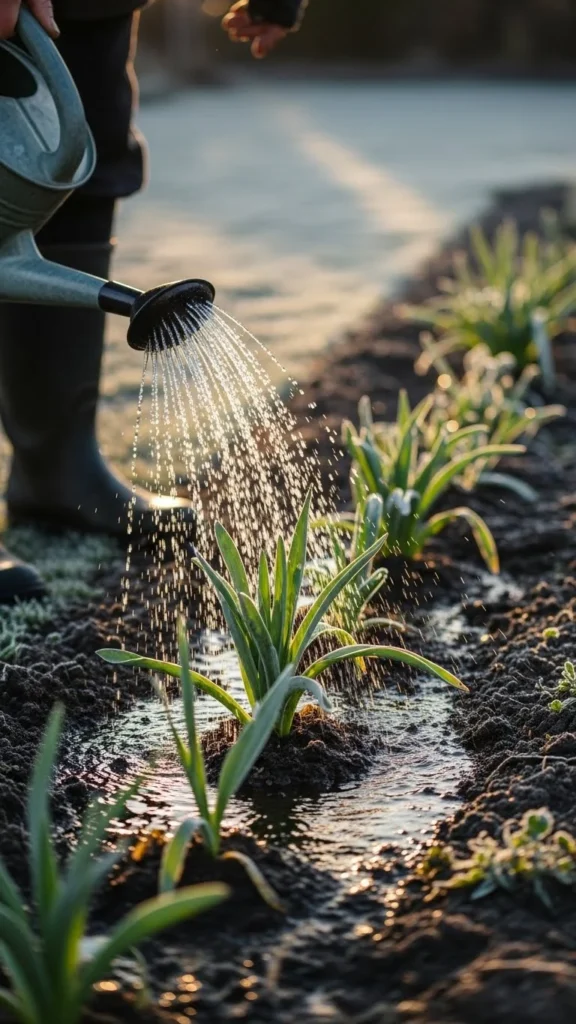
Moist soil holds heat better than dry soil. Watering earlier in the day allows soil to absorb warmth before temperatures fall.
Focus on watering the soil, not the leaves. Wet leaves can freeze faster and cause damage. A slow soak works better than a quick splash.
This trick works best when frost is light and short. Pair it with covers for added protection.
Avoid watering late at night. Cold water at that time can lower soil temperature. Afternoon watering gives the best result.
5. Move Potted Plants Close Together
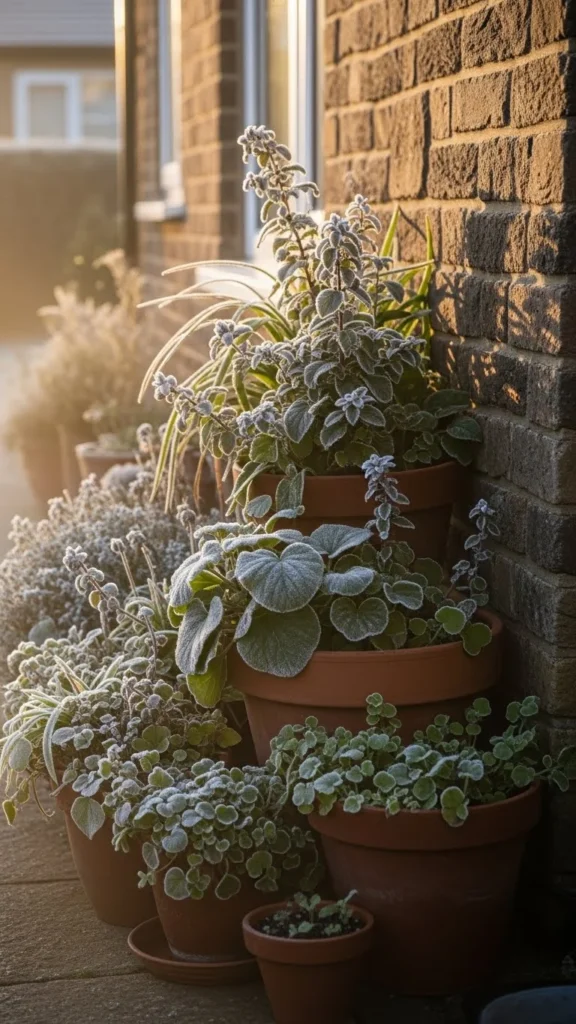
Grouping pots helps plants share warmth. Move containers close together near a wall or fence before nightfall.
Walls absorb heat during the day and release it slowly overnight. South- or west-facing walls work best.
Place taller plants on the outside and smaller ones in the center. This blocks wind and creates a warmer pocket of air.
If possible, place pots on wood boards instead of cold concrete. Concrete pulls heat away from roots. Even cardboard under pots can help.
6. Use Garden Fabric or Frost Cloth
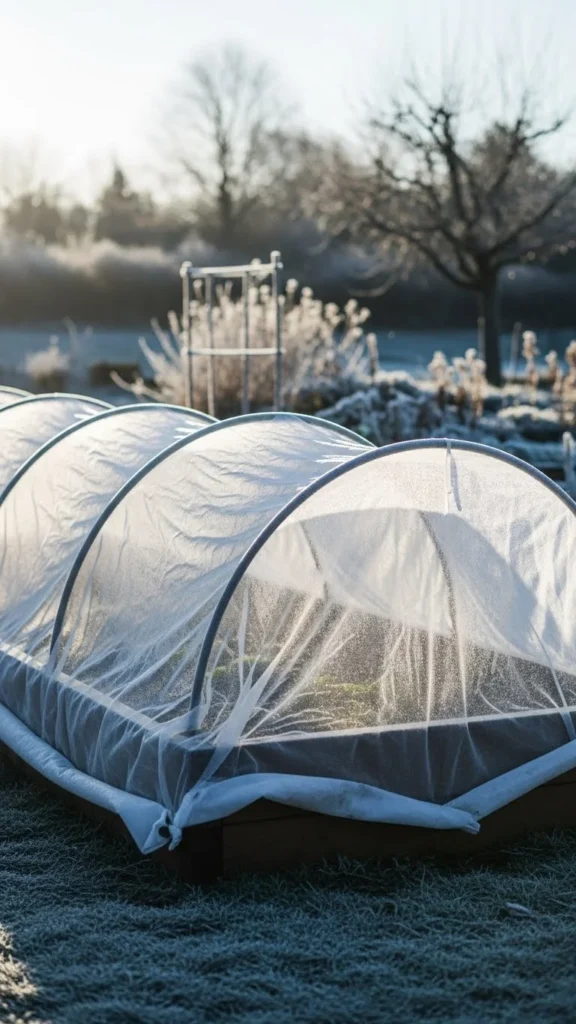
Frost cloth is made for plant protection. It allows light and water through while trapping heat.
Lay it loosely over plants and secure the edges. Avoid pulling it tight. Fabric should float above leaves when possible.
This material works for repeated use and lasts several seasons if stored dry. It is lighter than blankets and easier to manage for large beds.
For added warmth, double the fabric on very cold nights. Remove it during warmer days to prevent overheating.
7. Build Simple PVC Hoop Covers
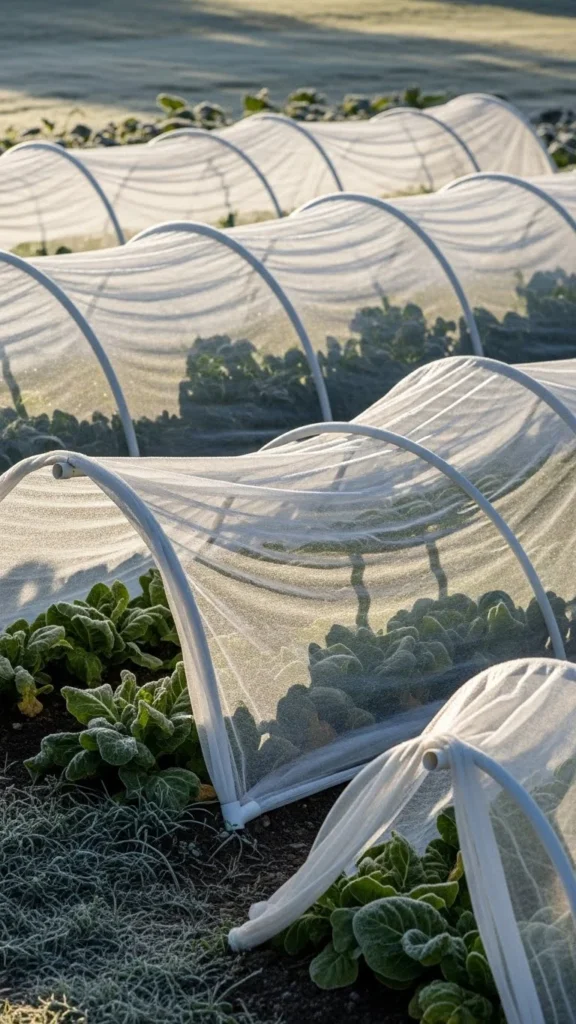
PVC hoops create space between plants and covers. This air gap helps keep leaves from freezing.
Use flexible PVC or metal conduit bent into arches. Push ends into the soil on each side of the bed. Drape fabric or sheets over the top.
Secure covers with clips, bricks, or soil along the edges. This setup works well for row crops and raised beds.
Hoops can stay in place all season. When frost danger passes, remove covers and reuse the frame for shade cloth later.
8. Protect with Cardboard Shields
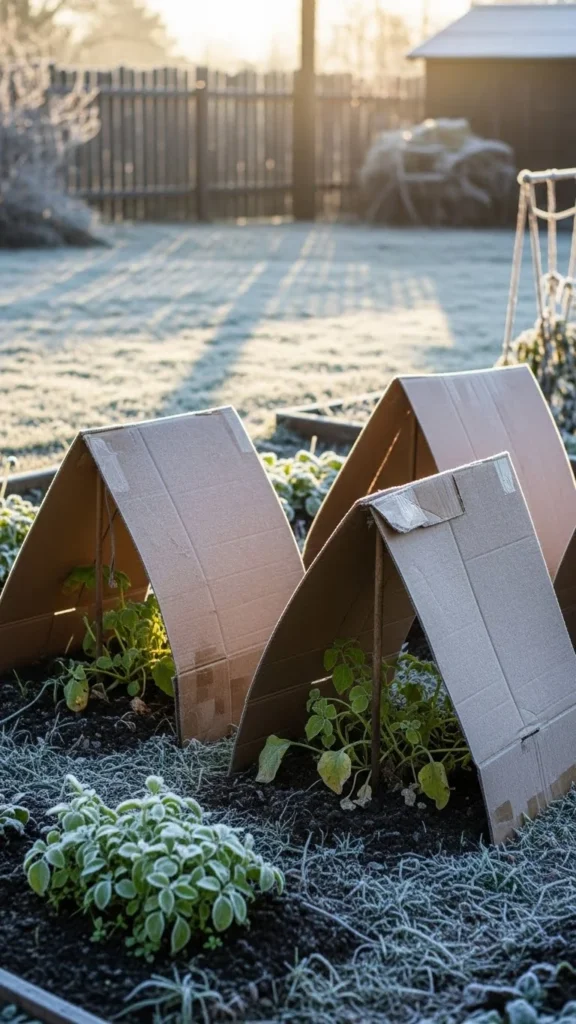
Cardboard blocks wind and traps warmth. Use flattened boxes to form walls around plants.
Secure cardboard with stakes or bricks so it does not blow over. This method works well for short cold snaps.
Cardboard also breaks down over time and can be composted later. Avoid glossy or coated cardboard.
For extra warmth, combine cardboard walls with mulch at the base.
9. Cover Plants with Towels for Emergencies
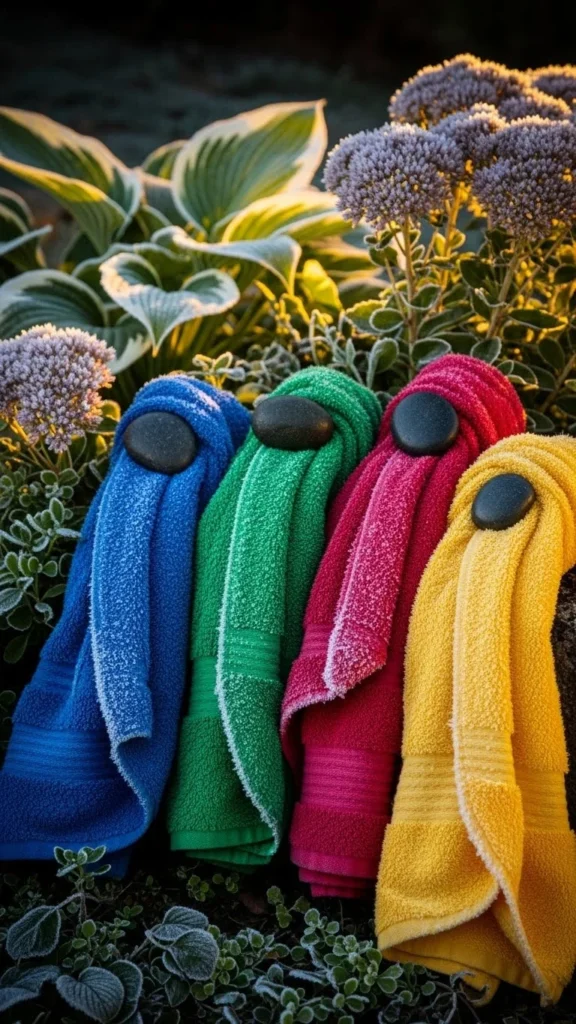
Thick towels offer quick protection when frost arrives unexpectedly. Use them like blankets over plants.
Avoid letting towels get wet. Moist fabric freezes faster. Use dry towels only.
Remove towels early in the morning. Heavy fabric blocks light and can bend stems if left too long.
This method works best for one or two nights and smaller garden areas.
10. Use Cloche Covers
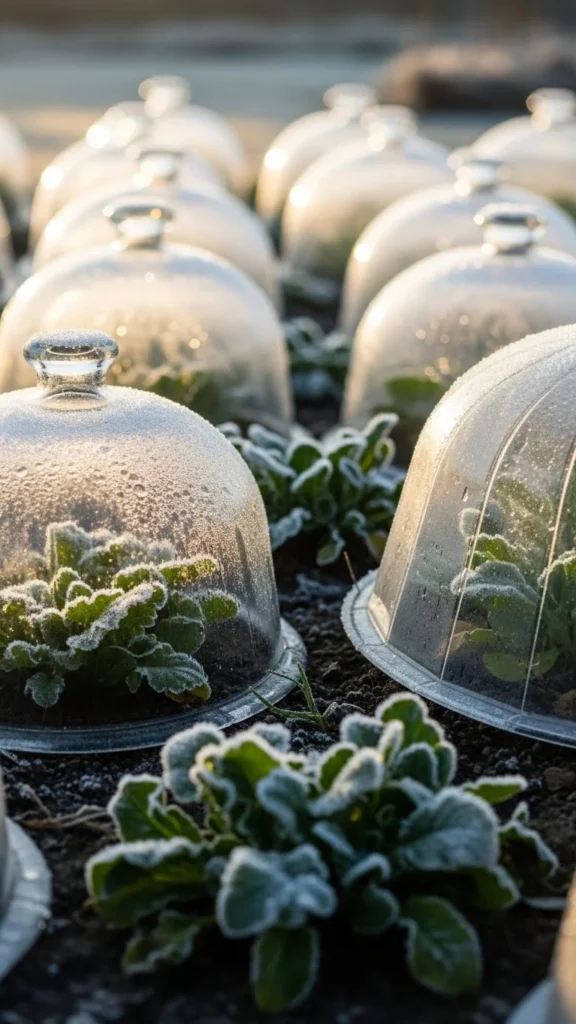
Cloches act like mini greenhouses. They trap heat and block cold air.
You can use store-bought cloches, glass jars, or cut plastic bottles. Remove caps or lids during the day to prevent overheating.
Place cloches before sunset. Make sure they sit firmly on the soil.
Cloches work well for seedlings and tender plants in early spring or late fall.
11. Bring Containers Indoors Overnight
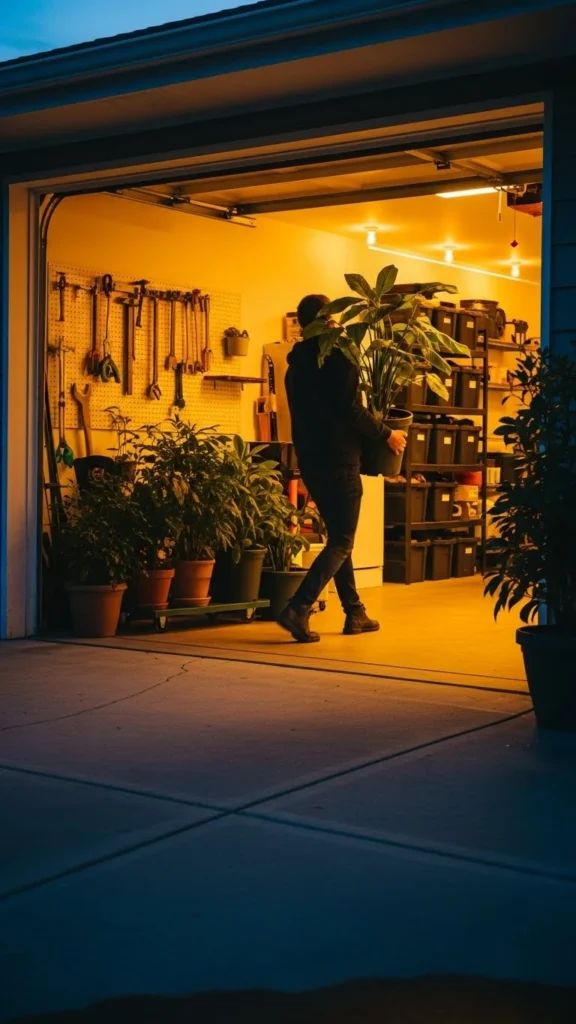
If plants are in containers, moving them indoors is often the safest option. Garages, sheds, or covered porches work well.
Choose spaces that stay above freezing. Light is less important for one night.
Move plants back outside once temperatures rise. This method prevents repeated freeze stress.
Keep pots on rolling trays to make moving easier during cold seasons.
12. Use Hay or Straw Bales as Wind Blocks
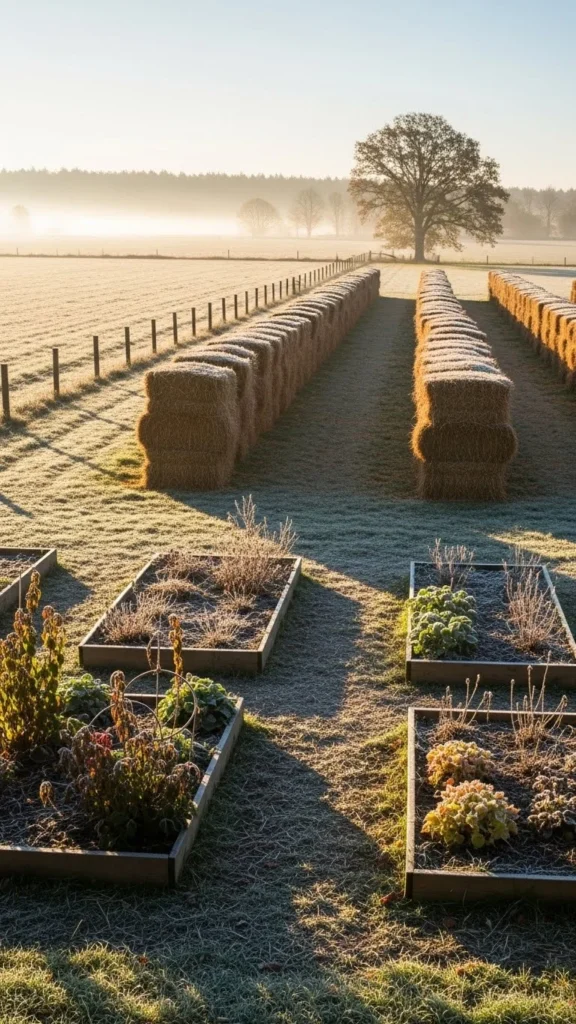
Wind increases frost damage. Straw bales create sturdy barriers that reduce cold air movement.
Place bales along the windward side of garden beds. This helps maintain warmer air around plants.
Bales also add insulation and can be reused later as mulch.
Avoid placing bales directly against plant stems. Leave space for airflow.
13. Wrap Tree Trunks with Fabric
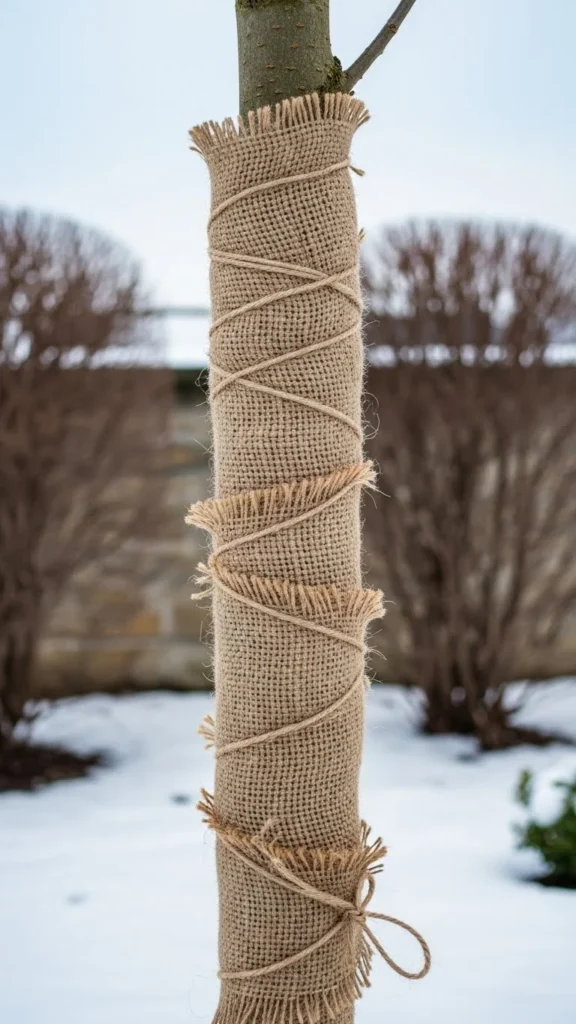
Young trees benefit from trunk wraps during cold spells. Fabric helps regulate temperature swings.
Use burlap or breathable fabric. Wrap from the base up to the first branches.
Remove wraps once temperatures stabilize. This helps prevent moisture buildup.
This method works well for fruit trees and ornamentals.
14. Create Heat with Water Jugs
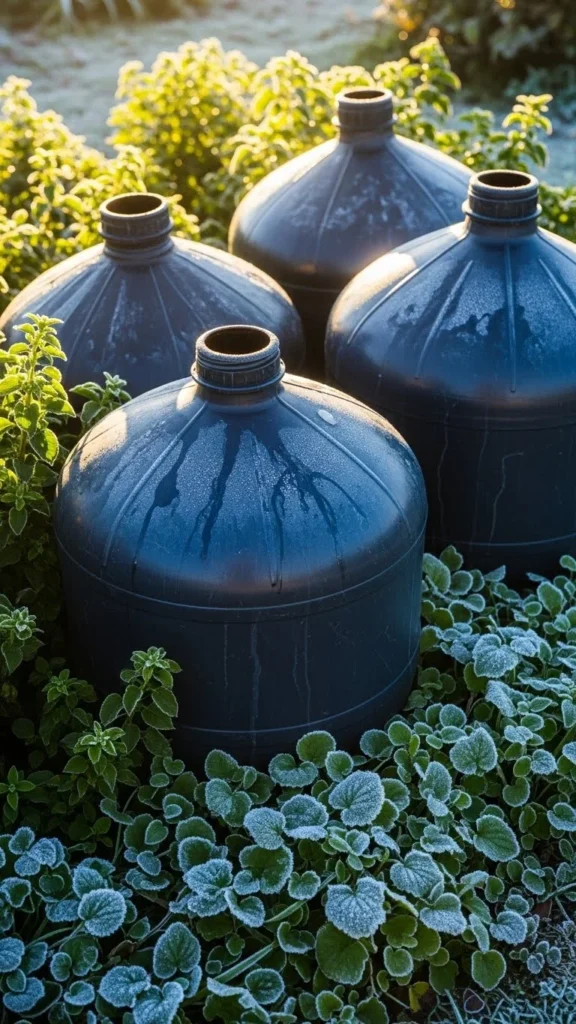
Water-filled jugs absorb heat during the day and release it at night. Use dark containers for better heat absorption.
Place jugs near plants but not touching leaves. This adds a small amount of warmth overnight.
This works best for light frost and sheltered areas.
Rotate jugs so they recharge with sunlight daily.
15. Use Leaves as Natural Insulation

Dry leaves trap air and insulate soil. Rake leaves into garden beds before frost.
Pile them loosely around plants. Avoid packing them tight.
Leaves are free and easy to move. After winter, they break down and enrich soil.
This method suits perennials and root crops.
16. Shield Plants with Lattice Panels
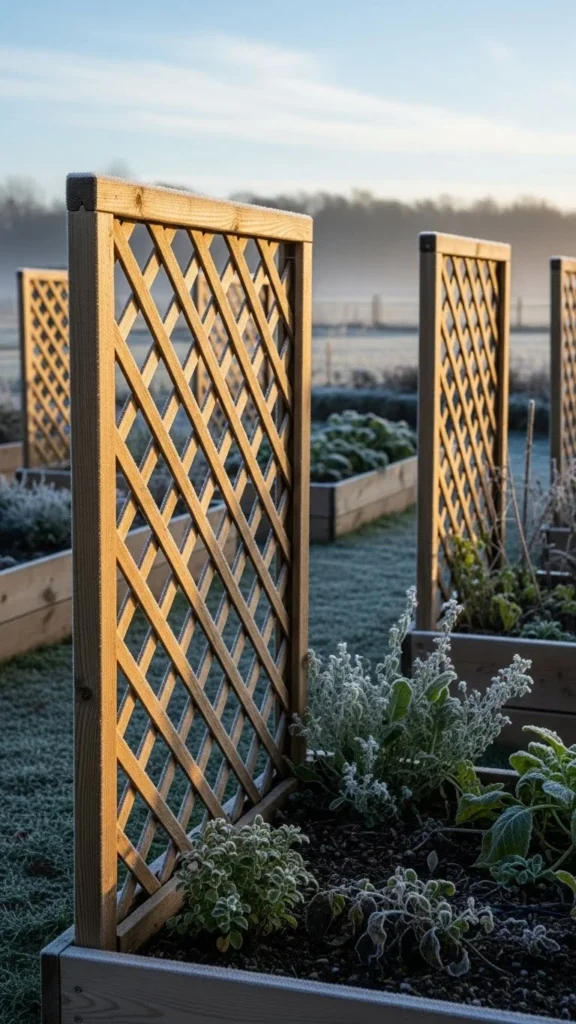
Lattice reduces wind while allowing airflow. Place panels on the windward side of plants.
Secure them with stakes. This method works well for larger garden sections.
Lattice also supports fabric covers if needed.
Store panels flat when not in use.
17. Raise Containers Off Cold Ground
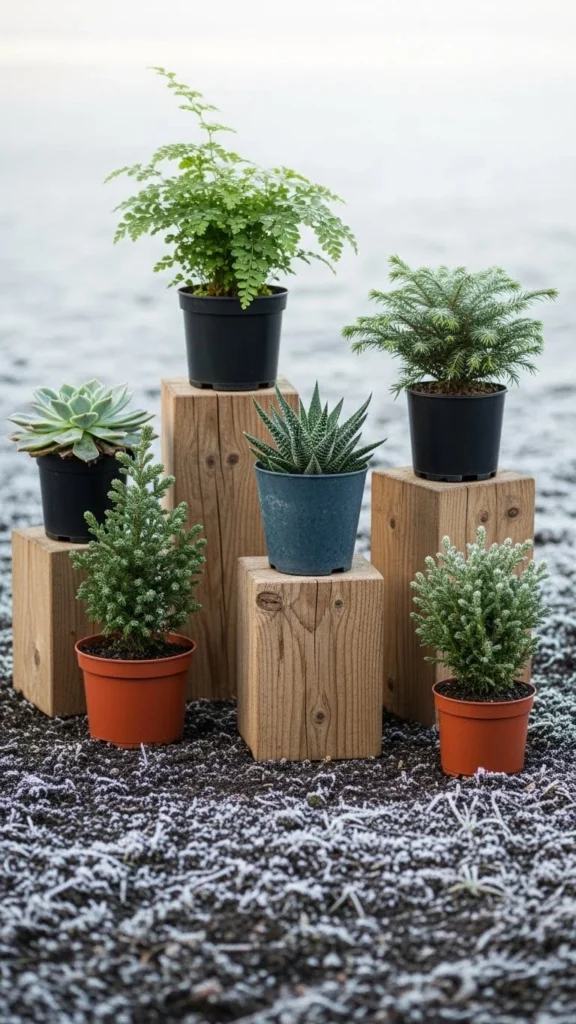
Cold ground pulls heat from pots. Raising containers helps protect roots.
Use bricks, wood blocks, or plant stands. Even a small lift helps.
Pair this with grouping pots near walls.
This is simple and works well all season.
18. Use Bubble Wrap for Pots
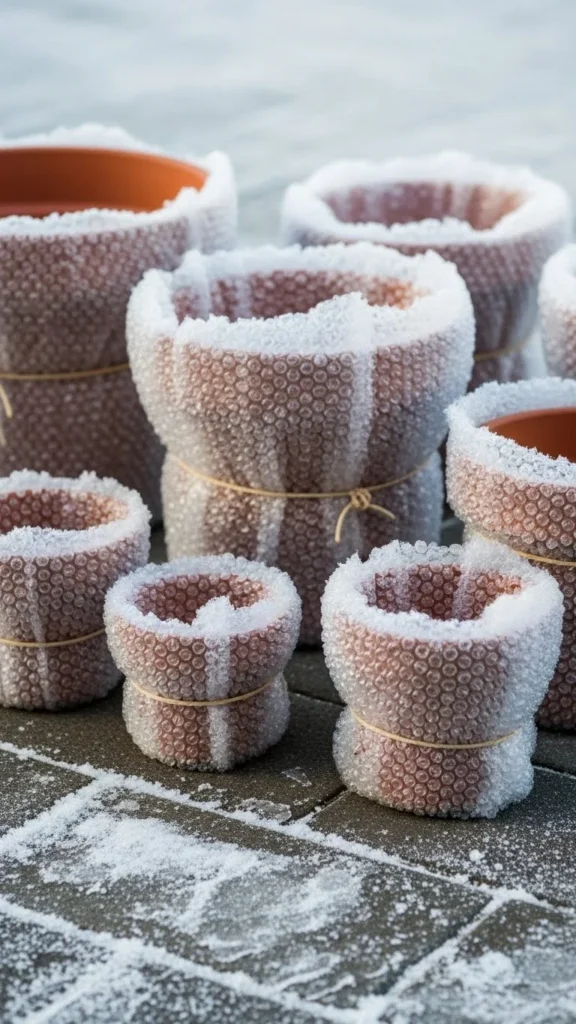
Bubble wrap insulates pot sides. Wrap around containers, leaving the top open.
Secure with tape or twine. Avoid wrapping soil surface.
This method helps roots stay warmer during cold nights.
Remove wrap once temperatures rise to avoid overheating.
19. Cover Soil with Compost
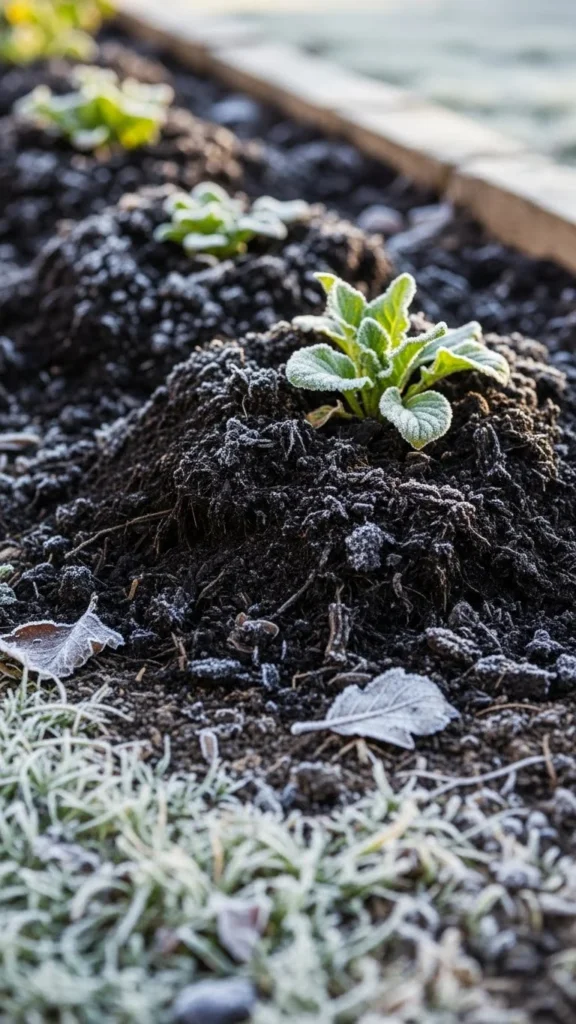
Compost holds warmth and improves soil health. Spread a layer around plants before frost.
It works well for vegetable beds and perennials.
Compost also feeds soil life during colder months.
Keep compost slightly away from stems.
20. Use Temporary Plastic Tents Carefully
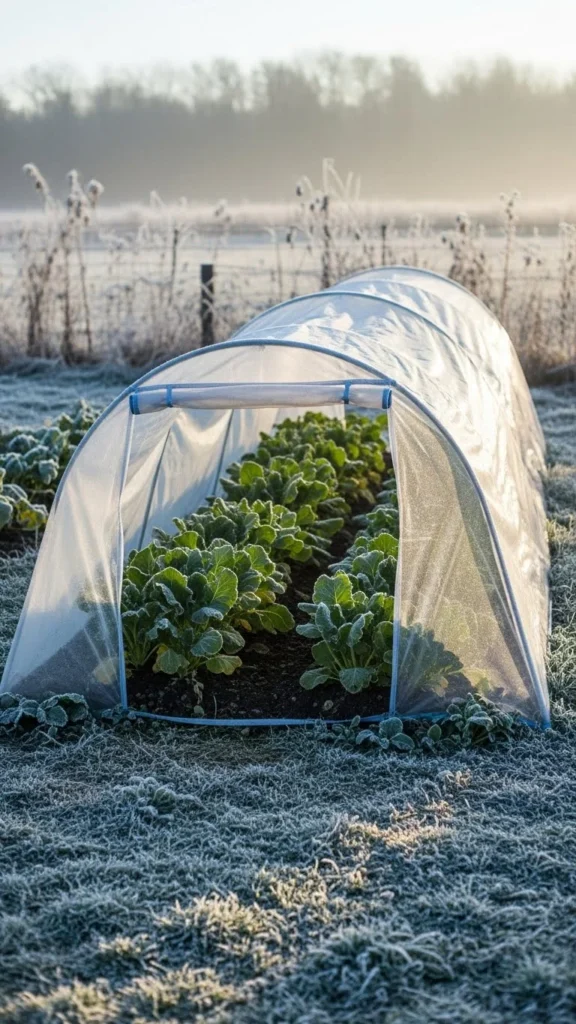
Plastic traps heat but must be used carefully. Keep plastic from touching leaves.
Vent during the day to release excess heat.
Use plastic only for short cold periods.
Remove once frost risk passes.
21. Plant Near Heat-Retaining Surfaces
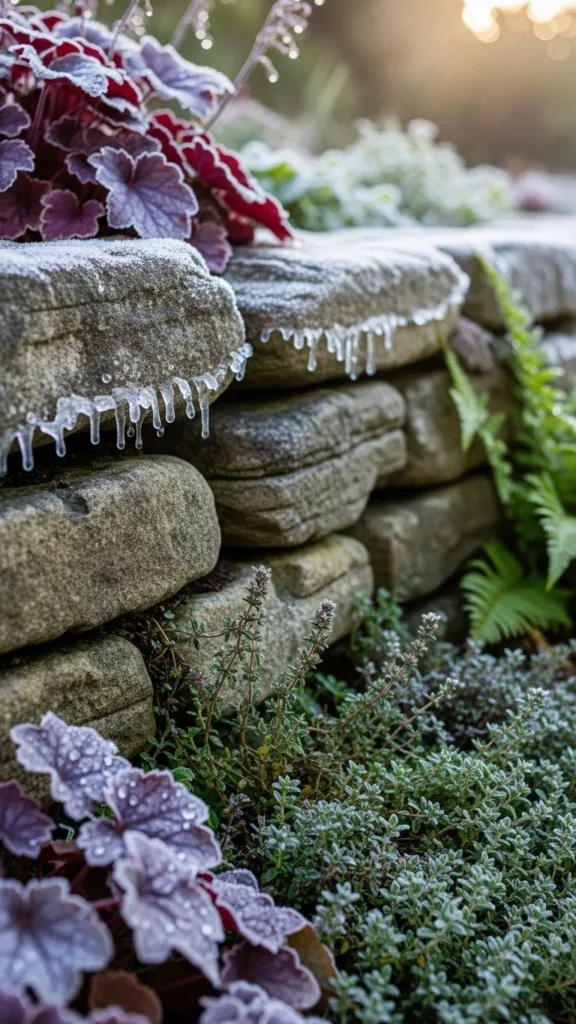
Stone, brick, and concrete store heat. Planting nearby gives plants extra warmth.
This works well for herbs and tender flowers.
Walls also block wind.
Plan planting spots with this in mind.
22. Use Portable Cold Frames
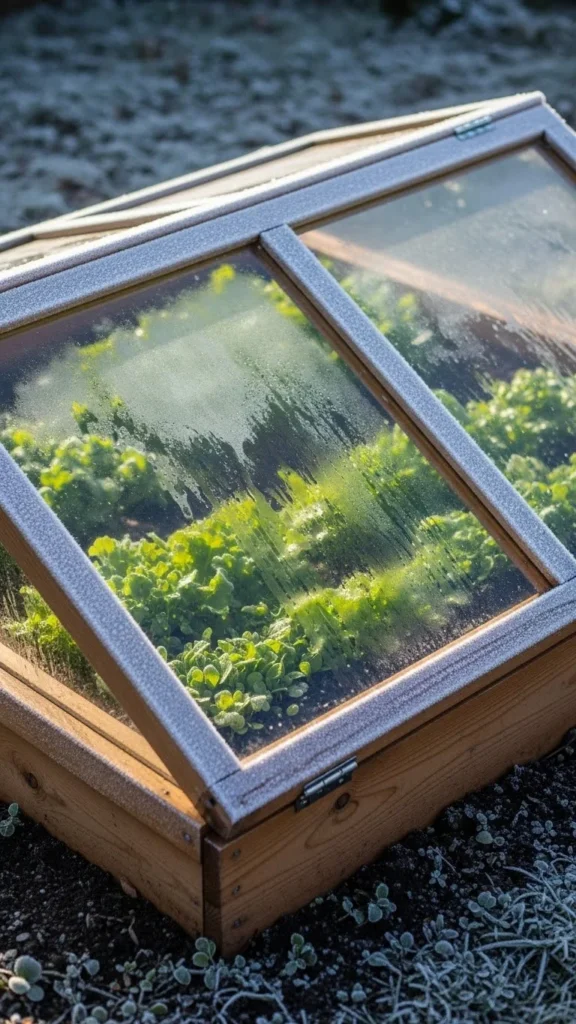
Cold frames create a sheltered space for plants. They trap heat and block cold air.
Open lids during warm days. Close them before sunset.
Cold frames work well for leafy greens and seedlings.
They can be moved as seasons change.
23. Monitor Weather and Act Early
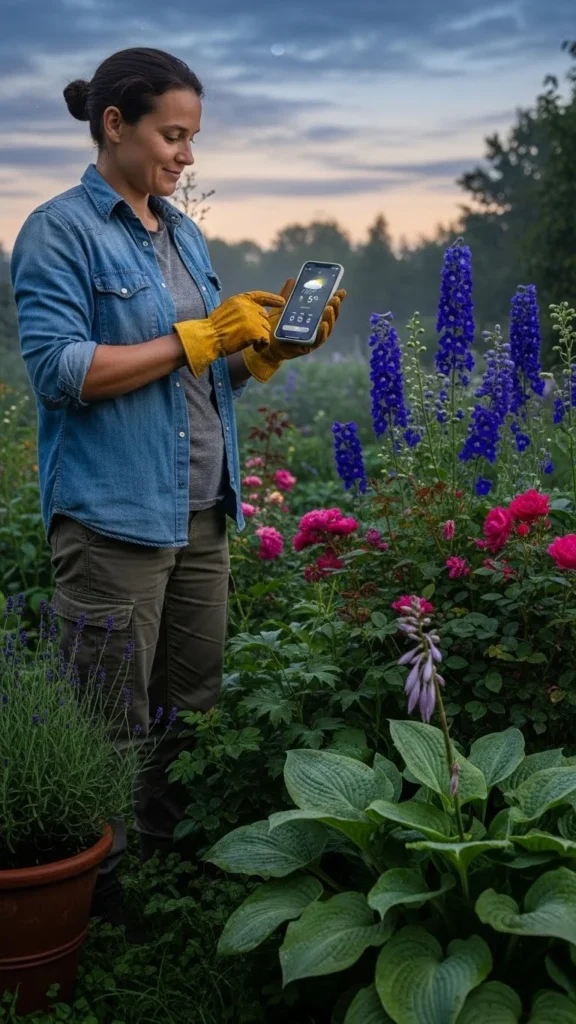
Preparation starts with awareness. Check nightly forecasts during cold seasons.
Act before frost arrives, not after. Early action saves time and plants.
Keep covers and supplies ready.
A few minutes of prep can prevent major damage.
Conclusion
Frost does not have to mean lost plants or wasted effort. With simple tools, reused materials, and smart timing, you can guard gardens against cold nights without spending much. These plant protection hacks fit many spaces, from raised beds to patios. Choose a few methods that match your setup and keep supplies nearby during colder months. Taking quick action before temperatures drop helps plants stay strong and ready for warmer days ahead.

Leave a Reply