

Winter doesn’t have to mean the end of your garden. With a simple cold-frame bed, you can keep leafy greens, herbs, and even some root vegetables growing long after frost arrives. These low-cost structures trap warmth, block icy winds, and create a cozy microclimate for plants when everything else goes dormant.
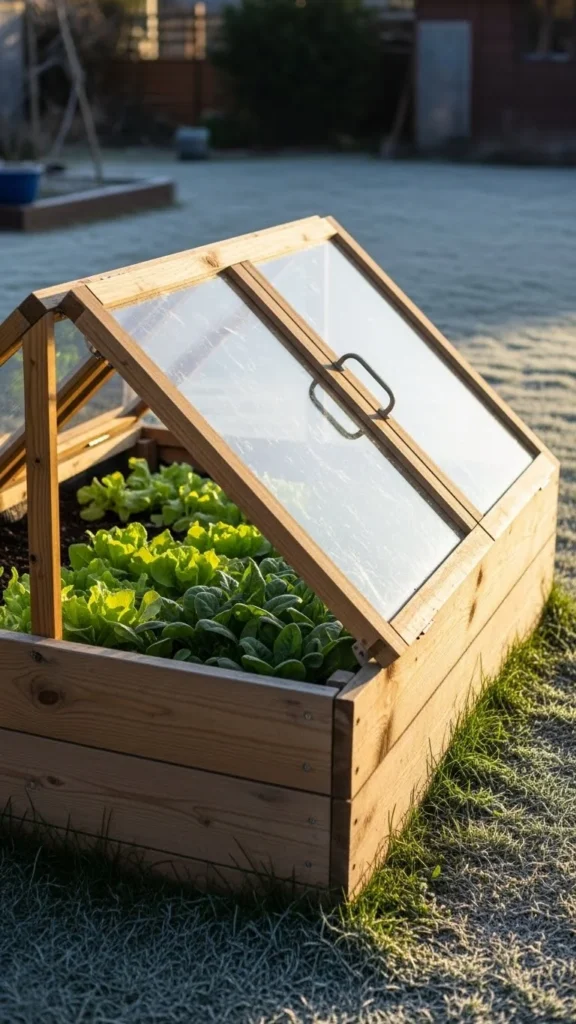
If you love the idea of harvesting fresh food in winter—or just want to get a head start on spring—this guide will walk you through building and using cold-frame beds step by step.
What Is a Cold-Frame Bed (and Why It Works)
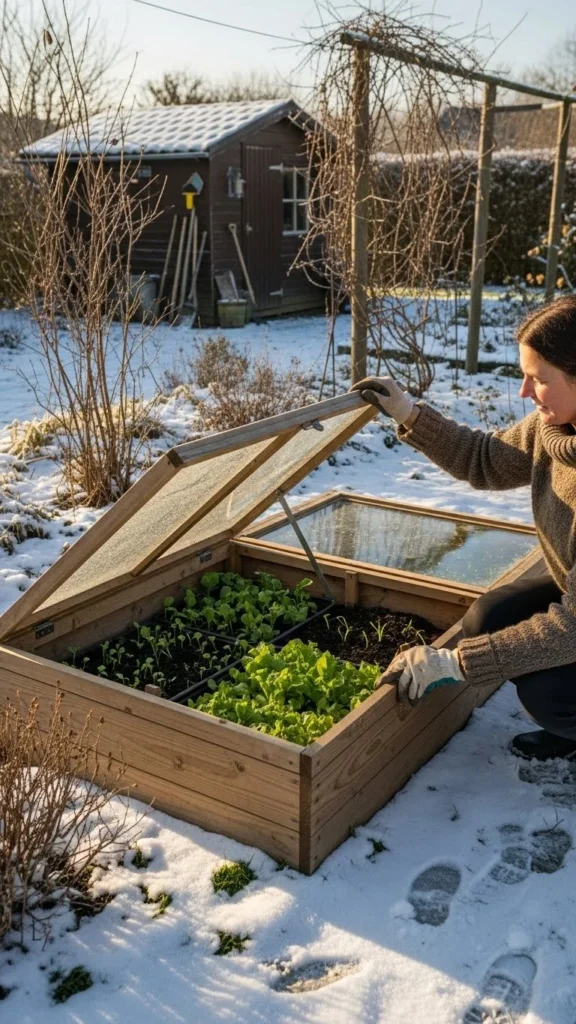
A cold-frame bed is essentially a low, box-like structure with a transparent lid. It sits directly on the soil and uses sunlight to warm the air and ground inside.
Here’s why it’s so effective:
- Sunlight passes through the clear top and heats the soil.
- Warmth gets trapped inside, raising the temperature by several degrees.
- The frame blocks cold winds and harsh weather.
- Plants stay protected without electricity or complex tools.
Cold frames are perfect for:
- Extending fall harvests
- Growing winter greens
- Hardening off seedlings in early spring
Choosing the Right Location in Your Garden
Location matters just as much as construction. A well-placed cold frame performs better all winter.
Look for a spot that:
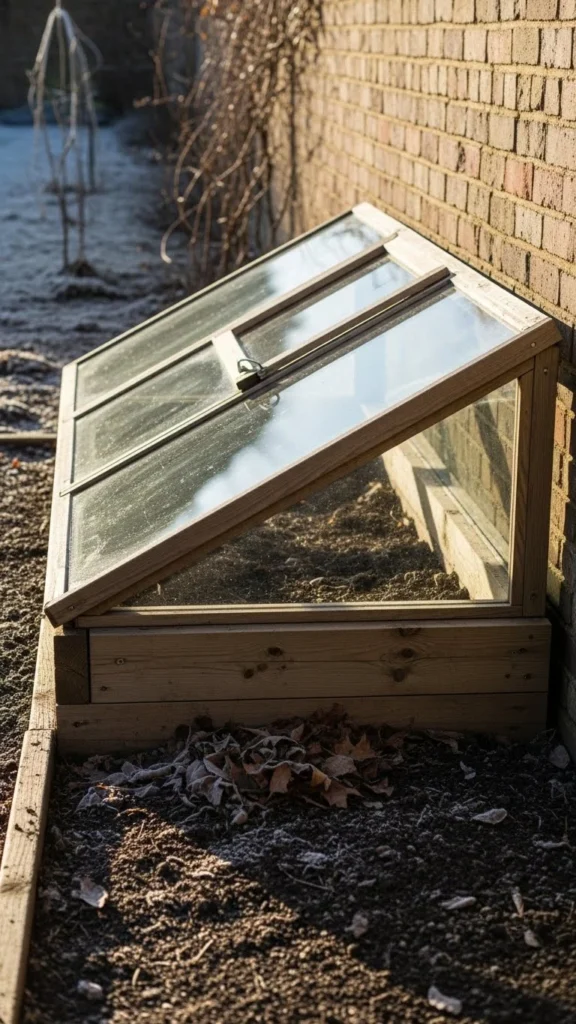
- Gets full sun, especially from the south
- Is sheltered from strong winter winds
- Has good drainage to prevent soggy soil
- Is close to your house for easy access in cold weather
Tip: If possible, place the back of the cold frame slightly higher than the front. This angle helps capture more sunlight during short winter days.
Materials You’ll Need (Simple and Budget-Friendly)
You don’t need fancy supplies to build a cold-frame bed. Many gardeners use leftover or repurposed materials.
Common options include:
- Untreated wood boards or old pallets
- Bricks, concrete blocks, or stone
- An old window, clear acrylic sheet, or polycarbonate panel for the lid
- Screws or corner brackets
- Hinges (optional, but helpful)
Before you start:
- Avoid treated wood that may leach chemicals
- Clean old windows thoroughly
- Make sure the lid fits snugly to keep heat inside
Step-by-Step: How to Build a Basic Cold-Frame Bed
Building a cold frame is beginner-friendly and usually takes an afternoon.
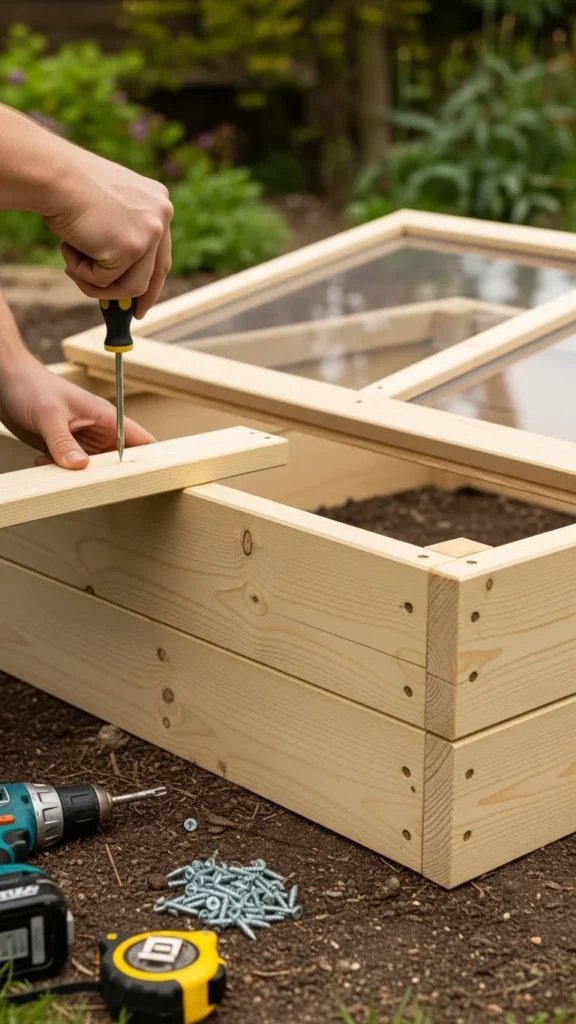
1. Build the Frame
Create a rectangular box without a bottom.
- Typical size: 3–4 feet wide and 2–3 feet deep
- Back wall should be 4–6 inches taller than the front
2. Secure the Corners
Use screws or brackets to keep everything sturdy. The frame should sit flat on the soil.
3. Prepare the Ground
Loosen the soil inside the frame and mix in compost. Healthy soil holds warmth better.
4. Add the Lid
Attach the clear top using hinges, or simply rest it on the frame so it can be lifted easily.
What to Grow in a Cold Frame During Winter
Cold frames work best with hardy crops that tolerate cool temperatures.
Great choices include:
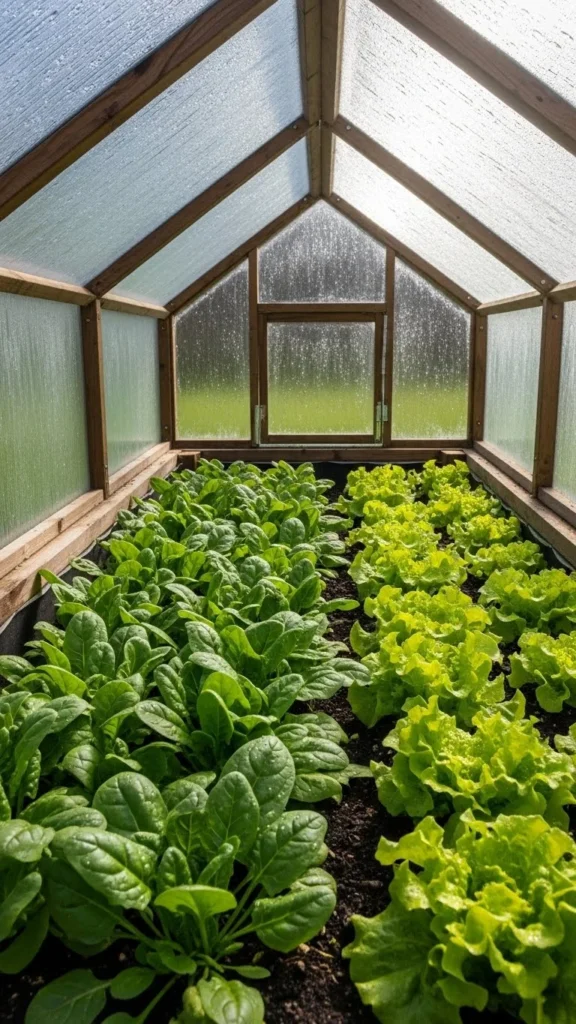
- Spinach
- Lettuce
- Kale
- Arugula
- Swiss chard
- Green onions
- Radishes
Plant them in late fall or early winter, depending on your climate. Growth will slow during the coldest weeks, but plants often stay alive and resume growing when days get brighter.
How to Vent, Water, and Protect Plants
Cold frames can heat up quickly on sunny days—even in winter. Managing airflow is key.
Vent regularly
- Prop the lid open on mild days
- Close it before sunset to trap warmth
Water lightly
- Plants need less water in winter
- Water in the morning to avoid freezing at night
Extra insulation for extreme cold
- Lay straw or leaves around the outside
- Use a blanket or frost cloth over the lid at night (remove during the day)
Common Mistakes to Avoid
Even simple structures can fail if a few basics are missed.
Avoid these issues:
- Overheating plants by never venting
- Letting snow pile up on the lid
- Using cracked or cloudy panels that block sunlight
- Forgetting to check moisture levels
A quick daily peek is usually enough to keep everything balanced.
Takeaway: Grow More, Even in Winter
Cold-frame beds are one of the easiest ways to stretch your growing season without complex systems or high costs. With a bit of sunlight, simple materials, and regular care, you can enjoy fresh greens when most gardens are resting.
If you’ve been waiting for a sign to try winter growing, this is it. Save this guide for later and build your first cold frame this season!

Leave a Reply