

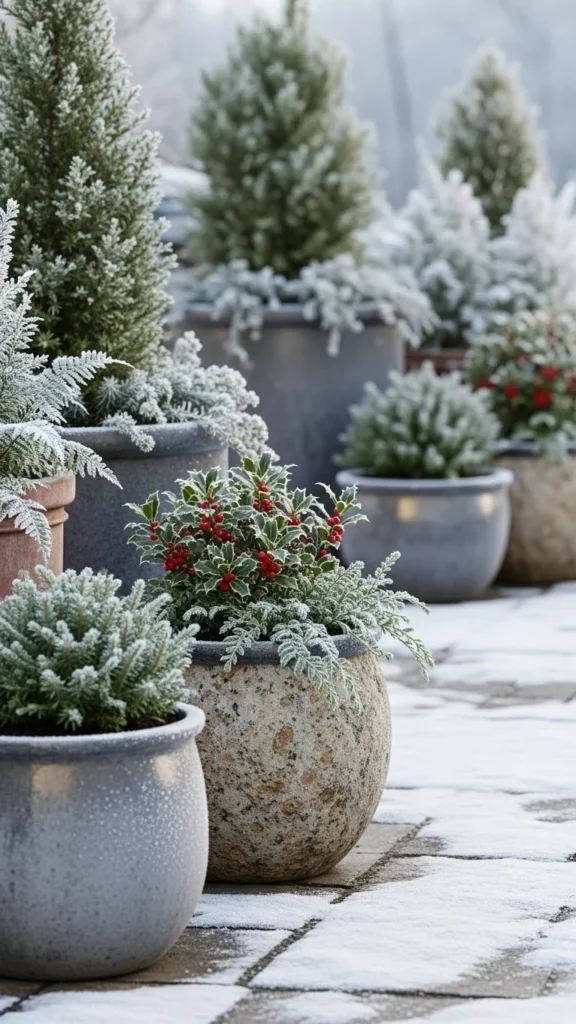
Cold weather does not mean outdoor spaces have to look bare or neglected. The right planter can stay strong through snow, ice, and freezing nights while still looking polished. This guide focuses on snow-ready planters that resist cracking, warping, and splitting, even in harsh winter conditions. Each option below highlights materials, placement ideas, and affordable ways to use them at home. Whether you decorate an entryway, balcony, or garden path, these planters help plants stay protected while keeping outdoor areas visually grounded all winter.
1. Thick-Walled Stone Composite Planters
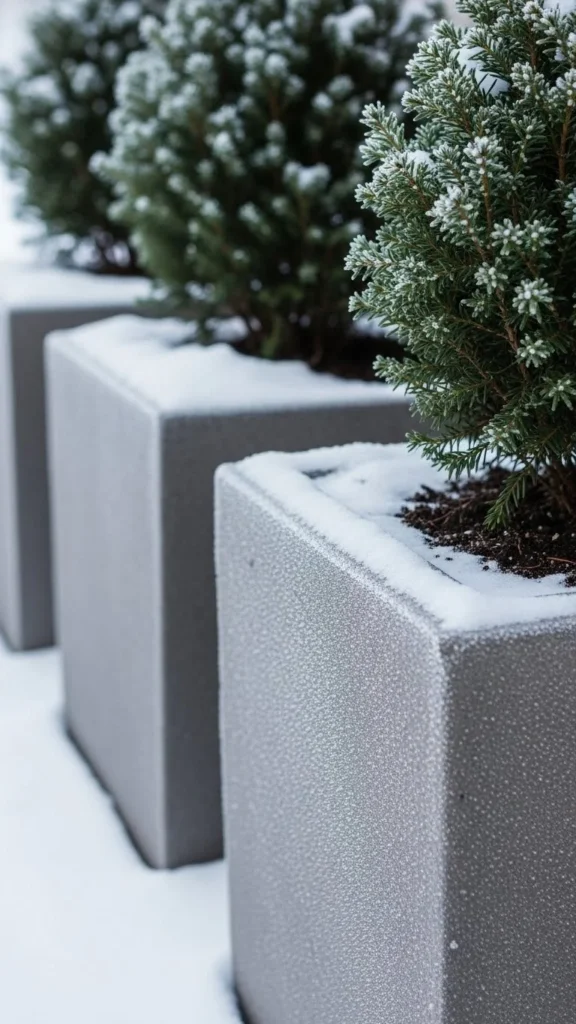
Stone composite planters are built for freezing weather. Their dense walls slow temperature swings, which helps protect roots. These planters work well near doors, steps, and walkways where snow piles up.
They feel heavy, so wind is rarely an issue. Many budget versions mimic natural stone without the cost. Look for ones with drainage holes to prevent ice buildup inside.
A simple tip is to raise the planter slightly using pot feet or bricks. This keeps melting snow from pooling underneath. For extra protection, line the inside with bubble wrap before adding soil.
Stone composite styles pair nicely with boxwood, pine, or winter grasses. Even when plants stay green, the container keeps its shape through repeated freeze cycles.
2. Reinforced Fiberglass Outdoor Pots
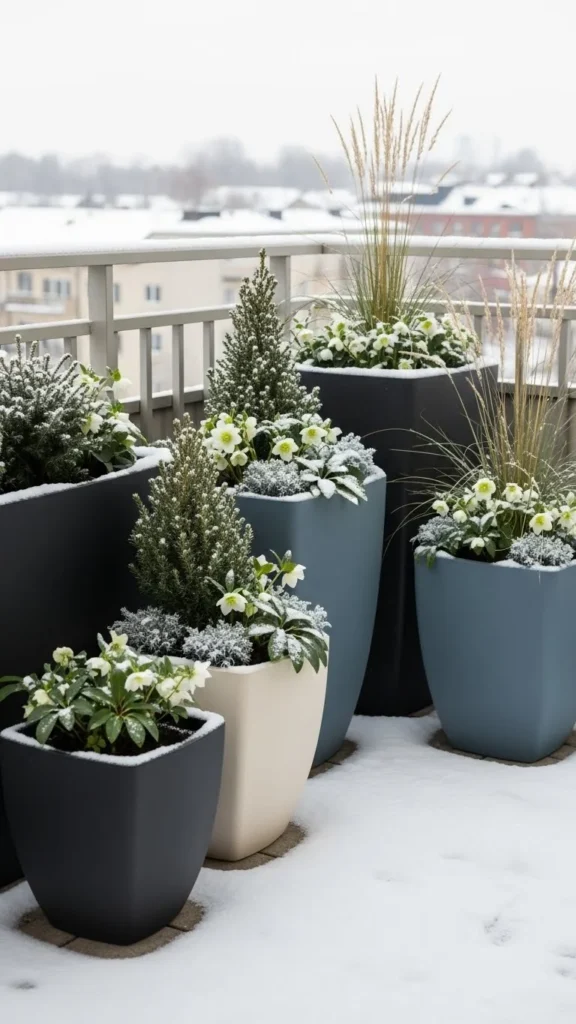
Fiberglass planters perform well in snow because they resist cracking. Unlike basic plastic, reinforced fiberglass keeps its form during temperature drops.
These planters are lighter than stone, making them easy to move before storms. That flexibility helps renters or small-space gardeners. Many designs come in tall or slim shapes that fit tight corners.
For added stability, place a few stones at the bottom before soil. This adds weight without harming drainage. Fiberglass also handles moisture well, reducing surface damage from melting snow.
Use them for hardy shrubs or winter arrangements with branches and pine cuttings. They look clean and modern while staying reliable through cold months.
3. Frost-Resistant Glazed Ceramic Planters
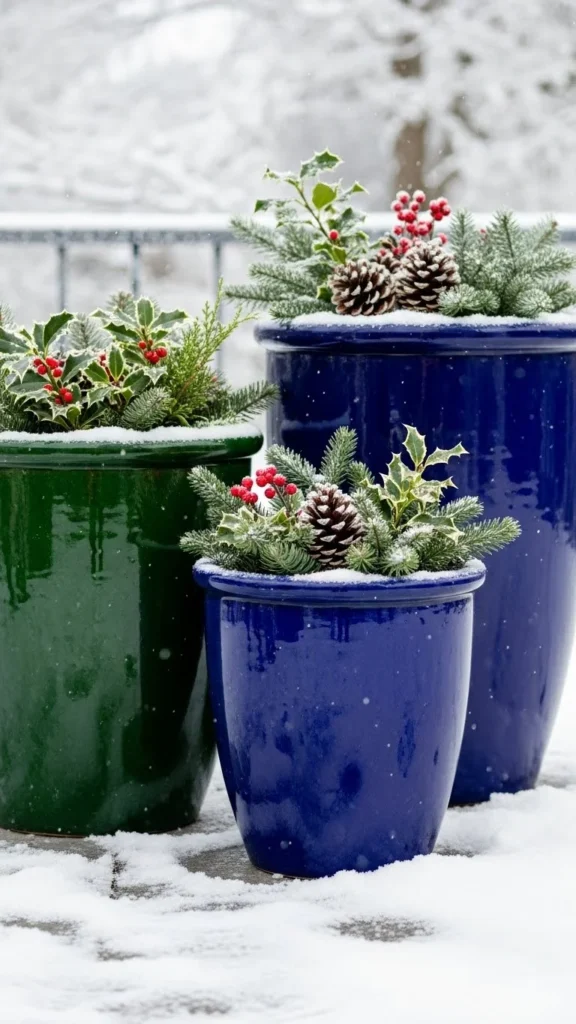
Not all ceramic planters survive winter, but frost-rated glazed versions do. These are fired at higher temperatures, making them less likely to crack.
They add color and shine when gardens look muted. Deep blues, greens, or charcoal finishes work well in snow.
Keep these planters slightly elevated. Avoid placing them directly on frozen ground. Drainage holes are key, so water does not freeze inside.
A budget idea is to use fewer large glazed planters instead of many small ones. Larger pots hold temperature better and reduce risk.
4. Heavy-Duty Resin Planters
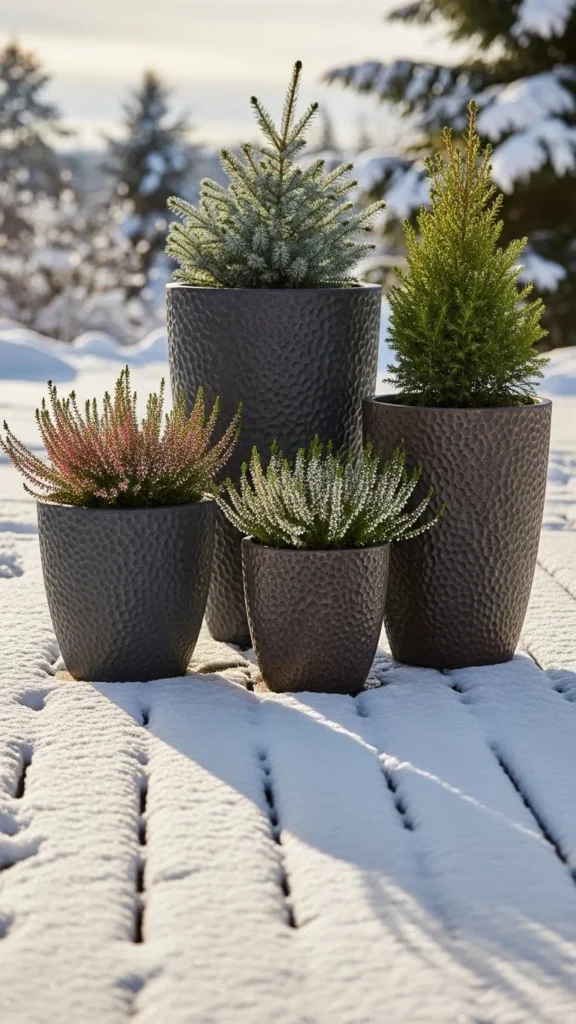
Resin planters built for outdoor use resist splitting during freeze cycles. They mimic stone or concrete but weigh much less.
These planters work well for porches and decks. Many have UV protection, which helps prevent surface wear from winter sun.
Add foam insulation inside for extra root protection. Resin handles moisture better than clay, making it easier to maintain.
Affordable sets often come in neutral colors, making them easy to reuse year after year.
5. Concrete Cylinder Planters
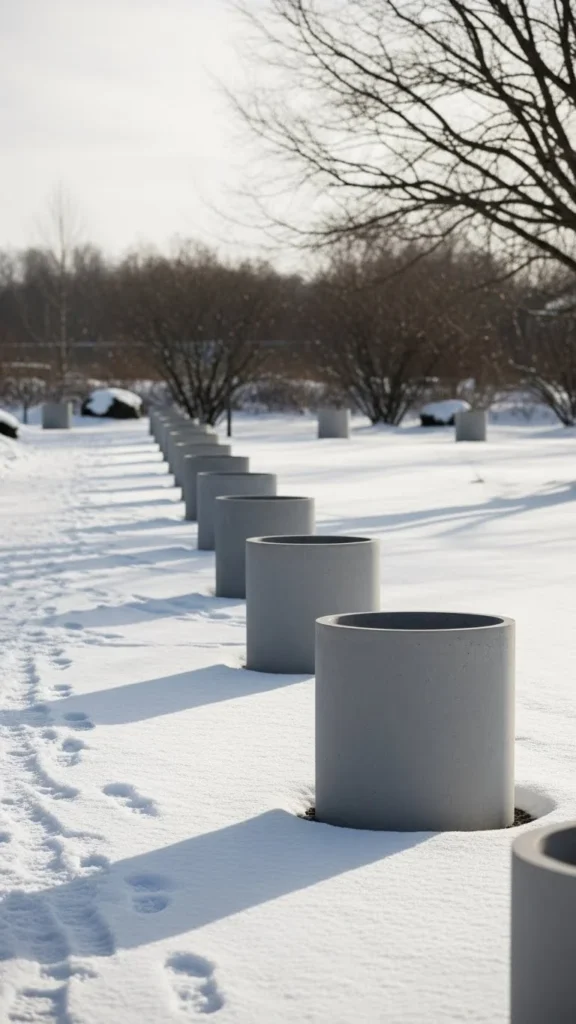
Concrete planters are classic winter choices. Their mass helps them stay stable in wind and snow.
They suit entryways and garden borders. Look for air-entrained concrete, which handles freezing better.
To avoid cracking, keep soil levels a few inches below the rim. This leaves room for ice expansion.
Concrete pairs well with evergreens and winter branches, adding structure even when plants are simple.
6. Double-Walled Insulated Planters
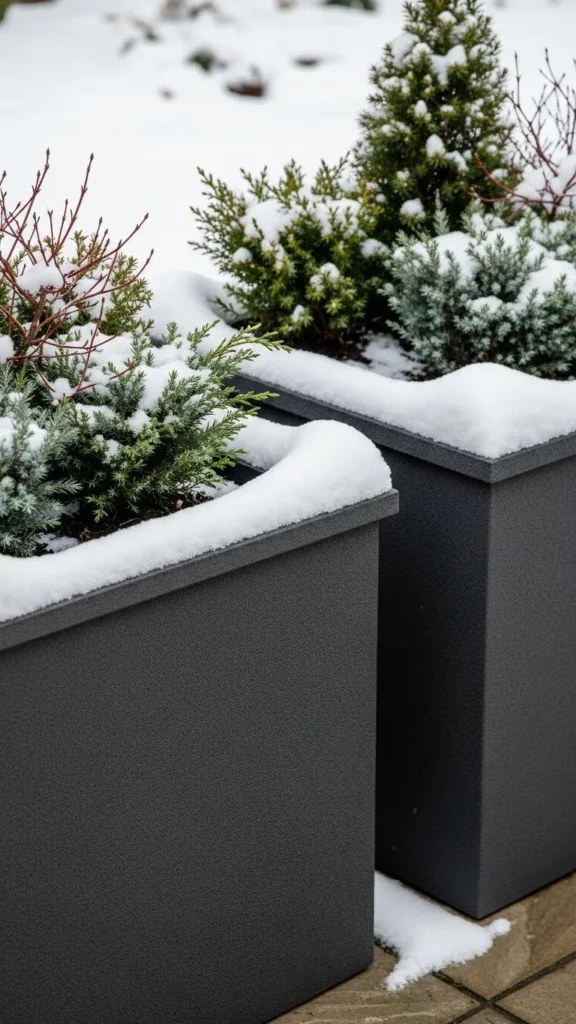
Double-walled planters trap air between layers. This slows temperature changes around roots.
They are helpful in regions with frequent freeze-thaw cycles. Many designs look sleek and modern.
You can add mulch inside to increase insulation. This keeps soil stable without special tools.
These planters cost more upfront but last for many winters.
7. Outdoor Metal Planters with Powder Coating
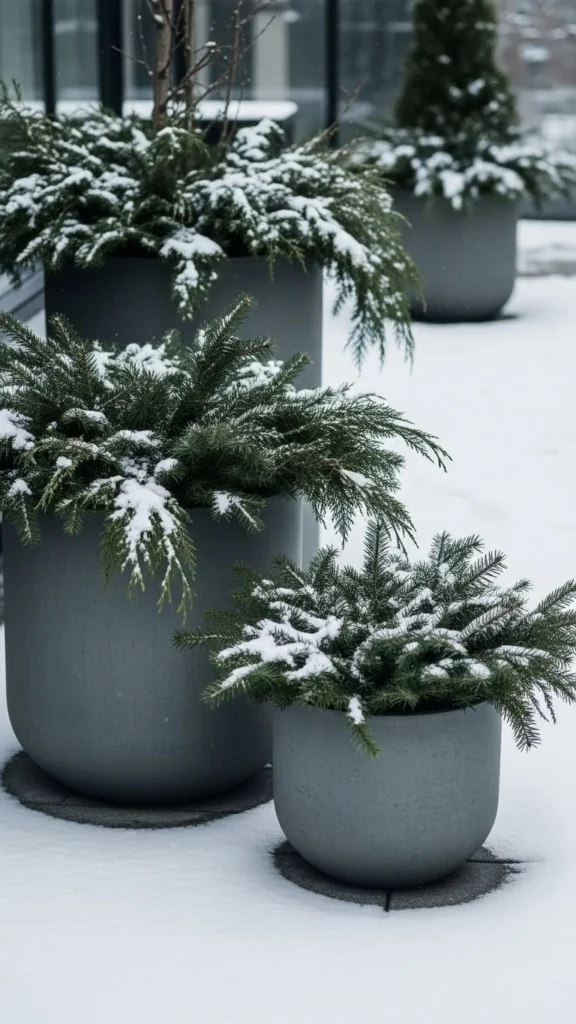
Metal planters with proper coating resist rust and surface damage. Steel and aluminum versions work best.
They heat and cool quickly, so insulation inside matters. Line them with foam sheets or coco liners.
Metal styles suit modern spaces and city patios. Choose darker finishes to hide winter marks.
8. Thick Plastic Planters Rated for Cold
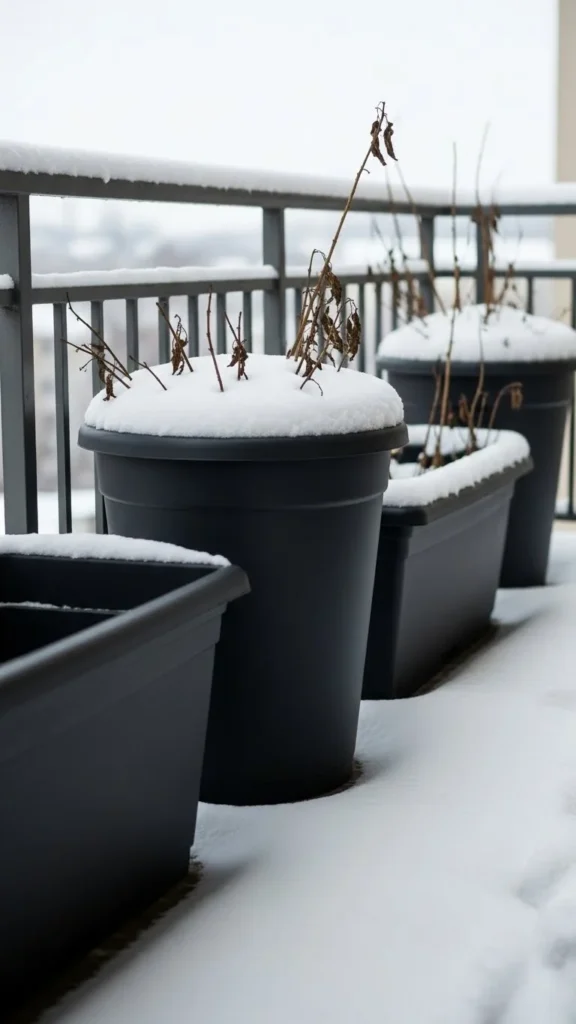
Not all plastic fails in winter. Look for thick, outdoor-rated versions labeled for freezing weather.
These planters are affordable and easy to move. They work well for seasonal displays.
Group them near walls for added warmth. Add mulch to protect roots.
They are ideal for beginners testing winter planting.
9. Cast Stone Urn Planters
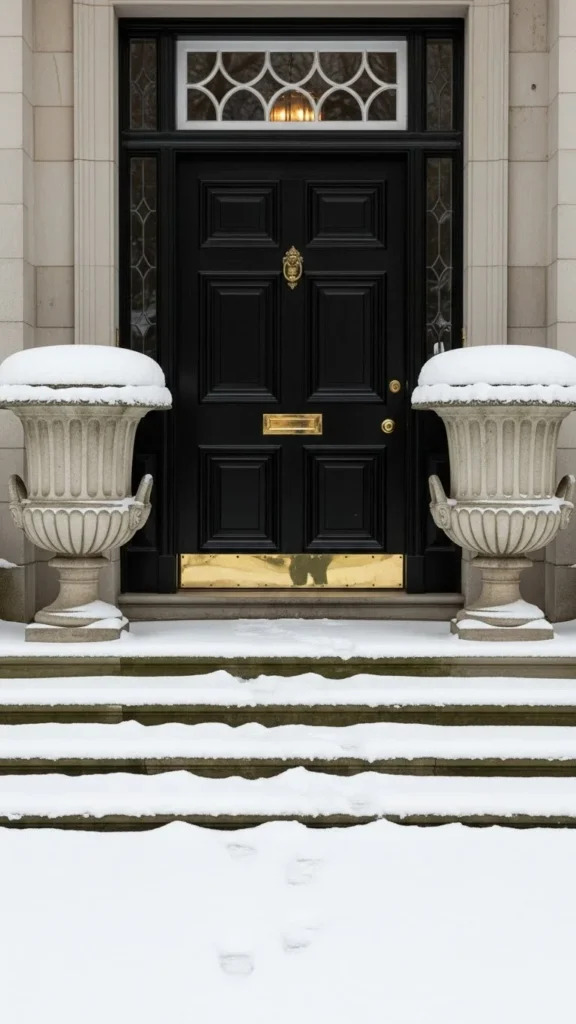
Cast stone urns add timeless appeal. They handle cold well when properly made.
Place them in sheltered spots. Elevation helps prevent water buildup.
They look great with evergreen balls or winter twigs.
10. Rubberized Outdoor Planters
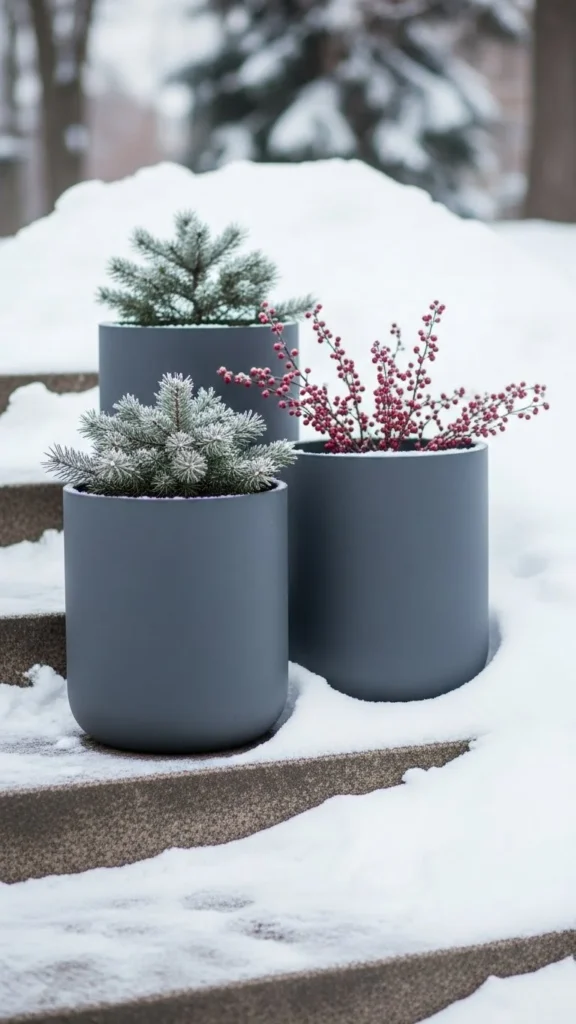
Rubber planters flex slightly, reducing cracking risk. They resist chips from ice.
They are lighter than stone and easy to reposition.
These planters suit busy walkways and high-traffic areas.
11. Wood Composite Planters
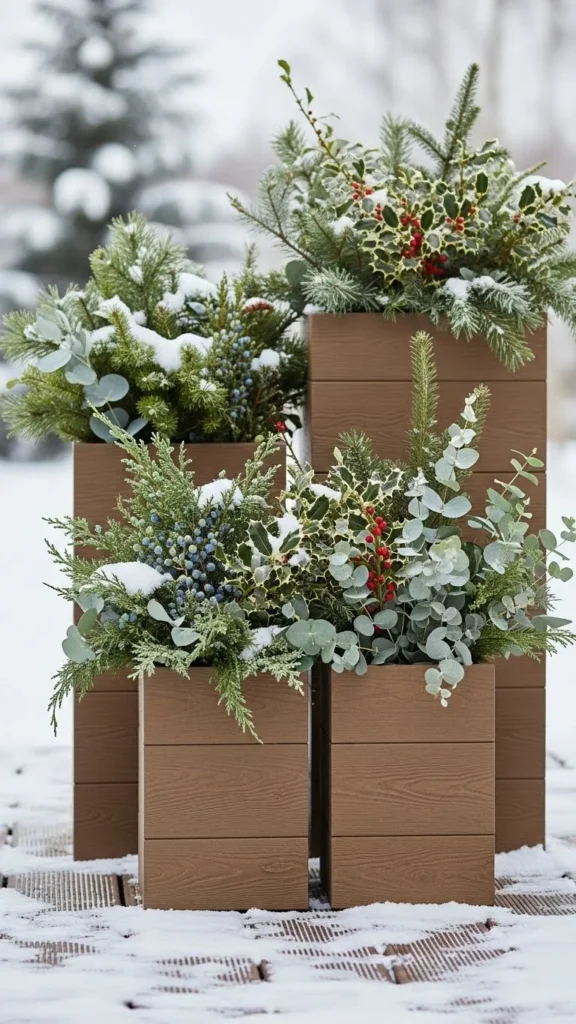
Wood composite blends fibers with resin, reducing splitting. It handles moisture better than raw wood.
Use liners inside to protect soil. Elevate slightly for drainage.
These planters suit rustic or modern spaces alike.
12. Large Terracotta with Frost Rating
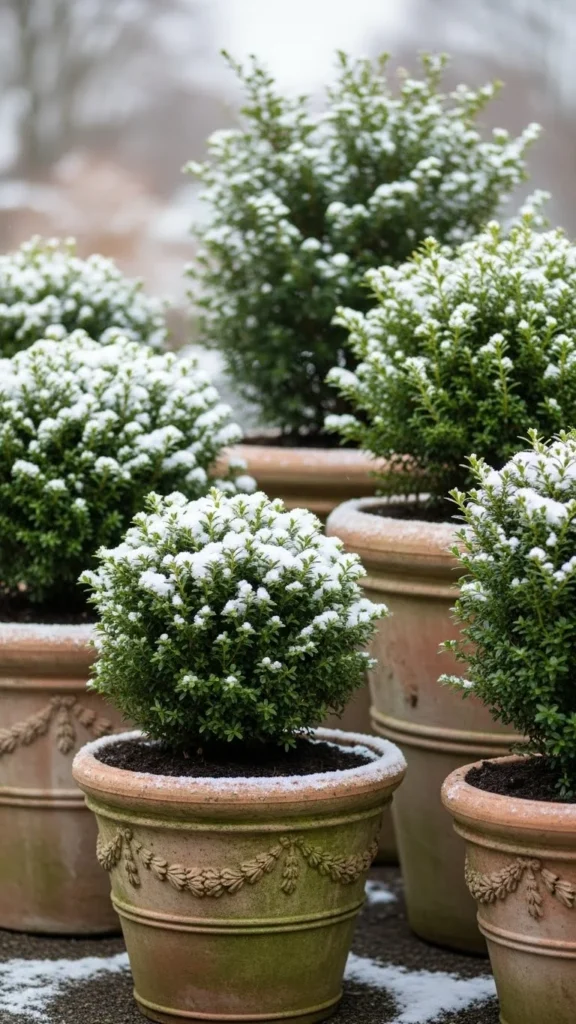
Standard terracotta cracks, but frost-rated versions perform better. Thickness matters.
Keep them dry and raised. Use simple insulation inside.
They bring warmth to winter scenes.
13. Stone Trough Planters
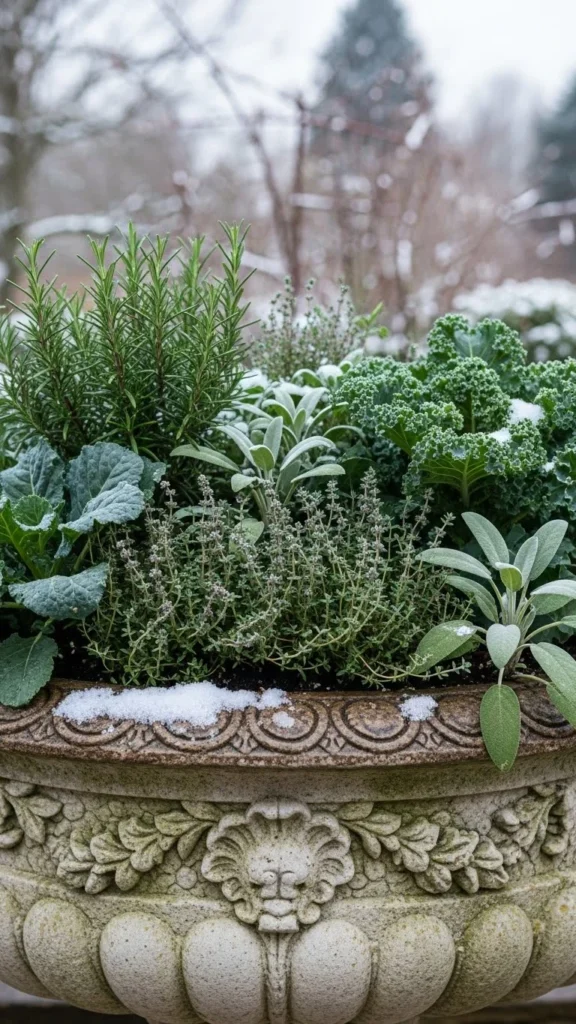
Stone troughs are thick and sturdy. They resist cold damage well.
They work for low-growing plants. Place them along paths.
Their weight keeps them steady all season.
14. Recycled Plastic Composite Pots
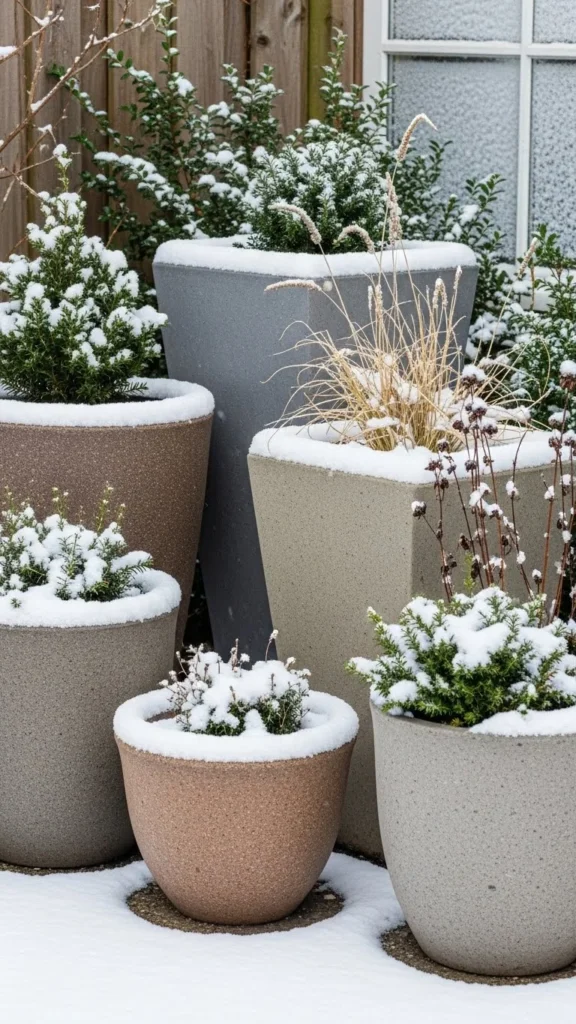
Recycled composite planters handle cold while staying lightweight.
They resist moisture and surface wear. Many are budget-friendly.
Use them for seasonal groupings.
15. Insulated Window Box Planters
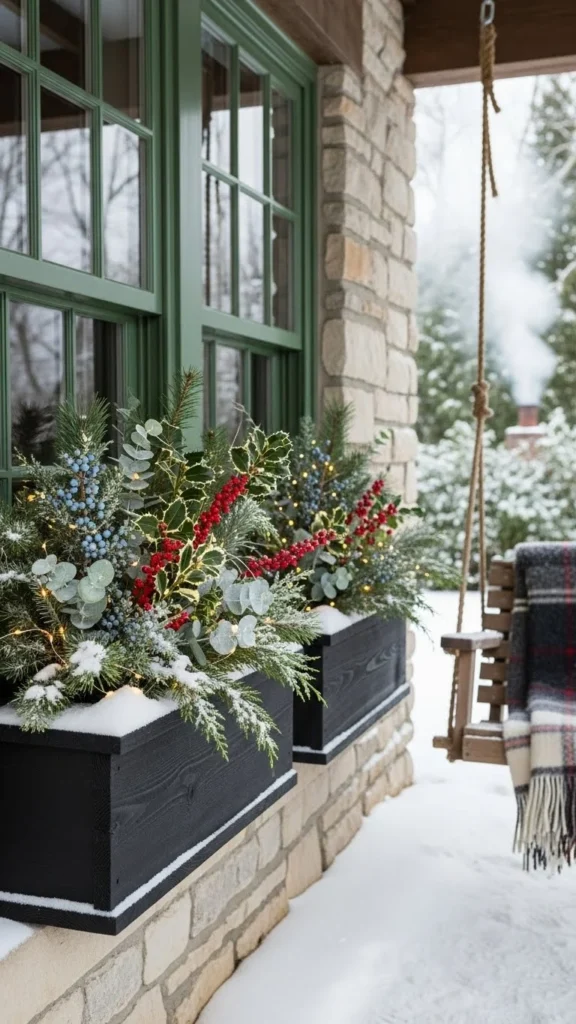
Insulated boxes protect roots near windows.
Line them well and avoid overwatering.
They add charm without heavy lifting.
16. Deep Root Protection Planters
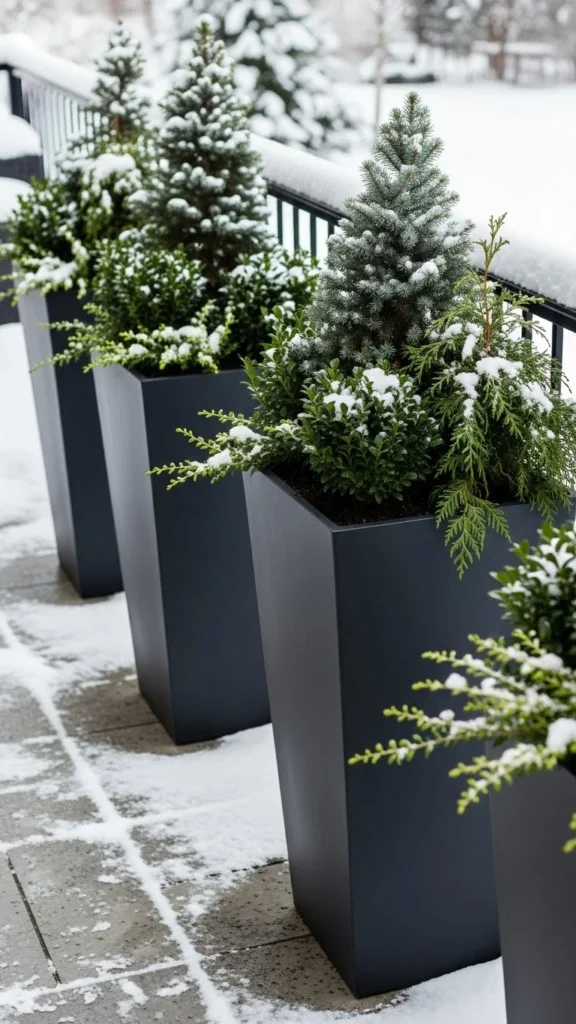
Deeper planters protect roots from freezing air.
They work well for shrubs and grasses.
Depth adds stability and insulation.
17. Frost-Safe Hanging Planters
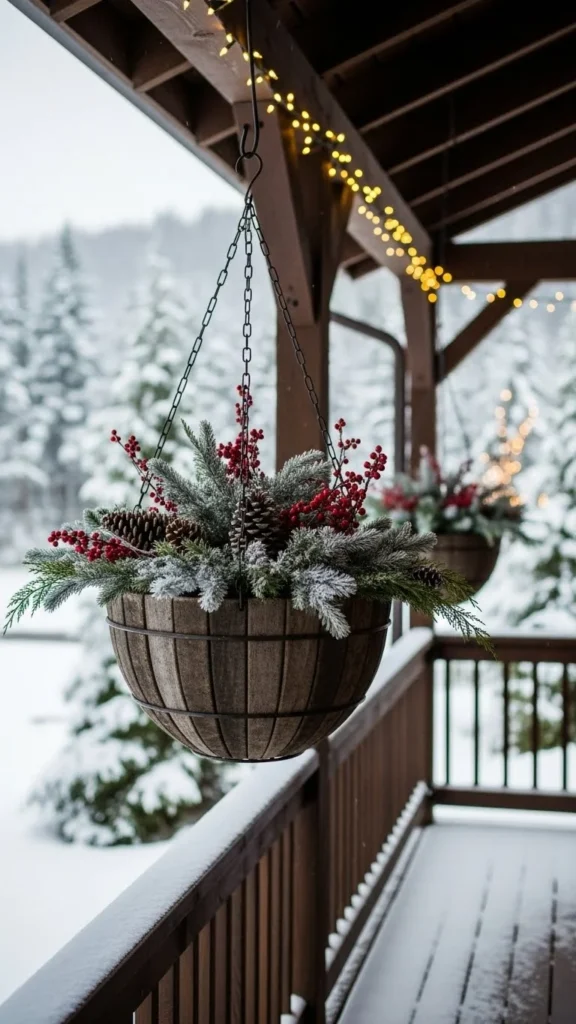
Hanging planters need cold-rated materials.
Use sheltered locations. Keep soil light.
They add height without ground contact.
18. Tall Entryway Column Planters
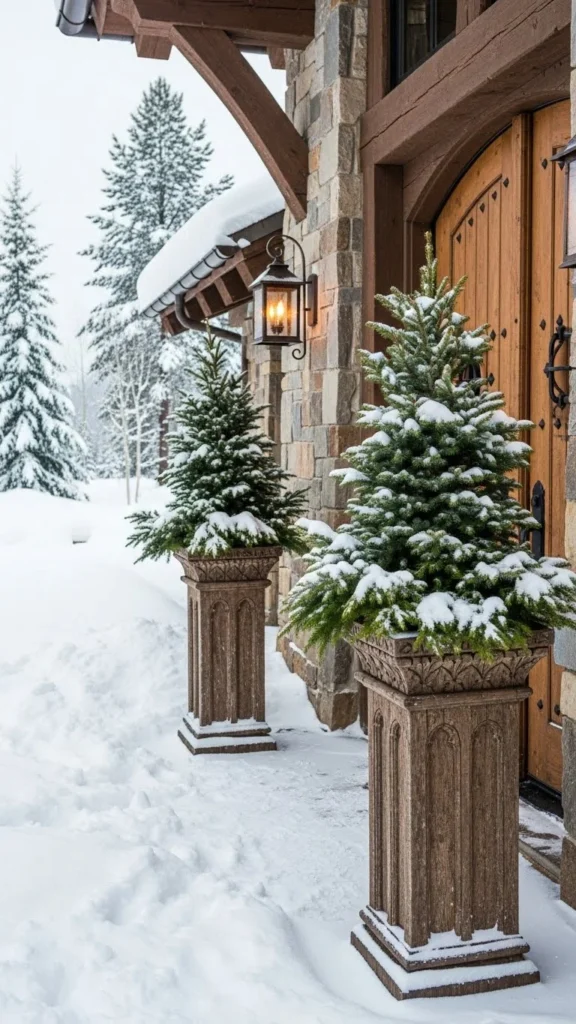
Column planters frame doors nicely.
Choose thick walls and drainage.
They stay upright during storms.
19. Outdoor Planters with Built-In Feet
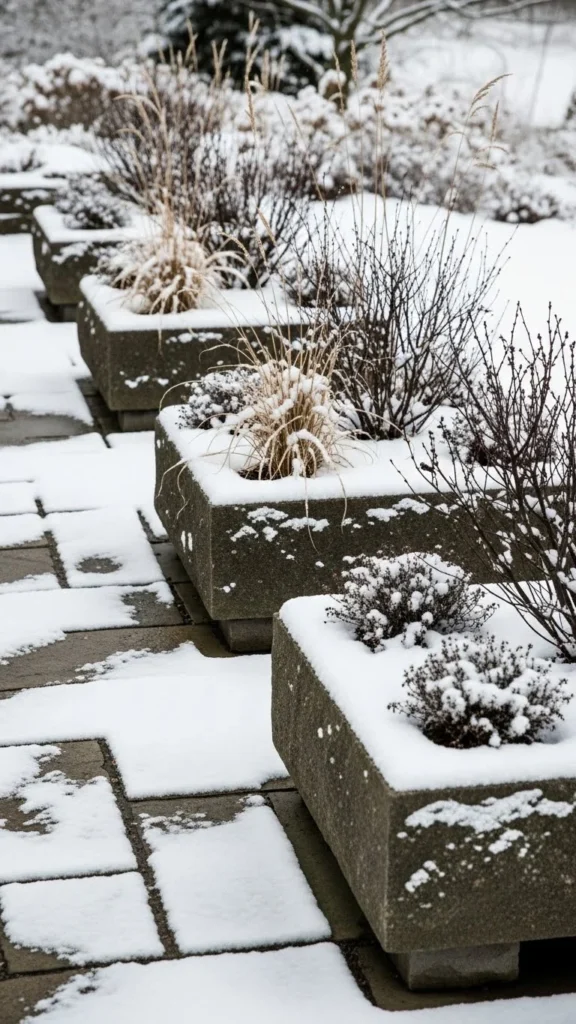
Built-in feet improve drainage.
They reduce ice contact underneath.
Simple design, strong performance.
20. Modular Stackable Winter Planters
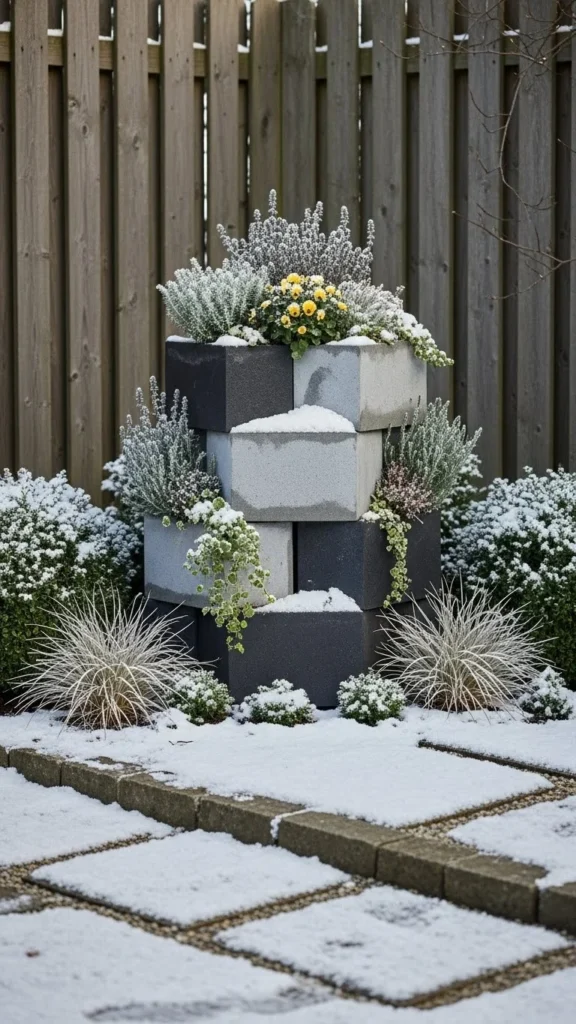
Stackable planters let you adjust height.
Use cold-rated materials only.
They suit small spaces.
21. Frost-Ready Balcony Rail Planters
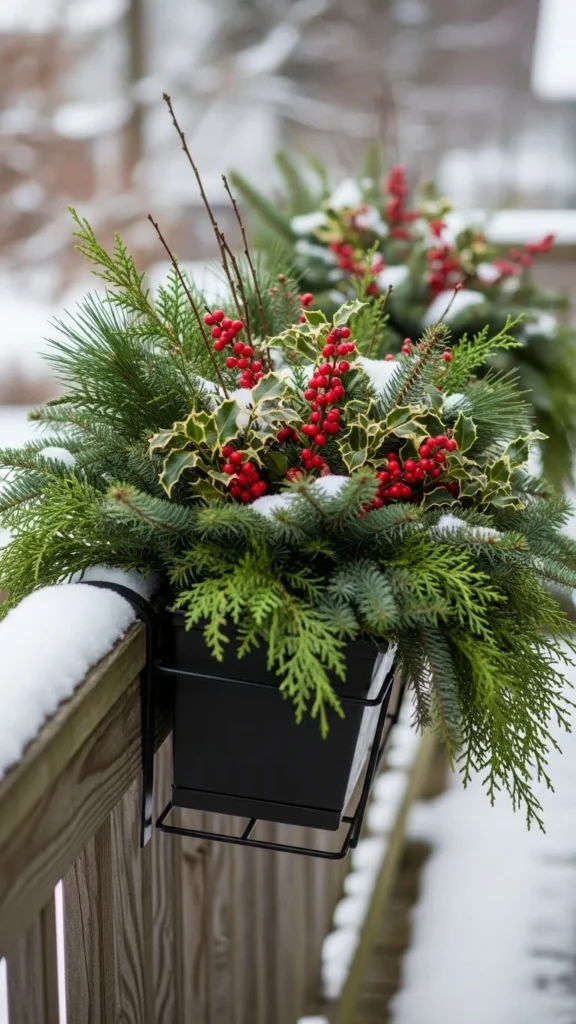
Rail planters need reinforced hooks.
Choose thick materials.
They save floor space.
22. Square Concrete Cube Planters
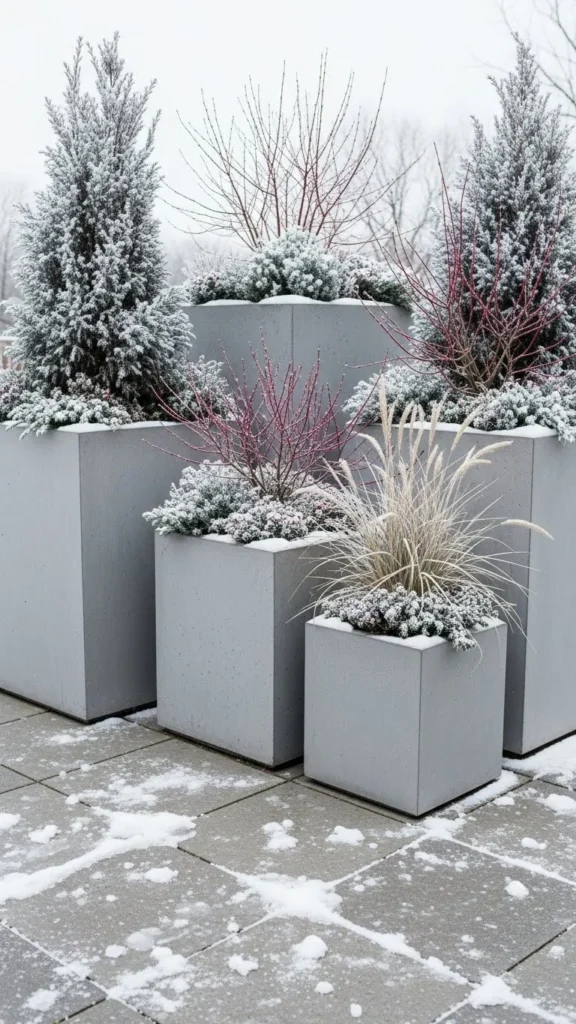
Concrete cubes feel modern.
They handle cold well.
Group them for impact.
23. Resin-Stone Hybrid Planters
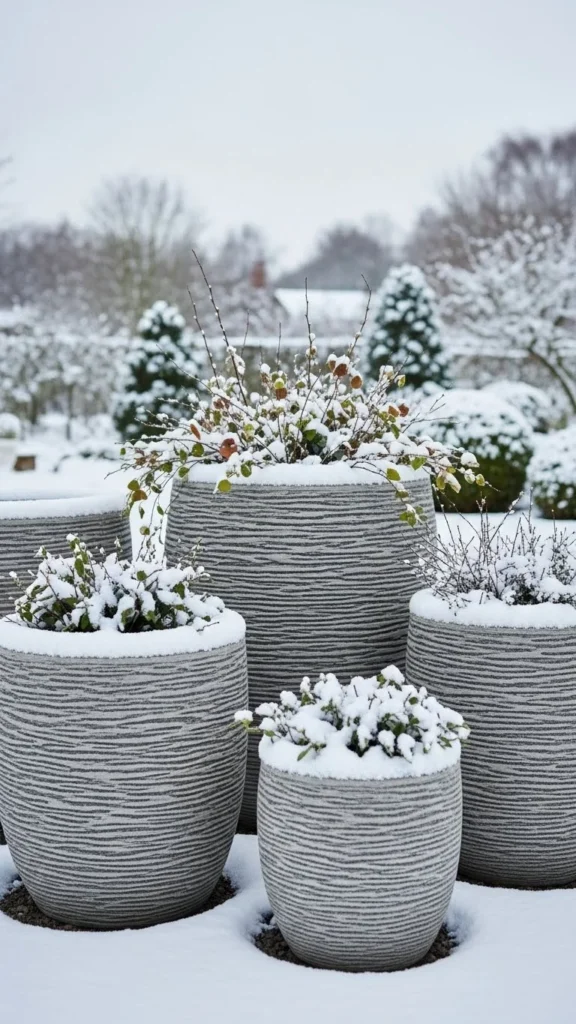
Hybrid planters mix strength and light weight.
They resist cracks.
Good for long-term use.
24. Heavy Outdoor Planters with Drainage Inserts
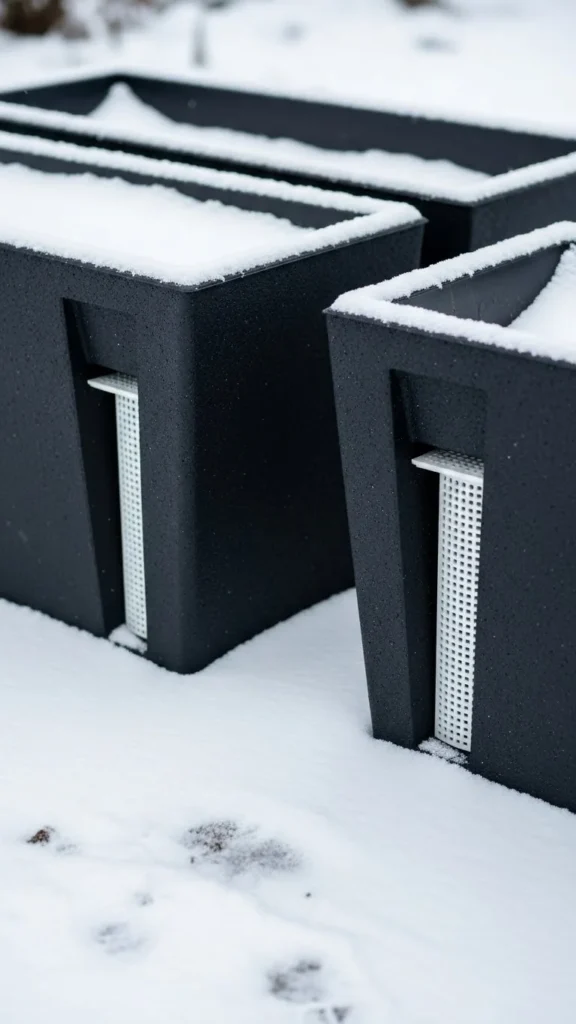
Drainage inserts prevent ice damage.
They protect roots from standing water.
A smart upgrade for winter planting.
Conclusion
Snow-ready planters make winter planting simpler and more reliable. By choosing materials built for freezing weather and using small setup tricks like elevation and insulation, outdoor spaces stay structured even during cold months. Pick styles that match your space, focus on durability, and reuse them year after year for steady winter appeal.
Leave a Reply