

Winter can feel quiet in the garden, but it doesn’t have to be empty. With the right plants, your outdoor space can become a lively refuge filled with fluttering wings and cheerful bird calls—even on the coldest days. Birds are actively searching for food, shelter, and safety in winter, and your garden can offer all three naturally.
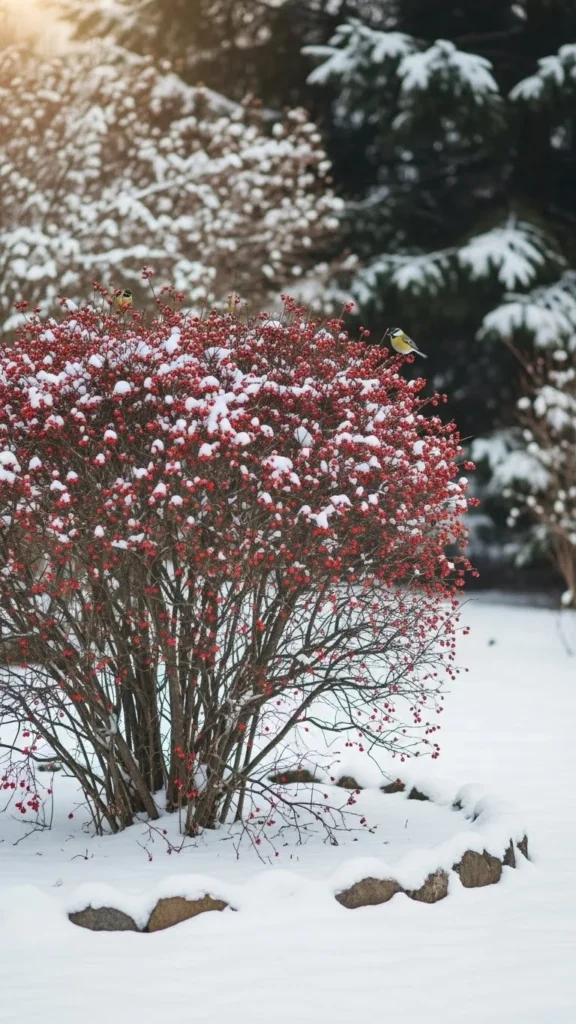
Below is a simple, plant-focused guide to help you attract birds all winter long, no feeders required.
Why Birds Need Plant-Based Gardens in Winter
Winter is tough for birds. Natural food sources disappear, shelter becomes scarce, and cold winds drain energy fast. Gardens filled with the right plants act as mini survival zones.
Plant-based bird gardens provide:
- Natural food like berries, seeds, and dried flower heads
- Safe cover from wind, snow, and predators
- Resting spots near reliable nourishment
The bonus? These gardens look beautiful while supporting local wildlife.
Choose Berry-Producing Plants Birds Love
Berries are one of the most important winter food sources for birds. Many shrubs hold onto their fruit well into the cold months, offering steady nutrition.
Great winter berry plants include:
- Holly (especially female plants)
- Winterberry
- Viburnum
- Beautyberry
- Juniper
Birds like robins, cedar waxwings, and thrushes rely heavily on these berries when insects are gone.
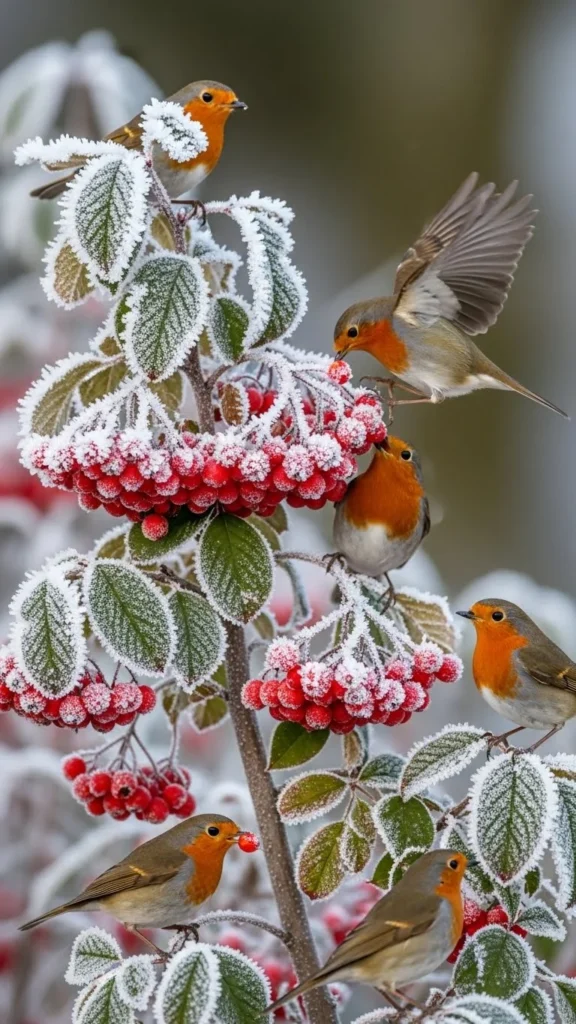
Tip: Plant several berry shrubs together. Larger clusters are easier for birds to find and safer to feed in.
Leave Seed Heads Standing Through Winter
It’s tempting to clean up the garden in fall, but leaving seed heads standing is one of the easiest ways to attract birds.
Birds love:
- Coneflowers
- Black-eyed Susans
- Sunflowers
- Ornamental grasses
These plants provide:
- High-energy seeds
- Natural perches
- Texture and beauty in winter beds
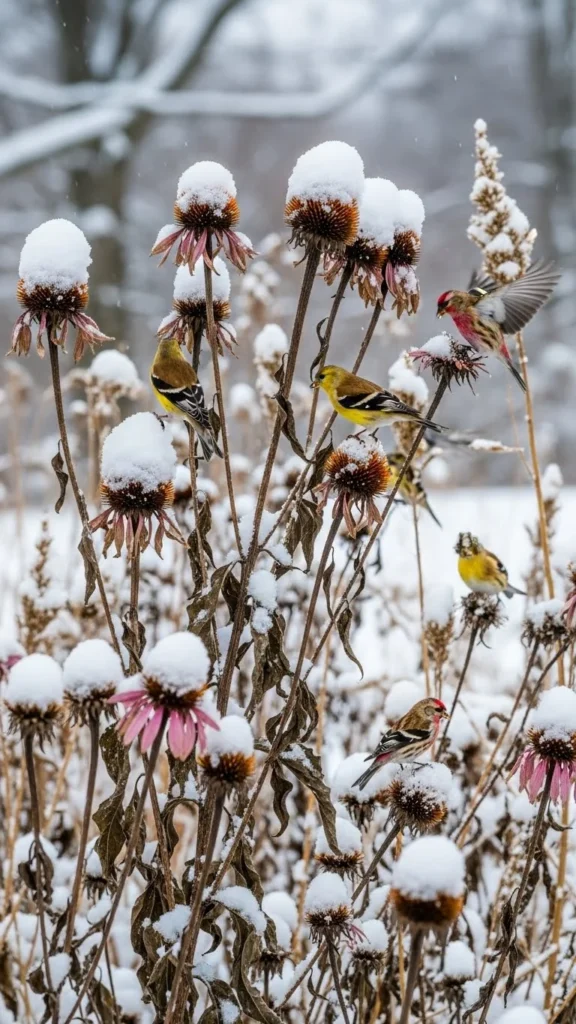
Quick win: Skip fall deadheading. Let nature do the work for you.
Add Evergreen Plants for Shelter and Safety
Food alone isn’t enough. Birds also need protection from freezing winds and predators. Evergreens create essential winter cover.
Best evergreen choices:
- Spruce and pine
- Cedar
- Boxwood
- Yew
- Holly
Evergreens offer:
- Dense shelter during storms
- Nighttime roosting spots
- Safe escape routes
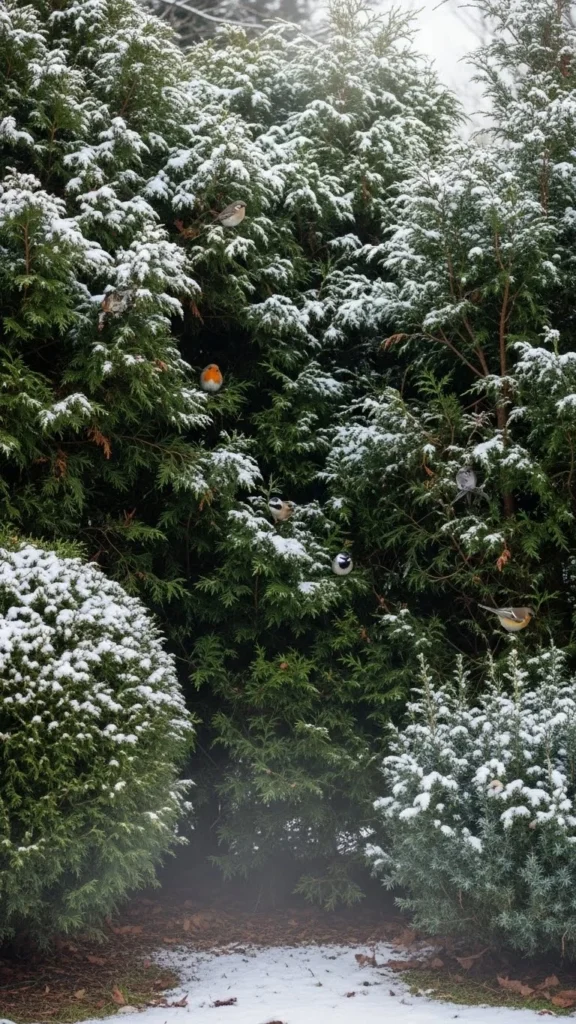
Design tip: Layer evergreens at different heights to create cozy hiding zones.
Plant Native Species for Maximum Impact
Native plants are perfectly adapted to local birds. They produce the right berries, seeds, and shelter birds recognize and rely on.
Benefits of native plants:
- Birds find food more easily
- Plants require less maintenance
- Stronger ecosystem support
If you’re unsure what’s native, start with:
- Native viburnums
- Local dogwoods
- Regional grasses
Even adding a few native plants can make a noticeable difference.
Create Plant Groupings Instead of Single Specimens
Birds feel safer when feeding in areas with nearby cover. Single plants in open spaces are less appealing.
Try this approach:
- Group shrubs in clusters of 3–5
- Place seed plants near evergreens
- Mix heights for layered protection
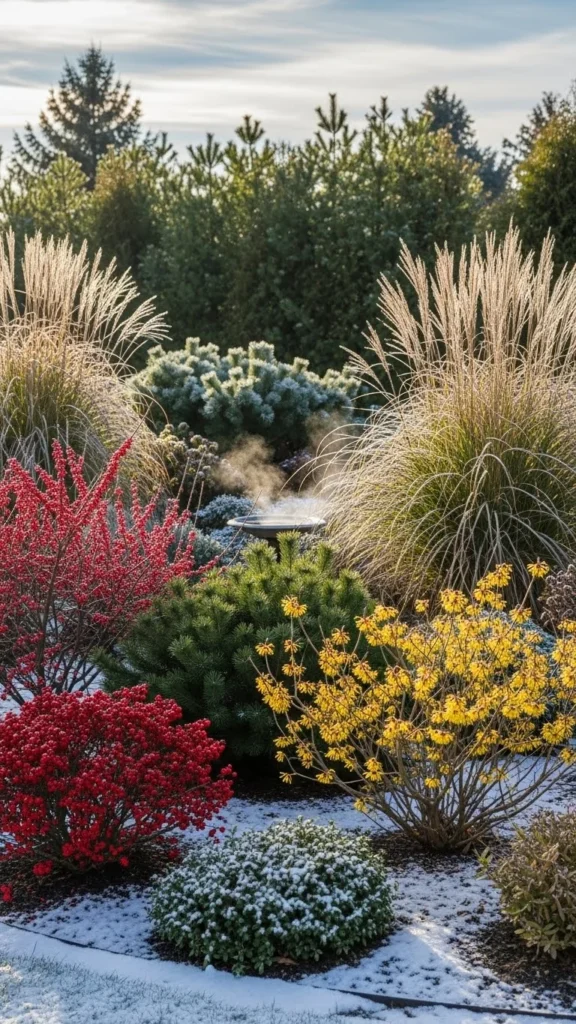
This layout encourages birds to stay longer and return often.
Provide Water Using Natural Garden Features
Water is often overlooked in winter, but birds still need it daily.
Plant-based water ideas:
- Shallow stone basins near shrubs
- Natural depressions lined with pebbles
- Sheltered spots that catch sunlight
Keep water shallow and refreshed when possible. Even a small unfrozen area can attract multiple species.
Avoid Chemicals and Over-Tidying
Birds depend on more than just berries and seeds. Tiny insects hiding in bark and leaf litter are critical winter snacks.
Let your garden work naturally:
- Leave some fallen leaves
- Avoid pesticides
- Keep bark and stems intact
A slightly “messy” winter garden is a bird-friendly one.
Final Takeaway: Let Plants Do the Work
Attracting birds in winter doesn’t require complicated setups. By choosing the right plants and letting your garden stay natural, you create a welcoming space birds can rely on when they need it most.
Start with just one or two changes—add a berry shrub, leave seed heads standing, or plant an evergreen—and you’ll notice more life almost immediately.
Save this guide for later and let your winter garden come alive with birds!

Leave a Reply