

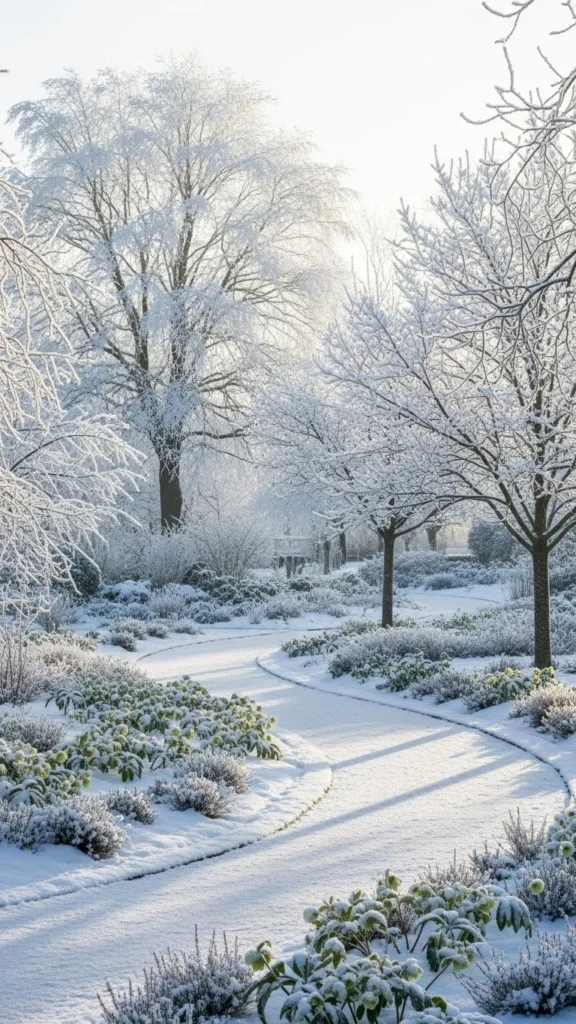
Snow-covered gardens have a quiet beauty that feels calm and almost otherworldly. With the right layout, textures, and simple accents, winter landscapes can feel intentional rather than empty. This guide focuses on snow garden designs that feel soft, dreamy, and achievable, even on a modest budget. Each idea below shows how small choices—paths, plants, and light—can shape a peaceful winter garden you’ll enjoy all season.
1. Curved Snow-Covered Pathways
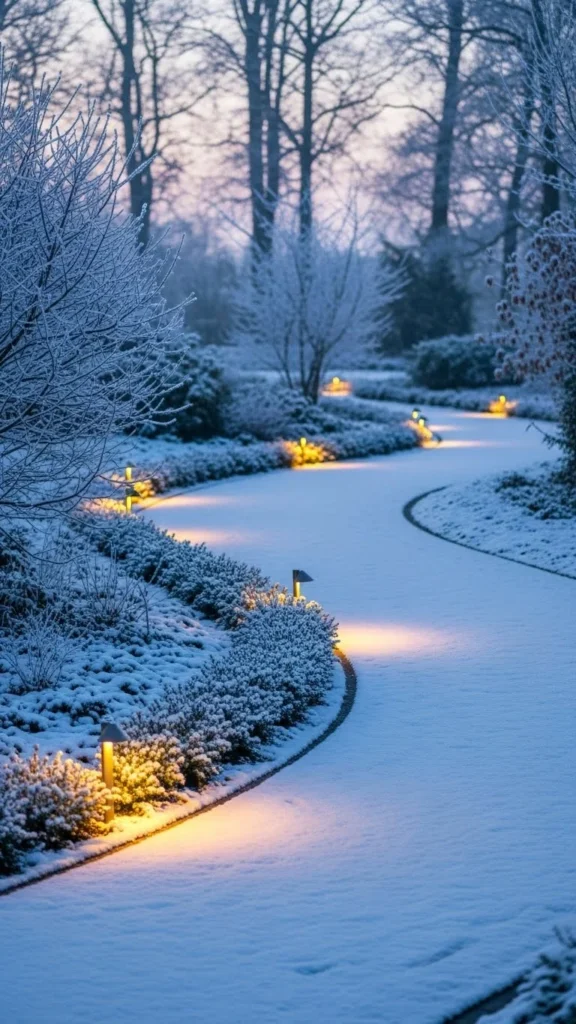
Curved paths feel calm and natural when snow settles over them. Straight lines can look harsh in winter, while curves soften the space. You don’t need stone or concrete. Gravel paths or packed soil work just as well once covered in snow. Use simple edging like reclaimed bricks or wood to guide the shape.
A budget-friendly tip is to outline the path with solar lights spaced wide apart. Even under snow, the glow still shows the curve. Keep the path narrow to reduce shoveling. The snow itself becomes part of the design.
Curves also slow movement. That encourages you to pause and notice the garden. Add a bench nearby for quiet moments. Snow-covered paths feel peaceful without extra decoration. Let the shape do the work.
2. Frosted Evergreen Layers
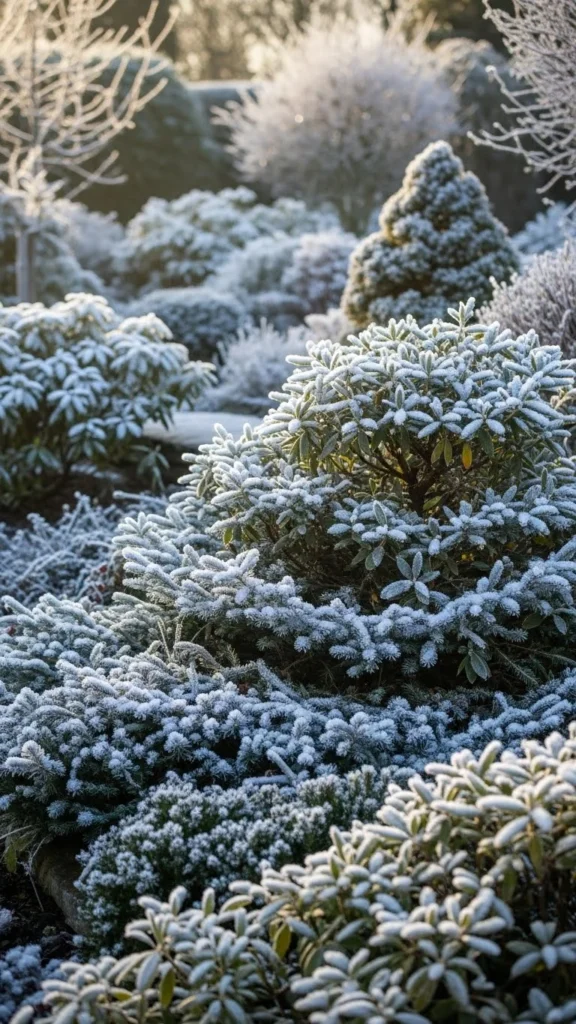
Evergreens form the backbone of winter gardens. Layering different heights creates depth when everything turns white. Combine tall pines, medium shrubs, and low ground cover. Snow highlights their shapes.
You don’t need rare plants. Common boxwood, juniper, or spruce work well. Space them loosely so snow can settle between branches. That spacing adds visual rhythm.
For small yards, use containers with dwarf evergreens. Place them in clusters rather than rows. The groupings feel natural and balanced. Snow resting on needles creates texture without effort.
This setup stays attractive all winter. No maintenance needed beyond brushing heavy snow after storms.
3. Snow-Framed Garden Arches
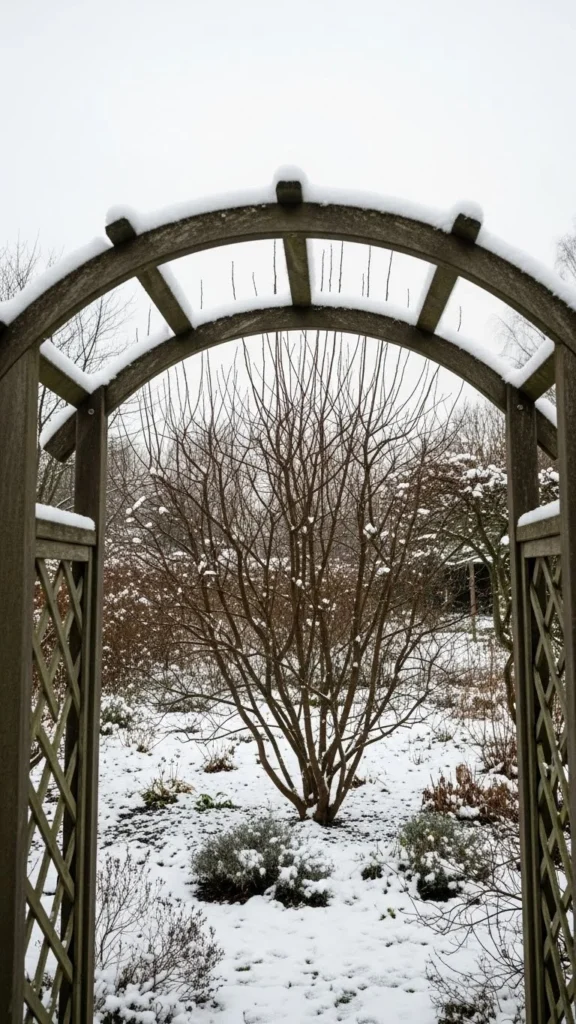
Garden arches look striking in winter. Snow outlines their shape and creates contrast. You don’t need climbing plants for this to work. Bare arches still add structure.
Build one from wood or metal. Keep the design simple. Avoid heavy decoration. Snow becomes the feature. Position it over a path or entry point.
If buying new isn’t an option, repurpose old trellis panels. Secure them firmly before winter. Snow adds weight, so stability matters.
Arches guide the eye and make the garden feel intentional, even when plants rest.
4. Minimalist Snow Stone Beds
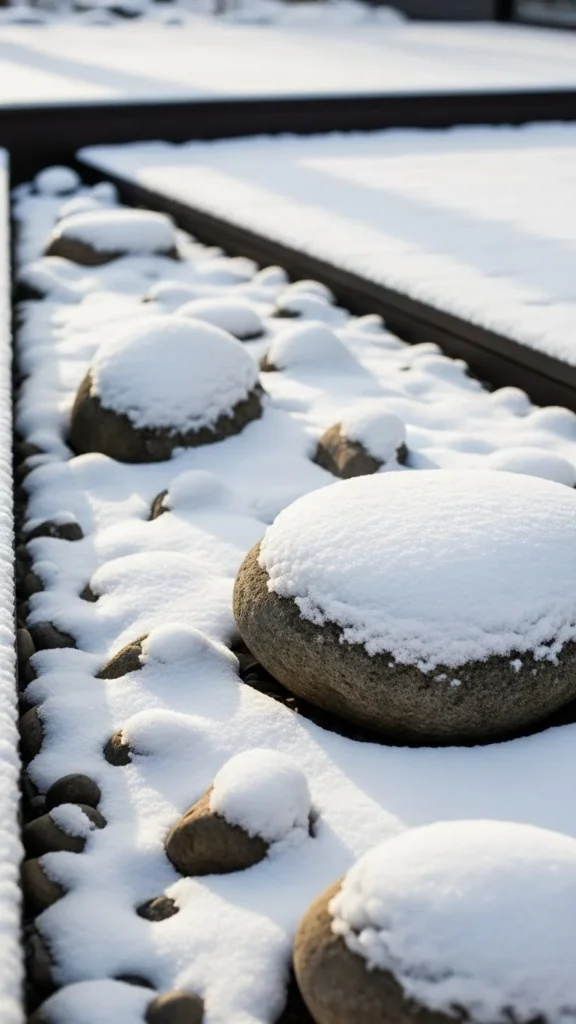
Stone beds shine in winter. Snow softens edges and reveals shapes. Choose stones with varied sizes for interest. River rocks or local stone keep costs down.
Avoid clutter. Fewer stones work better. Let snow fill the gaps naturally. This contrast between white and gray feels calm.
Place stone beds near walkways or seating areas. They define space without plants. Maintenance is simple. No trimming or watering.
Stone beds last for years and look better with each snowfall.
5. Bare Branch Focal Trees
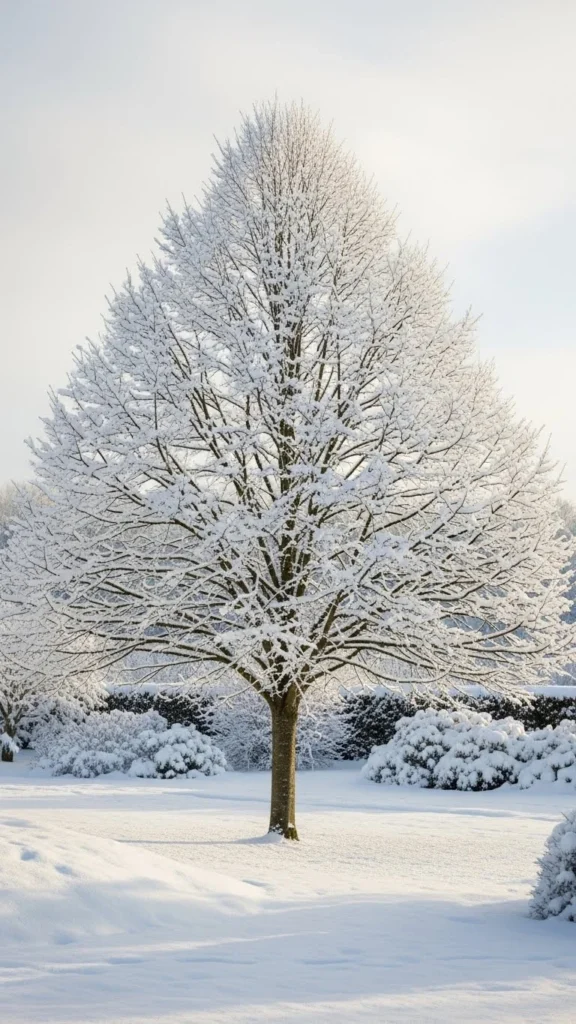
One well-placed tree can anchor the whole garden. Bare branches catch snow beautifully. Choose a tree with an interesting branch structure.
You don’t need a large specimen. Even small ornamental trees work. Prune lightly in fall to highlight shape.
Position the tree where it’s visible from indoors. Winter views matter. Snow outlines branches naturally, creating interest without effort.
This design costs little once planted and improves with time.
6. Snow-Dusted Raised Beds
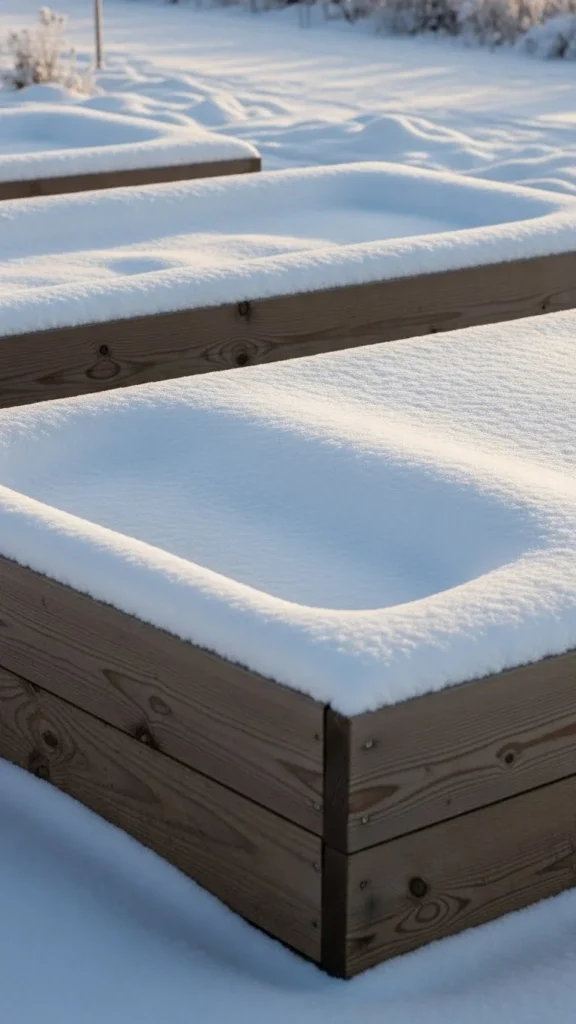
Raised beds don’t disappear in winter. Snow highlights their edges and layout. Use wood, brick, or stone for contrast.
Keep beds simple and aligned. The repetition looks calm under snow. Even empty beds add structure.
For budget builds, use untreated wood or reclaimed boards. Seal before winter to extend life.
Raised beds define the garden year-round.
7. Lantern-Lined Winter Walkways
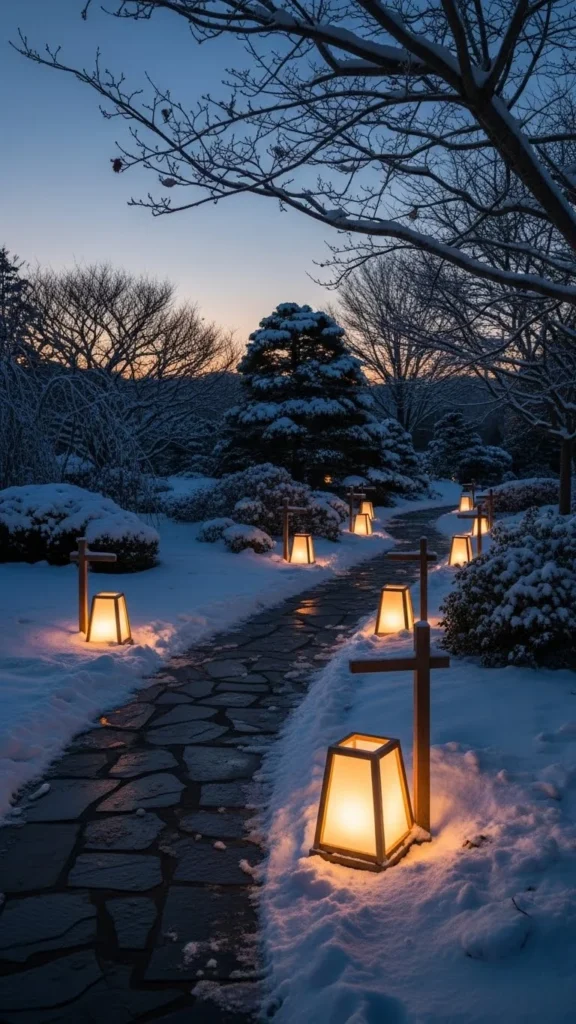
Lanterns add warmth to snow gardens. Use battery or solar options. Place them low along paths.
Choose simple designs. Metal or glass works well. Avoid bright light. Soft glow suits winter scenes.
You can use thrifted lanterns for savings. Group them in odd numbers for balance.
Light reflects on snow, making the garden feel welcoming.
8. Snow Garden Seating Corners
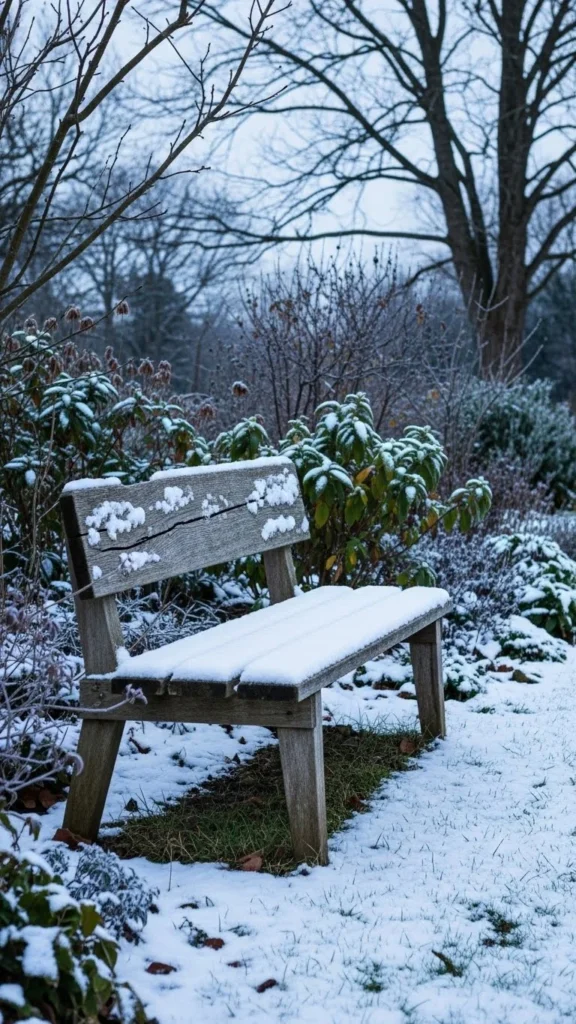
Benches look poetic in snow. Choose wood or metal designs. Place them near focal points.
No cushions needed. Snow softens the look. Position benches where snow falls gently, not under heavy branches.
Even unused seating adds charm. It suggests quiet moments ahead.
9. Frosted Ornamental Grasses
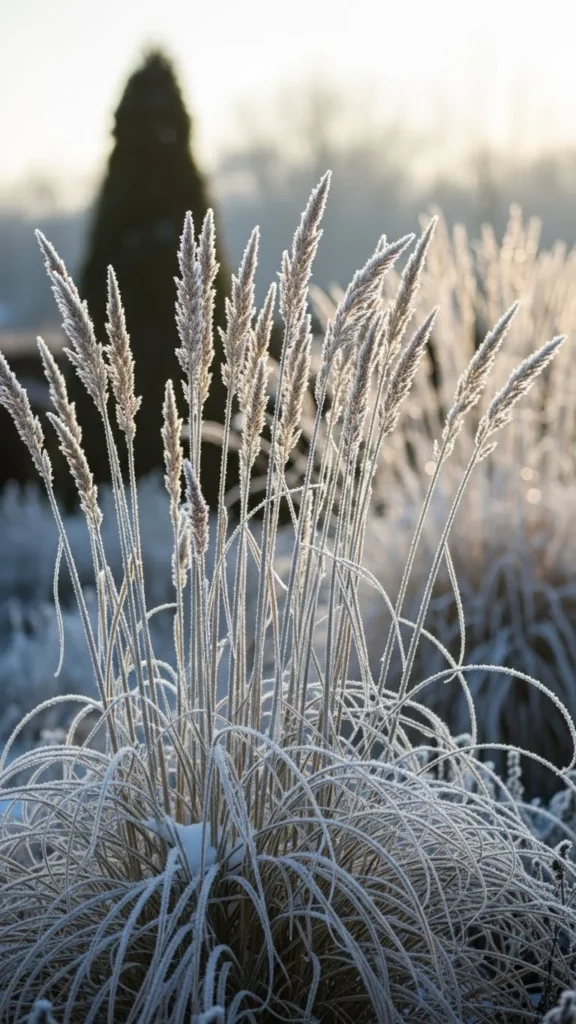
Grasses add movement even when frozen. Leave them standing through winter. Snow clings to blades beautifully.
Common grasses work fine. No special varieties required. Cut back in spring instead.
Plant in clusters for impact. Snow outlines their shape clearly.
Grasses bring texture without effort.
10. Snow-Capped Garden Sculptures
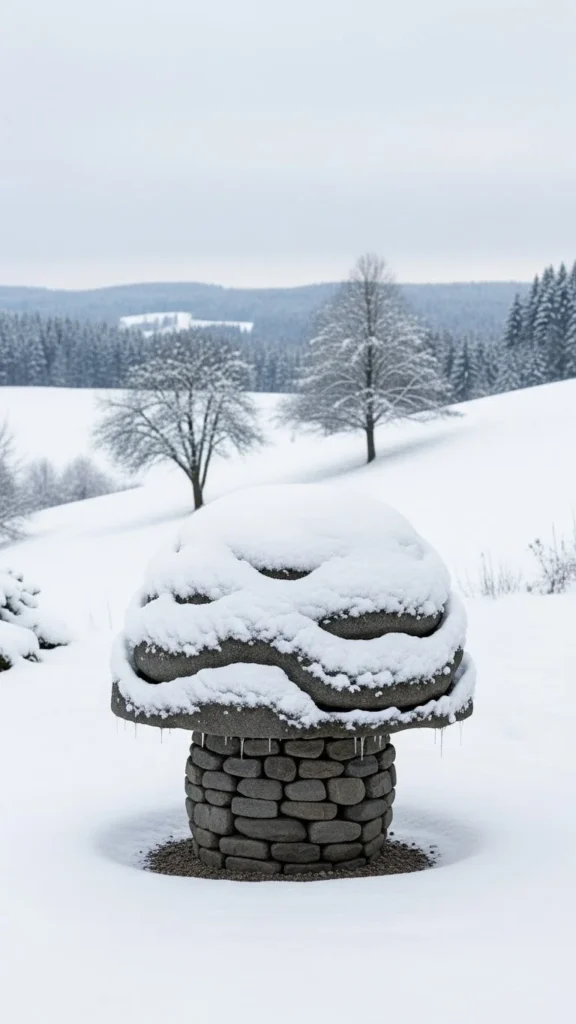
Sculptures gain character in snow. Choose simple shapes. Avoid busy details.
DIY options include stacked stones or concrete forms. Snow completes the look.
Place sculptures where snow gathers naturally. No decoration needed.
11. Winter Water Feature Silhouettes
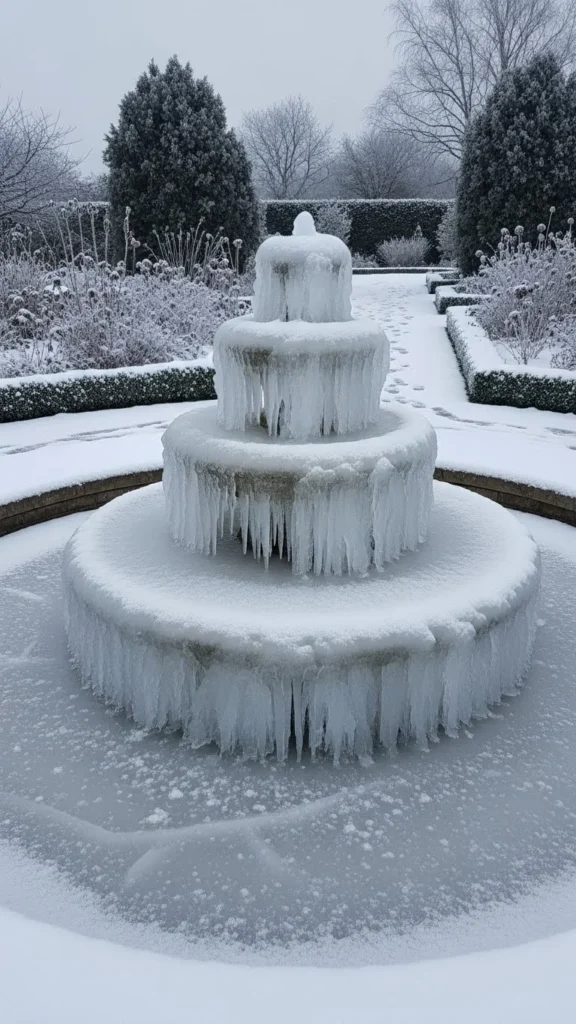
Frozen fountains or ponds add quiet beauty. Even when not running, they hold shape.
Drain before winter for safety. Let snow soften edges.
Simple basins work well. No complex systems needed.
12. Snow-Lined Garden Borders
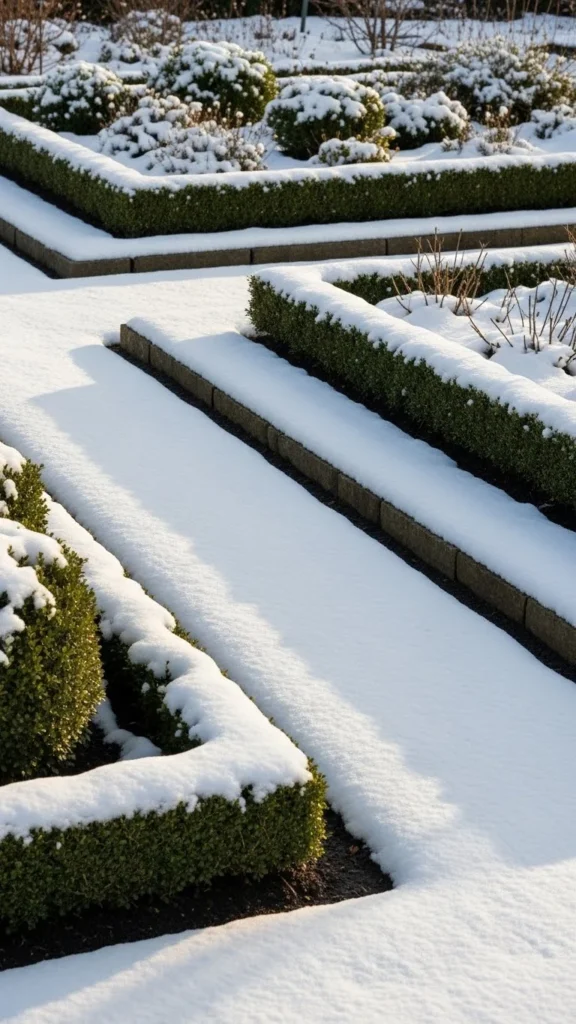
Borders guide the eye. Snow makes edges visible.
Use bricks, logs, or stones. Straight or curved both work.
Borders keep the garden readable even in winter.
13. Frosted Climbing Frames
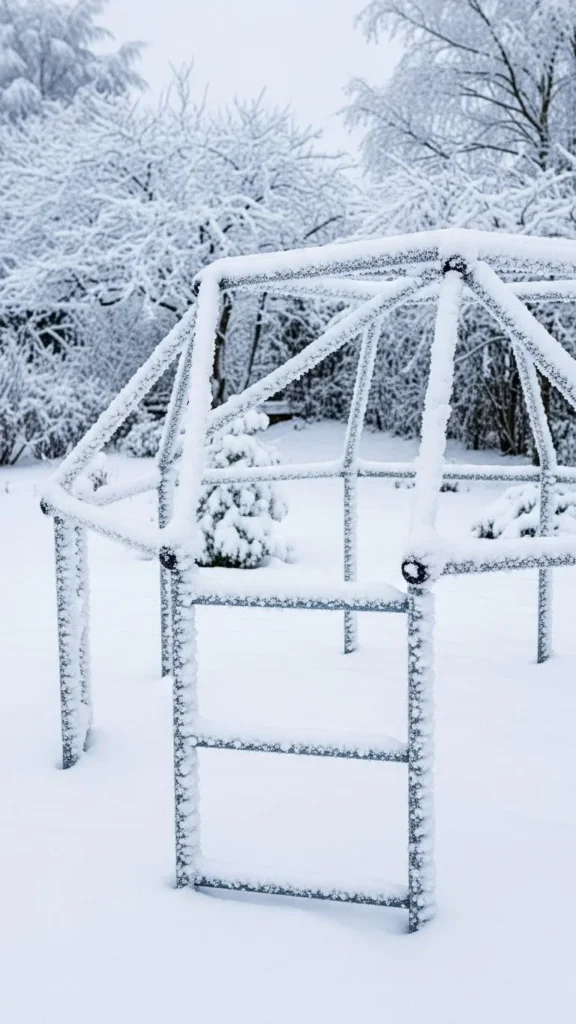
Climbing frames still shine without plants. Snow outlines the structure.
Simple wooden frames cost little. Place near paths.
They add height and interest year-round.
14. Snow Garden Entry Gates
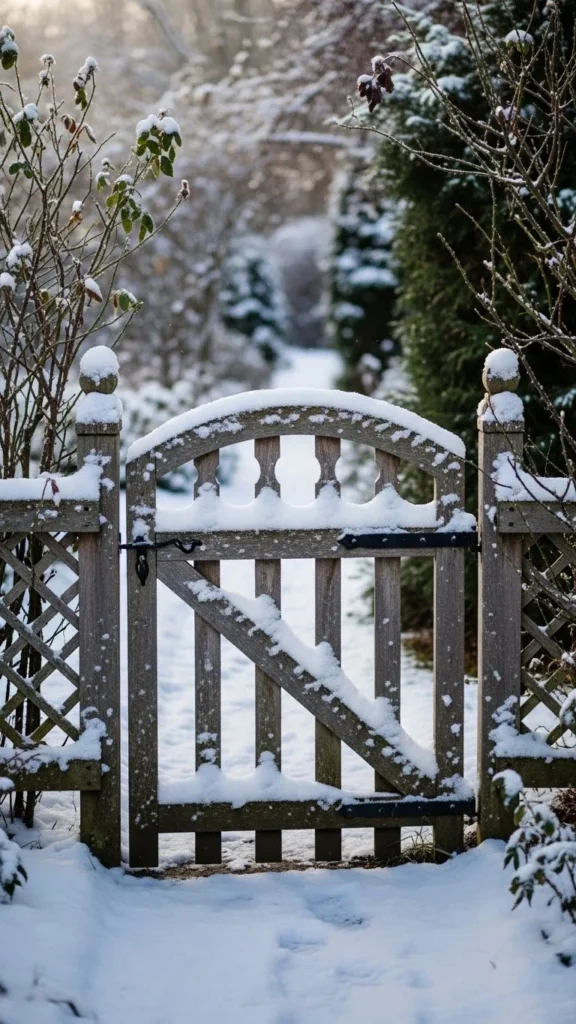
Gates frame views. Snow highlights their shape.
Wood or metal both work. Keep designs open.
Entry points feel special even in winter.
15. Layered Shrub Islands
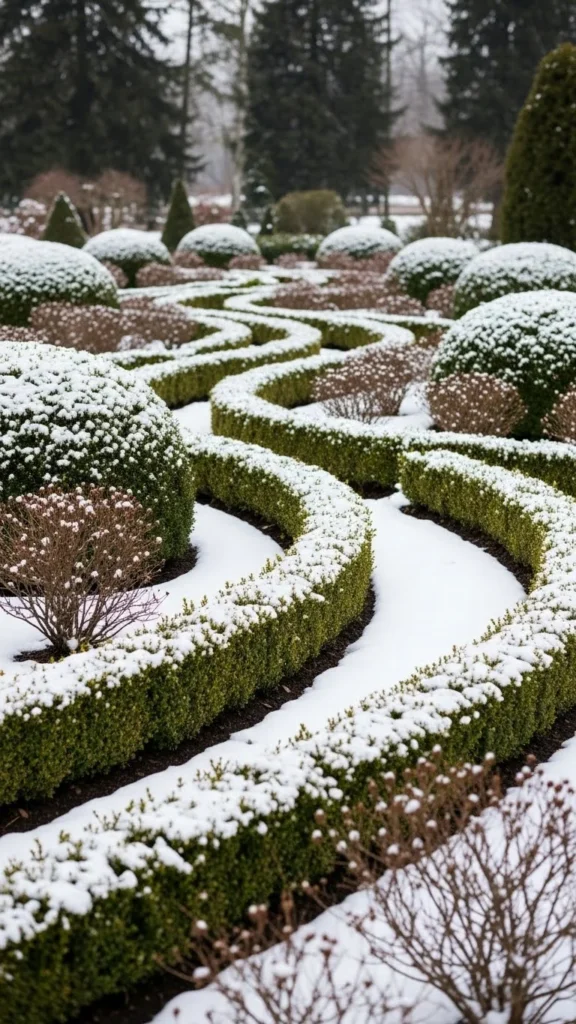
Island planting breaks up space. Snow defines each shape.
Use common shrubs. Group by size.
Islands add depth without clutter.
16. Snow-Framed Steps
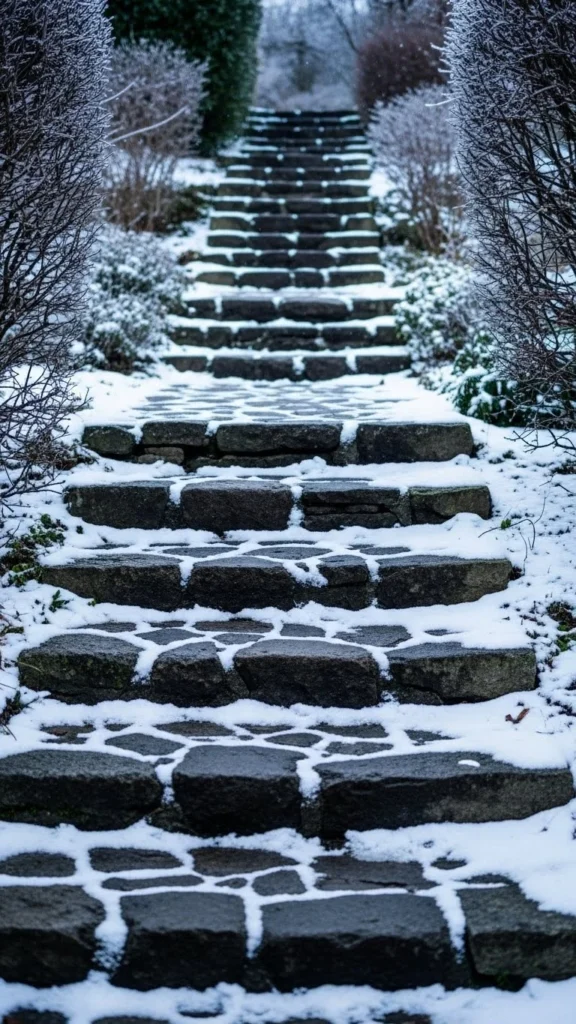
Steps look striking in winter. Snow outlines each level.
Add simple side edging for safety and style.
Steps guide movement visually.
17. Winter Garden Walls
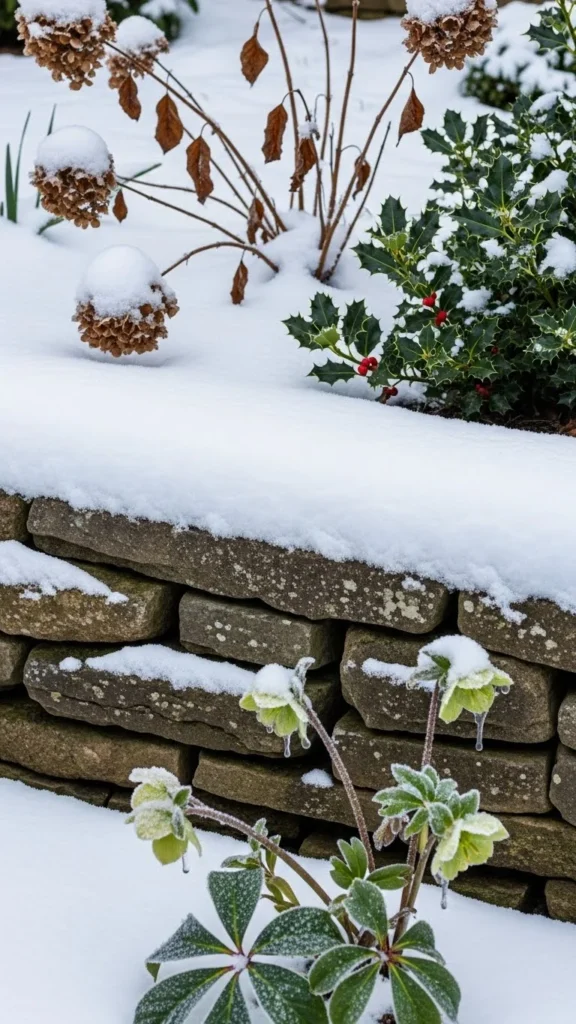
Walls provide structure. Snow softens their look.
Brick or stone works well. Even short walls help.
They define space clearly.
18. Snow-Covered Herb Beds
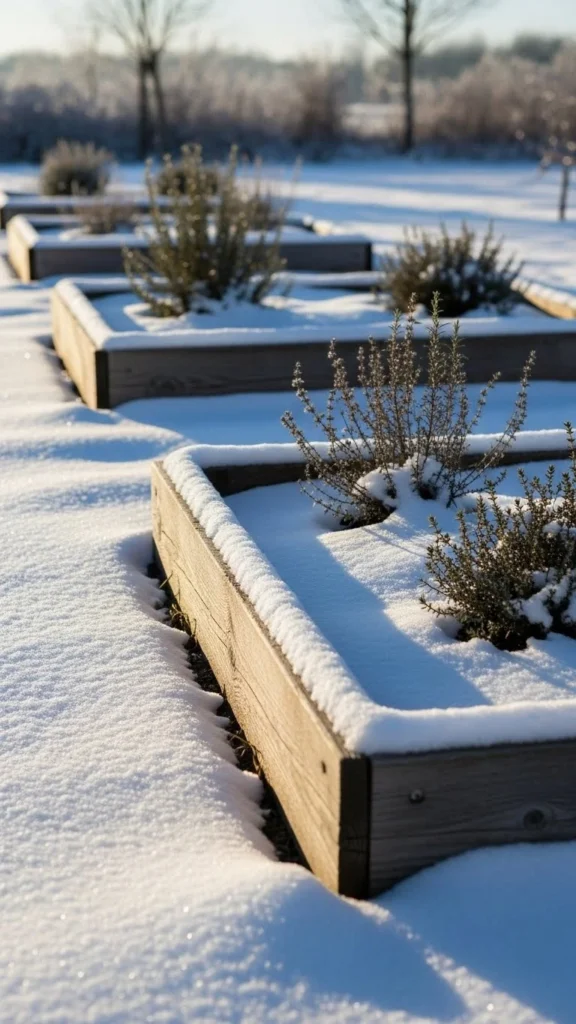
Even dormant herb beds add interest. Snow shows layout.
Keep labels minimal. Let shapes stand out.
Herb beds stay useful visually all year.
19. Tree Ring Snow Accents
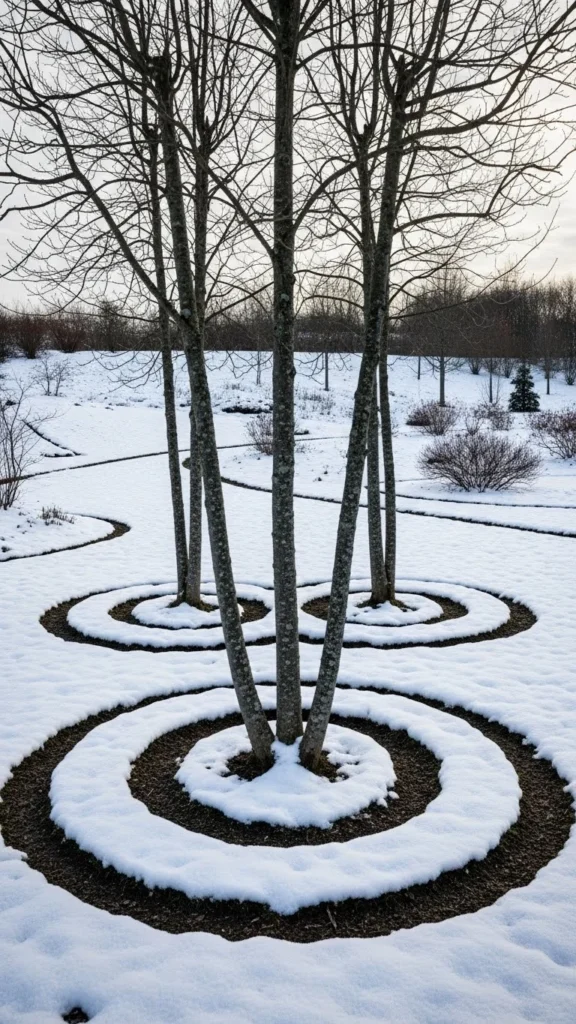
Tree rings frame trunks. Snow fills them evenly.
Use stone or brick. Simple circles work best.
They highlight trees naturally.
20. Snow Garden Viewing Windows
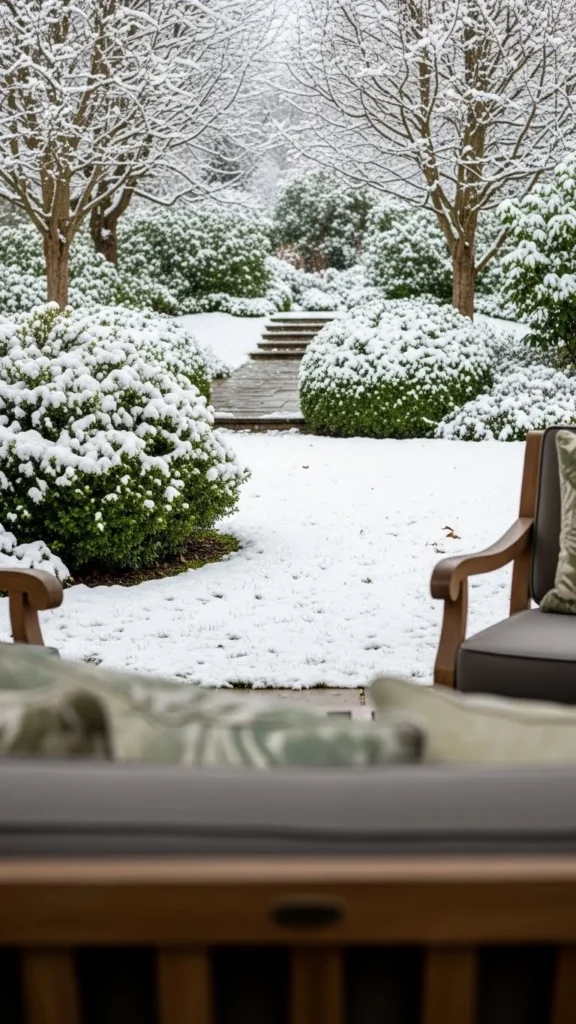
Design views intentionally. Frame areas with plants.
Snow draws attention to these spaces.
Viewing points add calm.
21. Snow-Dusted Rock Clusters
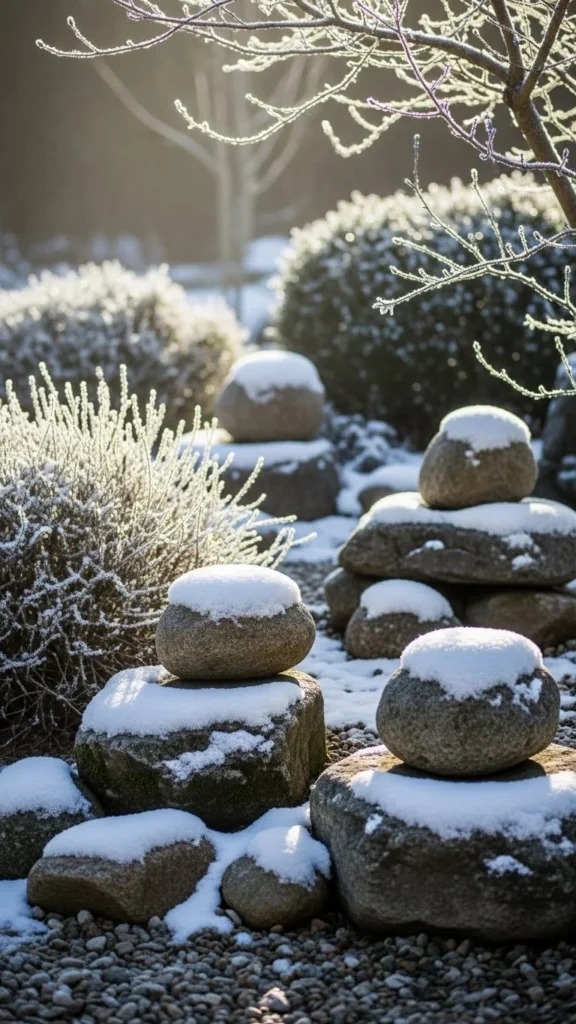
Rock clusters feel organic. Snow enhances texture.
Use local stone. Group loosely.
They add interest without upkeep.
22. Winter Garden Mirrors
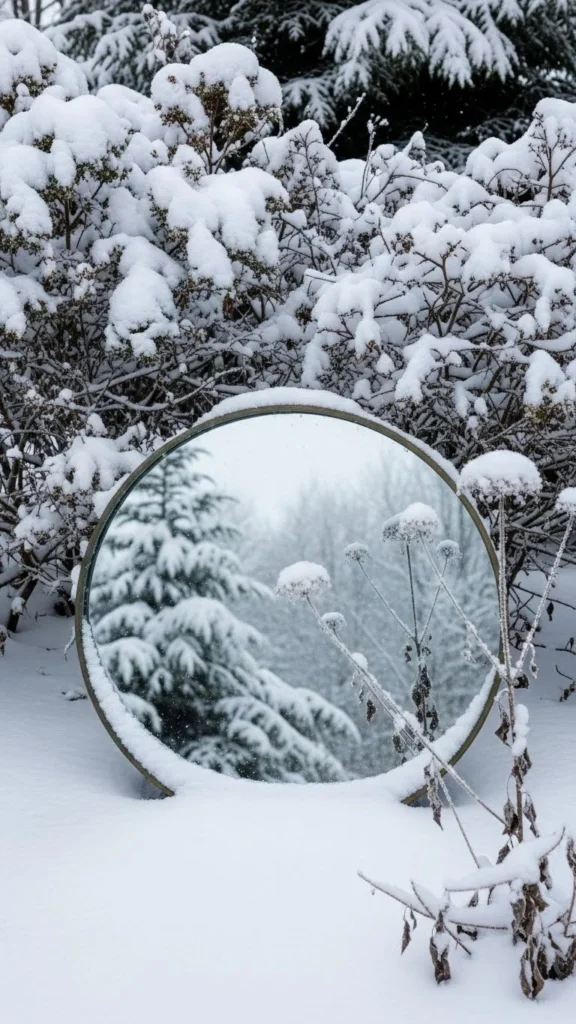
Mirrors reflect light. Snow doubles the effect.
Use weather-safe mirrors. Place discreetly.
They expand small gardens visually.
23. Snow Path Edging with Logs
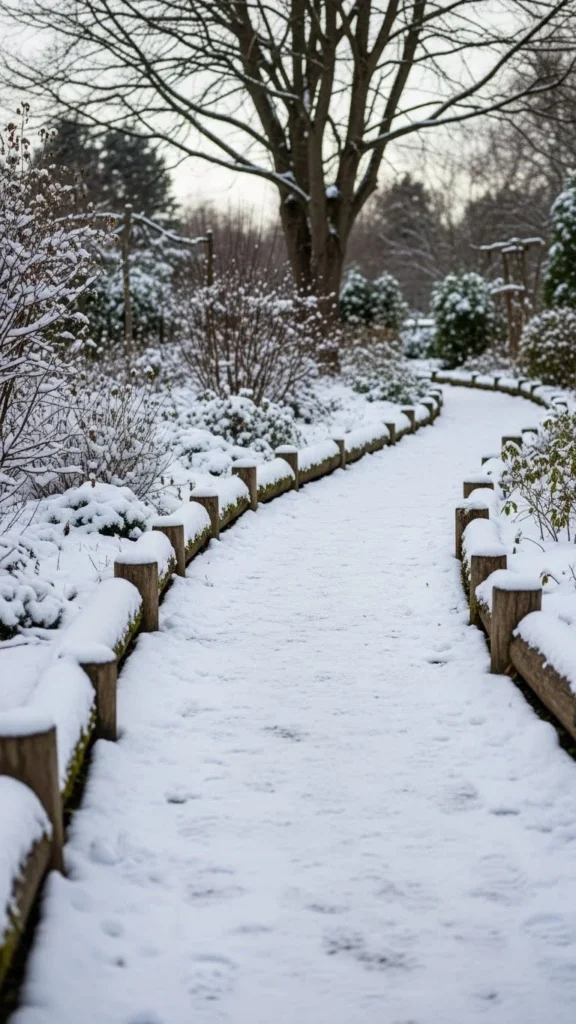
Logs add warmth. Snow softens them.
Use reclaimed wood. Keep spacing even.
Logs guide paths gently.
24. Snow Garden Pergola Frames
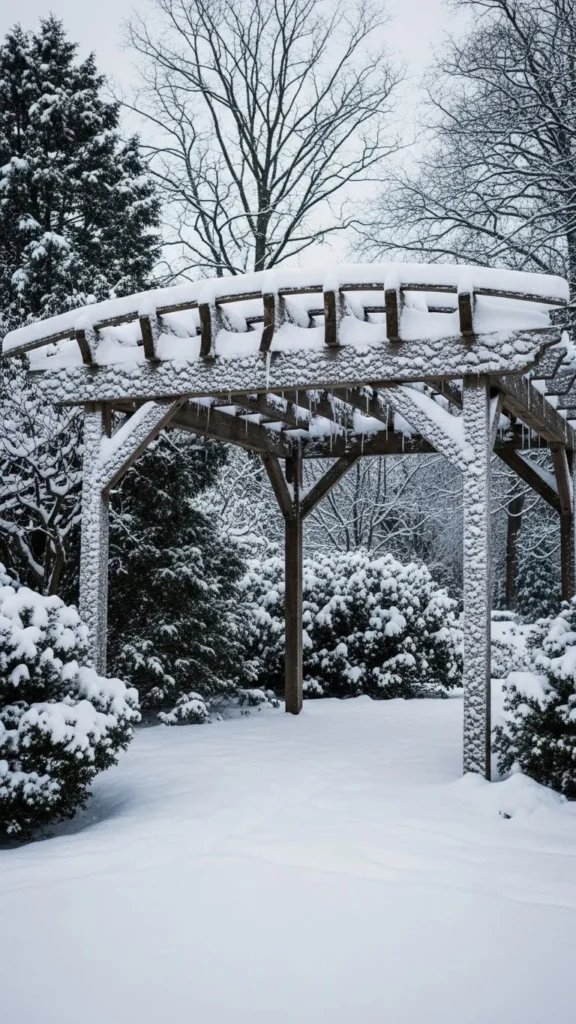
Pergolas stand strong in winter. Snow outlines beams.
Simple builds work best. No extras needed.
They add height and focus.
25. Winter Shrub Tunnels
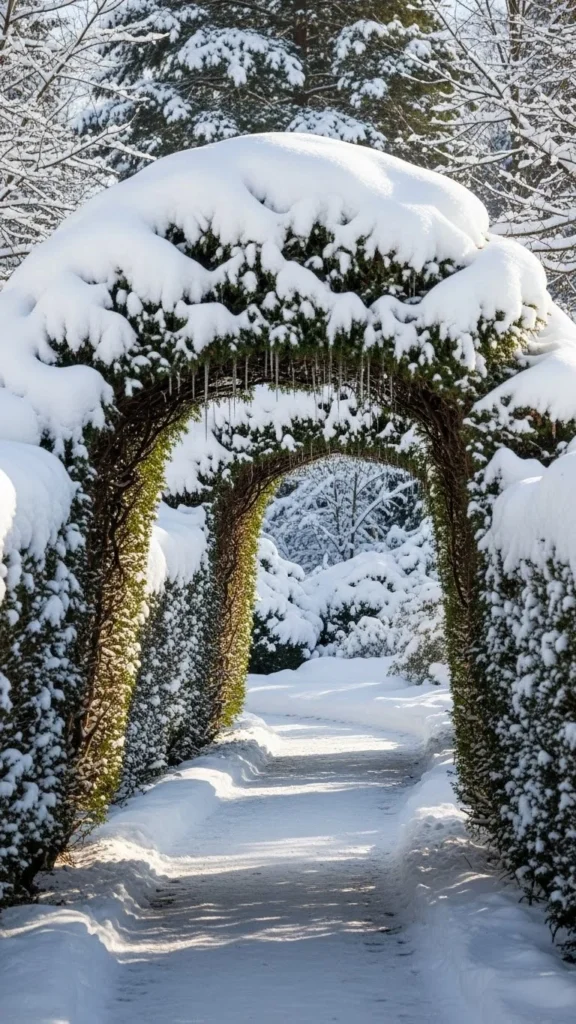
Shrub tunnels feel cozy. Snow defines the arch.
Use flexible shrubs. Trim lightly.
They guide movement softly.
26. Snow Garden Corner Accents
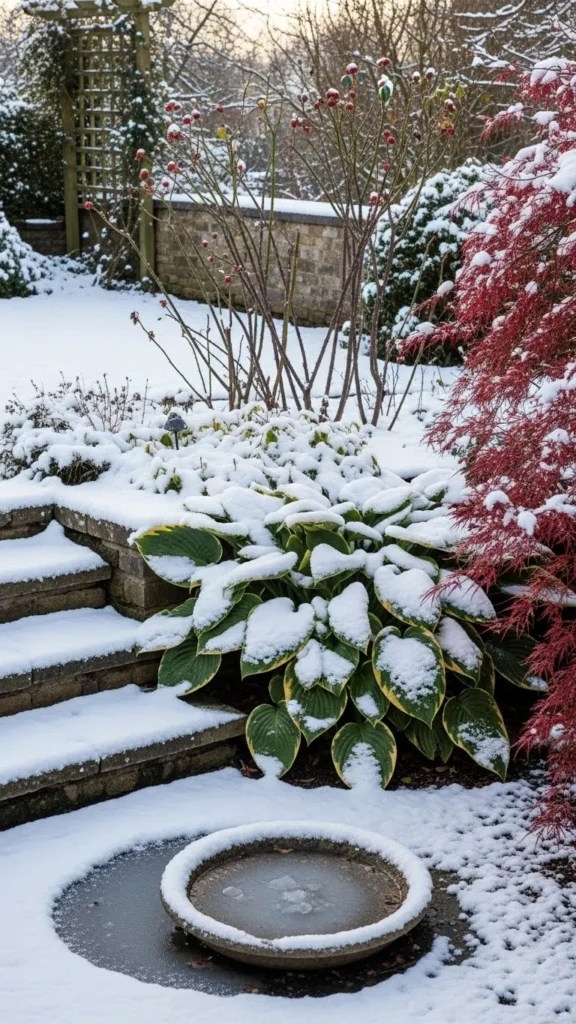
Corners matter. Add one feature per corner.
Snow brings attention naturally.
Small changes make impact.
27. Snow-Framed Garden Signs
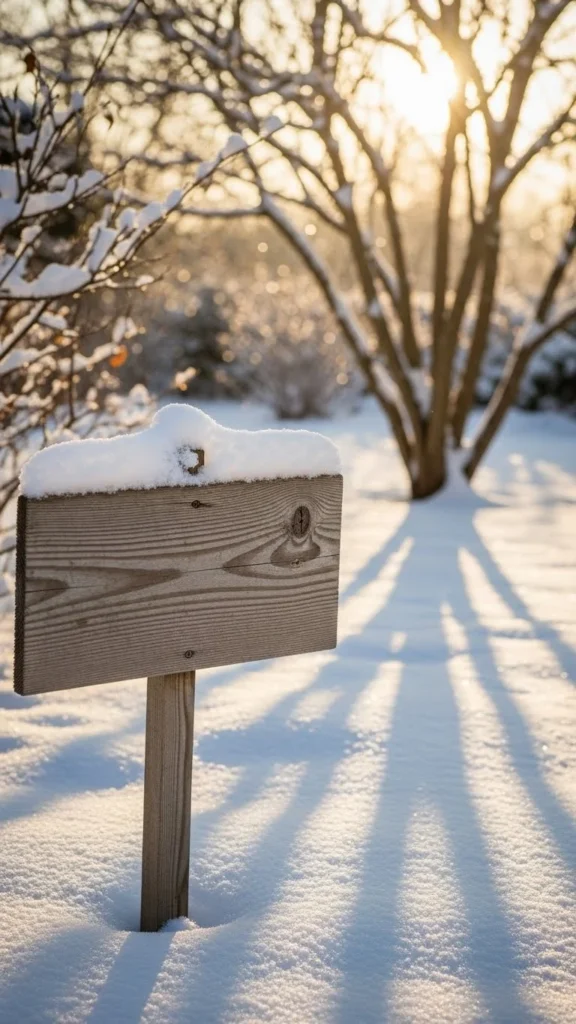
Signs add charm without words visible.
Keep designs simple. Snow softens edges.
They add personality quietly.
28. Winter Container Groupings
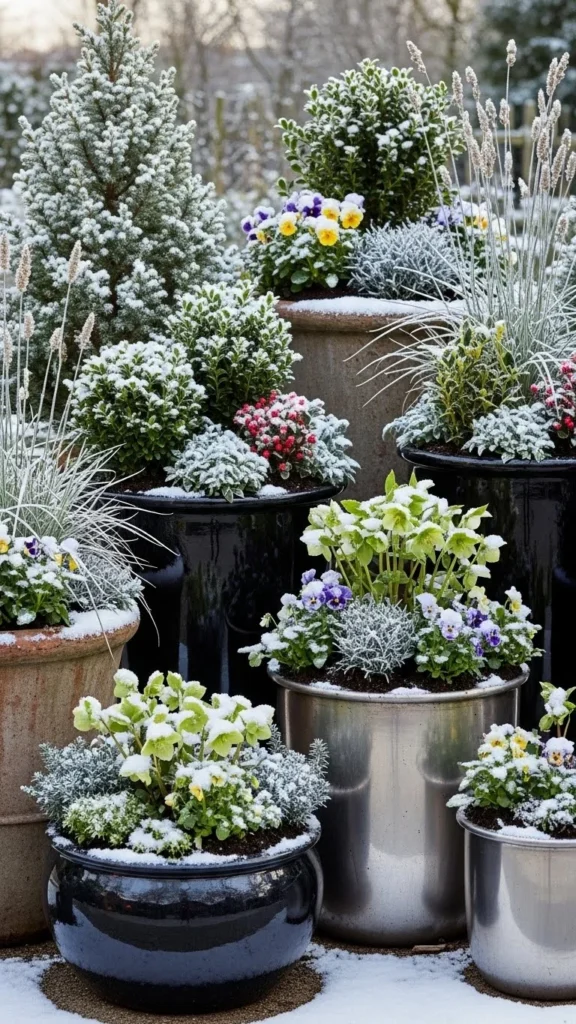
Containers add height variation. Snow fills them evenly.
Use mismatched pots for character.
Group in threes for balance.
29. Snow Garden Silence Zones
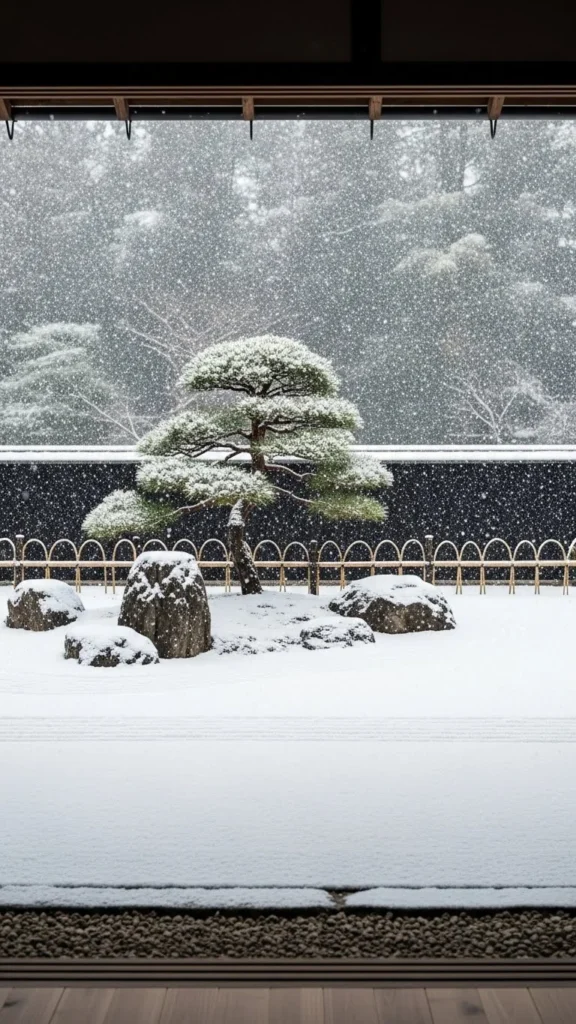
Leave some areas empty. Snow becomes the feature.
Open space feels restful.
Silence adds beauty.
Conclusion
Snow gardens don’t rely on flowers or color. Structure, shape, and simple materials do the work. By focusing on paths, frames, and quiet focal points, you can create a winter garden that feels peaceful and intentional. Try one or two ideas first, observe how snow settles, and build from there. Save your favorite designs and let winter shape your garden story.
Leave a Reply