

Winter doesn’t have to mean the end of your garden. With a few smart materials and simple techniques, you can protect tender plants from frost and keep them thriving through cold nights. The best part? Most winter plant shelters are budget-friendly, quick to build, and easy to adjust as the weather changes.
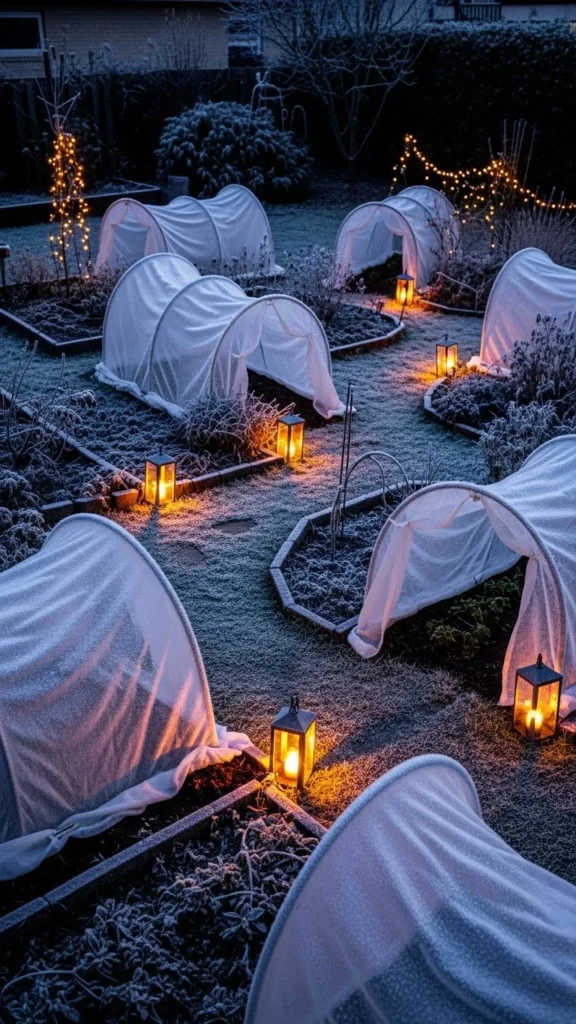
Whether you’re shielding herbs, vegetables, or young shrubs, this guide will walk you through exactly how to build winter plant shelters that work.
Why Winter Plant Shelters Matter
Frost damages plants when cold air settles around leaves and stems, freezing moisture inside plant cells. Shelters act like a buffer, trapping warmth from the soil and blocking icy winds.
A good shelter helps by:
- Reducing wind exposure
- Trapping daytime heat overnight
- Preventing frost from settling directly on leaves
- Extending your growing season by weeks—or even months
You don’t need fancy gear. Many effective shelters can be made with items you already have.
Choosing the Right Shelter for Your Plants
Not every plant needs the same level of protection. Start by matching the shelter style to the plant type.
- Low-growing vegetables & herbs: Simple covers or cloches
- Raised beds: Hoop tunnels or row covers
- Small shrubs & perennials: Burlap wraps or framed shelters
- Potted plants: Mini tents or grouped containers
Before building, check how cold your winters get and how frost-sensitive your plants are. This helps you avoid overbuilding—or underprotecting.
DIY Hoop Tunnels for Garden Beds
Hoop tunnels are one of the most reliable winter shelters, especially for vegetables.
What you’ll need:
- Flexible PVC pipe or metal garden hoops
- Garden stakes or rebar
- Frost cloth, garden fabric, or old sheets
- Clips, clamps, or clothespins
How to build it:
- Push stakes into the ground along each side of the bed.
- Bend the pipe into an arch and slide it over the stakes.
- Drape fabric over the hoops, leaving extra on the sides.
- Secure edges tightly so cold air can’t sneak in.
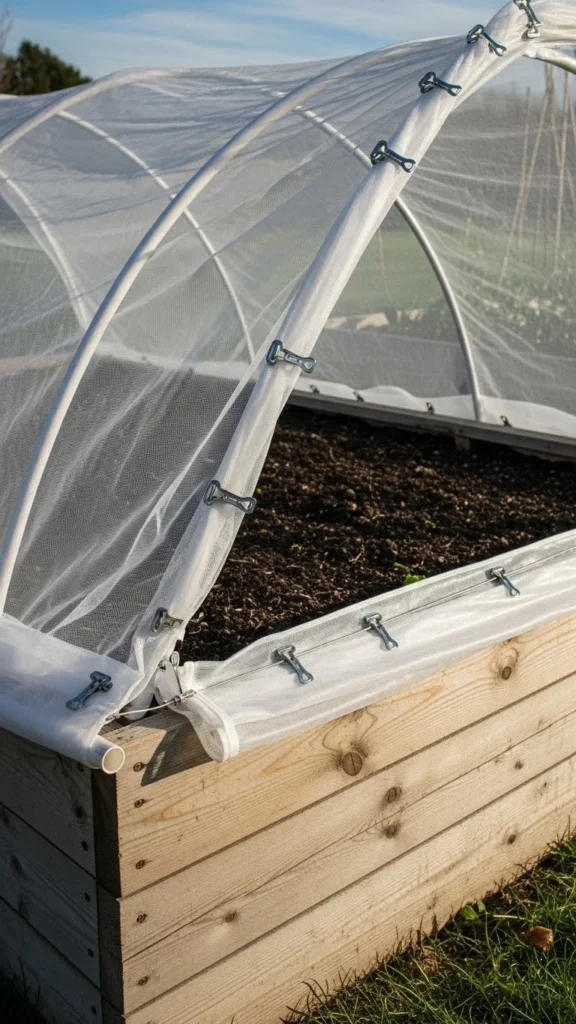
Tip: Open the ends on sunny days to prevent overheating.
Simple Cloches for Individual Plants
Cloches are perfect for protecting single plants or small clusters.
Easy cloche ideas:
- Upside-down clear storage bins
- Cut plastic containers with the bottoms removed
- Glass domes or bell jars
Place the cloche over the plant before sunset to trap warmth. Remove or vent it during the day if temperatures rise.
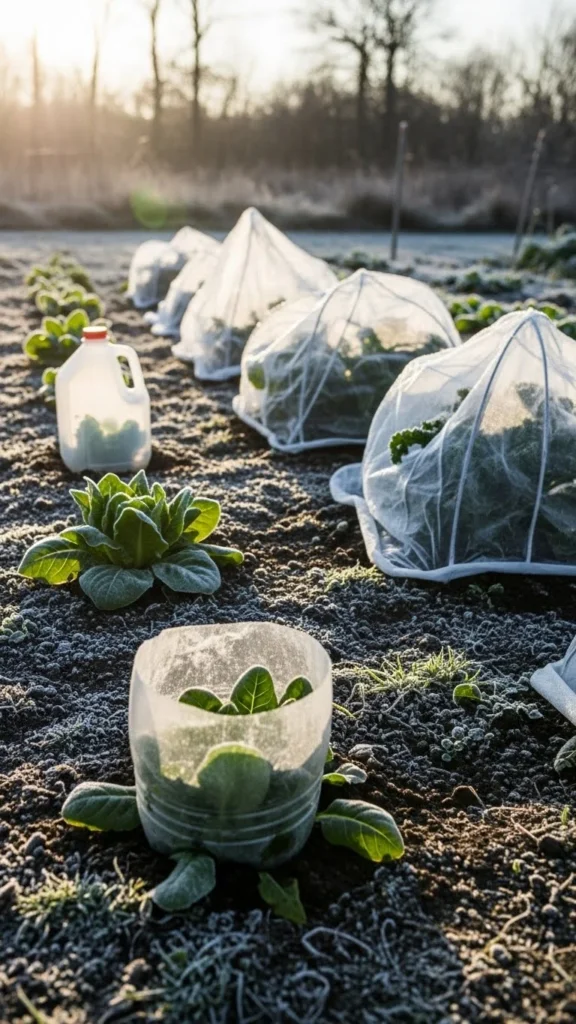
Pro tip: Weigh cloches down with stones so winter winds don’t knock them over.
Burlap Wraps for Shrubs and Perennials
Woody plants and shrubs benefit from wind protection more than warmth.
How to wrap safely:
- Drive stakes around the plant
- Wrap burlap loosely around the stakes
- Secure with twine, leaving space for airflow
Avoid wrapping burlap directly against leaves or stems—it can trap moisture and cause damage.
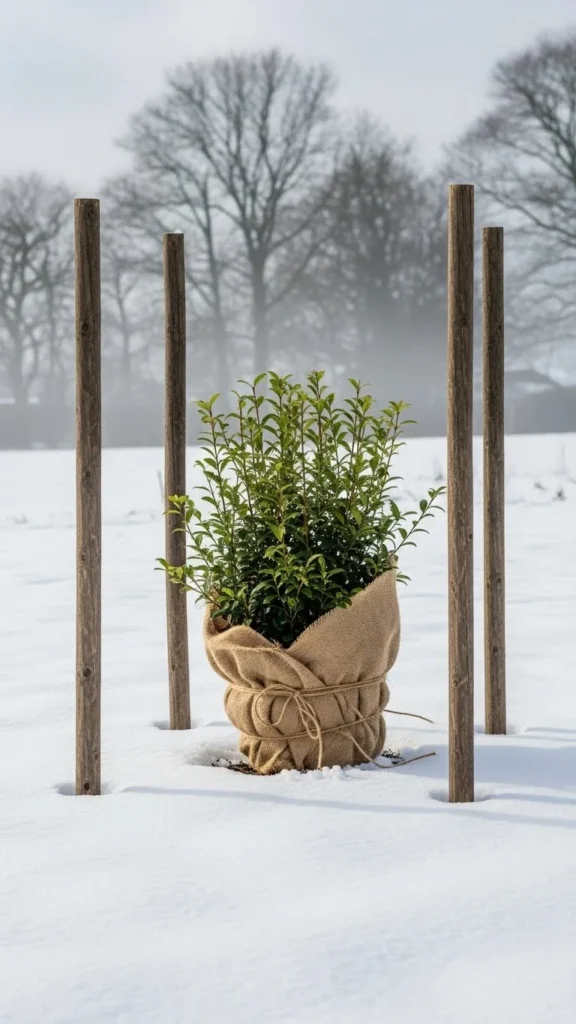
This method works especially well for roses, young evergreens, and ornamental shrubs.
Building a Cold Frame from Scratch
Cold frames are like mini greenhouses that sit directly on the soil.
Basic materials:
- Wooden boards or recycled pallets
- Clear plastic sheet or old window panel
- Screws or nails
Build a low box, then attach the clear top at a slight angle to catch sunlight. Place it over leafy greens, seedlings, or herbs.
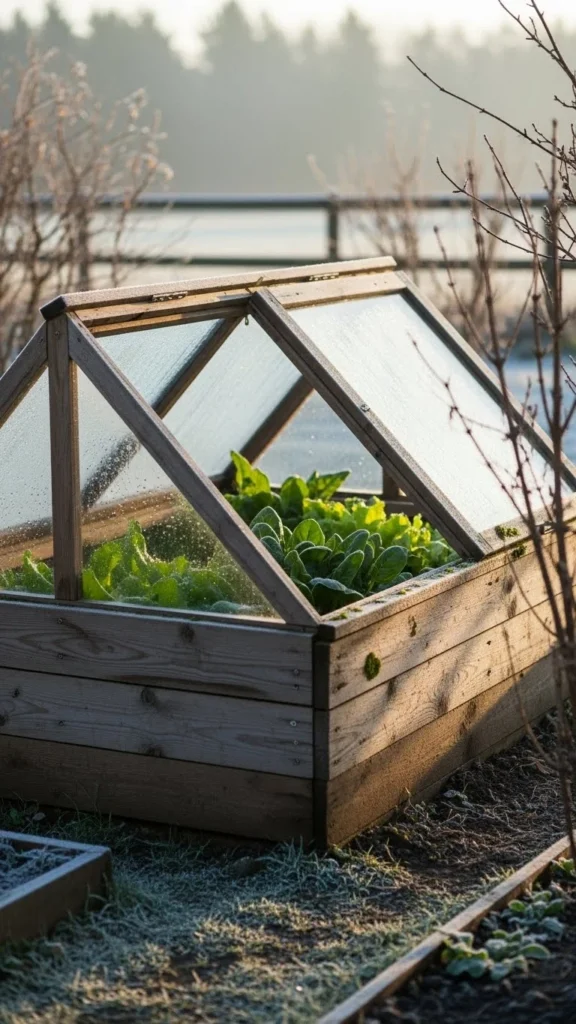
Cold frames are reusable year after year and offer excellent protection during long cold spells.
Extra Tips to Boost Frost Protection
Even the best shelter works better with a few extra tricks:
- Water soil before frost: Moist soil holds heat better than dry soil
- Mulch heavily: Straw, leaves, or wood chips insulate roots
- Group potted plants: They keep each other warmer
- Anchor everything well: Winter wind can undo your hard work overnight
Check shelters regularly after storms to make sure they’re still secure.
Common Mistakes to Avoid
- Leaving covers on too long during sunny days
- Letting fabric touch plant leaves directly
- Using airtight materials with no ventilation
- Forgetting to remove snow buildup on top
Small adjustments make a big difference in plant survival.
Final Takeaway
Winter plant shelters don’t need to be complicated to be effective. With simple materials and a little planning, you can protect your garden from frost and enjoy healthier plants come spring.
Save this guide for later, and start building your winter shelters before the first hard frost hits!

Leave a Reply