

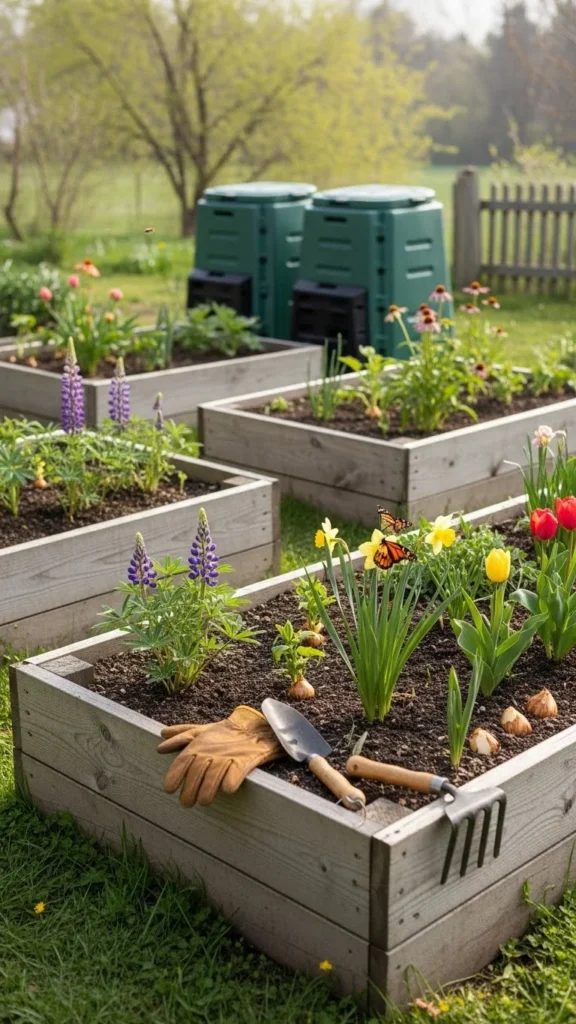
Spring gardening is the perfect time to care for plants while also showing respect for the environment around them. Many small garden choices affect soil life, insects, birds, and water use. Eco-friendly habits help reduce waste, protect local wildlife, and keep your outdoor space productive year after year. These tips focus on simple actions you can start right away using common tools and low-cost materials. Each idea supports healthier gardens without harming nearby ecosystems.
1. Compost Kitchen Scraps at Home
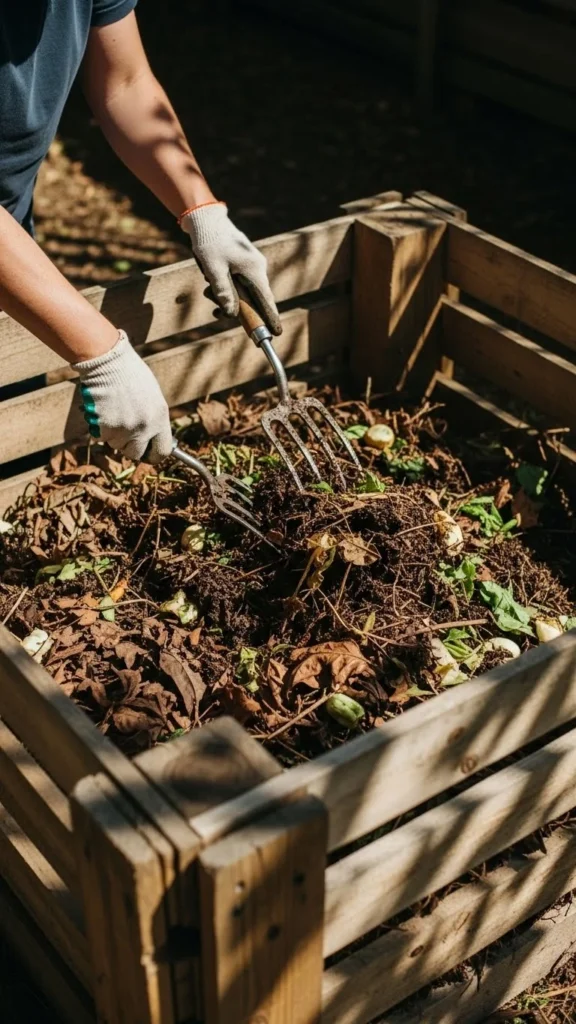
Composting keeps food scraps out of landfills and returns nutrients back to the soil. You can start with fruit peels, coffee grounds, eggshells, and yard trimmings. A simple bin made from pallets or a reused container works well. Turn the pile once a week using a shovel or garden fork.
Layer green scraps with dry leaves or shredded paper. This helps prevent odor and keeps the pile balanced. Finished compost looks dark and crumbly. Sprinkle it around plants or mix it into garden beds.
This method saves money on soil mixes and reduces trash. Even small patios can use compact compost bins. Over time, your soil becomes easier to work with and supports strong plant growth naturally.
2. Collect Rainwater for Garden Use
[Image Prompt: A rain barrel connected to a roof downspout beside a garden bed, water dripping gently into the barrel. Surrounding plants are green and healthy. Soft overcast light, realistic outdoor setting, high-end camera.]
Rainwater collection lowers tap water use and supports gardens during dry weeks. A basic rain barrel can be placed under a gutter downspout. Many models are affordable, or you can reuse large food-safe containers.
Use collected water for garden beds, containers, and seedlings. Plants respond well because rainwater lacks added chemicals. A simple spigot makes filling watering cans easy.
Cover the barrel with mesh to keep debris and insects out. Elevating the barrel slightly helps water flow. This habit reduces runoff and keeps water use mindful without extra effort.
3. Choose Native Plants for Your Area
[Image Prompt: A garden bed filled with native wildflowers, grasses, and shrubs, butterflies resting on blooms. Natural sunlight, shallow focus, realistic outdoor photography.]
Native plants grow well with local rainfall and soil conditions. They support birds, bees, and butterflies that rely on familiar plant types. Many require less watering and care after establishment.
Visit local plant sales or community gardens to find native options. Ask for varieties suited to your region’s climate. Group similar plants together for easier care.
Native gardens feel natural and balanced. They often resist pests better than imported plants. Over time, you’ll spend less on replacements and watering while supporting local wildlife.
4. Mulch With Natural Materials
[Image Prompt: Close-up of hands spreading straw mulch around young garden plants. Soil visible beneath, soft sunlight, earthy textures captured with a high-end camera.]
Mulching protects soil from erosion and keeps moisture in place. Use straw, shredded leaves, wood chips, or grass clippings. Avoid dyed or treated materials.
Spread mulch two to three inches deep around plants, leaving space near stems. This reduces weed growth and limits soil splash during rain.
Mulch breaks down slowly and feeds soil life. It also keeps roots cooler during warm days. This low-cost step reduces watering time and improves garden comfort.
5. Skip Chemical Weed Control
[Image Prompt: A gardener pulling weeds by hand from a vegetable bed, reusable bucket nearby. Natural light, detailed soil texture, realistic outdoor scene.]
Hand-pulling weeds avoids chemical runoff that harms soil organisms. Pull weeds after rain when the soil is loose. A simple hand tool helps remove roots fully.
Use mulch to block weed growth naturally. Cardboard layered under mulch works well for pathways and beds. Over time, weeds become easier to manage.
This approach protects insects and nearby water sources. It also keeps gardens safer for pets and children. Regular short sessions prevent weeds from spreading.
6. Plant Pollinator-Friendly Flowers
[Image Prompt: Bees and butterflies visiting flowering plants like coneflowers and lavender in a home garden. Bright daylight, shallow depth, high-end camera.]
Pollinators help plants reproduce and support food crops. Flowers with open centers attract bees and butterflies easily. Plant clusters rather than single blooms.
Choose a mix of early and late bloomers. This gives pollinators food throughout the season. Many seed packets label pollinator-friendly options.
Avoid treated seeds. Water gently to protect visiting insects. A lively pollinator garden improves yields and supports local ecosystems naturally.
7. Reuse Containers for Seed Starting
[Image Prompt: Seedlings growing in reused yogurt cups and egg cartons on a sunny windowsill. Soft natural light, realistic indoor photography.]
Plastic cups, egg cartons, and food trays make great seed starters. Poke small drainage holes in the bottom. Label with tape or marker.
Use basic potting soil or homemade compost mix. Place containers near a window or outdoors on warm days. This reduces plastic waste.
Seed starting at home saves money and cuts packaging use. It also allows better control over plant care from the beginning.
8. Build Simple Raised Beds From Salvaged Wood
[Image Prompt: A raised garden bed built from reclaimed wood, filled with soil and young plants. Natural sunlight, visible wood grain, outdoor setting.]
Reclaimed wood from pallets or old fencing works well for raised beds. Check that wood is untreated. Simple screws and corner supports are enough.
Raised beds warm up quickly and improve drainage. They also reduce soil compaction from foot traffic. Beds can be built to any size.
This method repurposes materials and extends garden space. It’s a practical project that supports soil health and reduces waste.
9. Rotate Crops Each Season
[Image Prompt: Garden beds labeled with plant families, vegetables growing in neat rows. Natural daylight, realistic garden photography.]
Planting the same crops in new spots each year helps soil balance. Different plants draw nutrients in different ways. Rotation limits pest buildup.
Keep a simple garden map on paper. Move plant families rather than individual crops. This habit works even in small gardens.
Crop rotation reduces the need for added products. Soil stays productive and balanced with little effort.
10. Use Drip Watering or Soaker Hoses
[Image Prompt: Soaker hoses laid along garden rows, gently releasing water into soil. Early morning light, realistic outdoor photo.]
Drip systems deliver water directly to roots. This limits evaporation and runoff. Simple soaker hoses attach easily to standard taps.
Lay hoses under mulch for best results. Water early in the day. Plants receive steady moisture without soaked leaves.
This method reduces water waste and saves time. It also lowers the risk of plant stress during warm spells.
11. Leave Some Leaves for Wildlife
[Image Prompt: A garden corner with leaf piles beneath shrubs, birds nearby. Soft autumn-spring light, natural outdoor textures.]
Fallen leaves shelter insects and soil organisms. Instead of removing all leaves, leave small piles under shrubs or trees.
Leaves break down over time and enrich soil. They also protect overwintering insects that support garden health.
Rake paths clear but allow quiet corners to remain natural. This balance supports wildlife while keeping the garden tidy.
12. Grow Herbs Instead of Buying Packaged Ones
[Image Prompt: Herb garden with basil, thyme, and mint growing in reused containers outdoors. Bright natural light, close-up focus.]
Herbs grow well in small spaces and containers. Many thrive with minimal care. Growing your own cuts packaging waste.
Snip only what you use. This keeps plants productive longer. Herbs also attract pollinators when flowering.
A few pots near the kitchen save trips to the store and support low-waste habits.
13. Share Plants With Neighbors
[Image Prompt: Two gardeners exchanging potted plants over a garden fence. Friendly outdoor scene, warm natural light.]
Plant sharing builds community and reduces buying new plants. Divide perennials in spring and offer extras to others.
Swap seedlings, cuttings, or seeds. This helps everyone expand gardens without extra cost.
Sharing plants strengthens local gardening knowledge and keeps useful plants circulating nearby.
14. Avoid Single-Use Garden Products
[Image Prompt: Reusable garden tools, metal plant markers, and fabric plant ties arranged on a wooden table outdoors.]
Choose durable tools and reusable ties. Fabric strips or twine work better than plastic ties. Metal or wooden markers last longer.
Store tools properly to extend lifespan. Clean them after use.
Reducing disposable items lowers waste and saves money over time.
15. Create Simple Wildlife Shelters
[Image Prompt: A small bug hotel made from sticks and bamboo tucked into a garden bed. Natural light, detailed textures.]
Stack sticks, hollow stems, or small logs in quiet spots. These shelters give insects places to rest and reproduce.
Many beneficial insects help control pests naturally. Shelters require no maintenance.
This small action supports balance within the garden ecosystem.
16. Grow Ground Covers Instead of Bare Soil
[Image Prompt: Low-growing ground cover plants spreading across soil between larger plants. Soft sunlight, realistic garden photo.]
Ground covers protect soil and limit weeds. Clover, creeping thyme, or low grasses work well.
They hold moisture and prevent erosion. Many also attract pollinators.
Living ground cover reduces maintenance and supports soil life naturally.
17. Use Hand Tools Instead of Power Tools
[Image Prompt: A gardener using a hand trowel and rake in a garden bed. Calm outdoor scene, natural lighting.]
Hand tools reduce noise and energy use. They also offer better control for small spaces.
Basic tools handle most garden tasks easily. Sharpen blades regularly for efficiency.
This approach keeps gardening simple and low-impact.
18. Save Seeds From Healthy Plants
[Image Prompt: Hands collecting dried seed heads into paper envelopes. Warm light, close-up detail.]
Saving seeds preserves plant varieties and reduces store purchases. Choose strong plants free from disease.
Dry seeds fully before storage. Label envelopes clearly.
Seed saving builds self-reliance and supports future planting cycles.
19. Plant Trees and Shrubs Thoughtfully
[Image Prompt: A young tree planted with mulch around the base, garden tools nearby. Bright outdoor light.]
Trees offer shade, shelter, and habitat. Choose sizes that fit the space to avoid future removal.
Water deeply during establishment. Mulch helps roots settle.
Long-lasting plants support gardens and surrounding environments for years.
20. Limit Lawn Areas
[Image Prompt: A yard transitioning from grass lawn to garden beds and native plants. Overhead outdoor view.]
Large lawns require frequent mowing and watering. Convert sections into garden beds or native plant zones.
Even small reductions make a difference. Add paths or seating areas.
Less lawn means more habitat and lower maintenance.
21. Feed Soil With Homemade Mixes
[Image Prompt: A gardener mixing compost and soil in a wheelbarrow. Natural daylight, realistic textures.]
Homemade soil blends reduce store purchases. Mix compost with garden soil for planting.
This feeds soil organisms and improves structure. Plants respond with steady growth.
Simple mixes work well for most garden beds.
22. Water Plants at the Base
[Image Prompt: Watering can pouring water directly onto soil near plant roots. Soft morning light.]
Direct watering limits evaporation and leaf issues. Water slowly so moisture reaches roots.
This habit reduces water use and plant stress.
It also keeps foliage dry and comfortable.
23. Grow Food in Small Spaces
[Image Prompt: Balcony garden with vegetables growing in containers. Urban outdoor setting, natural light.]
Containers, windowsills, and balconies support food plants. Use recycled pots and buckets.
Compact varieties fit tight spaces well. Rotate containers for even light.
Small harvests add up and reduce packaging waste.
24. Observe Before Acting
[Image Prompt: Gardener kneeling and observing plants closely. Calm outdoor scene.]
Spend time watching the garden. Notice insects, soil moisture, and plant behavior.
Observation guides simple choices without extra products.
Patience leads to better results with less effort.
25. Keep Garden Practices Simple
[Image Prompt: A tidy garden with basic tools, healthy plants, and natural materials. Soft daylight.]
Simple habits often work best. Focus on soil care, water use, and plant choice.
Avoid overworking the space. Let nature guide growth.
Consistency over time supports long-term garden health.
Conclusion
Eco-friendly spring gardening relies on small, thoughtful actions that respect soil, water, and wildlife. Each tip here focuses on practical steps that fit real budgets and everyday routines. By reusing materials, choosing plants wisely, and working with natural systems, your garden becomes a space that supports both people and the environment. Pick a few ideas to start this season and build from there as your confidence grows.

Leave a Reply