

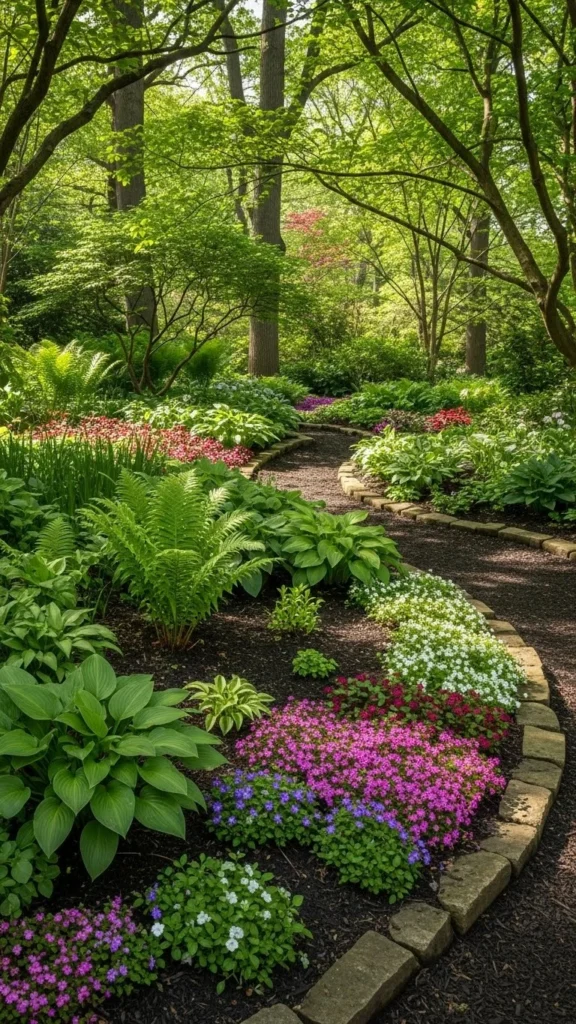
Spring shade gardens are perfect for yards with trees, north-facing walls, or covered patios. Many plants grow happily with limited light and reward you with texture, color, and steady growth. Shade areas also hold moisture longer, reduce watering costs, and stay cooler during warm days. With simple planning and affordable plant choices, you can turn low-light corners into calm, productive garden spaces that feel welcoming all season.
Fern-Filled Woodland Corners
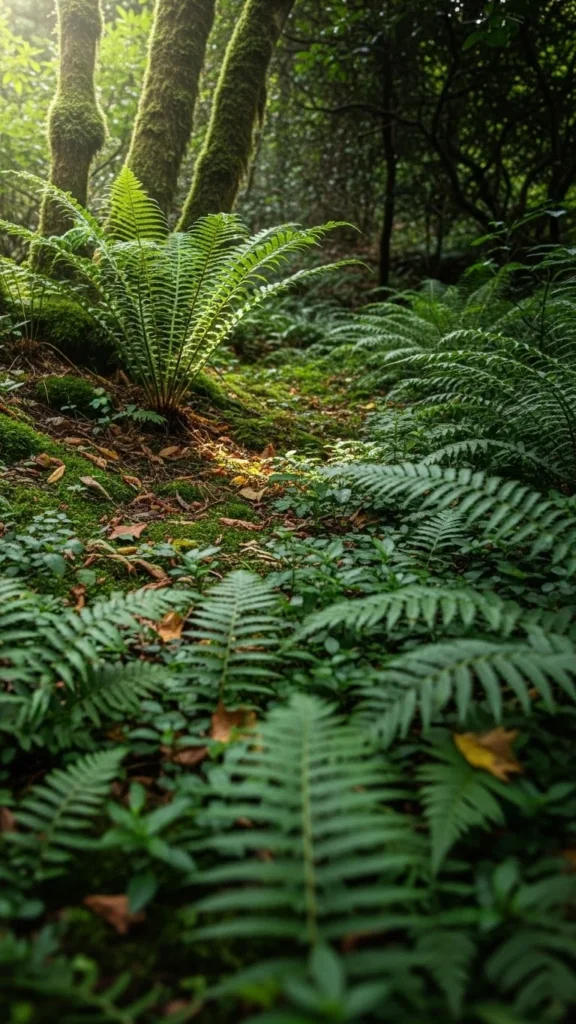
Ferns work well in shaded spring gardens because they enjoy cool soil and filtered light. Start small by planting two or three varieties along fences or under trees. Most garden centers sell young fern starts at low cost, especially early in spring. Space them loosely so air moves between fronds.
Mulch with shredded leaves or bark chips to hold moisture. Water deeply once or twice a week instead of daily. This saves time and keeps roots steady. Ferns also mix well with stones, logs, or simple stepping paths.
If you want more coverage without spending much, divide mature ferns after their first full year. Each clump can turn into several new plants. Ferns also pair nicely with hostas or shade ground cover, giving your garden height without extra work.
Hostas With Layered Leaf Texture
[Image Prompt: A spring shade garden bed filled with hostas in varied green tones, large textured leaves overlapping in soft light. Moist soil and stone edging frame the plants, captured clearly with a high-end camera.]
Hostas grow well in shade and give bold leaf shapes that fill space fast. Choose smaller starter plants to save money. They grow wider each year, so avoid overcrowding early. Plant them along walkways or borders where leaves can spread naturally.
Use compost or leaf mulch around the base to keep soil cool. Water at ground level to avoid leaf damage. Slugs can be managed with crushed eggshells or copper tape instead of chemicals.
Hostas look best when layered with other low-light plants. Mix tall and short varieties for depth. Over time, divide mature clumps and reuse them in other shaded spots. This keeps your garden full without extra cost.
Shade-Loving Ground Cover Carpets
[Image Prompt: A dense carpet of shade ground cover spreading beneath trees, with small leaves and soft green tones. Light filters through branches onto moist soil, photographed with close detail using a high-end camera.]
Ground cover plants help shaded gardens stay tidy while blocking weeds. Look for varieties sold in flats, which cost less than single pots. Plant them close together so they spread quickly.
Water deeply during the first few weeks to help roots settle. After that, shade ground cover holds moisture well. Trim edges once a season to keep paths clear.
These plants work well under trees where grass struggles. Over time, they create a smooth green base that supports taller plants without extra care.
Moss-Inspired Garden Pockets
[Image Prompt: A small shaded garden pocket with natural moss growth between stones and tree roots. Soft moisture glistens on green textures, captured with close focus and muted tones using a high-end camera.]
Moss thrives in shade with steady moisture. You can encourage it without buying anything. Keep soil slightly damp and avoid heavy foot traffic. Place stones or logs to guide growth.
Moss gardens work well in quiet corners. They pair nicely with ferns and small rocks. This option costs very little and stays green through spring.
Shade Container Gardens
[Image Prompt: A collection of containers filled with shade plants on a covered patio. Soft indirect light highlights leafy greens and textured pots, photographed cleanly with a high-end camera.]
Containers give flexibility in shaded spaces. Use recycled pots or buckets with drainage holes. Choose shade plants that stay compact.
Group containers together to hold moisture longer. This reduces watering. Move pots if light patterns change through spring.
Woodland Path Borders
[Image Prompt: A winding garden path bordered by shade plants under tall trees. Dappled sunlight falls on leaves and stone edging, captured naturally with a high-end camera.]
Path borders guide movement and define space. Use low-cost plants like ferns or ground cover along edges.
Mulch paths to keep soil cool. This setup feels calm and works well in narrow shaded yards.
Native Shade Plants
[Image Prompt: A spring shade garden planted with native woodland species beneath trees. Natural light and layered growth create a relaxed scene, photographed with soft focus using a high-end camera.]
Native plants adapt easily to local shade conditions. They often cost less and require less care.
Ask local nurseries which shade natives grow best. These plants settle faster and need less water.
Raised Shade Beds
[Image Prompt: A low raised garden bed in partial shade filled with leafy plants. Soft light touches the soil and wood frame, photographed with clear detail using a high-end camera.]
Raised beds improve drainage in shaded areas. Build one with scrap wood or blocks.
Fill with compost-rich soil. This supports steady growth even with limited light.
Shade Herb Corners
[Image Prompt: A shaded herb corner with leafy herbs growing in filtered light. Moist soil and simple markers, photographed naturally using a high-end camera.]
Some herbs grow well in shade. Plant them close to the house for easy access.
Use small containers or beds. Trim often to keep growth tidy.
Spring Bulbs for Shade
[Image Prompt: Early spring bulbs blooming in a shaded garden bed under trees. Soft light highlights petals and leaves, captured with a high-end camera.]
Certain bulbs bloom before trees leaf out. Plant them in fall for early color.
They fade naturally as shade deepens. This keeps your garden active early in the season.
Stone and Shade Plant Pairings
[Image Prompt: A shaded garden featuring stone accents surrounded by leafy plants. Soft light and texture contrast captured with a high-end camera.]
Stones add structure where flowers are limited. Place them near shade plants for balance.
This reduces planting costs while adding visual interest.
Under-Deck Shade Gardens
[Image Prompt: A tidy garden beneath a raised deck with shade plants and mulch. Filtered light creates soft contrast, photographed with a high-end camera.]
Under decks often stay unused. Add mulch and shade plants to soften the area.
Choose plants that stay compact. This keeps the space neat.
Shade Garden Seating Nooks
[Image Prompt: A small seating nook in a shaded garden surrounded by leafy plants. Soft light and calm tones captured with a high-end camera.]
A simple bench turns shade into a resting space. Surround it with low-light plants.
This creates a calm spring retreat with little expense.
Tree Base Plant Rings
[Image Prompt: A tree base ringed with shade plants and mulch. Dappled light falls on leaves and soil, photographed with a high-end camera.]
Plant around tree bases to cover bare soil. Use shallow-rooted plants.
Mulch lightly to protect roots and hold moisture.
Shade Garden Borders Along Walls
[Image Prompt: A shaded garden border along a fence with leafy plants and mulch. Soft indirect light, captured with a high-end camera.]
Walls create steady shade. Use this space for layered planting.
This turns unused edges into green borders.
Shade-Friendly Annual Mixes
[Image Prompt: A shaded garden bed with mixed annuals growing in soft light. Rich soil and gentle contrast captured with a high-end camera.]
Some annuals grow well without direct sun. Buy smaller packs to save money.
Mix colors and leaf shapes for interest.
Leaf-Focused Color Gardens
[Image Prompt: A shade garden highlighting colorful foliage rather than flowers. Soft light enhances leaf tones, photographed with a high-end camera.]
Leaf color stands out in shade. Mix light and dark greens.
This keeps the garden attractive all season.
Rain-Fed Shade Gardens
[Image Prompt: A shaded garden area showing moist soil after rainfall. Plants appear healthy under soft light, captured with a high-end camera.]
Shade areas hold rain longer. Shape soil to collect runoff.
This reduces watering work.
Shade Garden Edging With Logs
[Image Prompt: Natural log edging in a shaded garden bed. Moss and leaves add texture, photographed with a high-end camera.]
Logs create simple borders. Use fallen branches or reclaimed wood.
They break down slowly and enrich soil.
Shaded Courtyard Gardens
[Image Prompt: A small shaded courtyard garden with potted plants and stone flooring. Soft light fills the space, photographed with a high-end camera.]
Courtyards often lack sun. Use containers and shade plants.
This setup stays cool and manageable.
Mulched Shade Beds
[Image Prompt: A thickly mulched shade garden bed with leafy plants. Moist soil and rich texture captured with a high-end camera.]
Mulch keeps shade soil healthy. Use leaves or bark.
This reduces weeds and saves water.
Shade Garden Water Bowls
[Image Prompt: A shallow water bowl nestled among shade plants. Soft reflections and calm light captured with a high-end camera.]
Water features add life. Use shallow bowls for birds.
Place them where light stays gentle.
Mixed Height Shade Planting
[Image Prompt: A layered shade garden with tall, medium, and low plants. Soft spring light captured with a high-end camera.]
Layering adds depth. Place taller plants at the back.
This uses space wisely and looks full.
Natural Shade Wild Corners
[Image Prompt: A relaxed shaded garden corner with natural growth patterns. Soft light and organic textures captured with a high-end camera.]
Let some areas grow freely. Trim only when needed.
This saves effort and supports balance.
Conclusion
Spring shade gardens offer comfort, low upkeep, and steady growth without direct sun. By using shade-friendly plants, simple materials, and smart layouts, you can turn dim areas into calm, green spaces. Start small, reuse plants through division, and let shade work in your favor. Save these ideas and begin shaping your own spring shade garden today.

Leave a Reply