

Winter can feel endless when the garden goes quiet—but winter camellias refuse to fade into the background. These glossy evergreens bloom when most plants sleep, opening elegant flowers right through cold months. With the right setup, you can enjoy camellia blooms even when frost is part of daily life.
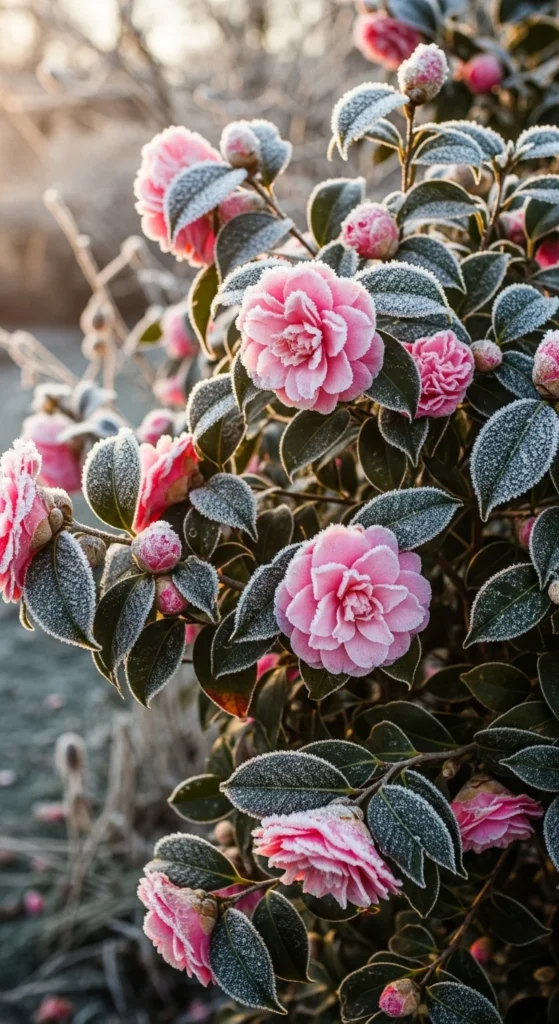
Below is a clear, cold-weather–friendly guide to growing winter camellias successfully, even in challenging climates.
Understanding Winter Camellias (Why They’re Worth It)
Winter camellias—mainly Camellia japonica and Camellia sasanqua—are prized for one big reason: they bloom when almost nothing else does.
What makes them special:
- Evergreen foliage that stays lush year-round
- Blooms from late fall through early spring
- Long-lived shrubs that improve with age
- Excellent structure plants for winter landscapes
Cold weather doesn’t scare camellias—but sudden temperature swings can. That’s why thoughtful placement and care matter more than extreme cold tolerance.
Choose the Right Variety for Cold Climates
Not all camellias handle cold equally. Selecting a cold-hardy cultivar is the first success step.
Look for varieties labeled:
- Cold-hardy to Zone 6 or 7
- Late-blooming (to avoid bud damage from early freezes)
- Proven northern cultivars
Popular cold-tolerant traits include:
- Smaller, tighter buds
- Thicker leaves
- Slower bloom opening
Avoid impulse buys from warm-climate nurseries unless the variety is clearly marked as cold-tolerant.
Pick a Protected Planting Location
Where you plant matters just as much as what you plant.
Camellias thrive in:
- Morning sun + afternoon shade
- Sheltered spots near buildings or fences
- Areas protected from harsh winter wind
Avoid:
- South-facing walls (can cause early bud opening)
- Low frost pockets
- Open, windy exposures
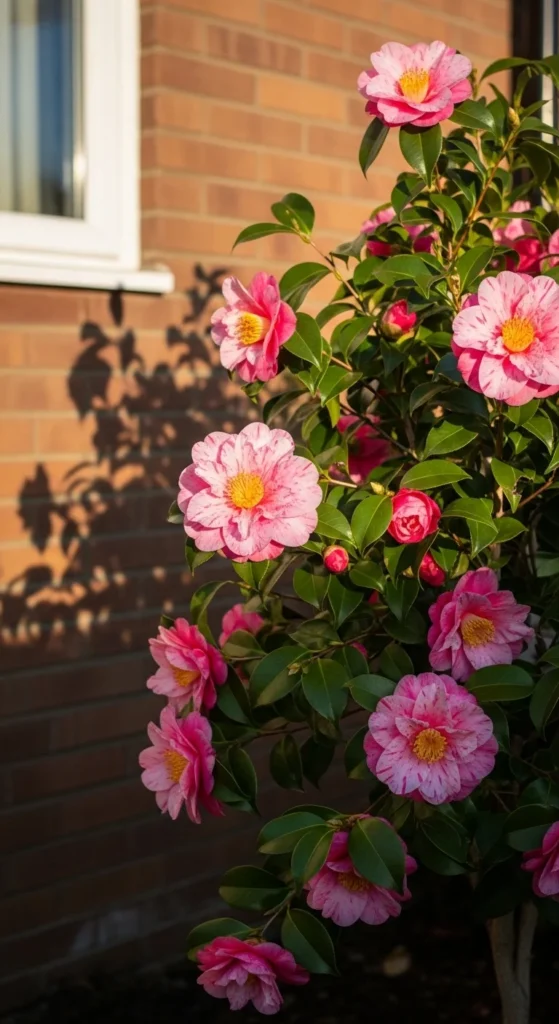
A stable environment prevents buds from freezing overnight and thawing too quickly during sunny winter days.
Soil Preparation Is Everything
Camellias are picky about soil—but once settled, they’re low drama.
Ideal soil conditions:
- Slightly acidic (pH 5.5–6.5)
- Well-draining but moisture-retentive
- Rich in organic matter
Before planting:
- Amend soil with composted pine bark or leaf mold
- Avoid heavy clay without drainage improvement
- Plant slightly above ground level to prevent root rot
Healthy roots = stronger cold resistance.
Watering Through Cold Months
Yes, winter camellias still need water.
Key winter watering rules:
- Water deeply before hard freezes
- Keep soil evenly moist, not soggy
- Dry roots freeze faster than hydrated ones
During dry winters, check soil weekly—especially for newly planted shrubs.
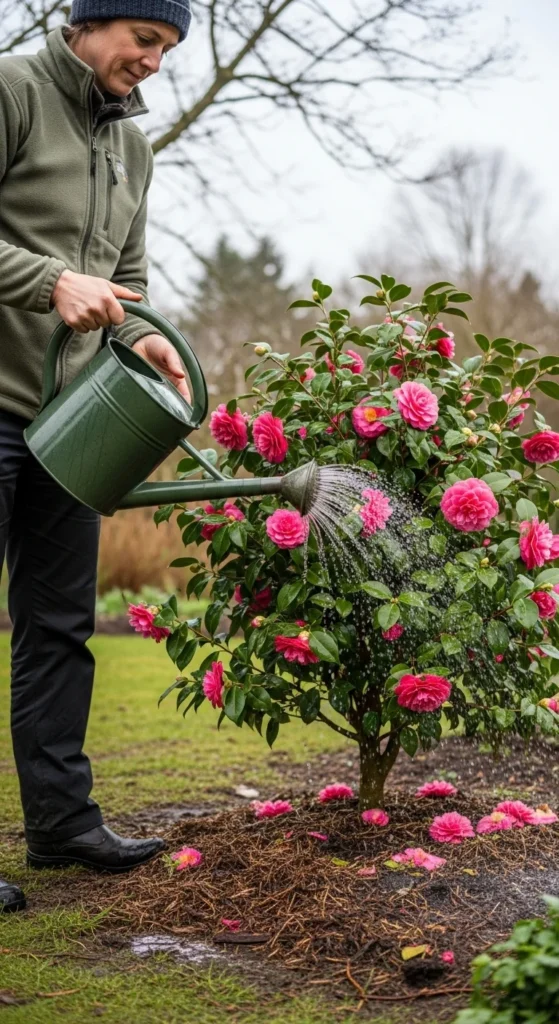
Consistent moisture protects roots and helps buds stay intact.
Mulching for Winter Survival
Mulch is your best cold-weather insurance.
Apply:
- 2–4 inches of pine needles, bark, or shredded leaves
- Keep mulch a few inches away from the trunk
Benefits of winter mulching:
- Insulates roots from freeze–thaw cycles
- Conserves moisture
- Protects shallow root systems
Refresh mulch in late fall before temperatures drop.
Protect Buds from Frost Damage
Camellia buds are tougher than they look—but extreme cold needs backup.
During harsh cold snaps:
- Cover shrubs with frost cloth or burlap
- Avoid plastic touching leaves or buds
- Remove covers during the day
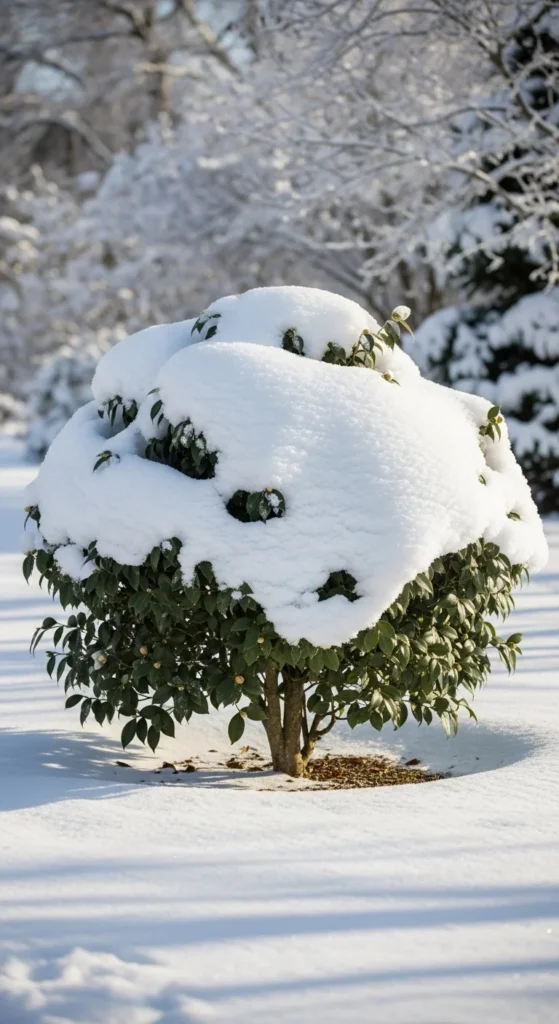
Temporary protection can mean the difference between buds dropping and flowers opening beautifully.
Feeding Without Forcing Growth
Overfeeding in cold climates is a common mistake.
Follow this schedule:
- Fertilize lightly in early spring after flowering
- Use an acid-loving plant fertilizer
- Stop feeding by mid-summer
Late-season growth is more likely to freeze and weaken the plant.
Common Winter Camellia Problems (and Easy Fixes)
Bud drop
- Usually caused by temperature swings or drought
- Fix with consistent watering and wind protection
Yellow leaves
- Often due to alkaline soil
- Add soil acidifier or organic matter
Leaf burn
- Caused by winter sun + wind
- Improve placement or add wind barriers
Most issues come from environment, not pests.
Final Thoughts: Winter Flowers Worth the Effort
Growing winter camellias in cold weather is incredibly rewarding. When the rest of the landscape looks bare, these shrubs step up with glossy leaves and elegant blooms—proof that winter gardens don’t have to feel lifeless.
Once established, camellias become dependable, long-lived stars in cold-climate gardens.
Save this guide for planting season and enjoy winter blooms that truly stand out.
Leave a Reply