

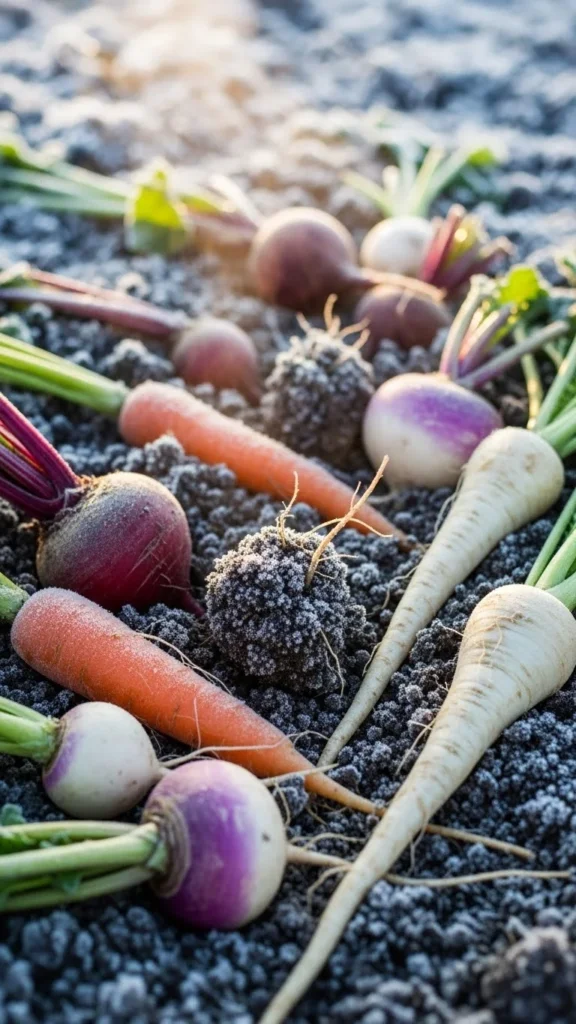
Winter gardening can feel simple and satisfying when you grow root vegetables that stay strong in cold soil. Many varieties thrive even when temperatures dip below freezing. They hold flavor, stay crisp, and save money because you can grow them in small raised beds or narrow garden strips. If you’re searching for cold-tolerant options with easy care routines, this list gives you practical ideas you can try right away—perfect for both beginners and seasoned growers.
1. Carrots
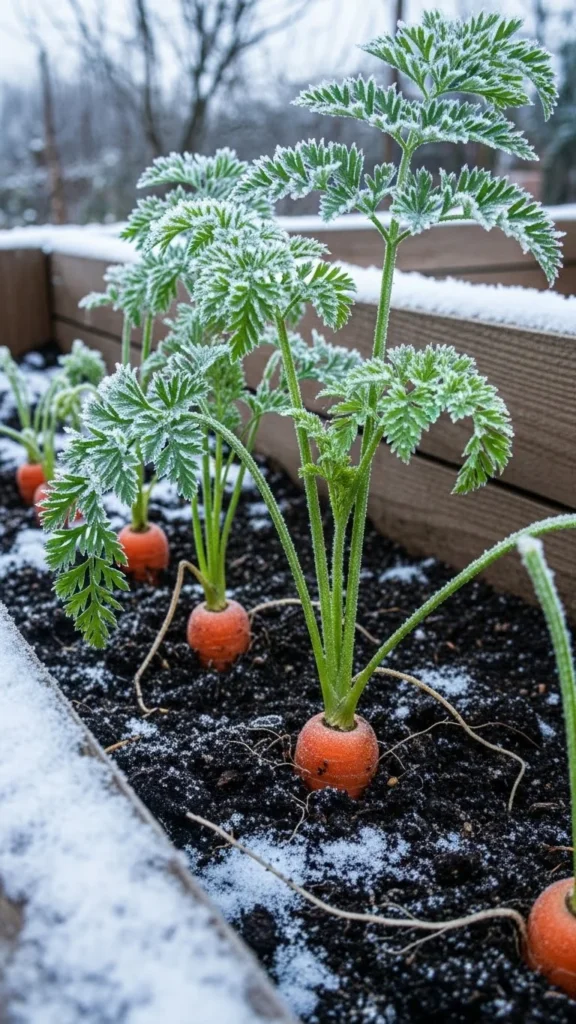
Carrots love chilly weather. In fact, cold temperatures make them sweeter. The key is loosening the soil before planting. This helps roots grow long and straight. Carrots work well in raised beds or deep containers if your yard space is tight. Keep the soil slightly moist, but not soggy, during late fall and early winter.
Try planting staggered rows so you always have a batch ready to harvest. If you want extra insulation, place a layer of straw on top of the soil. It keeps the ground soft enough to pull carrots even after frost. For a budget-friendly idea, reuse old plastic totes as mini raised beds. Just drill drainage holes and add loose soil. Carrots stay healthy even when temperatures drop, making them a helpful crop for winter meals.
2. Beets
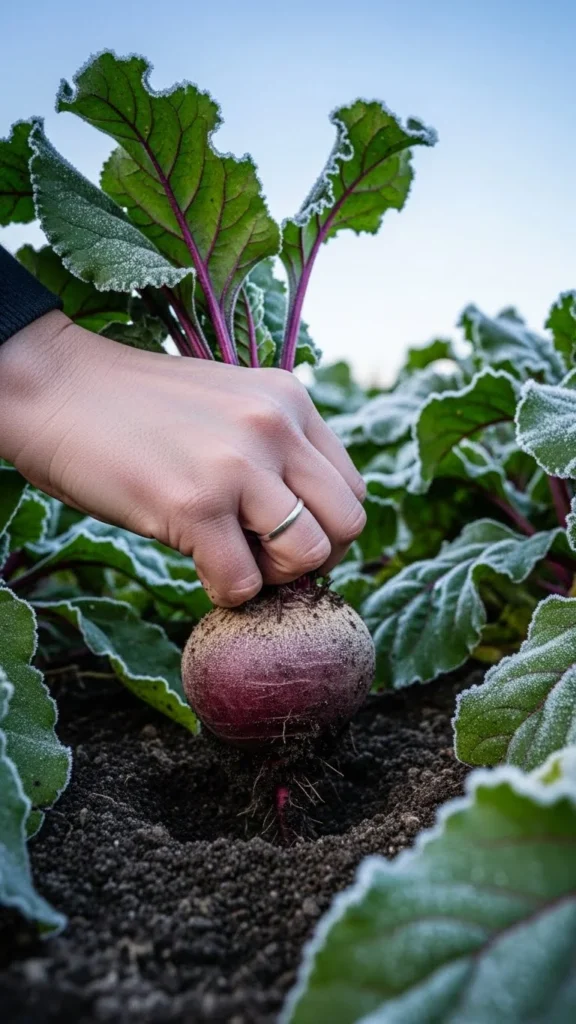
Beets grow surprisingly well through winter. Their roots stay firm, and the tops stay crisp unless the temperature drops extremely low. They thrive in cool soil, and the flavor becomes richer in cold weather. Plant them in rows with enough spacing so the round roots can expand without crowding.
You can grow beets in shallow beds or wide containers. Water lightly and avoid overwatering during cold months. Add fallen leaves as a simple winter mulch. It protects the soil and reduces weeds. If you want steady harvests, plant new seeds every few weeks in early fall. This gives you a mix of small and medium-sized beets throughout winter. Growing beets is affordable, reliable, and perfect for anyone who wants a hardy crop that doesn’t demand constant care.
3. Turnips
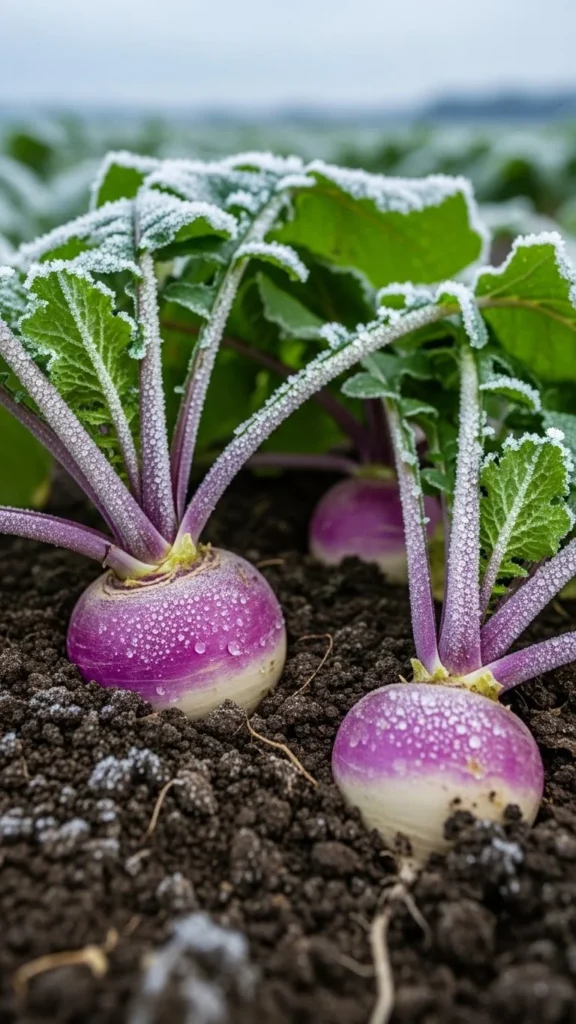
Turnips grow fast, even in low temperatures. They do well in garden beds and small backyard plots. The roots stay crisp, and the greens remain usable until the cold becomes extreme. Turnips are inexpensive to grow because they don’t require rich soil. A simple mix of compost and garden dirt works fine.
Plant the seeds lightly and keep them moist until seedlings appear. If your soil freezes often, spread straw or dried grass over the bed. This keeps the ground workable so you can harvest any time. Turnips are great for gardeners who want quick results. Many varieties mature in about six weeks, making them a helpful winter crop. You can also grow them in deep pots if your outdoor space is limited.
4. Radishes
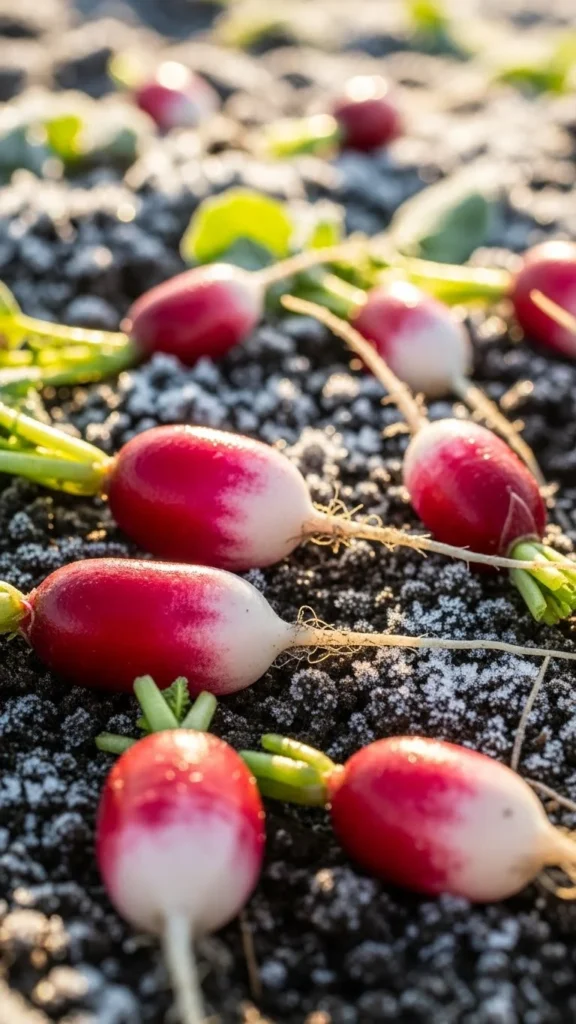
Radishes mature quickly, which makes them perfect for winter gardening. Cold weather keeps them crunchy and prevents them from becoming woody. You can plant radishes in narrow rows, deep pots, or along the edges of raised beds. They don’t need much space, making them a smart option for small gardens.
Keep the soil loose so the roots form evenly. Water sparingly during winter to avoid rot. If you want a steady supply, plant new seeds every couple of weeks. Radishes also pair well with slow-growing winter greens, allowing you to maximize your gardening area. A simple cold frame helps protect them from heavy frost, but many varieties withstand cold conditions naturally.
5. Parsnips
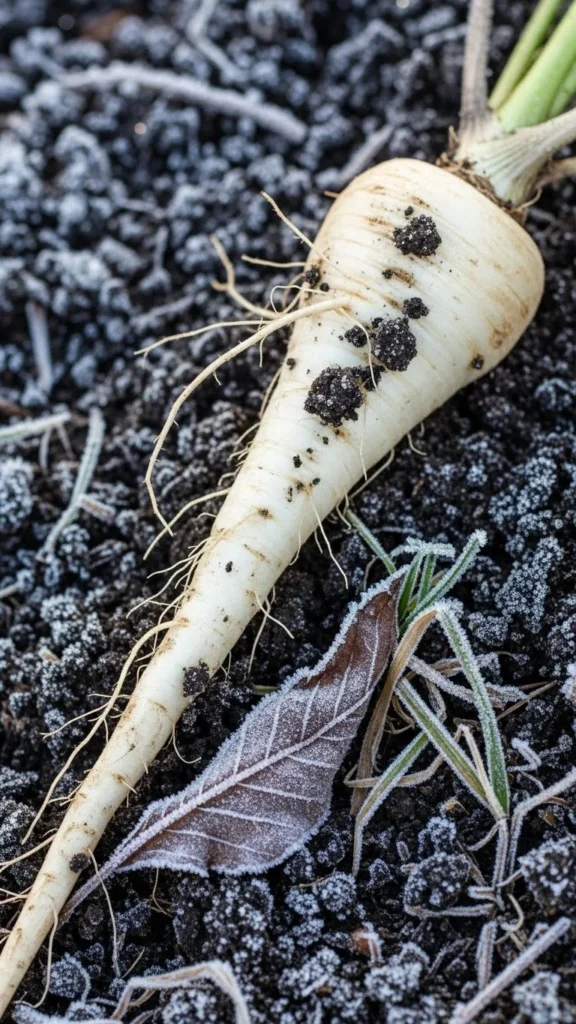
Parsnips thrive in cold climates. They taste sweeter after frost, and their roots stay firm even in hard soil. Plant them in deep, loose soil so the long roots can develop without bending. While they take longer to mature, the winter flavor makes the wait worthwhile.
Parsnips benefit from a layer of mulch during freezing weeks. It keeps the ground soft enough for harvesting. You can use straw, shredded leaves, or even old cardboard sheets. Since parsnips stay in the ground for months, they serve as natural storage. They require little attention beyond occasional watering, making them dependable winter vegetables.
6. Rutabaga
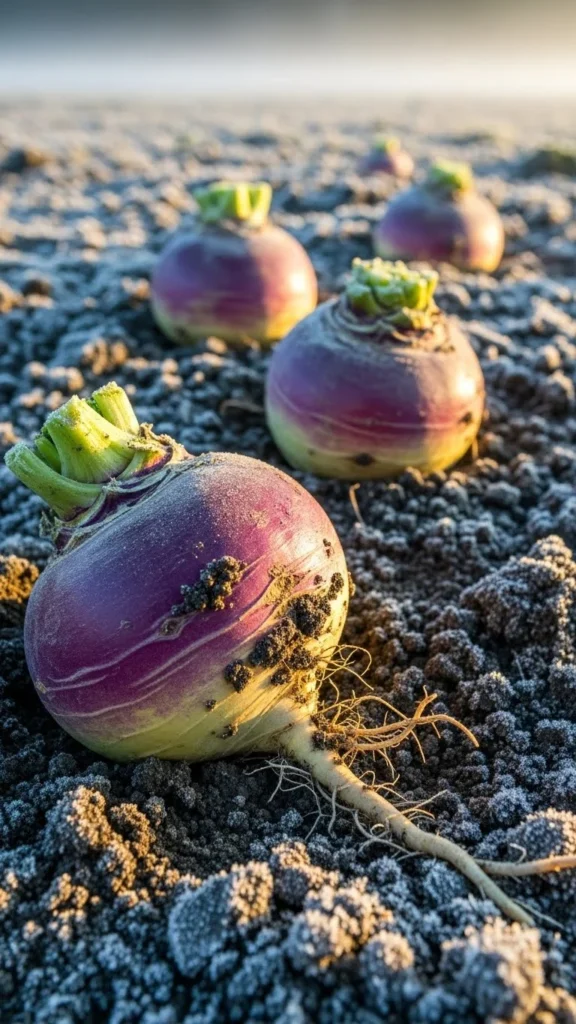
Rutabaga grows well during cold months. The roots develop a smooth texture when exposed to light frost. Plant the seeds in rows and thin the seedlings as they grow. This gives each root enough room to expand. Rutabaga is hardy and forgiving, making it a strong winter option.
Add a layer of mulch once temperatures begin to drop. This helps keep the soil workable. Rutabagas store well in the ground, giving you flexible harvest times. If you want an affordable way to grow large winter roots, rutabagas are a great choice.
7. Celeriac
Celeriac grows slowly but handles winter weather extremely well. The roots stay sturdy and flavorful even after frost. Plant it in loose, compost-rich soil so the bulbs develop properly. Water lightly through the season and avoid letting the soil become soggy.
Celeriac benefits from a thick mulch layer. Leaves or straw help maintain moisture and protect the roots. You can harvest whenever the bulbs reach the size you like. This vegetable works well in winter gardens because it doesn’t demand frequent care and stays firm in cold soil.
8. Jerusalem Artichokes
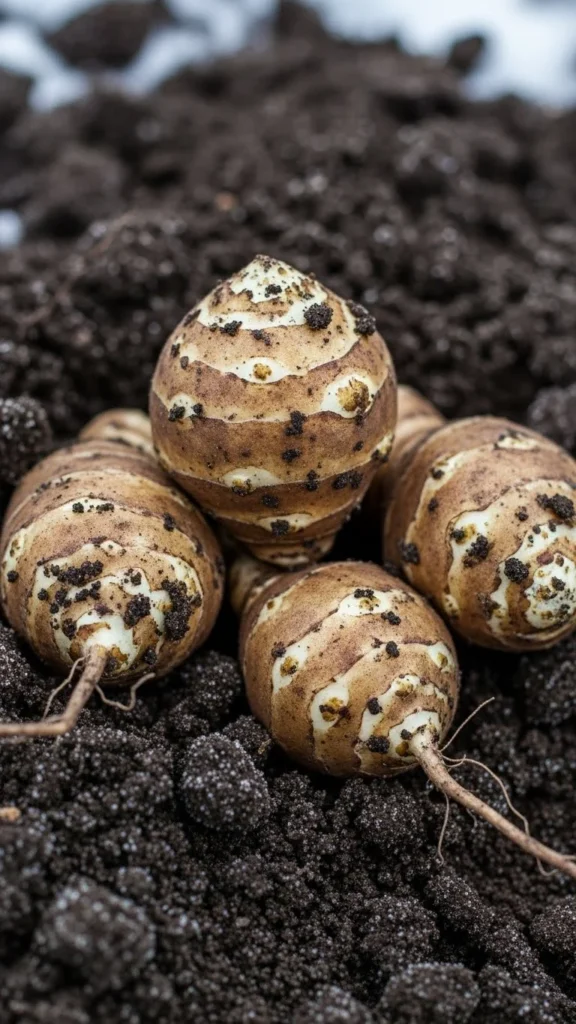
Jerusalem artichokes grow like wildflowers and handle cold soil without trouble. They spread easily, so plant them in a dedicated area or large container. Once established, they return each year with little effort.
Harvesting is simple. Dig around the plant and pull up the tubers as needed. They store best in the ground through winter, keeping their crisp texture. Jerusalem artichokes are affordable to grow long-term because they produce new tubers annually. They suit gardeners who want a steady supply of winter roots without constant planting.
9. Kohlrabi
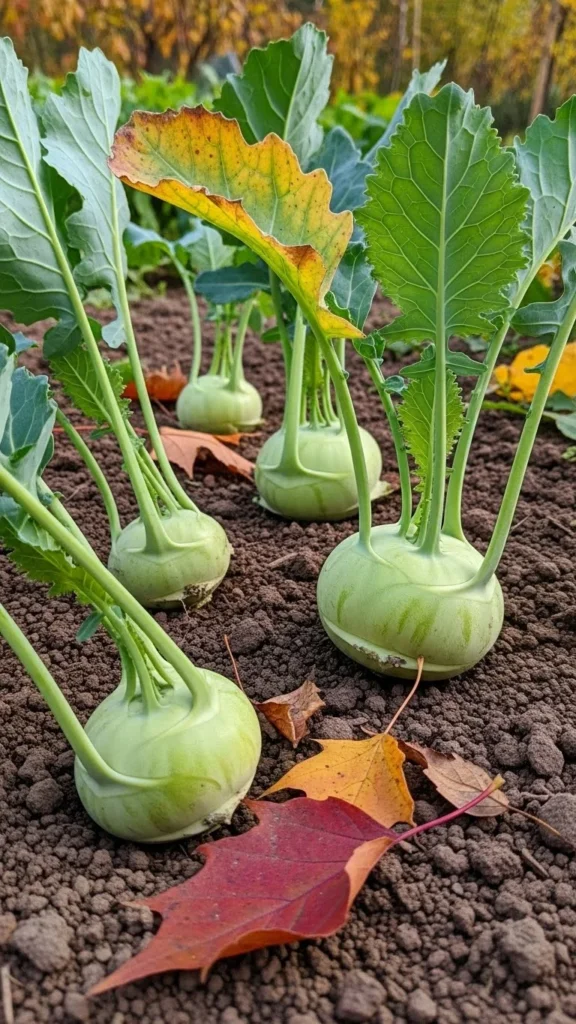
Kohlrabi handles cold weather better than many leafy crops. The bulbs stay firm in winter, and the flavor is mild and pleasant. Plant kohlrabi in loose soil and give each plant space so the bulbs can expand evenly.
Water lightly during cold months. Add a simple mulch layer to protect the soil from freezing solid. You can grow kohlrabi in containers too, making it a flexible winter option. Its short growing period helps you maintain a steady supply throughout the season.
10. Daikon Radish
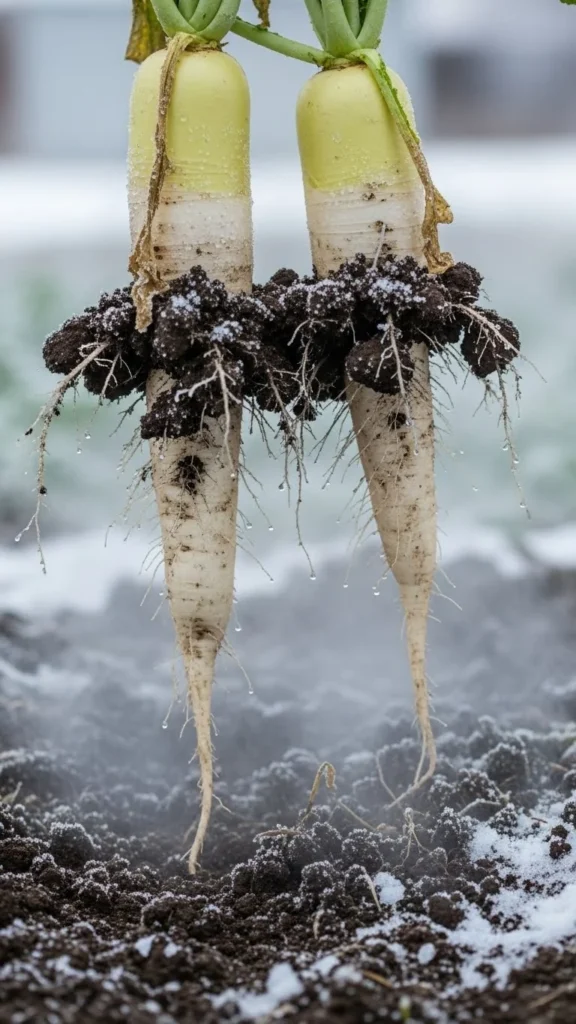
Daikon radishes grow well in cold conditions. Their long roots develop best in deep, loose soil. Plant them early in fall so they can mature before extreme cold sets in. Once established, they stay firm throughout winter.
A layer of straw helps protect the soil and keeps harvesting easy. Daikons work well in large containers too. They are space-efficient and reliable, making them useful for winter gardeners who want a hardy root crop.
11. Horseradish
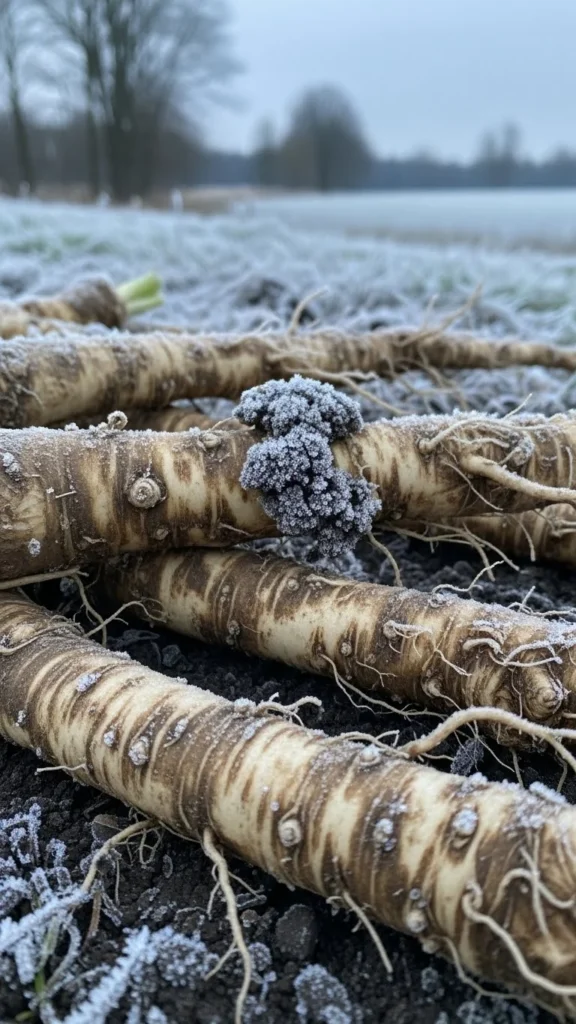
Horseradish is incredibly tough. It grows in poor soil and survives harsh winters. Plant a small root cutting in a corner of your garden, and it will expand steadily. It spreads easily, so use a container if you want control.
Harvesting is simple. Dig around the plant and pull up the roots as needed. The flavor intensifies in cold weather. Horseradish is affordable, dependable, and requires almost no attention during winter.
12. Salsify
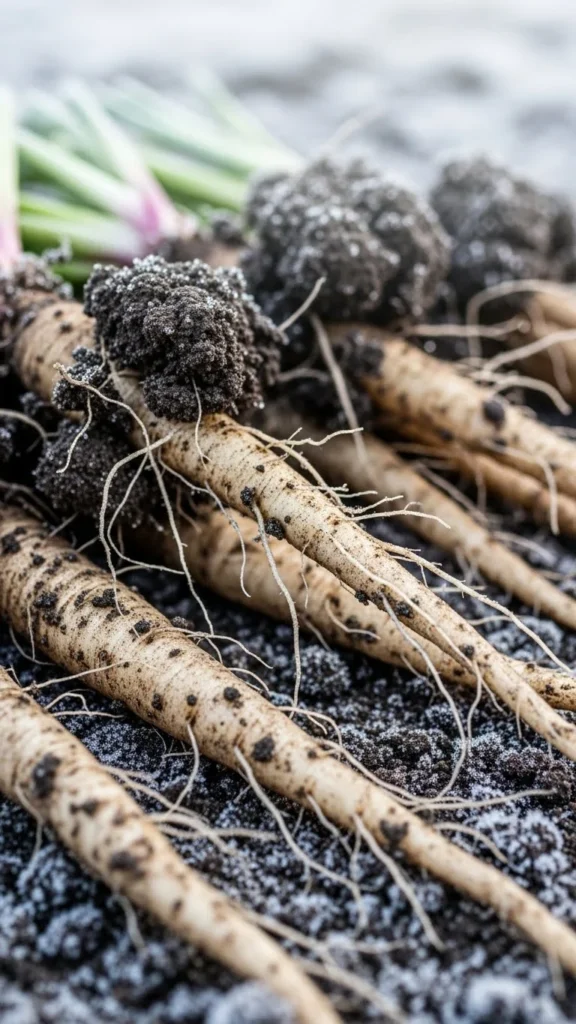
Salsify is lesser-known but surprisingly winter-friendly. The roots stay intact in cold soil and develop a mild, earthy flavor. Plant them in loose soil so the thin roots grow straight. They take time to mature, but once ready, they store well in the ground.
A mulch layer helps protect the soil during freezing weeks. Salsify is a good option for gardeners who enjoy trying new winter crops. It grows quietly and steadily without constant care.
13. Burdock Root
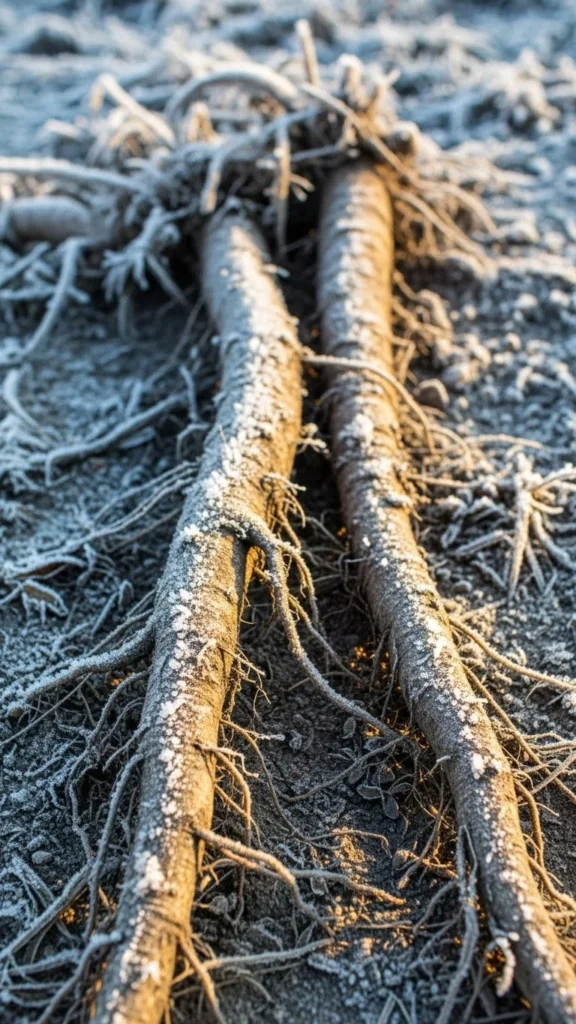
Burdock root grows deep and strong, even in cold conditions. It prefers loose soil, but it can handle tougher ground too. Plant seeds in long rows and give the plants room to stretch out.
The roots become easier to pull after frost softens the soil. Add mulch to maintain moisture and protect the top layer of the ground. Burdock is a long-season crop, but it rewards you with dependable winter harvests.
14. Chicory Root
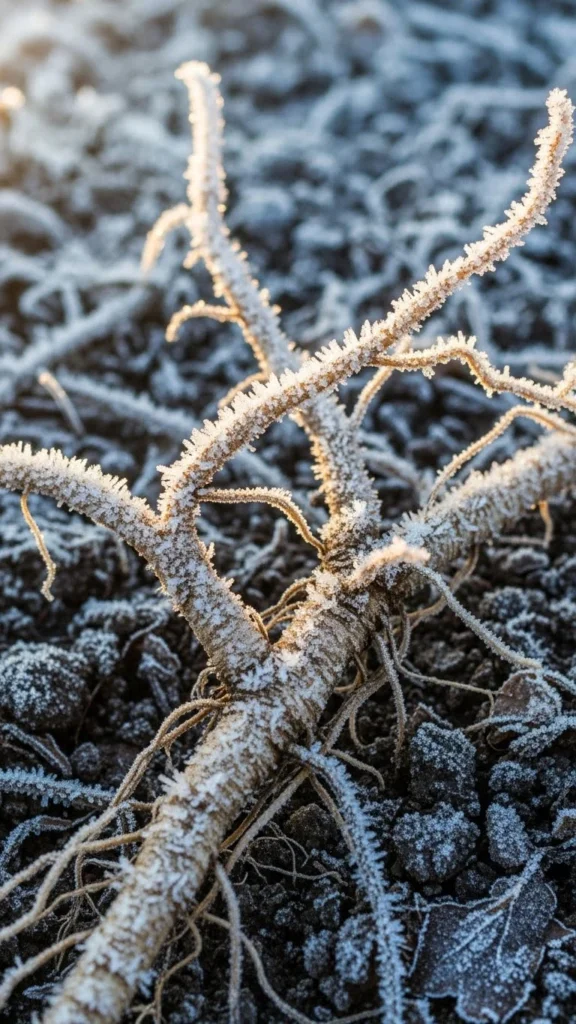
Chicory root is resilient and stays stable in cold weather. It grows well in simple garden beds and doesn’t demand rich soil. Plant chicory seeds in straight rows and thin them once the seedlings appear.
Water sparingly during winter. Add dry leaves around the base for insulation. Chicory can remain in the soil for months, making it helpful for winter gardeners who prefer low-maintenance crops.
15. Maca Root
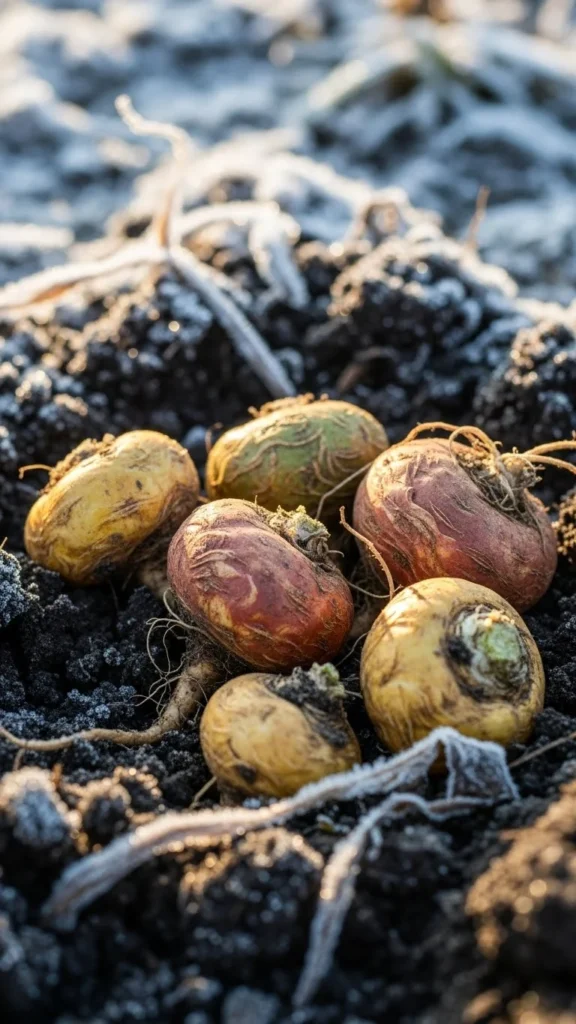
Maca root grows best at high altitudes, but it handles winter cold well in many climates. Plant maca in loose, sandy soil so the round roots can grow without resistance. It takes time to mature but stays stable in frost.
Mulch helps protect the soil during cold spells. Water lightly and let the plant grow at its own pace. Maca is good for gardeners who enjoy unusual root crops that still thrive in winter.
16. Scorzonera
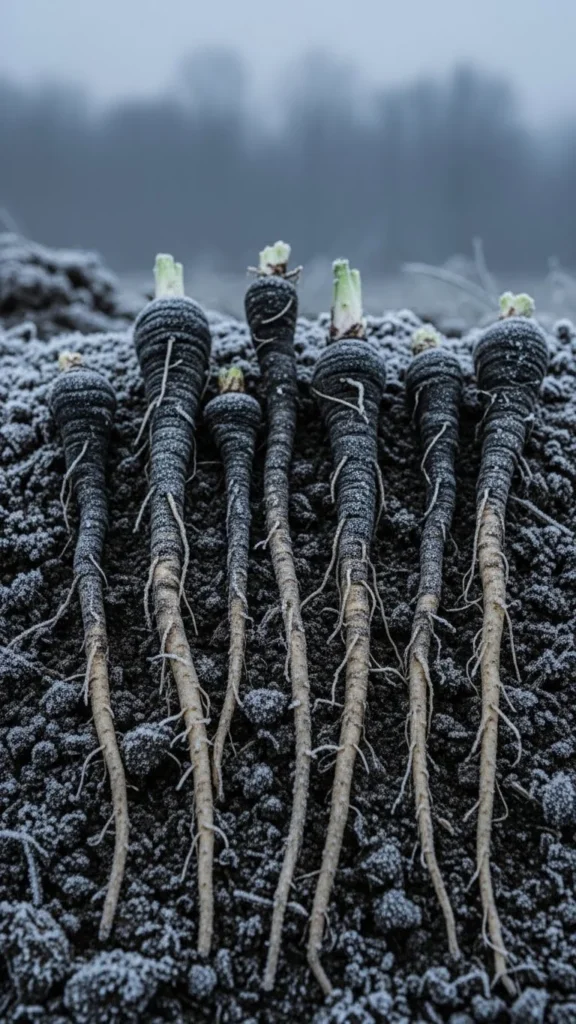
Scorzonera, sometimes called black salsify, stays firm in cold soil. Plant it in deep, loose ground so the long roots can grow without breaking. It handles frost well and doesn’t need much attention during winter.
Add a simple mulch layer to keep the soil workable. Harvest as needed, because scorzonera stores best underground. This makes it practical for winter gardens where storage space is limited.
17. Taro (Cold-Tolerant Varieties)
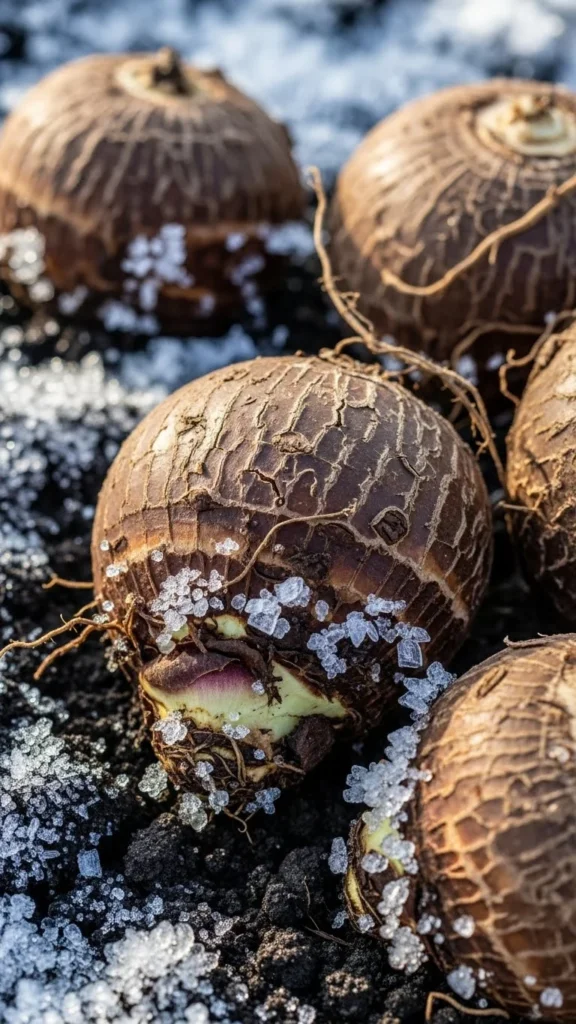
Some taro varieties handle mild frost. Plant them in raised beds where the soil warms faster, and give them rich, well-drained soil. Mulch helps protect the roots from sudden temperature drops.
Harvesting is easy. Dig around the plant and pull the corms once they reach the size you prefer. Taro works well in sheltered winter gardens or simple backyard setups.
18. Japanese Mountain Yam
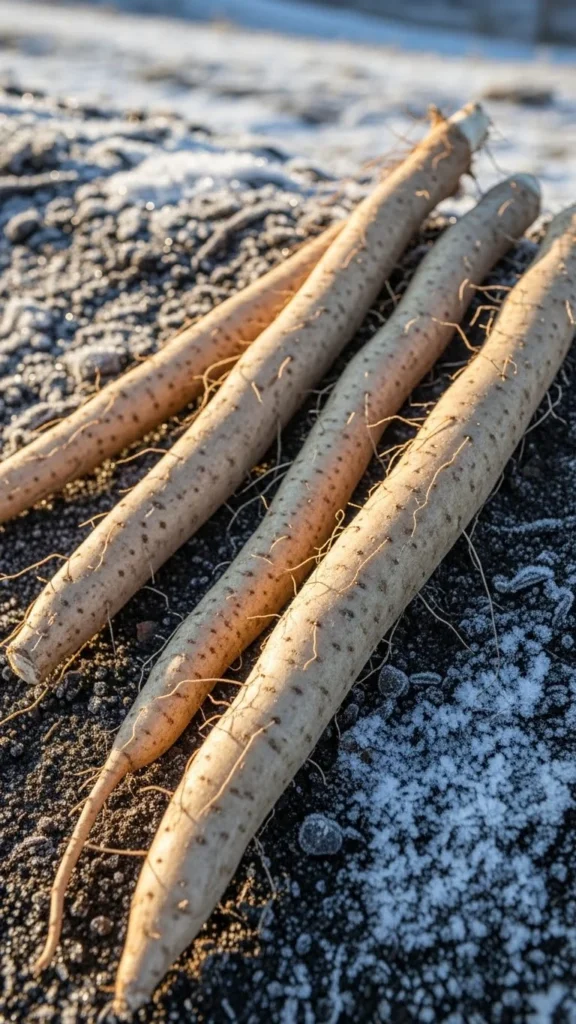
Japanese mountain yam grows deep into the soil. It handles winter cold well and develops a strong, firm texture. Plant it in loose soil so the long roots grow without breaking.
A layer of leaves helps keep the soil soft through frost. This crop grows slowly, but it stays steady all winter. It’s an interesting option for gardeners who want unique root vegetables.
19. Scallions (Root Harvest)
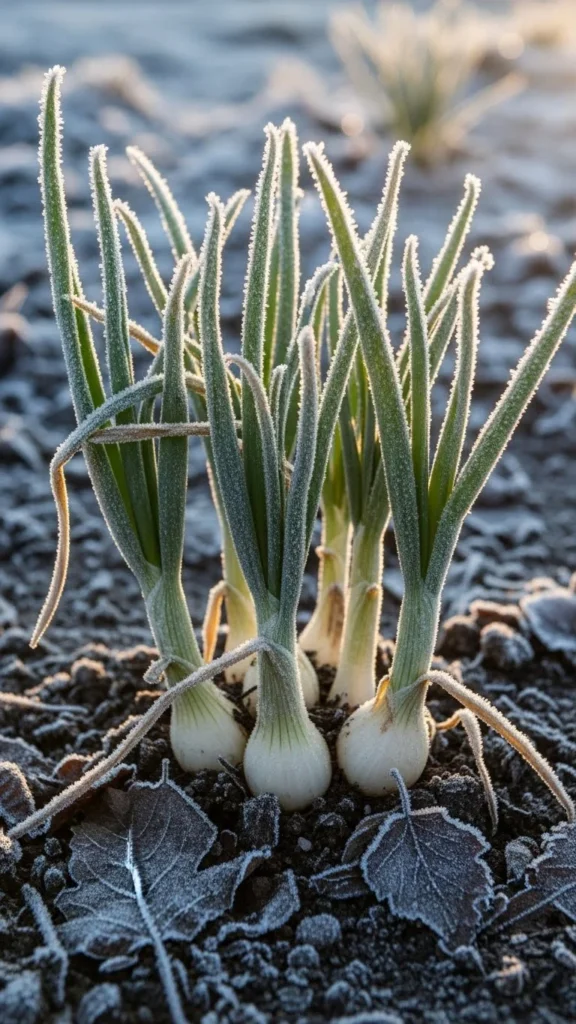
Scallions are usually grown for their greens, but the small white roots are winter-hardy. They grow well in narrow rows and containers. Plant scallions thickly, then pull them as needed.
Water lightly through winter. Add straw for insulation. Scallions are quick, reliable, and perfect for filling small gaps in your winter garden.
20. Garlic (Planted for Next Year’s Bulbs)
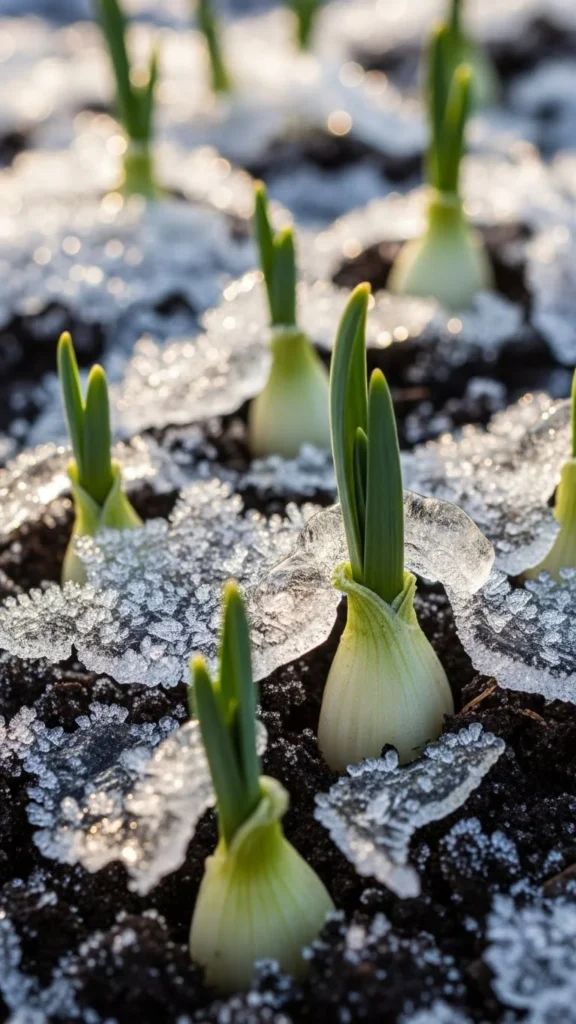
Garlic is planted in fall and grows roots all winter. The bulbs develop slowly underground, and cold temperatures help them form properly. Plant cloves in straight rows and cover with mulch.
Garlic requires little care during winter. The roots stay protected under straw or leaves. It’s an easy crop to manage because the frost actually supports strong growth.
21. Onions (Overwintering Varieties)
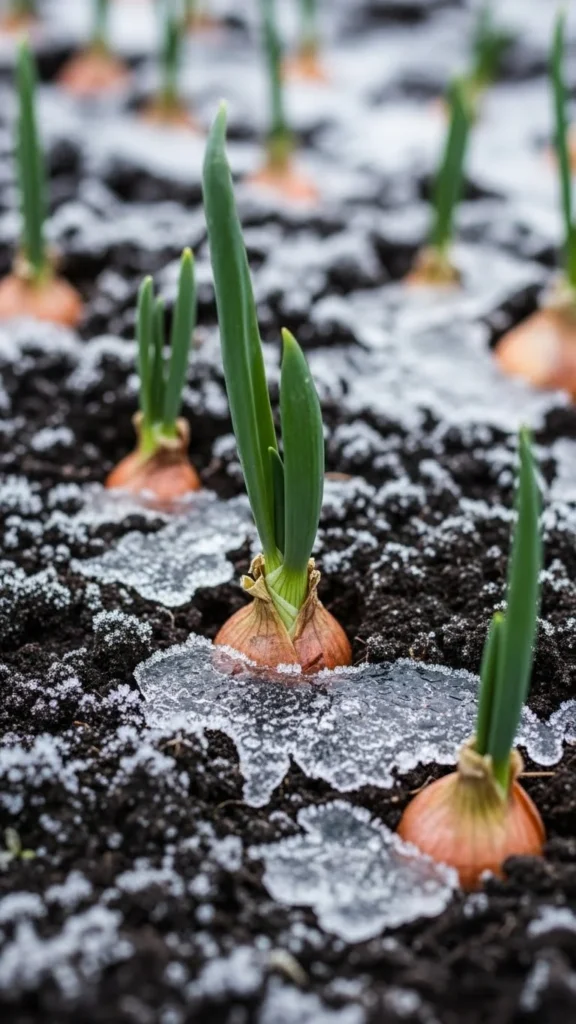
Overwintering onions survive frost and begin growing again in early spring. Plant them in loose soil so the bulbs can swell. Cover with mulch to keep the topsoil soft.
Onions are simple to care for. Water lightly and let them grow slowly through winter. This method helps you enjoy early harvests when spring arrives.
22. Leeks
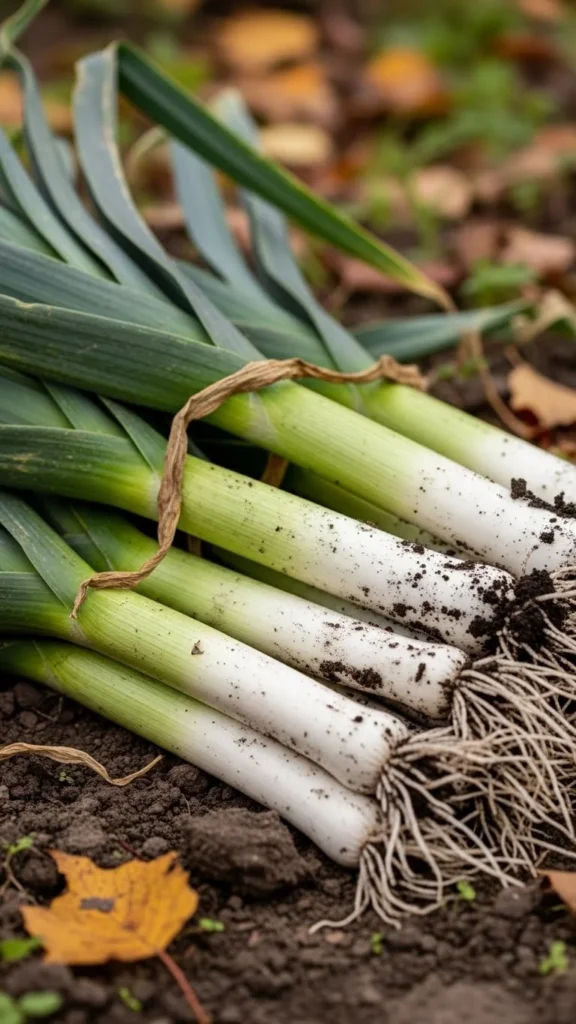
Leeks stay strong in cold gardens. Their thick stems handle frost well, and they grow steadily through winter. Plant leeks in trenches and fill in the soil as they grow to blanch the stems.
Add mulch around the base to protect the roots. You can harvest leeks as needed, and they stay crisp even in freezing weather.
23. Shallots
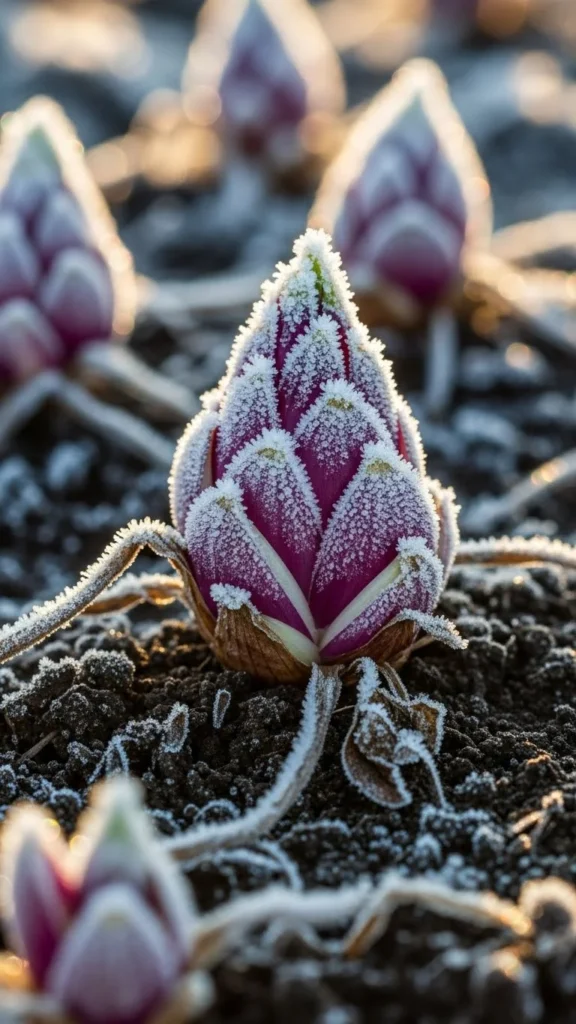
Shallots grow well during winter when planted in fall. They form clusters of bulbs underground, and the shoots remain stable even in cold air. Plant them in neat rows and add mulch once temperatures drop.
Shallots require little care. Water sparingly and allow them to develop through winter. They reward you with early spring harvests.
24. Elephant Garlic
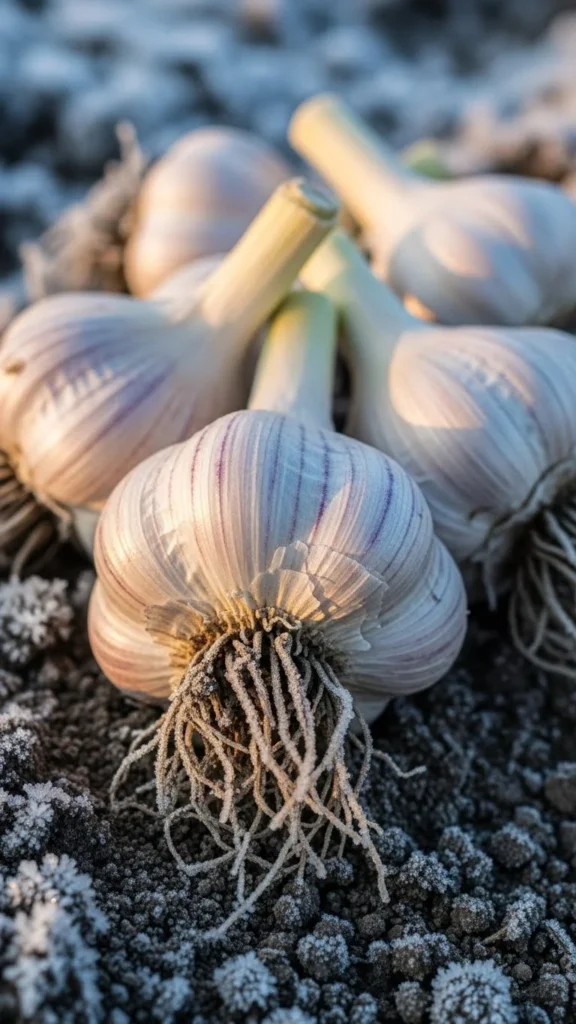
Elephant garlic grows slowly through winter. Plant the large cloves several inches deep and space them well. Cover with straw to protect the soil.
This plant handles frost easily and develops strong roots during winter. It’s a great choice for gardeners who want big bulbs without much effort.
25. Winter Radish Varieties (Black, Watermelon, Green)
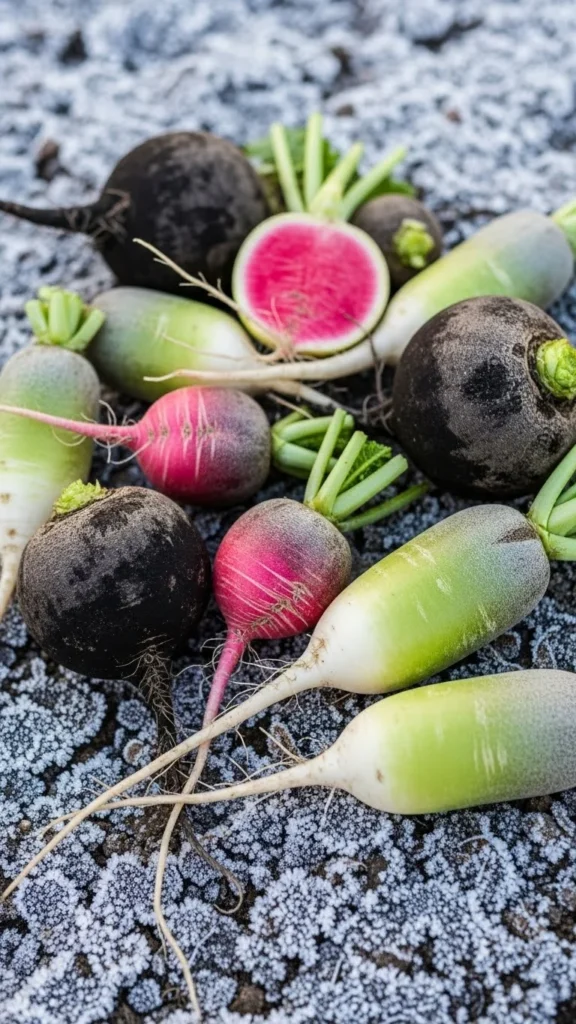
Winter radishes grow well in cold soil. Their thick skins help them stay firm through frost. Plant them early in fall so they mature before extreme cold arrives.
You can store winter radishes in the garden by covering them with leaves. Pull them as needed, and they stay crisp for months.
26. Yacon
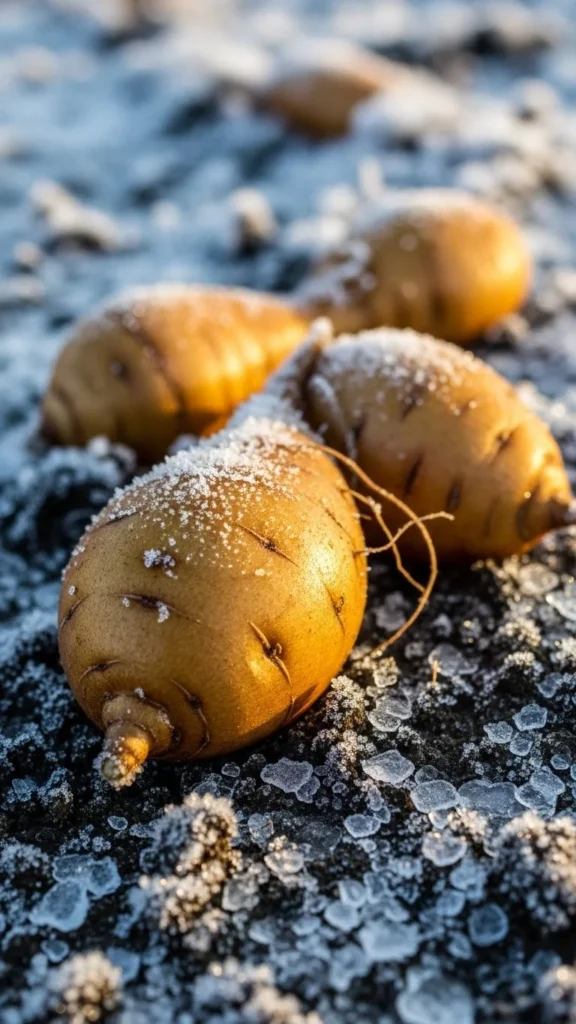
Yacon grows underground and handles mild frost. Plant it in raised beds with loose soil. The tubers develop slowly but stay stable as temperatures drop.
Mulch helps protect the plant and keeps the soil workable. Yacon is a good winter crop for gardeners who enjoy trying new root vegetables with simple care routines.
Conclusion
Winter gardens thrive when you grow hardy root vegetables that stay strong in cold soil. These crops offer steady harvests, easy routines, and budget-friendly gardening options. With simple mulching, light watering, and thoughtful spacing, you can enjoy crisp, flavorful vegetables even during frost-filled months. Try a few from this list, build confidence through the season, and enjoy homegrown winter produce without stress.

Leave a Reply