

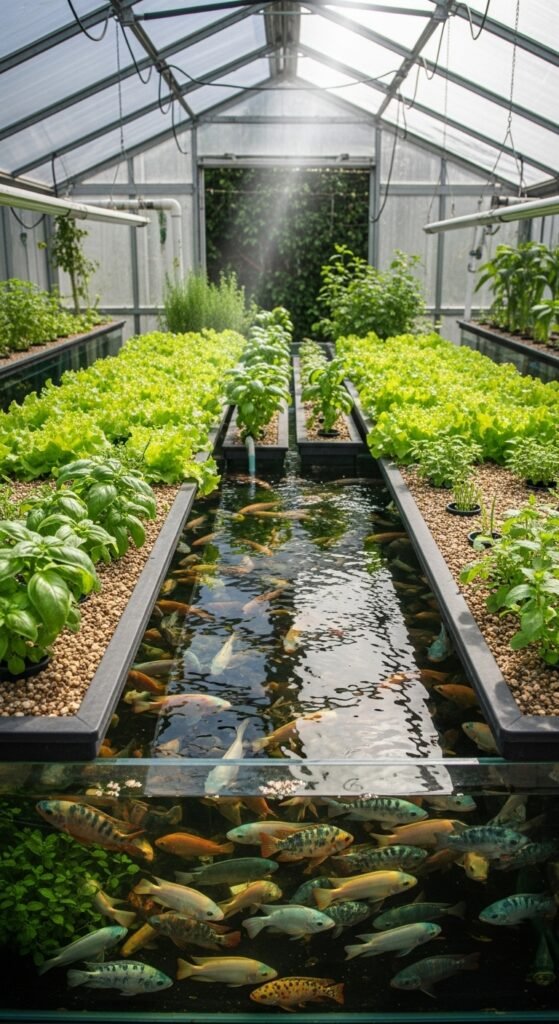
Aquaponics is one of the most rewarding ways to grow food naturally. It combines aquaculture (raising fish) and hydroponics (growing plants in water) to create a self-sustaining cycle. If set up correctly, you can produce vegetables, herbs, and fish all year round — right in your backyard or even indoors. Here are 25 practical aquaponics gardening tips that will help you get bigger harvests, healthier plants, and thriving fish without spending a fortune.
1. Start Small and Scale Up
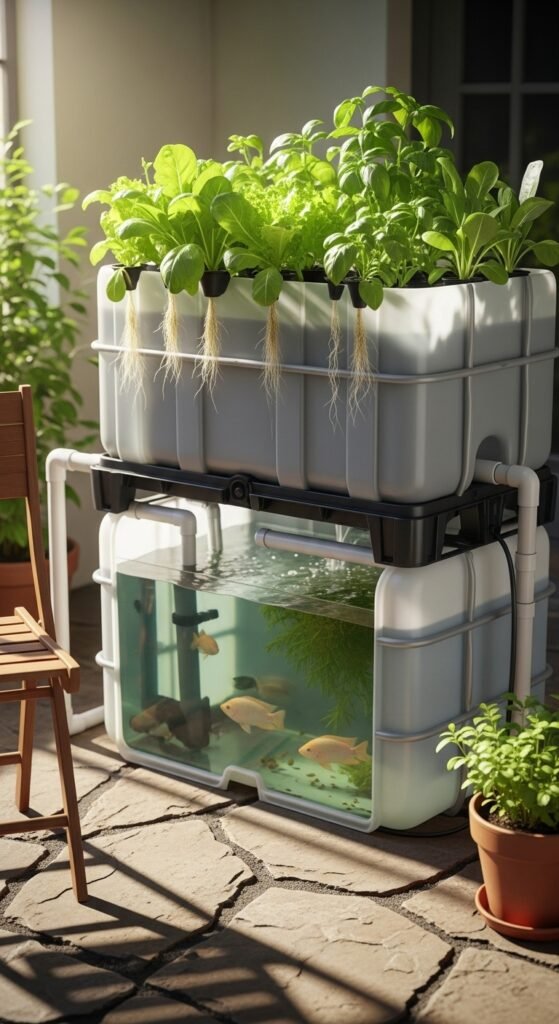
If you’re new, begin with a small system. It’s easier to manage water balance, learn the cycle, and fix issues before scaling up. A 50–100-gallon setup with hardy plants like lettuce or basil works perfectly. Once you understand feeding, filtration, and pH stability, expand gradually. Small systems also require less upfront cost, making them a smart entry point.
2. Choose Hardy Fish Species
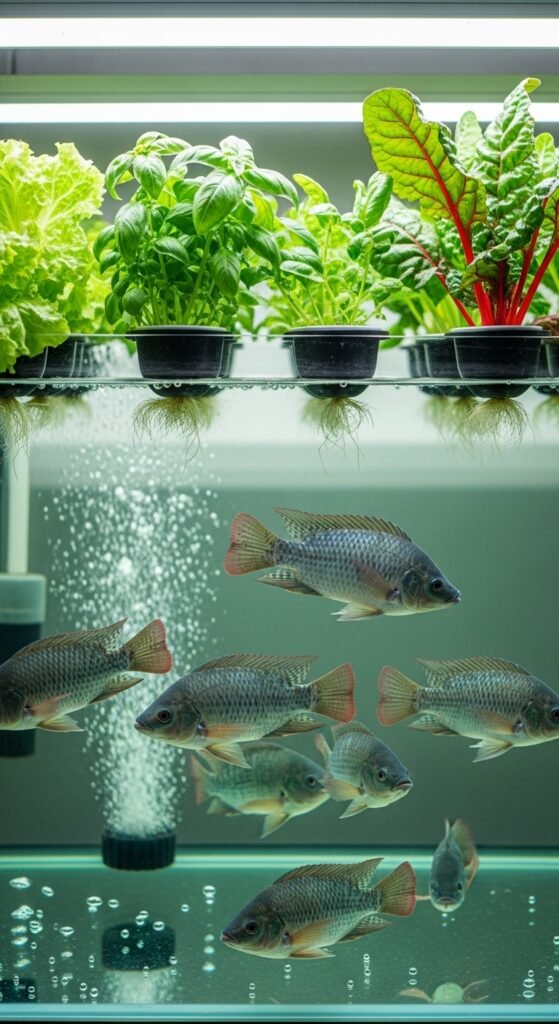
Pick fish that can tolerate temperature changes and variable water conditions. Tilapia, catfish, and goldfish are great starters. They handle beginner mistakes and grow quickly. Buy from a local hatchery to reduce stress on fish during transport. Avoid overstocking early on — aim for 1 fish per 5 gallons of water until the system stabilizes.
3. Use the Right Grow Media
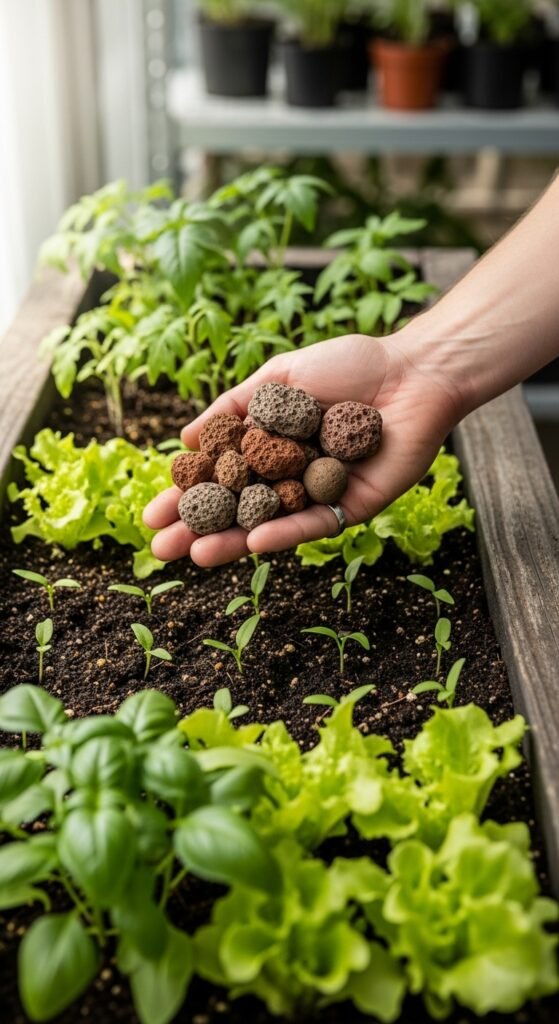
Your grow media affects both filtration and root support. Clay pebbles, lava rock, or expanded shale are top choices because they don’t clog easily and allow bacteria to thrive. Avoid anything that alters water pH, like limestone. Rinse your media before use to remove dust that could cloud the water.
4.Maintain Balanced pH Levels
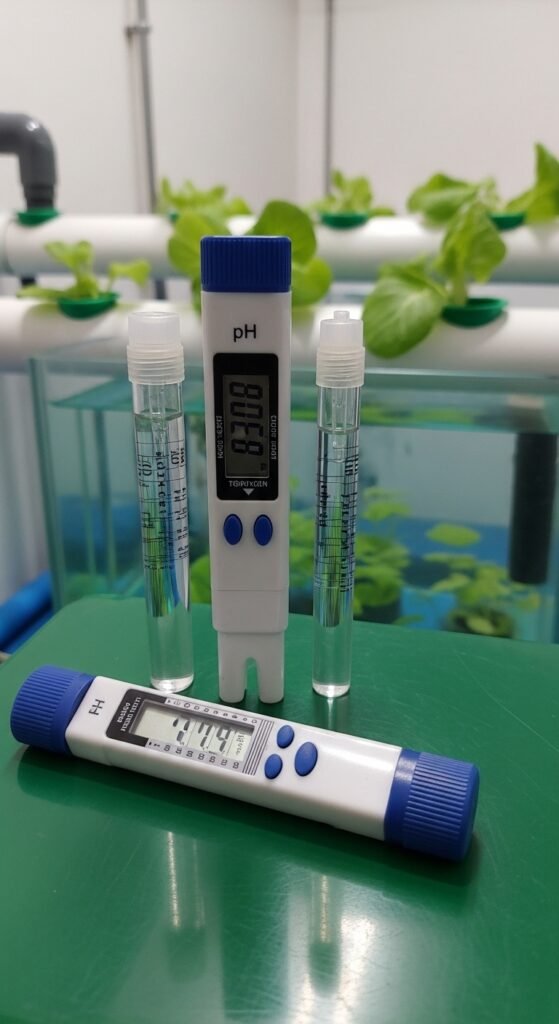
Fish and plants share the same water, so pH balance is key. Keep levels between 6.8 and 7.2 for best results. Test weekly and use natural adjustments like adding crushed coral (to raise pH) or peat moss (to lower it). Avoid sudden changes — stability keeps your system running smoothly.
5. Feed Fish Consistently
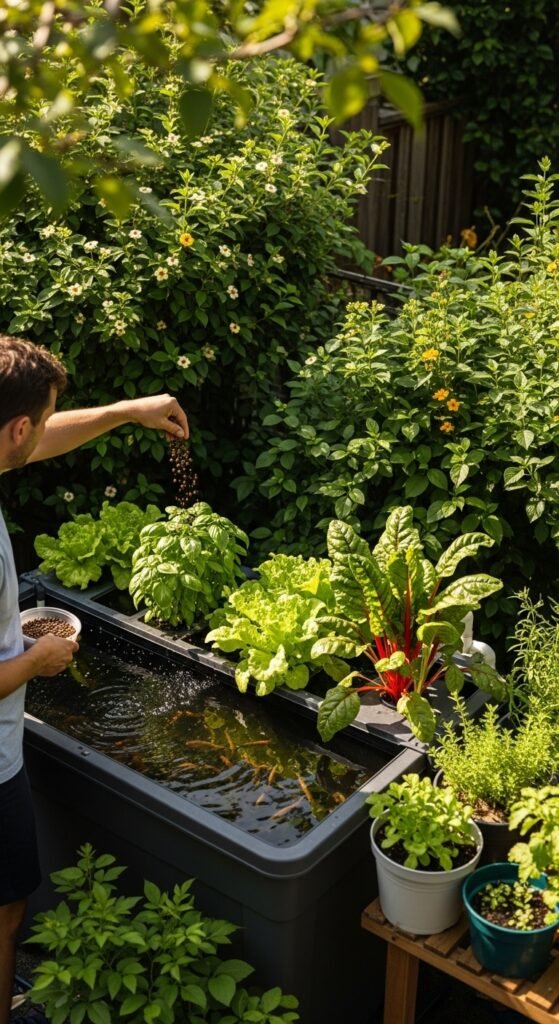
Feed your fish small amounts twice daily. Uneaten food decays fast and can harm water quality. Watch for how quickly they eat — if food remains after 5 minutes, you’re overfeeding. Choose high-protein pellets and store them in airtight containers to prevent moisture buildup.
6. Let the System Cycle Before Planting
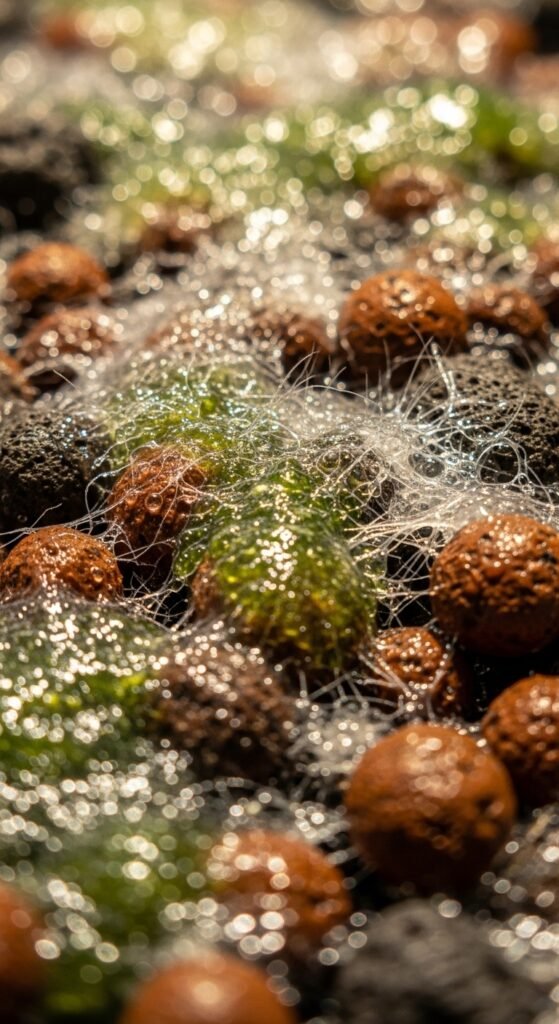
Before adding plants, let bacteria establish. This process, known as cycling, takes 4–6 weeks. During this time, bacteria convert fish waste into nutrients plants can absorb. You can add ammonia manually or use a few hardy fish to start the process. Be patient — once the nitrogen cycle stabilizes, your plants will thrive.
7. Monitor Water Temperature
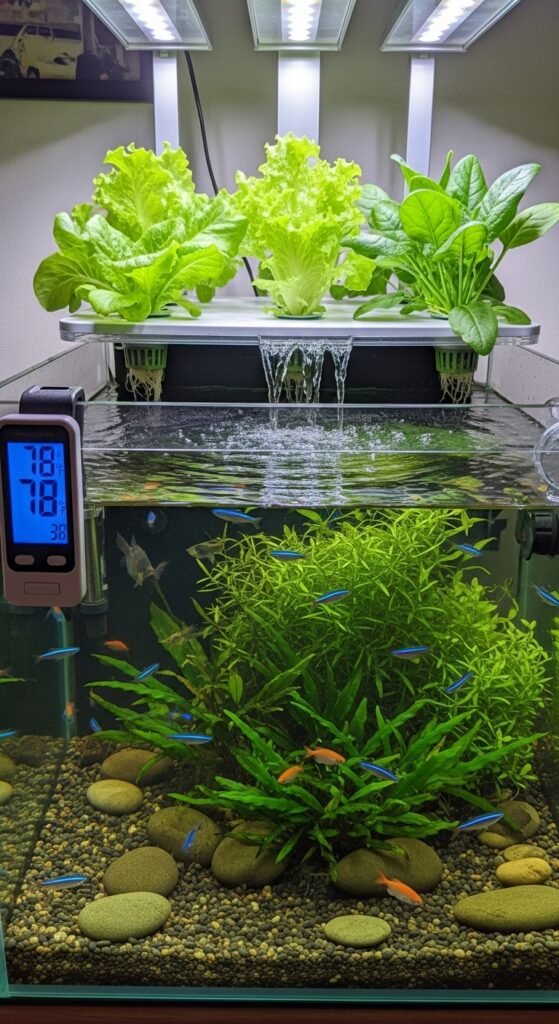
Water temperature affects both plant growth and fish health. Most systems do best between 68°F and 80°F. Use a simple aquarium heater during cold months and shade cloth in summer. Consistent temperature helps bacteria perform their nutrient-conversion role efficiently.
8. Choose Fast-Growing Plants
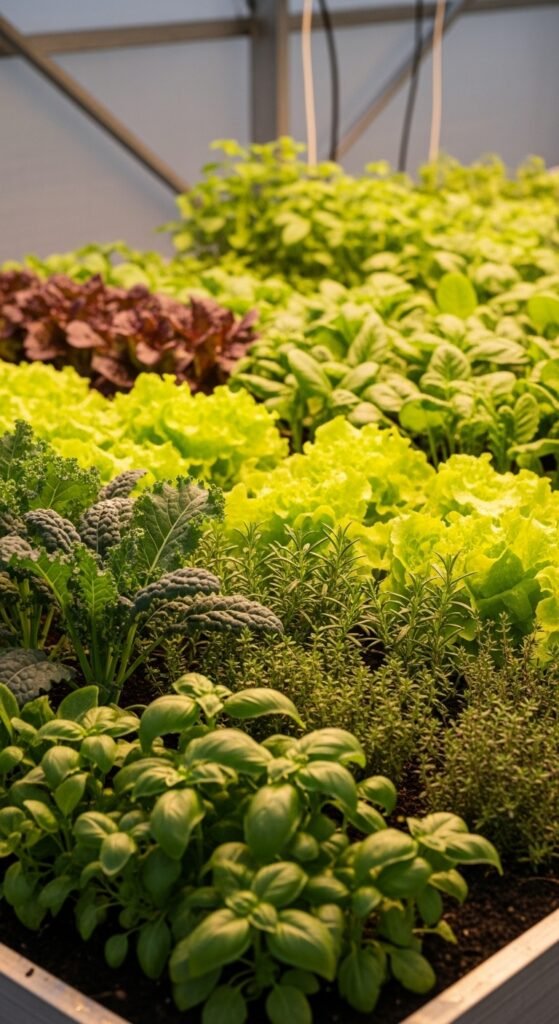
Start with quick growers like lettuce, basil, spinach, and mint. These plants adapt easily and let you harvest often. Once your system matures, try tomatoes or cucumbers. Stick with plants that don’t need deep roots — shallow varieties thrive in aquaponic media beds.
9. Keep Oxygen Levels High
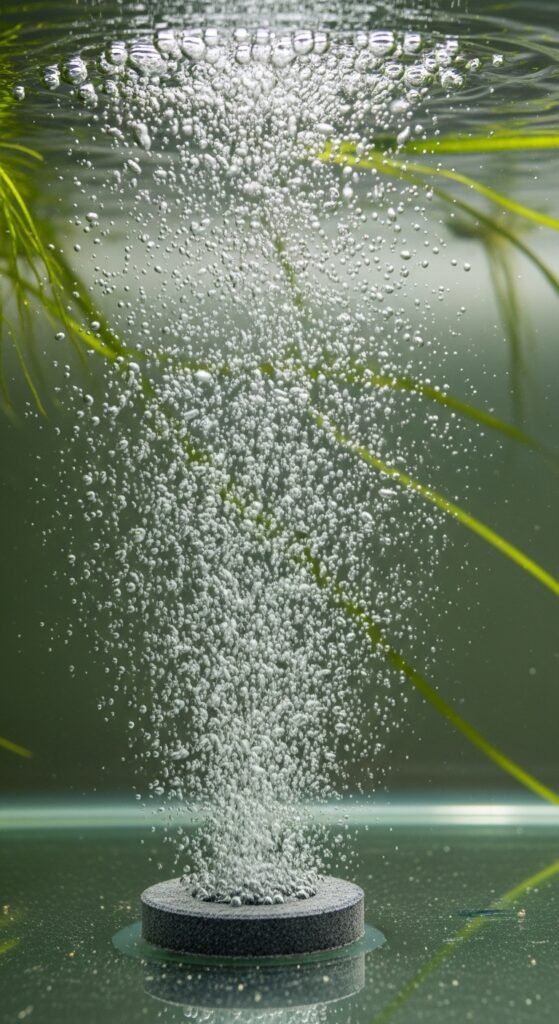
Both fish and bacteria need oxygen to survive. Use air pumps and stones to keep water well-aerated. If fish gasp near the surface, it’s a warning sign. Clean air stones regularly and make sure your pump runs 24/7. Oxygen-rich water keeps the ecosystem balanced.
10. Add Worms to the Grow Beds
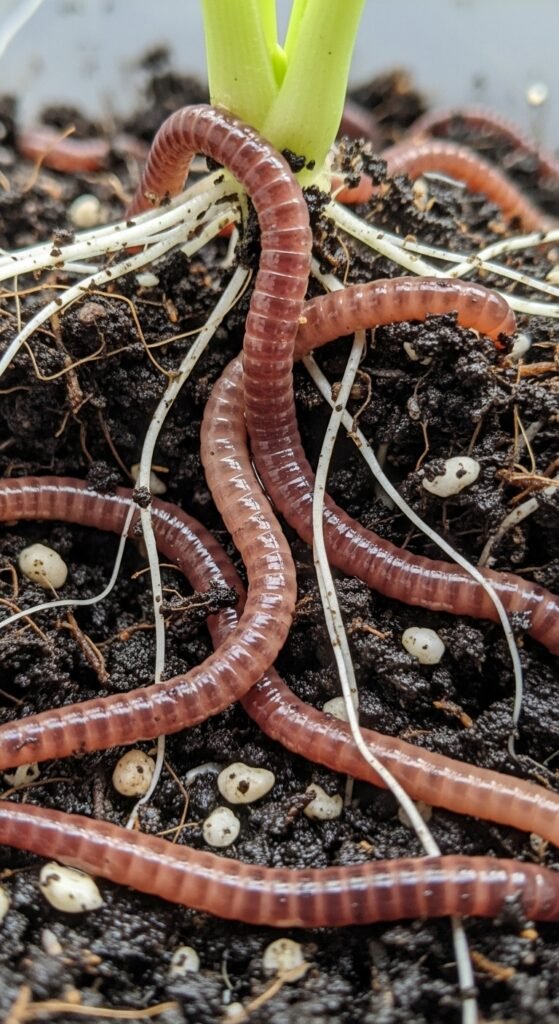
Worms break down fish waste and leftover roots into compost that plants can absorb. Red wigglers are the best option. They also help prevent root rot by improving aeration in the grow beds. Start with a small handful and let them multiply naturally.
11. Use Rainwater When Possible
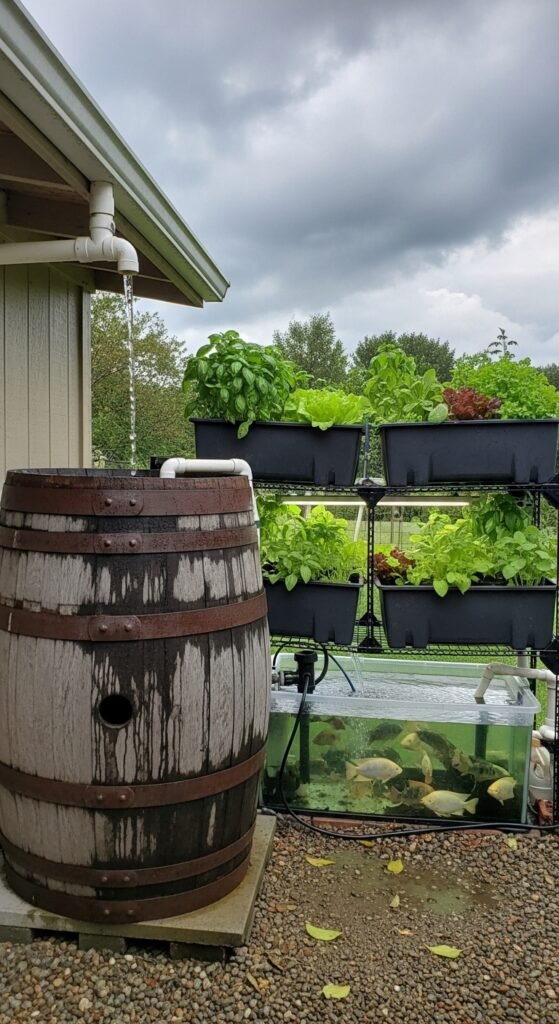
Rainwater is chlorine-free and soft, making it perfect for aquaponics. Collect it safely in clean barrels and use it to top up your system. If you use tap water, let it sit for 24 hours before adding it, so chlorine can evaporate naturally.
12. Prune Plants Regularly
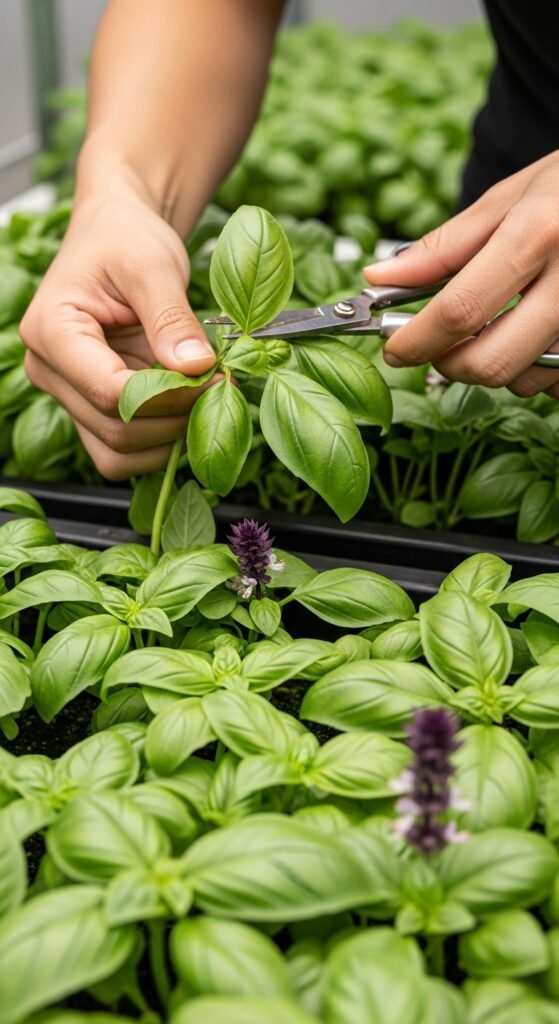
Trimming encourages new growth and prevents overcrowding. Remove yellow or dying leaves to keep water clean. Compost the trimmings instead of tossing them away. Regular pruning also improves airflow and light penetration for healthier plants.
13. Test Nitrate and Ammonia Levels
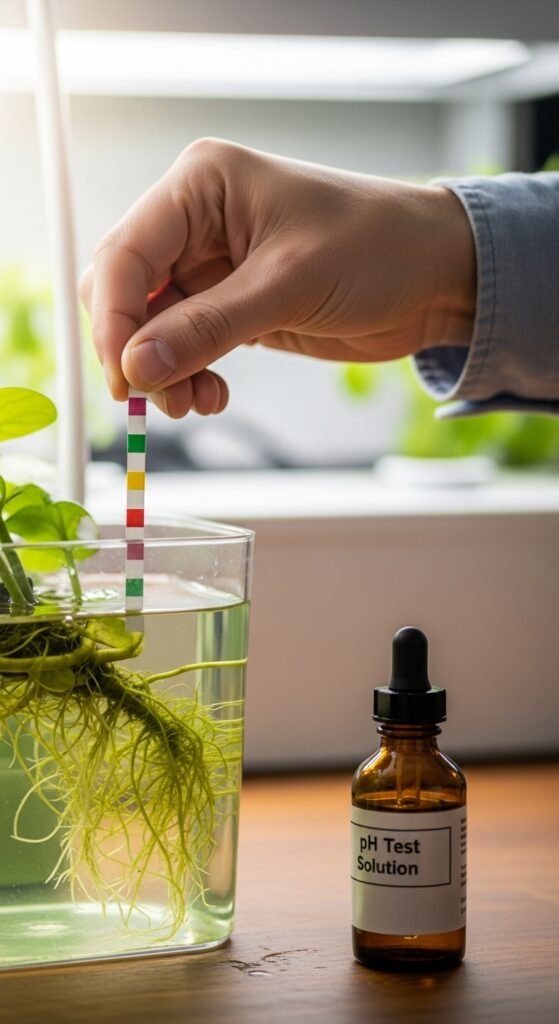
High ammonia or nitrate levels signal an imbalance. Use affordable test kits weekly. Ammonia should stay below 0.5 ppm and nitrates between 5–40 ppm. If numbers rise, reduce feeding or add more plants to absorb the nutrients. Consistent testing prevents system crashes.
14. Use Shade Cloth in Hot Weather
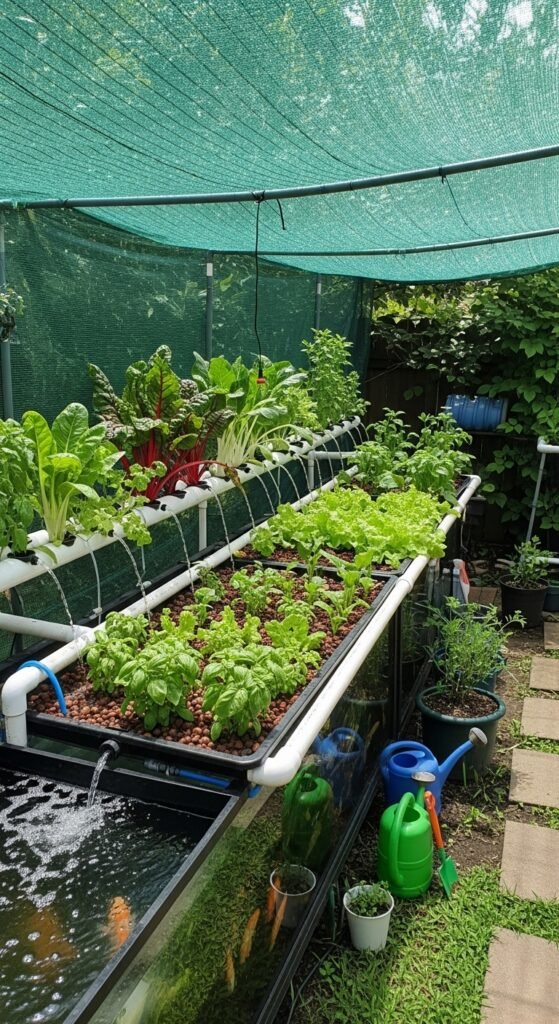
Direct sunlight can overheat the system. Install a simple shade cloth or old net curtain over your plants. It keeps temperatures steady and prevents algae growth in the water. You can attach it using PVC pipes or bamboo poles — simple and cheap.
15. Avoid Chemical Treatments
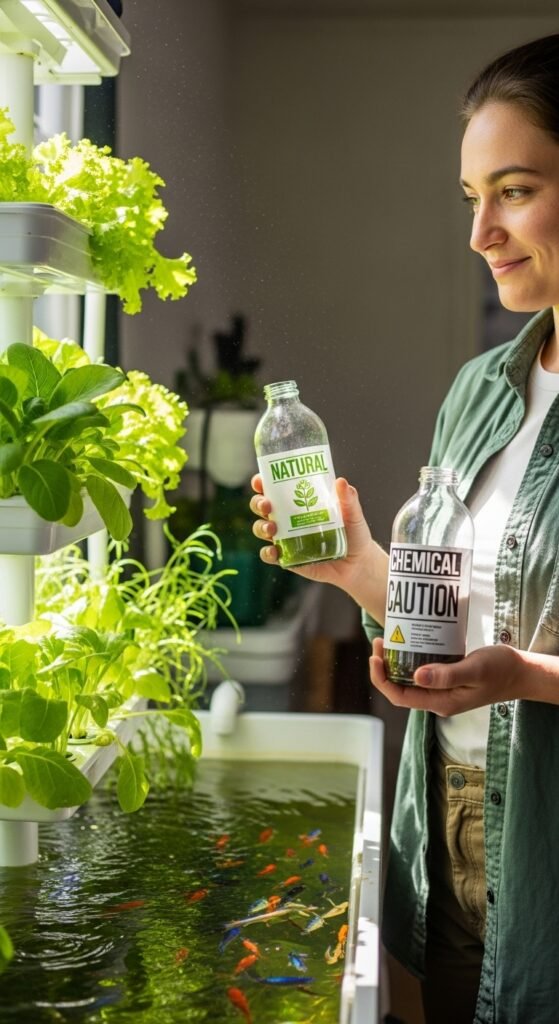
Chemicals harm the bacteria that keep your system running. Avoid using pesticides or water conditioners meant for standard aquariums. If pests appear, try neem oil spray or introduce natural helpers like ladybugs. Keep it organic for long-term balance.
16. Keep the System Clean
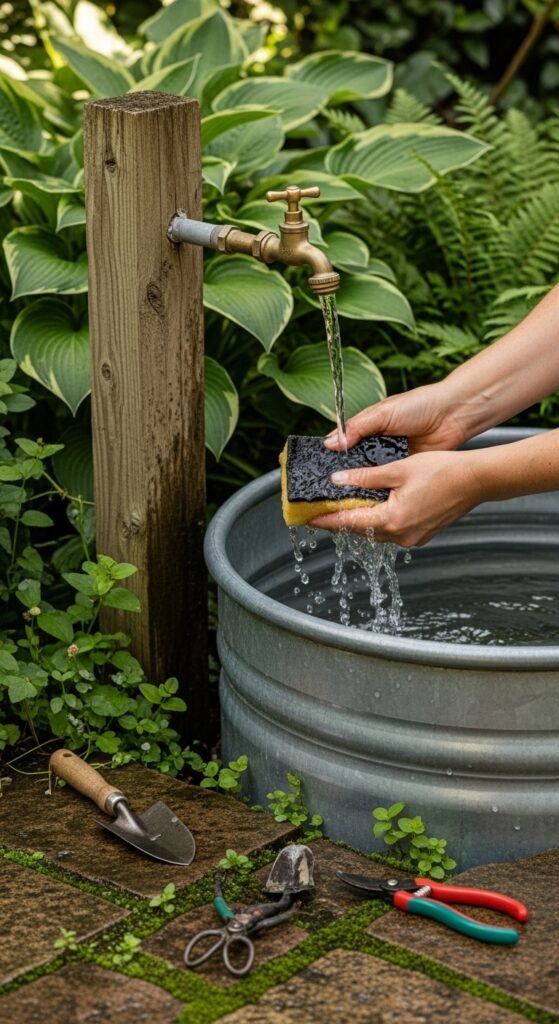
Every few weeks, clean filters, check for algae buildup, and remove dead plant matter. Small steps prevent blockages that could disrupt water flow. Use soft brushes and rinse media with system water to keep beneficial bacteria intact.
17. Maintain Consistent Light
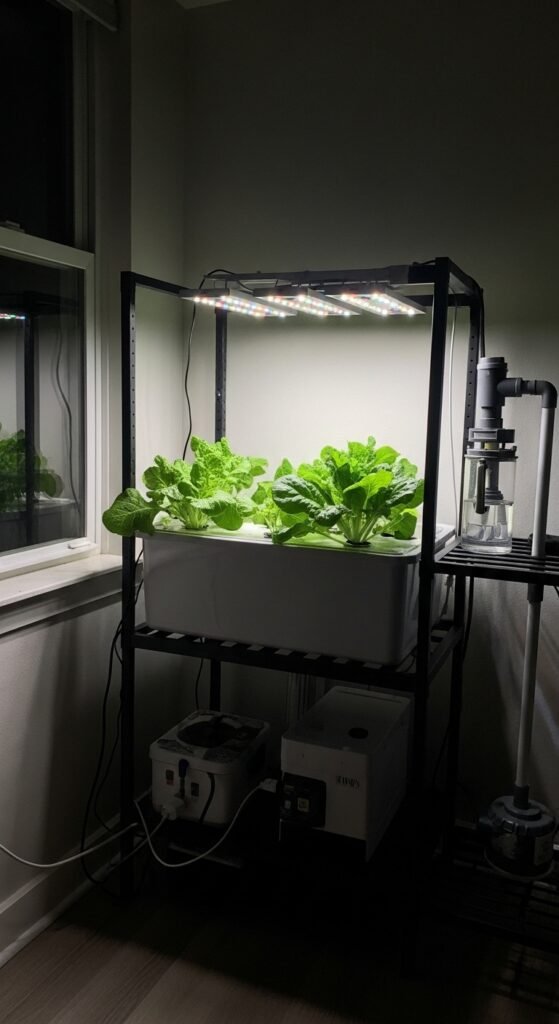
Plants need steady light — at least 12–16 hours daily. Use LED grow lights if you’re indoors. Set them on a timer so you don’t forget. Light consistency helps plants grow evenly and keeps yields strong.
18. Check Water Flow Regularly
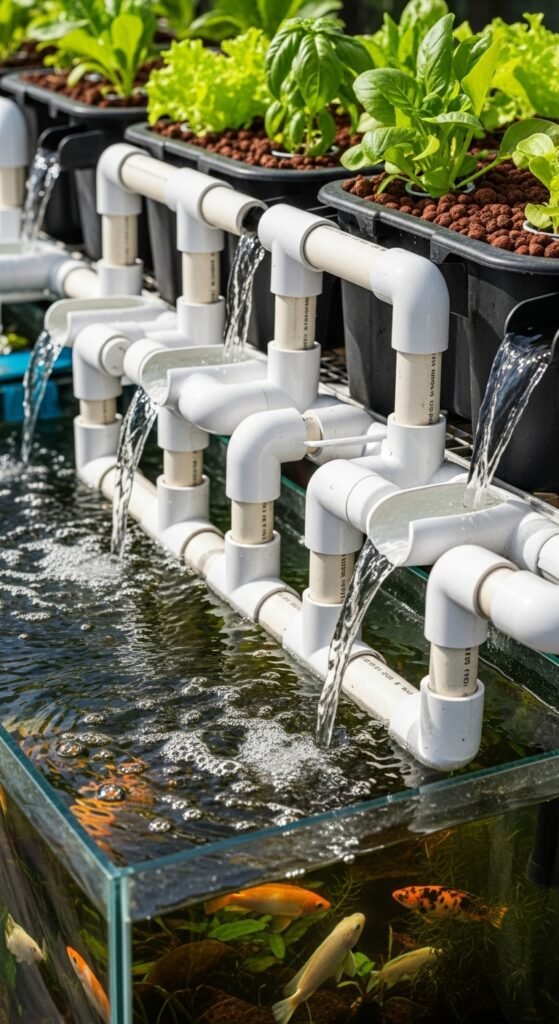
A steady flow keeps nutrients moving. Watch for clogs, especially near outlets. Adjust your pump’s strength to match the size of your grow beds. If water flow slows, clean tubing and check for debris.
19. Add Backup Power for Pumps
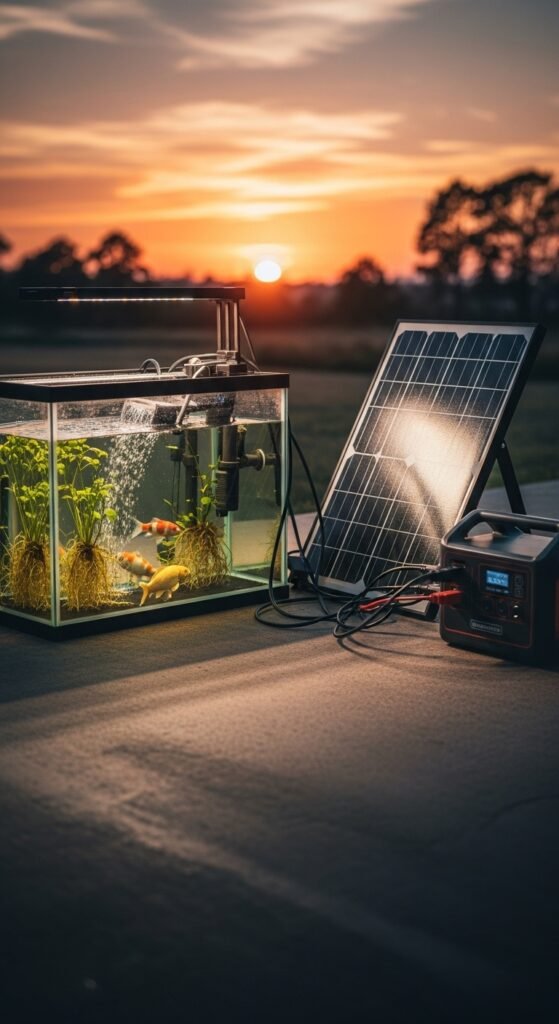
Power cuts can stop oxygen flow, which stresses fish. A small backup battery or solar pump can save your system. You can find affordable portable power kits online or repurpose an old UPS from a computer.
20. Prevent Algae Growth
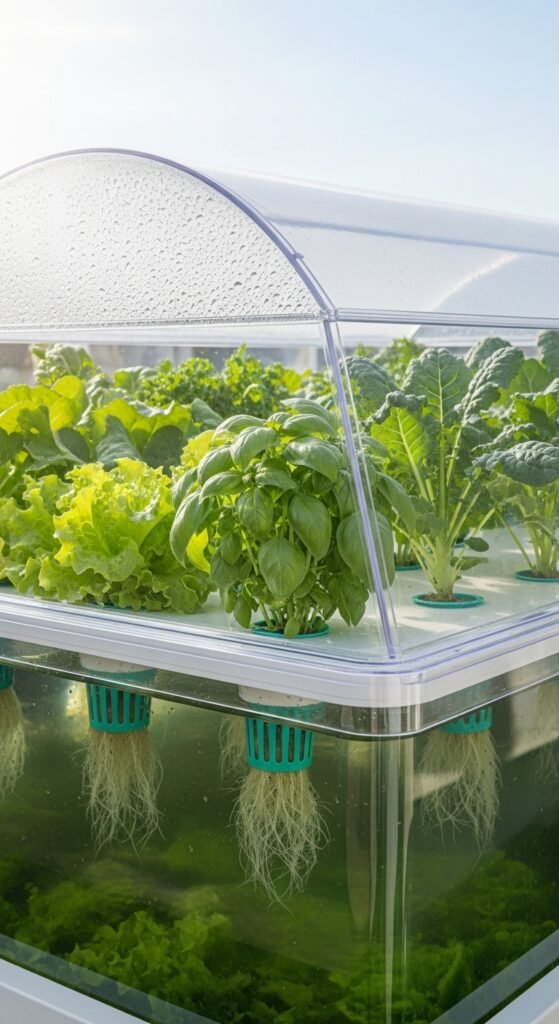
Algae competes with plants for nutrients. Reduce it by blocking sunlight from hitting the fish tank. Cover the top with dark plastic or paint the sides. Clean the surface if it starts to turn green.
21. Harvest Gradually
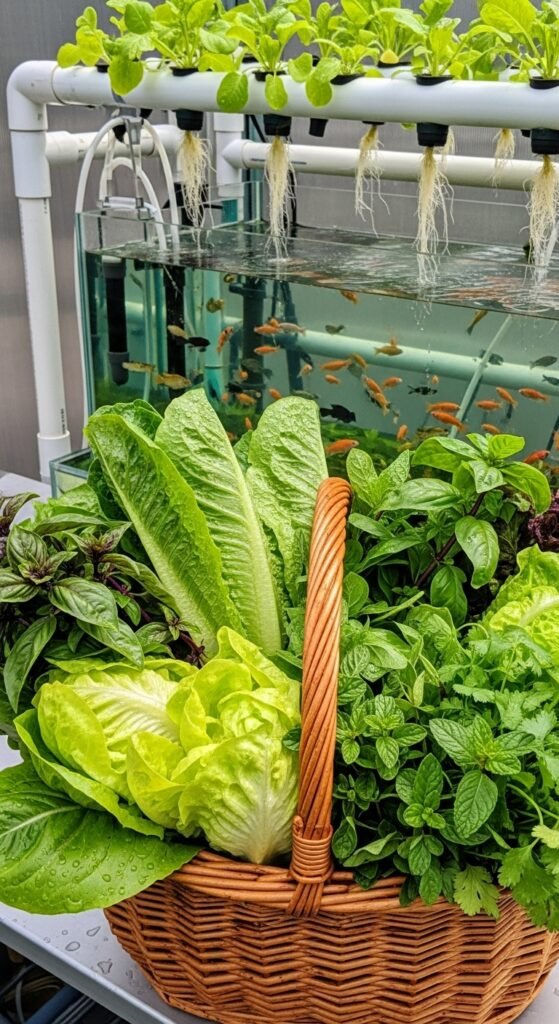
Don’t remove all plants at once. Take a few each week to keep water balanced. Sudden harvests can disrupt nutrient levels. Stagger planting schedules for a steady supply of greens all year.
22. Keep Detailed Records
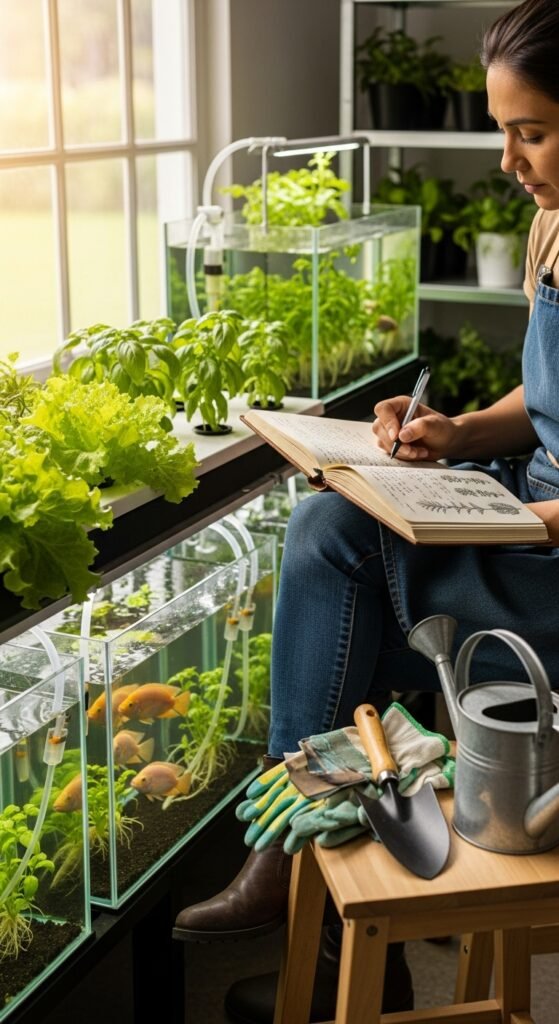
Track feeding times, water tests, and plant growth. A simple notebook or spreadsheet helps you spot patterns. Over time, you’ll learn what works best for your setup and can predict when adjustments are needed.
23. Add Calcium and Iron Naturally
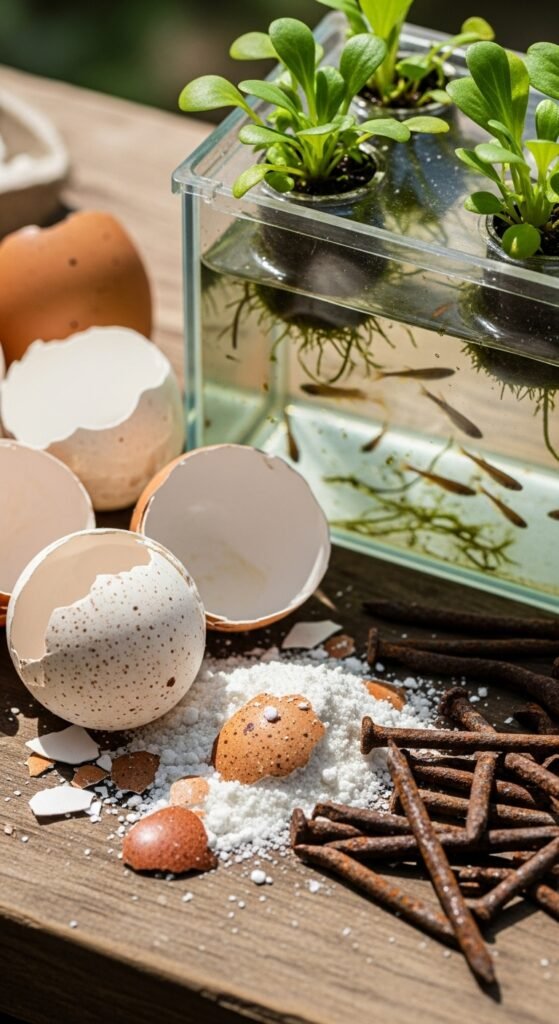
Plants often crave calcium and iron. Instead of chemical supplements, use crushed eggshells for calcium and old iron nails for trace minerals. Place them in a mesh bag inside your sump tank — slow release and safe for fish.
24. Keep Fish Stress-Free

Stress affects fish appetite and growth. Keep noise low, avoid tapping on the tank, and handle them gently. Provide shaded areas where fish can hide. Healthy, relaxed fish mean steady nutrient production.
25. Learn from Each Season
Every season changes water temperature, daylight, and growth rates. Observe how your system behaves throughout the year. Make adjustments, try new crops, and improve design bit by bit. Aquaponics thrives when you learn and adapt.
Conclusion
Aquaponics gardening brings life, food, and learning together. By following these 25 practical tips — from keeping water balanced to choosing the right plants — you’ll enjoy steady harvests and a thriving ecosystem. Start small, stay consistent, and enjoy the satisfaction of raising your own food naturally and efficiently.

Leave a Reply