

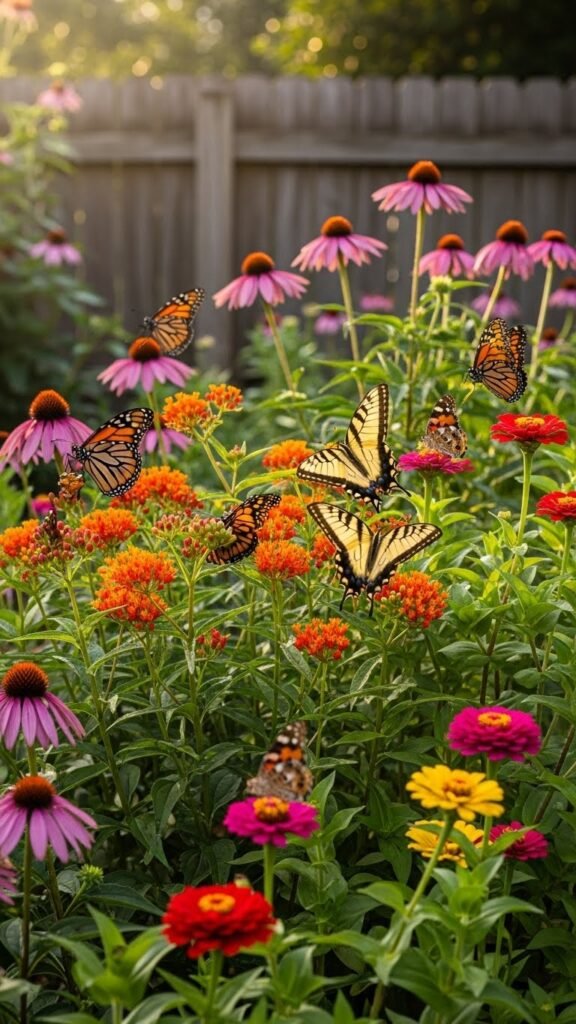
Creating a butterfly garden ideas isn’t just about beauty—it’s about bringing life, motion, and color to your outdoor space. Butterflies thrive in welcoming environments filled with nectar-rich blooms, sunshine, and calm shelter. Whether you have a sprawling yard or a small balcony, these easy and affordable ideas will help you attract these delicate pollinators while making your garden a peaceful retreat.
1. Grow Native Nectar Plants

Native flowers are the cornerstone of any butterfly garden. They provide the nectar butterflies crave and adapt perfectly to your local weather. Choose plants like milkweed, purple coneflower, or bee balm to keep wings fluttering all season. Group the same species together—this helps butterflies spot them easily from a distance.
Budget tip: Visit local plant swaps or nurseries specializing in native species instead of big box stores. You’ll find stronger plants and better prices.
2. Include Host Plants for Caterpillars
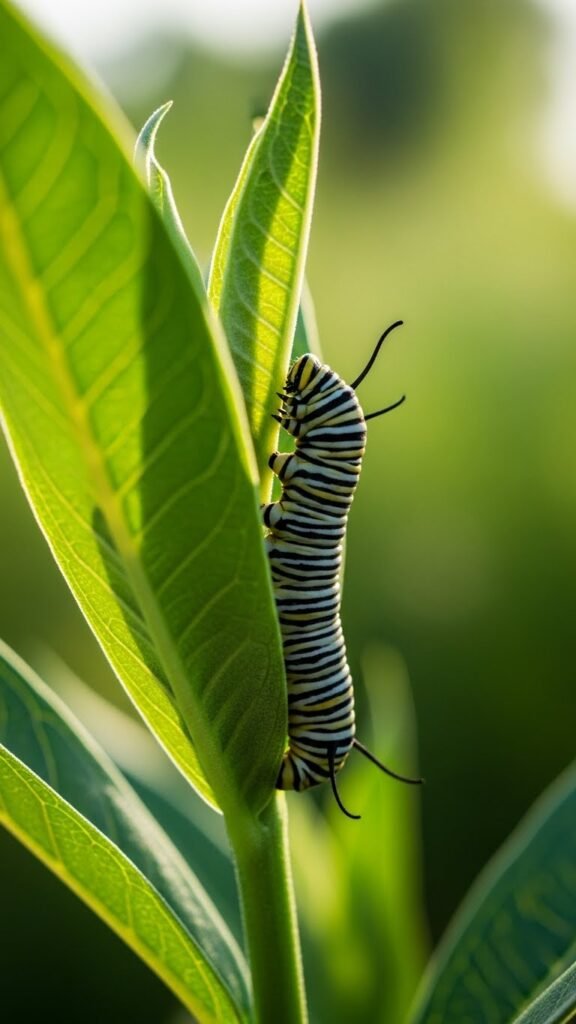
Butterflies need more than nectar—they need a place for their young. Add host plants where caterpillars can feed and grow. Monarchs love milkweed, while swallowtails prefer dill, fennel, or parsley. Don’t worry if the leaves get chewed—it means your garden is working.
DIY idea: Grow herbs like dill and parsley in pots so you can move them near nectar flowers for easy access.
3. Add a Shallow Water Dish
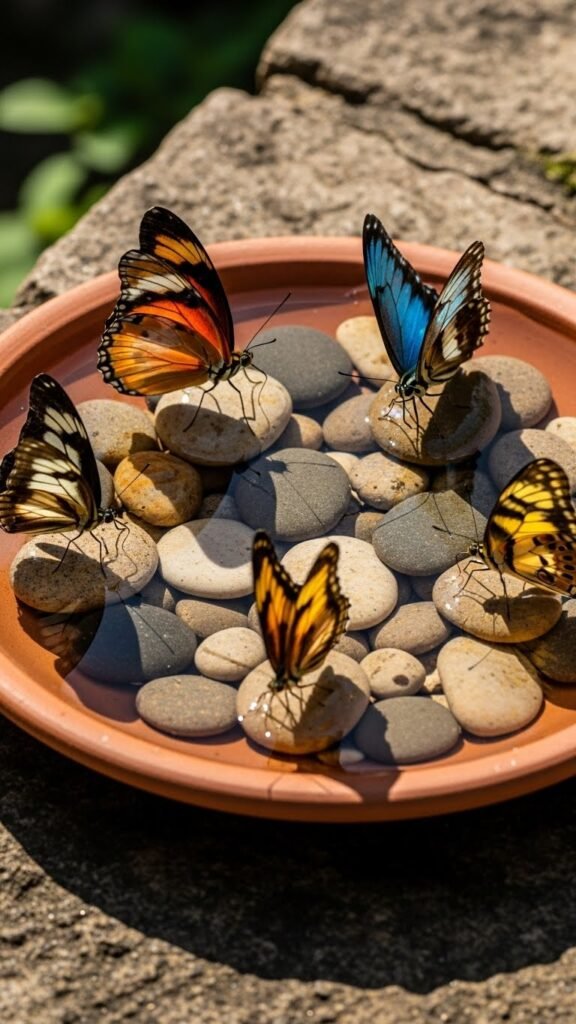
Butterflies don’t drink from deep water—they “puddle.” Use a shallow dish with pebbles to create a safe watering spot. The stones let them rest while sipping moisture.
Add a few mineral-rich ingredients like a pinch of sea salt or compost tea to mimic natural puddles. Keep it topped off during hot weather for constant visitors.
4. Choose Bright, Clumping Flowers

Butterflies are attracted to bright colors—especially red, yellow, and purple. Group flowers in clusters to make them easier to find. Zinnias, lantanas, and cosmos are inexpensive and bloom continuously.
Plant them in full sun and deadhead faded blooms often to encourage fresh ones. These flowers are easy to grow from seed—perfect for beginners on a budget.
5. Build a DIY Butterfly Feeder

You can create a simple butterfly feeder using items from home. Mix one part sugar with four parts water, soak a bright sponge, and place it in a shallow dish or jar lid. Hang it near flowers for a sweet treat.
Rinse and refill it every few days to keep it fresh. It’s a fun project for kids and adds instant charm to your garden.
6. Provide Sunbathing Spots
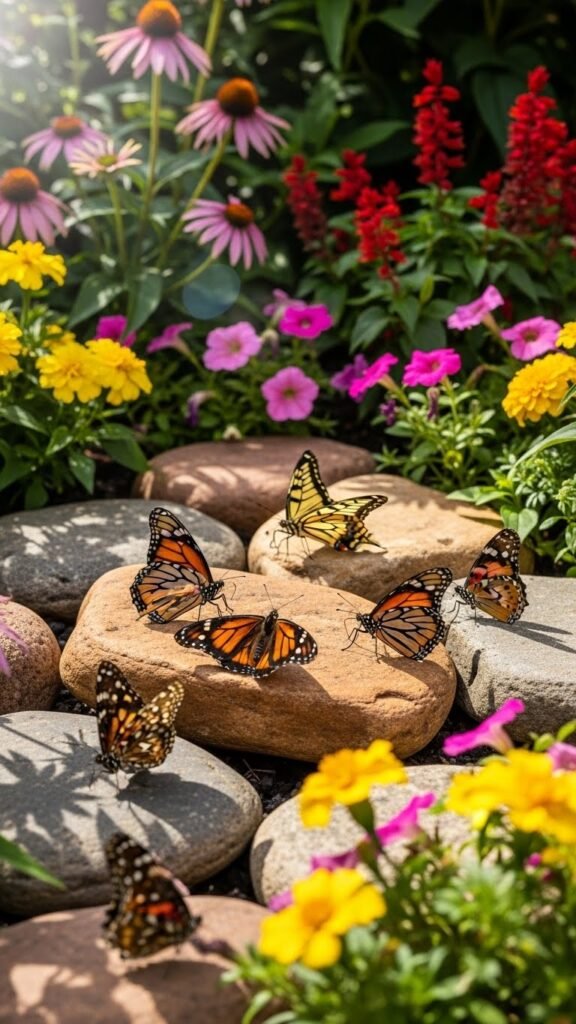
Butterflies are cold-blooded—they need the sun to warm their wings. Place flat stones or bricks in sunny areas for basking spots.
Choose natural stones that blend with your landscape. These sunbathing zones help butterflies stay active longer during cool mornings.
7. Skip Pesticides

Avoid chemical sprays—they harm butterflies and caterpillars. Instead, rely on natural pest control like ladybugs, lacewings, or neem oil.
Healthy soil, diverse plants, and plenty of pollinators naturally balance your garden. It’s safer for butterflies—and for you too.
8. Grow Milkweed for Monarchs
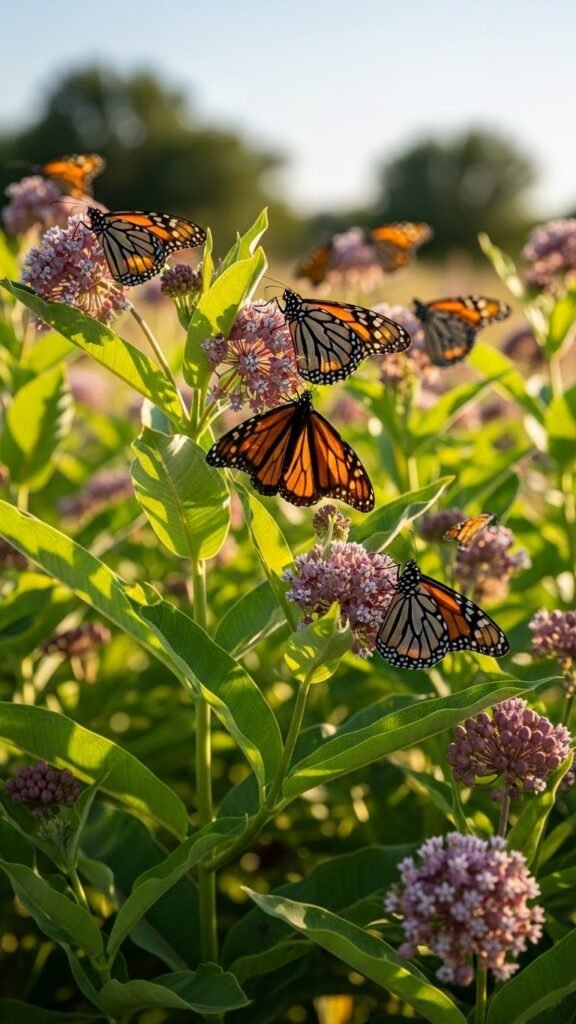
If you want monarchs, you must plant milkweed. It’s the only plant their caterpillars eat. Common, swamp, and butterfly milkweed varieties all work beautifully.
Plant milkweed in full sun and let it reseed naturally. Once established, it comes back every year with minimal care.
9. Use Clay Pots for Mini Habitats
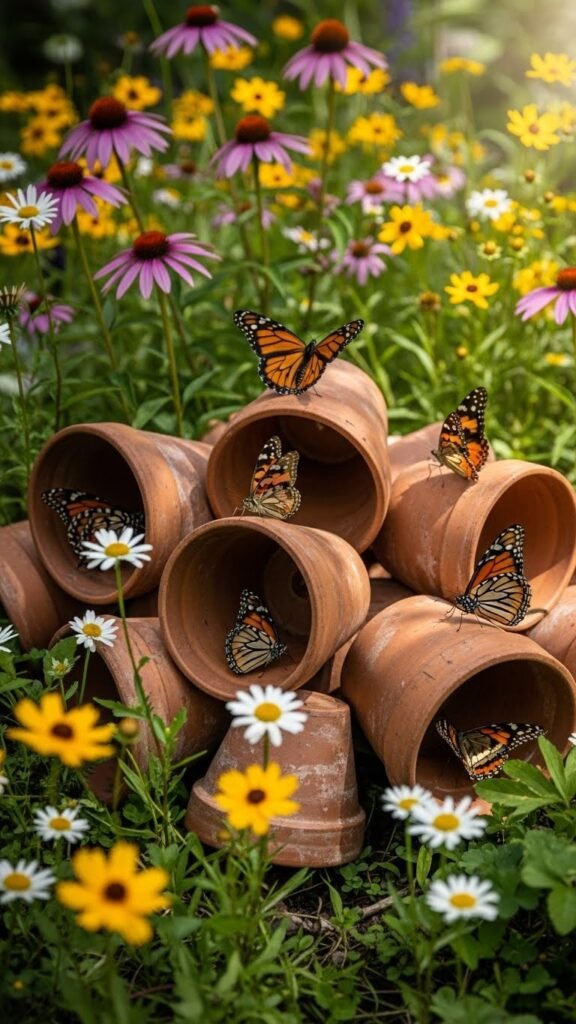
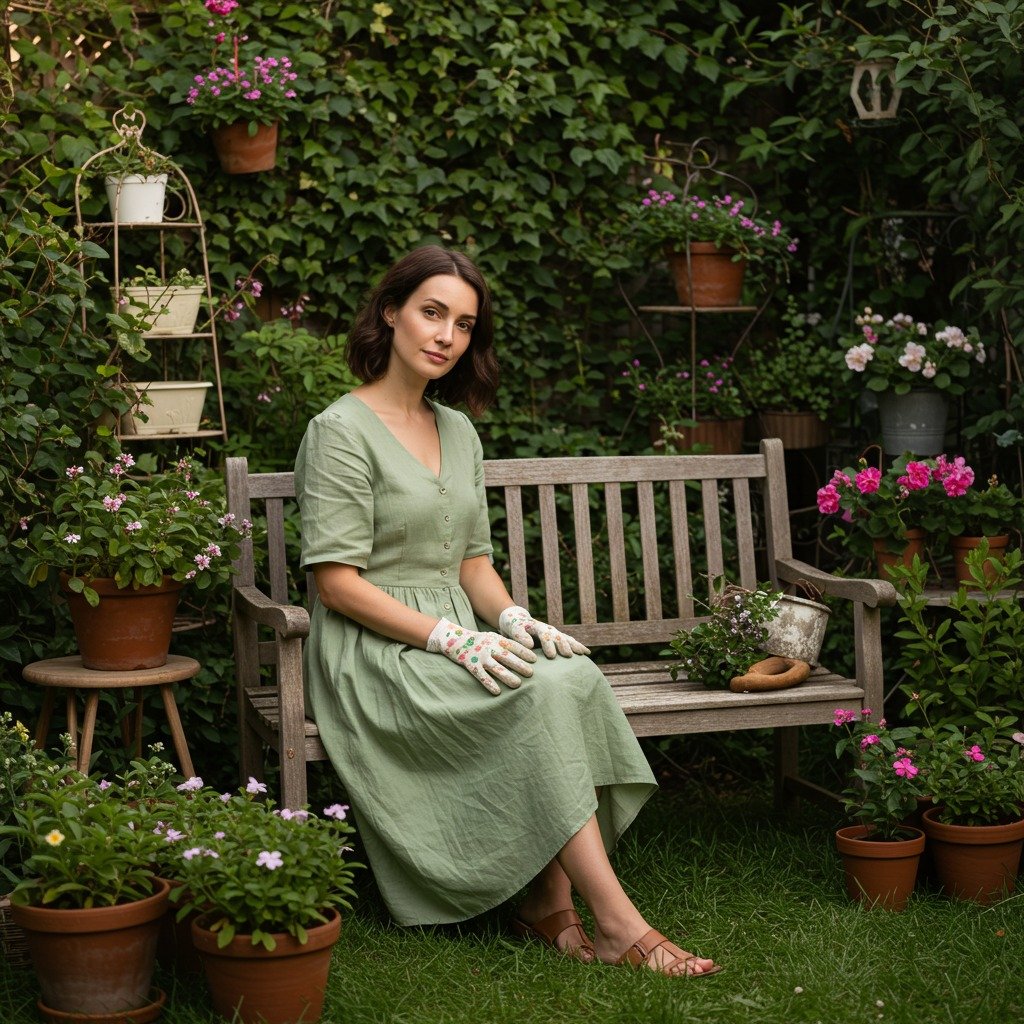
Clay pots aren’t just for plants—they make great butterfly shelters. Lay small pots on their sides among flowers to offer cool hiding spots.
You can also plant herbs or trailing blooms inside to double their function. Cheap, charming, and effective.
10. Create a Sunny Border Garden

Design a flower border that runs along a fence or walkway. Butterflies love open, sunny areas with blooms at different heights.
Mix perennials like coneflowers and daisies with annuals such as zinnias for a full-season show. Add mulch to hold moisture and keep roots cool.
11. Plant in Layers
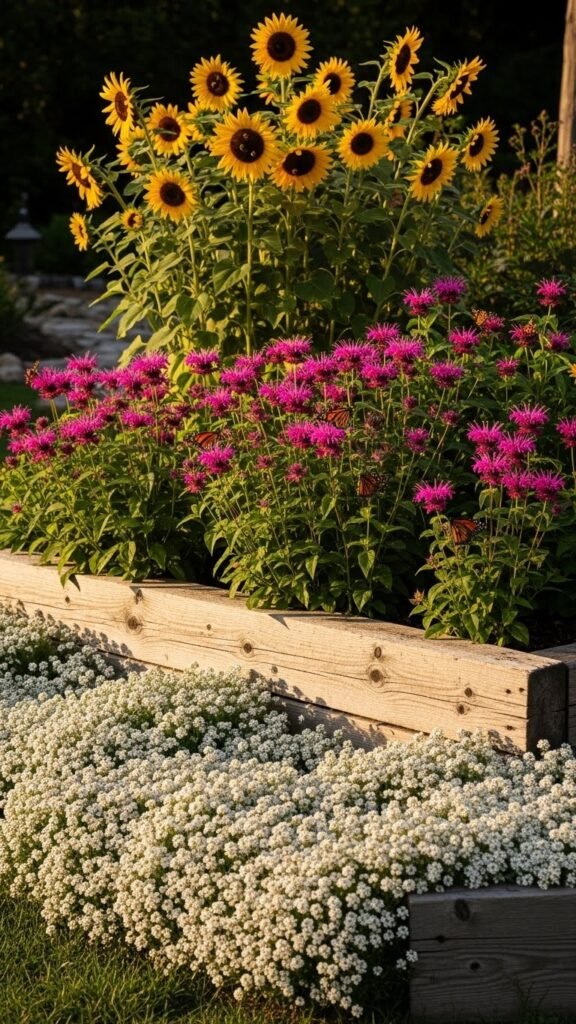
Butterflies prefer gardens with height variation—it offers food, cover, and visual appeal. Use taller plants in the back, mid-size in the middle, and short ones at the front.
This layered look also helps you fit more blooms into smaller spaces while keeping everything easy to maintain.
12. Add Fragrant Blooms

Scent plays a big role in attracting butterflies. Choose fragrant plants like lavender, sweet alyssum, and phlox. Their scent carries on the breeze and brings pollinators from afar.
These blooms thrive in full sun and are perfect for borders or patio containers. Plus, their fragrance makes your garden a relaxing escape.
13. Build a Rustic Butterfly Shelter
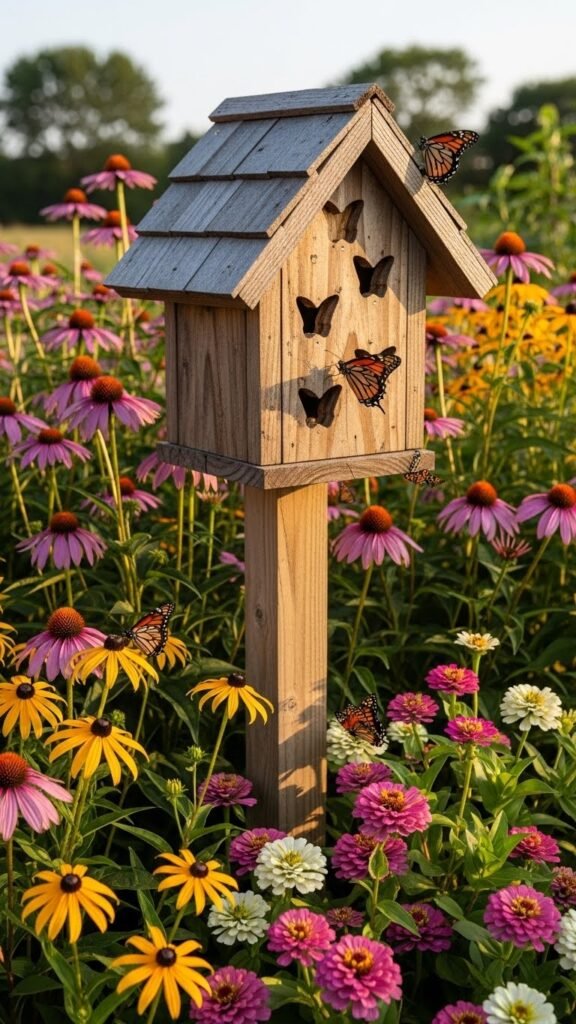
Butterfly houses give butterflies shelter from wind and rain. You can make one with a few wood scraps and narrow vertical slits.
Mount it near nectar plants, facing away from prevailing winds. Paint it with outdoor-safe colors to add charm to your garden design.
14. Add Wind Protection with Shrubs

Butterflies prefer calm areas. Add shrubs or hedges around your garden to block wind and create microclimates.
Plant lilac, viburnum, or hydrangea—they provide nectar and structure. Arrange them so sunlight still reaches the center of your garden.
15. Mix Annuals and Perennials
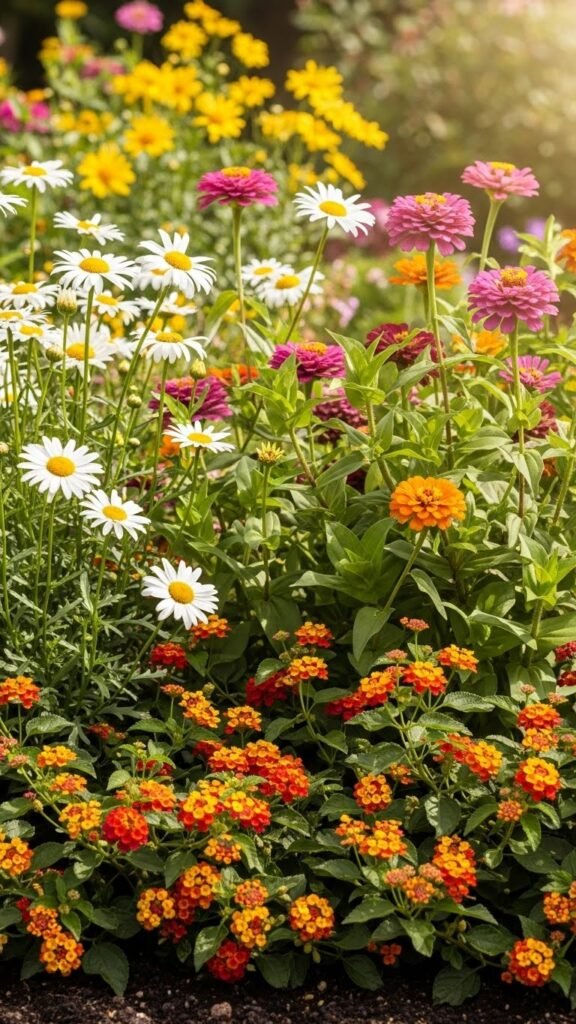
Combining annuals and perennials gives butterflies a long season of food. Perennials come back each year, while annuals keep color constant.
Rotate annuals yearly to attract new species. It’s an easy way to keep your butterfly haven vibrant without extra effort.
16. Try Vertical Gardening
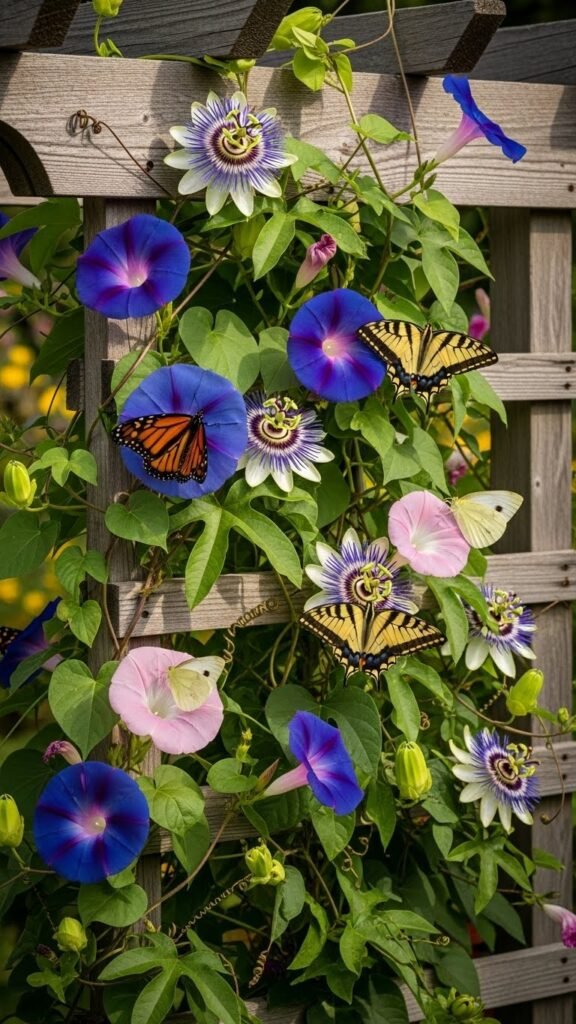
If you’re short on space, go vertical. Use trellises or hanging baskets with vines like morning glory, clematis, or passionflower.
These vertical spaces save ground area and create colorful walls butterflies love to explore. Great for patios or balconies.
17. Design a Pathway Through Flowers
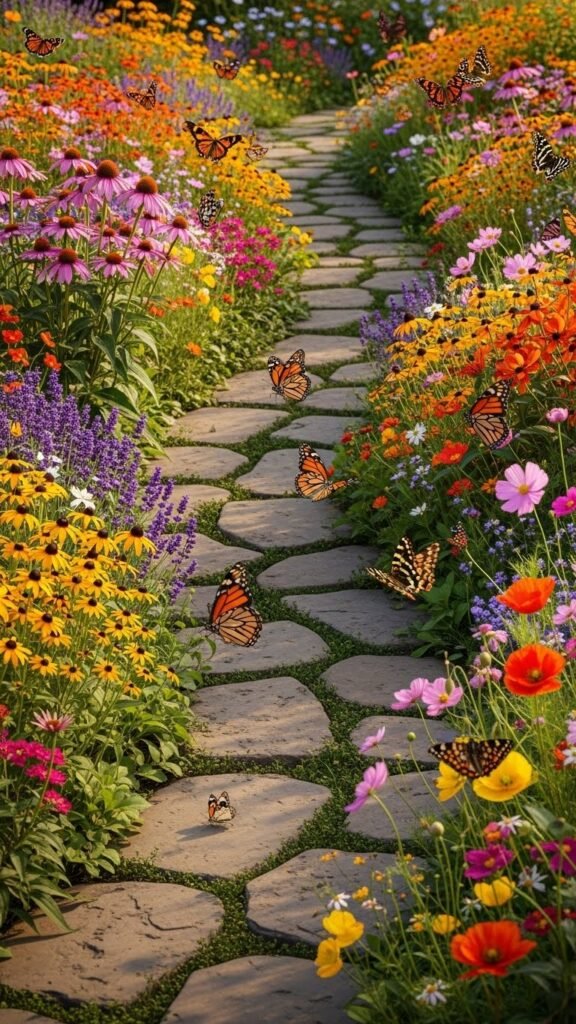
A flower-lined pathway invites you and butterflies to enjoy the garden up close. Use natural stepping stones or gravel paths surrounded by nectar plants.
This layout makes your garden accessible and visually pleasing—perfect for morning strolls or quick photo sessions.
18. Use Recycled Containers for Color
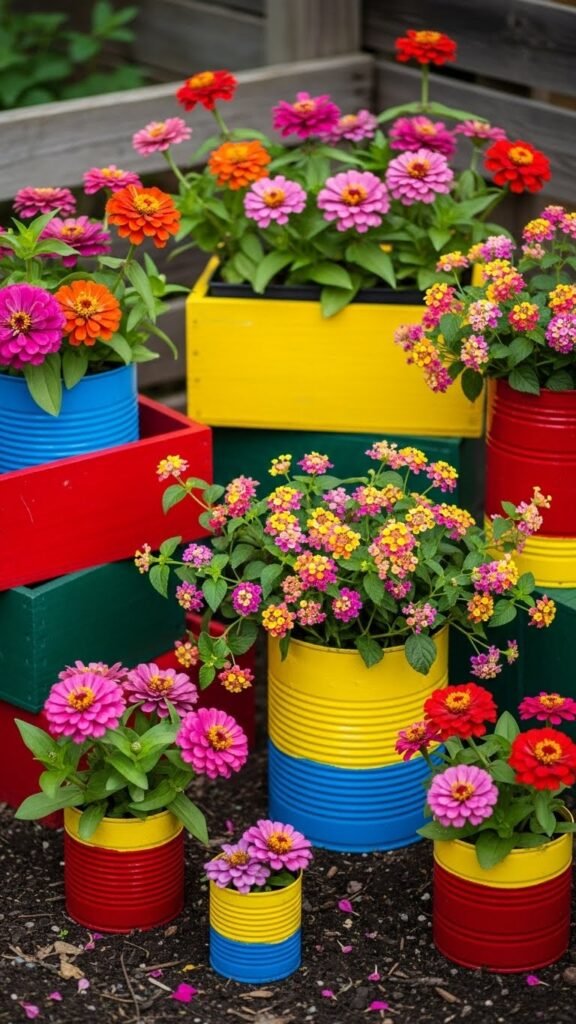
Turn old containers into colorful planters. Paint metal tins or wooden boxes with waterproof paint and fill them with butterfly-friendly blooms.
Arrange them at different heights for visual variety. It’s eco-friendly, budget-conscious, and adds personality to your garden.
19. Keep a Small Compost Corner

A compost area attracts insects that butterflies feed on and helps build rich soil. Keep it tidy, and use decomposed compost around plants.
Healthy soil produces stronger blooms, which means more nectar for your winged guests.
20. Add Solar Lights for Twilight Beauty

Butterflies rest at dusk, but solar lights let you enjoy your garden’s glow after sunset. Place solar lanterns or string lights along pathways and beds.
They add gentle illumination without disturbing nature—perfect for a calm evening outside.
21. Keep It Wild

Don’t over-prune or tidy everything. Butterflies love a little wildness—it gives them shelter and nesting spots.
Leave fallen leaves or small piles of branches in corners for overwintering butterflies. A natural look brings more life than a manicured one.
Conclusion
A butterfly garden is more than a visual treat—it’s a living ecosystem that supports pollinators and adds charm to your outdoor space. By planting nectar-rich flowers, providing shelter, and skipping chemicals, you’ll create a thriving haven for butterflies all season long. Start small, stay consistent, and soon your garden will flutter with color and life.
Leave a Reply