
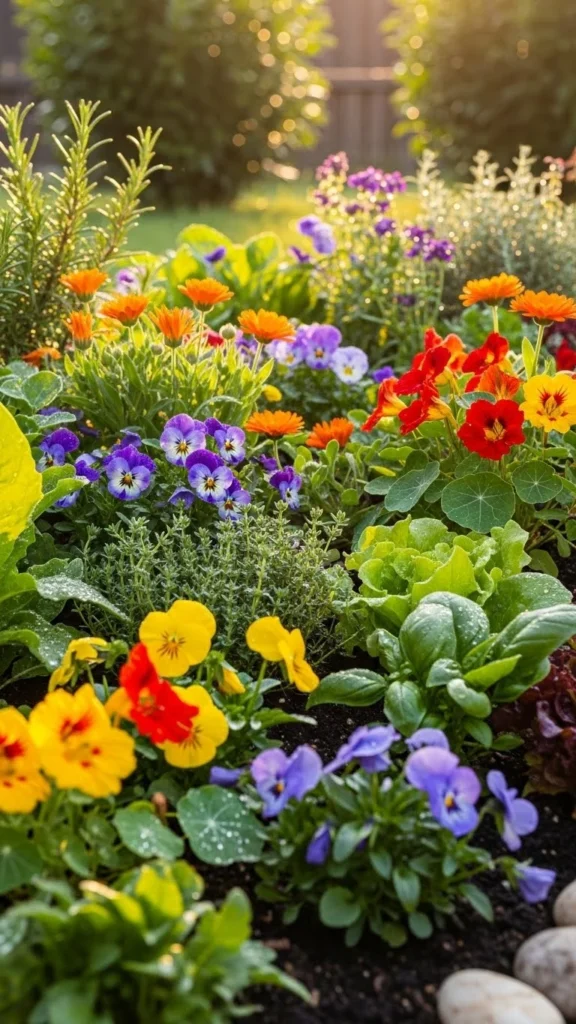
Have you ever admired a vibrant salad topped with colorful petals or a cake decorated with delicate blossoms? Edible flowers aren’t just beautiful—they bring subtle flavor, fragrance, and charm to your meals while adding whimsy to your garden. The best part? You can grow them yourself, even in small spaces!
Why Grow Edible Flowers?
Growing edible flowers is about more than aesthetics—it’s a sensory experience that combines gardening, cooking, and creativity. These blooms:
- Add natural color to salads, desserts, and drinks
- Attract pollinators like bees and butterflies
- Bring fragrance and charm to your outdoor space
- Offer an eco-friendly way to decorate your food without artificial dyes
From peppery nasturtiums to citrusy marigolds, edible flowers bring joy to your plate and vitality to your garden.
Choosing the Right Edible Flowers
Not every flower is safe to eat, so it’s essential to choose varieties known to be edible. Here are some easy-to-grow favorites:
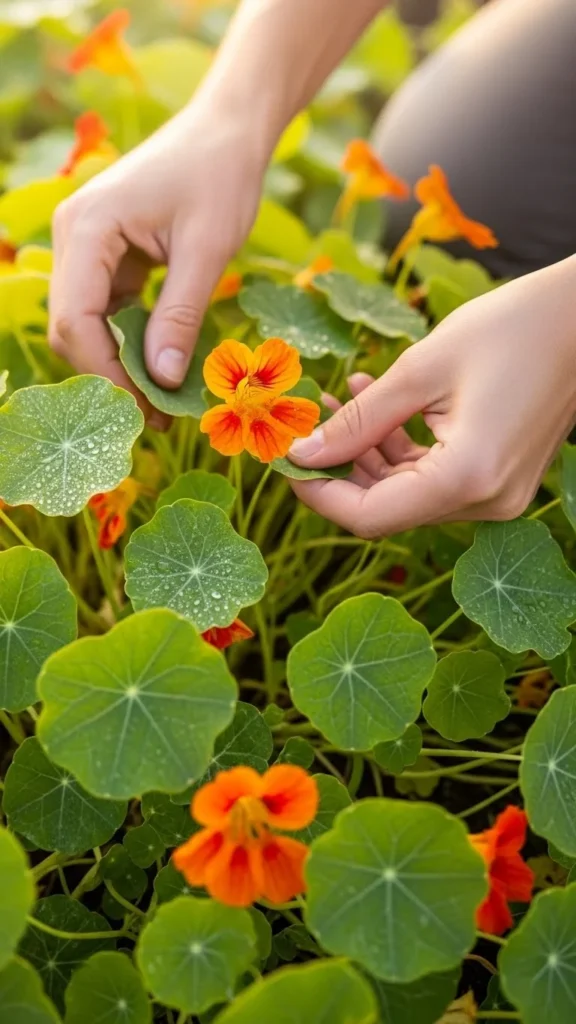
- Nasturtiums – Bright orange, red, or yellow blooms with a spicy, peppery taste
- Pansies and Violas – Mild, slightly sweet, and perfect for decorating desserts
- Calendula (Pot Marigold) – Vibrant orange petals with a tangy, saffron-like flavor
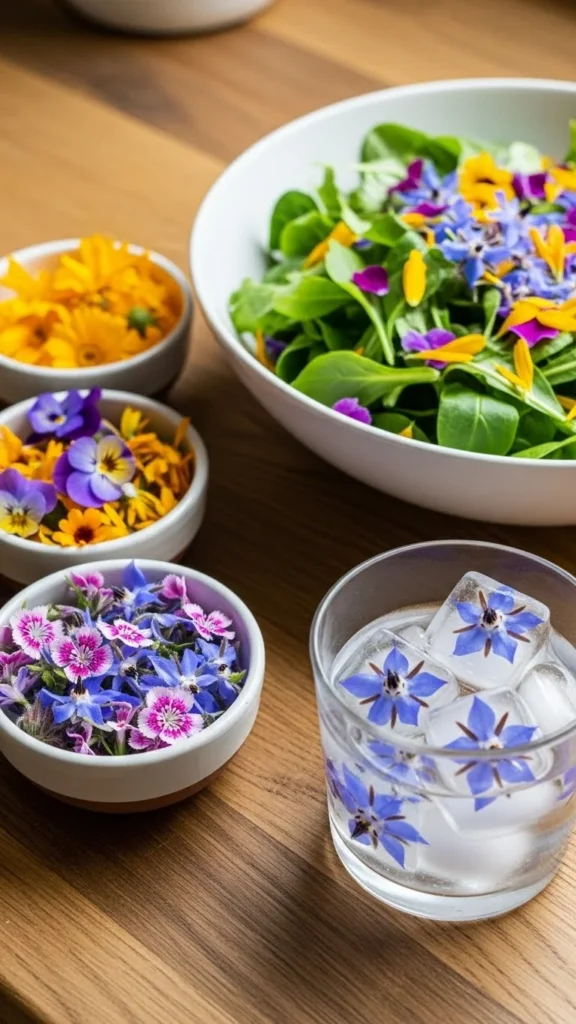
- Borage – Blue star-shaped flowers that taste faintly of cucumber
- Chamomile – Daisy-like blooms with a gentle apple fragrance
- Chive Blossoms – Pretty purple pom-poms with a hint of onion
Always avoid flowers treated with pesticides or chemicals, and stick to organically grown blooms for eating.

How to Plant and Care for Edible Flowers
Growing edible flowers doesn’t require a green thumb—just a bit of attention and care.
1. Pick a Sunny Spot
Most edible flowers love at least six hours of sunlight each day. Whether you’re planting in raised beds, containers, or window boxes, ensure they get plenty of light.
2. Choose the Right Soil
Use well-draining, nutrient-rich soil mixed with compost. Healthy soil ensures vibrant blooms and richer flavors.
3. Water Regularly—but Don’t Overdo It
Keep the soil moist but not soggy. Overwatering can lead to root rot, while too little water can dry out delicate petals.
4. Deadhead and Harvest Often
Remove faded blooms to encourage new growth. Harvest flowers early in the morning when they’re freshest, before the sun wilts the petals.
How to Harvest and Use Edible Flowers
Once your garden is blooming, it’s time to bring those colors into your kitchen.
Harvesting Tips:
- Use scissors or garden snips to cut flowers gently.
- Place them in a bowl of cool water to remove dirt and insects.
- Pat them dry carefully with a paper towel.
Culinary Uses:
- Sprinkle petals on salads, cakes, or fruit platters.
- Freeze small blooms in ice cubes for a pretty drink garnish.
- Infuse petals into syrups, honey, or herbal tea.
- Decorate baked goods or serve with cheese platters for a natural pop of color.
Safety Tips for Edible Flowers
Before eating any flower, remember:
- Only consume flowers labeled as edible.
- Never eat flowers from florists or garden centers, as they’re often treated with chemicals.
- Introduce new flowers gradually to check for allergies.
A good rule of thumb: When in doubt, don’t eat it.

Brighten Your Garden and Plate
Growing edible flowers is a delightful blend of beauty and purpose. You’ll transform your garden into a colorful haven while adding a touch of nature’s artistry to your meals. With a bit of care, patience, and sunshine, your backyard—or even your balcony—can become a gourmet garden.
So, grab a few seed packets, plant some color, and let your creativity bloom in both garden and kitchen.
Save this gardening idea for later—and start growing your own edible masterpiece today!
Leave a Reply