

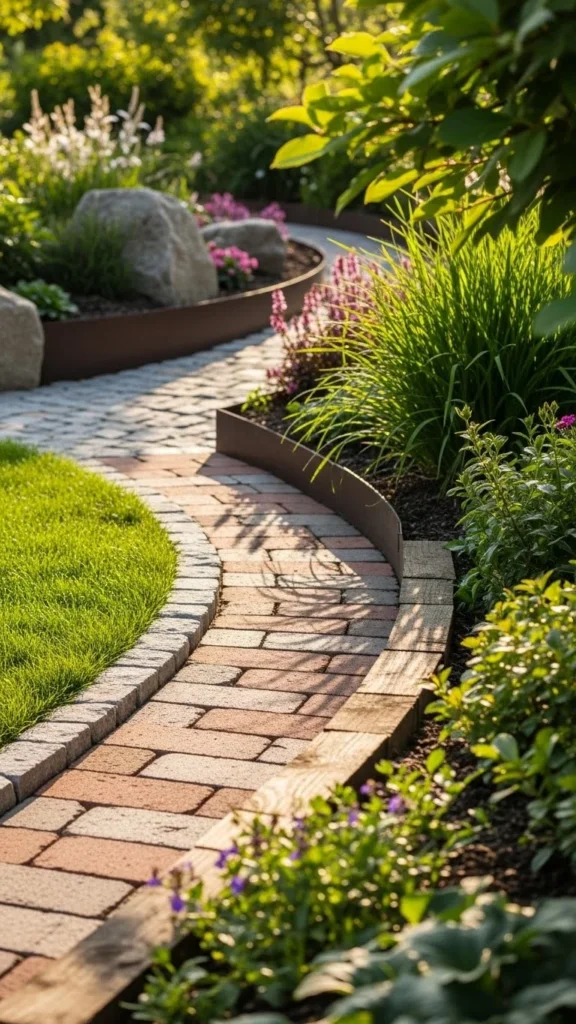
Creating a polished yard doesn’t require a full landscape overhaul—garden edging alone can redefine your outdoor space. Whether you’re working with a sprawling lawn or a compact backyard, smart edging helps separate flower beds, lawns, and pathways with clean, defined lines. From rustic stones to sleek steel, there’s a style for every taste and budget. Here are 20 garden edging ideas that bring structure, beauty, and easy maintenance to your yard.
1. Natural Stone Edging
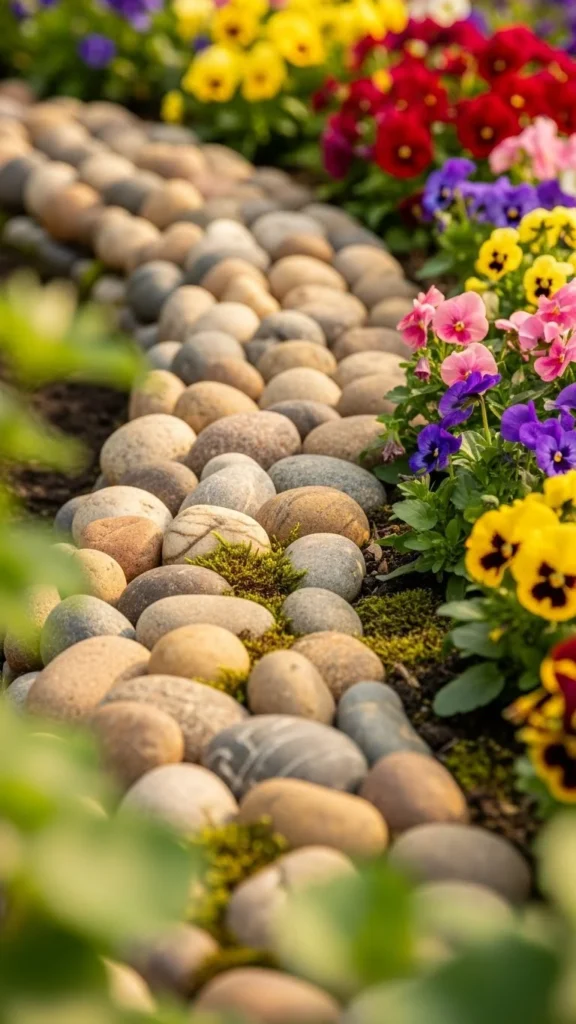
Natural stone adds timeless charm to any landscape. It looks organic and blends effortlessly with flower beds, pathways, and lawns. You can use river rocks, flagstones, or cobblestones for this look. Gather stones of similar height and press them into the soil along your border.
If you’re on a tight budget, check local quarries or reuse stones from other areas of your yard. Arrange them tightly to keep weeds at bay and soil neatly contained. A natural stone edge gives your garden a handcrafted touch that feels both grounded and inviting.
2. Brick Border
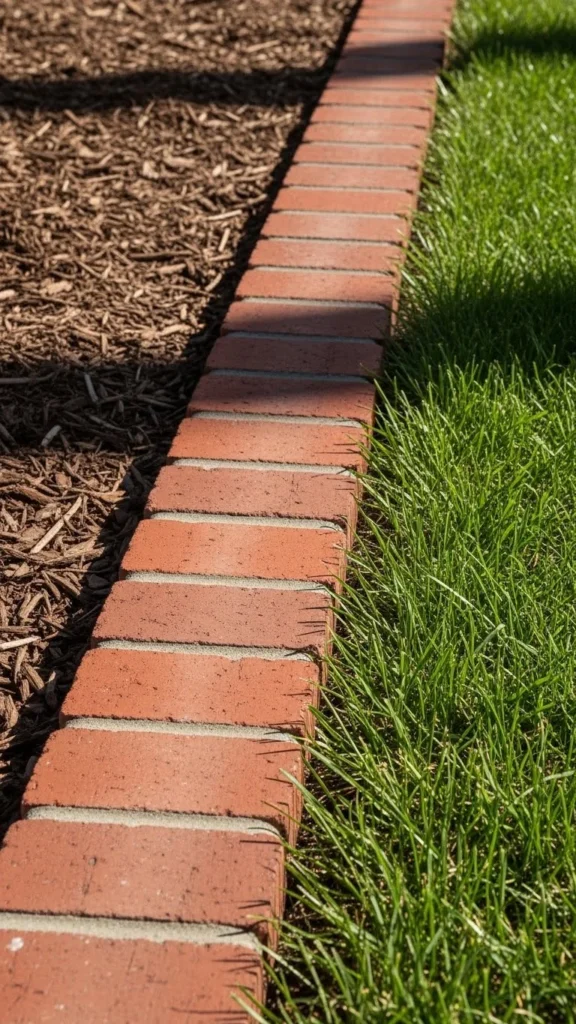
A brick border creates a clean, structured edge that complements both modern and traditional yards. You can lay bricks flat for a simple edge or stand them upright for a bold, raised border.
To DIY, dig a shallow trench, fill it with sand, and press the bricks in snugly. Use leftover bricks from old projects to save money. Seal the joints with sand to keep the border stable. Brick edges are long-lasting, easy to maintain, and add a charming contrast between grass and flower beds.
3. Wooden Log Edging
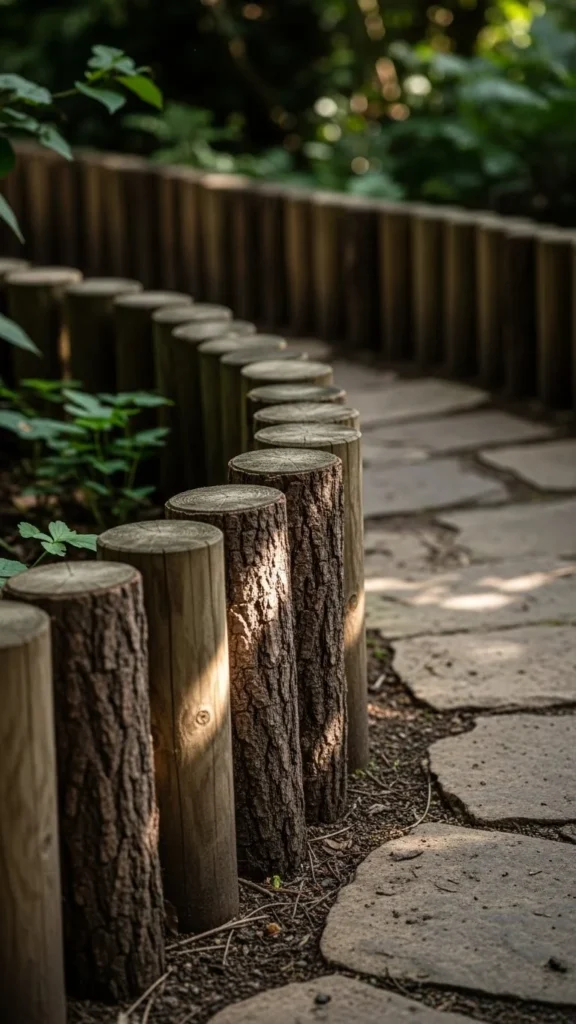
Wooden edging gives your garden a natural and warm appeal. Cut logs or branches of uniform height and align them vertically to form a small retaining wall.
This DIY idea works perfectly in cottage gardens or rustic spaces. For longevity, choose cedar or treated pine, as they resist rot. You can also use old fence posts for a repurposed look. Apply a waterproof sealant to extend their life. The result is a soft, organic edge that ties your planting beds together beautifully.
4. Metal Strip Edging
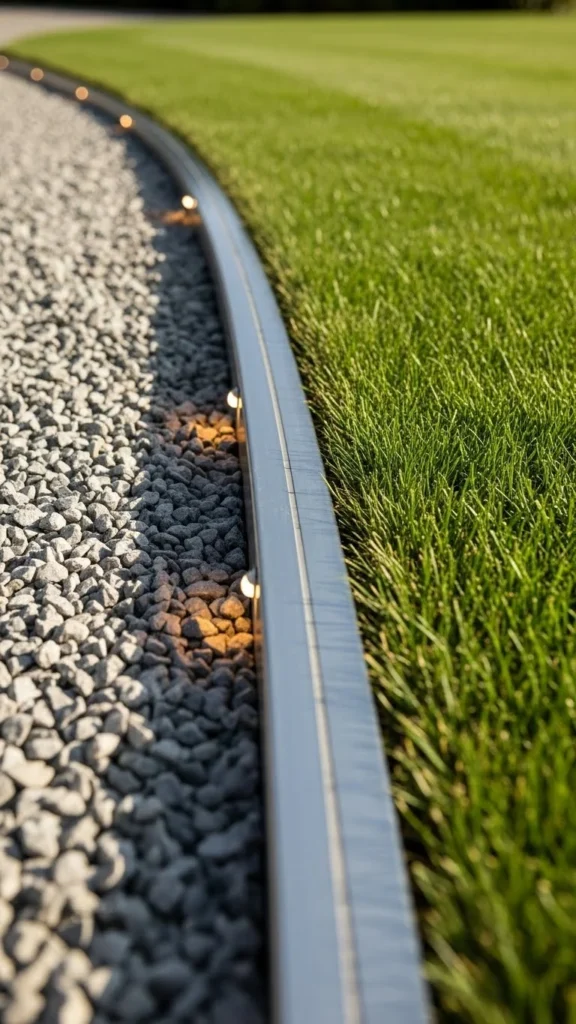
For a crisp, contemporary edge, metal strip edging is hard to beat. Aluminum or galvanized steel provides clean lines that visually separate garden sections.
Install it by hammering flexible strips into the soil around your beds. It bends easily, making it great for curves. This style is almost invisible from afar, letting your plants take center stage. Although metal edging costs a bit more, it’s extremely durable and maintenance-free. It’s ideal for anyone who prefers a modern, structured garden style.
5. Concrete Curbing
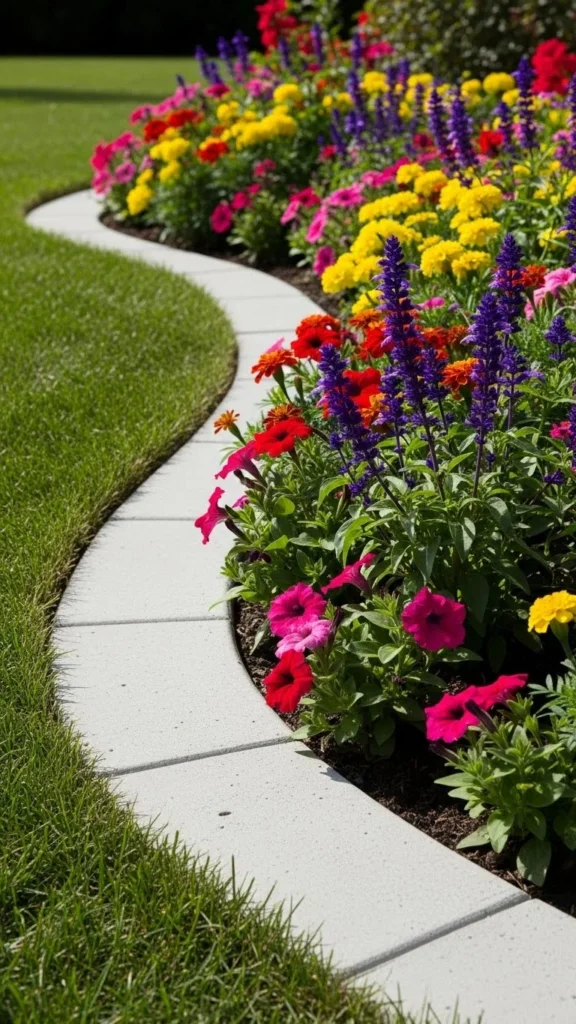
Concrete curbing offers a long-lasting and polished look. You can pour concrete into simple forms or buy ready-made blocks.
For DIY, use a flexible form to create gentle curves. Add pigment before it dries for a custom tone that matches your landscape. This edging keeps mulch contained and grass neatly trimmed. If you’re handy, you can make your own molds for a fraction of the cost. Concrete edges suit suburban yards and formal gardens alike.
6. Recycled Glass Bottles

Turn recycling into art by edging your beds with glass bottles. Choose bottles in similar sizes and bury them halfway into the soil, upside down.
The glass reflects light and adds pops of color along pathways. Mix green, blue, and clear bottles for a mosaic effect. Just make sure the edges are smooth and the bottles are sturdy. This is an easy weekend project that adds personality and charm while keeping waste out of landfills.
7. Terracotta Tiles
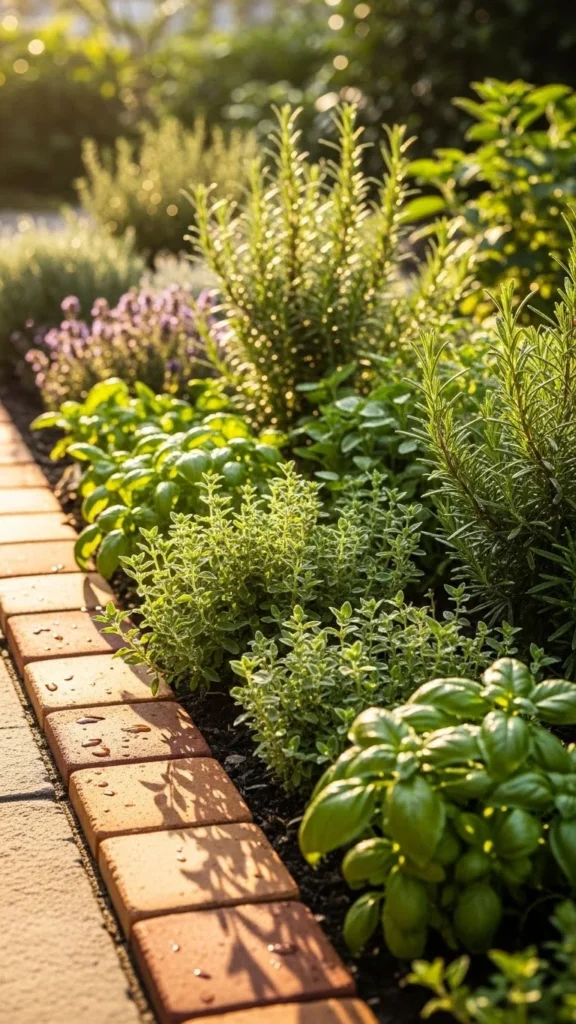
Terracotta tiles bring a Mediterranean feel to your garden. Their warm, earthy color pairs well with herbs and native plants.
You can set them upright for height or flat for subtlety. Terracotta is affordable and easy to replace if damaged. To protect it from frost, apply a sealant or store extra tiles for quick swaps. Pair this edge with rosemary or lavender beds for a cohesive look that feels sun-kissed and inviting.
8. Gravel Edge
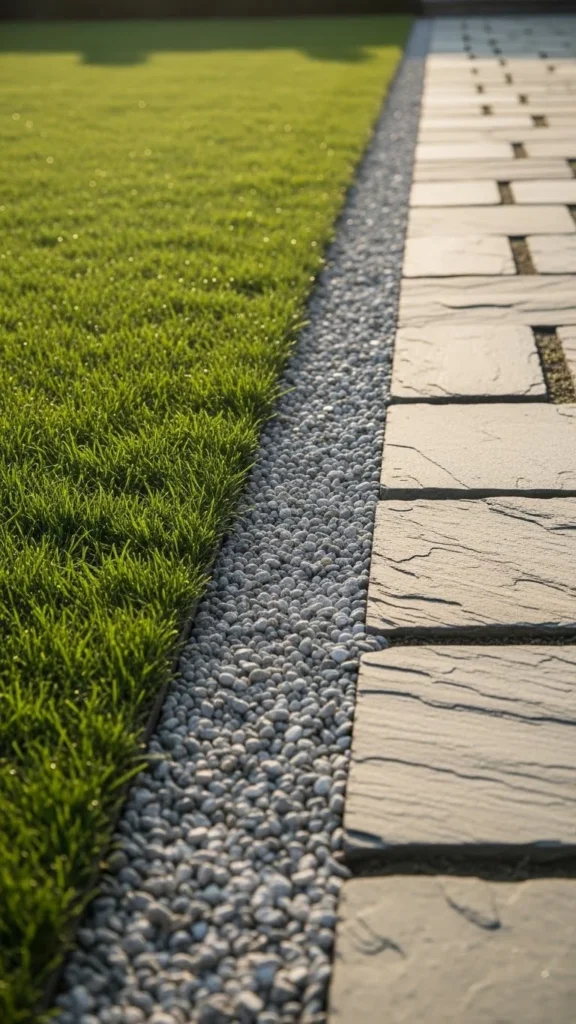
A gravel edge is one of the simplest and cheapest ways to define your beds. Dig a shallow trench and fill it with small decorative gravel or pebbles.
It works well around stepping stones or pathways. The loose texture allows drainage while preventing mud splatter during rain. Choose contrasting colors—like white gravel beside dark mulch—for extra visual interest. This edge requires minimal tools and can be refreshed anytime.
9. Upcycled Roof Tiles
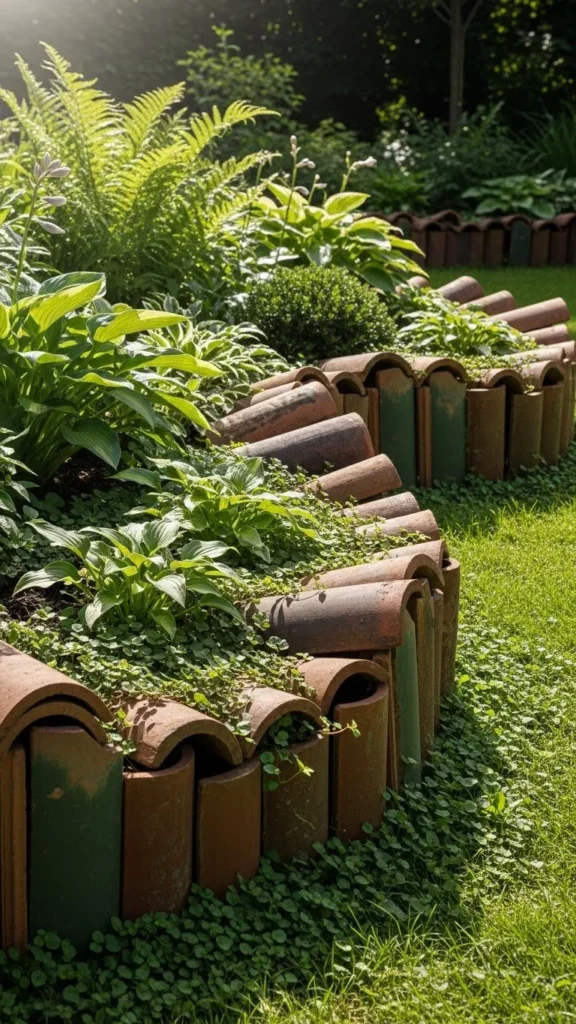
Old roof tiles make a charming, upcycled edging option. Their curved shape naturally holds soil in place and adds an old-world look.
Lay them in a slightly overlapping pattern, half-buried for stability. This edging idea is perfect if you love reclaimed materials and rustic character. You can often find roof tiles free or cheap from renovation sites. Add moss or creeping thyme nearby for a cottage-style finish.
10. Bamboo Border
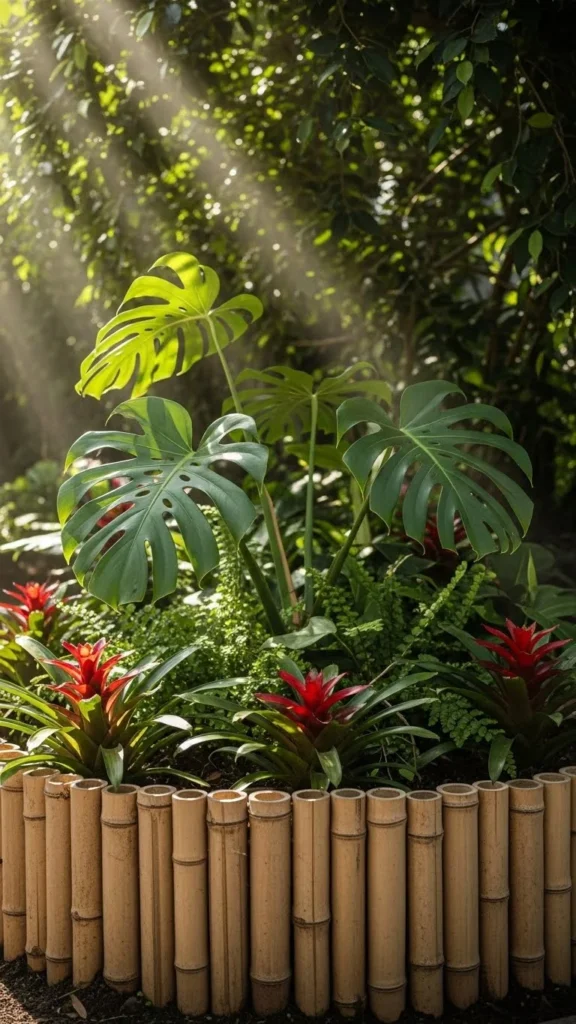
Bamboo edging brings a natural, Asian-inspired touch to your garden. It’s lightweight, eco-friendly, and easy to install.
Use bamboo stakes or pre-rolled fencing sections. Secure with garden wire and press into the soil. The light color complements lush green plants beautifully. For durability, coat bamboo with outdoor sealant to resist moisture. This border looks especially nice around ponds, rock gardens, or shaded paths.
11. Concrete Pavers
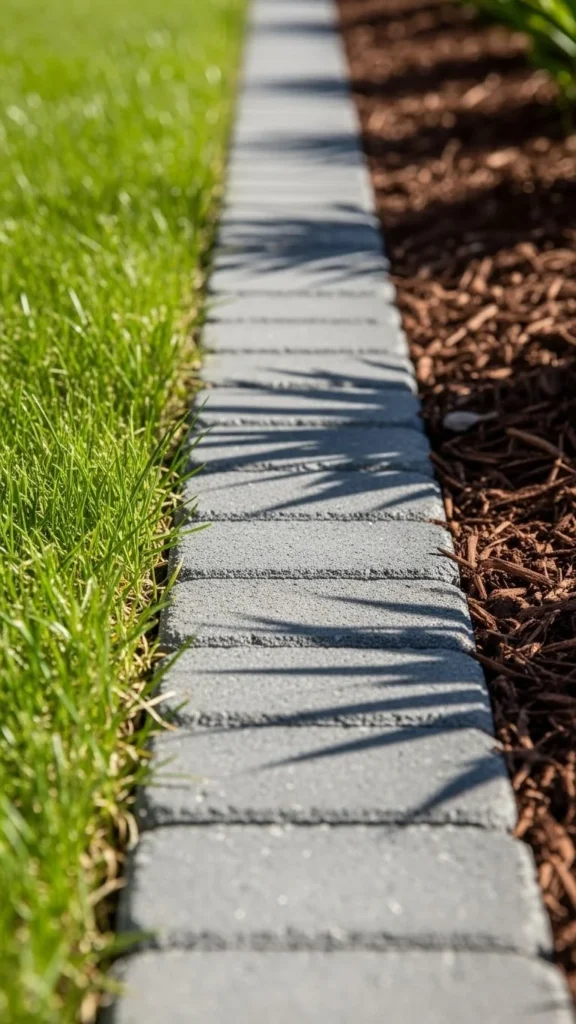
Concrete pavers offer structure and strength without breaking the bank. They’re available in different shapes and textures to fit your style.
Lay them side by side on a sand base for a simple, tidy edge. For curved designs, use small square pavers that fit snugly. This edging resists shifting and keeps your yard easy to mow. You can even paint or stain them for a more customized finish.
12. Cinder Block Border
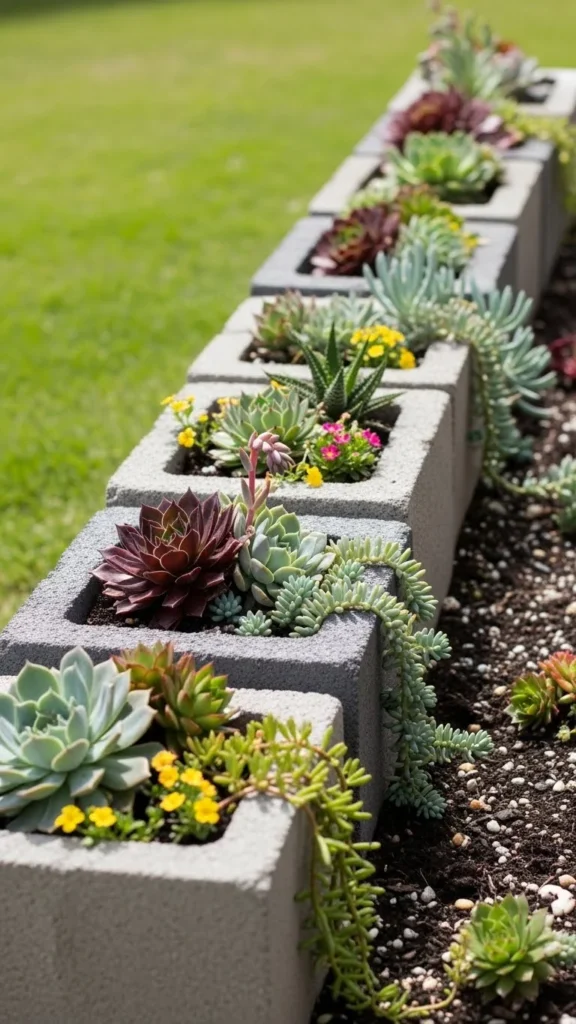
A cinder block border combines practicality and creativity. The hollow centers can hold small plants, herbs, or succulents.
Arrange the blocks in a line and fill gaps with soil. It’s perfect for raised beds or sloped gardens. Paint the blocks to match your outdoor decor. Since they’re heavy and stable, they’ll last for years without shifting. This design doubles as edging and planter space, maximizing your garden’s functionality.
13. Woven Willow Fence
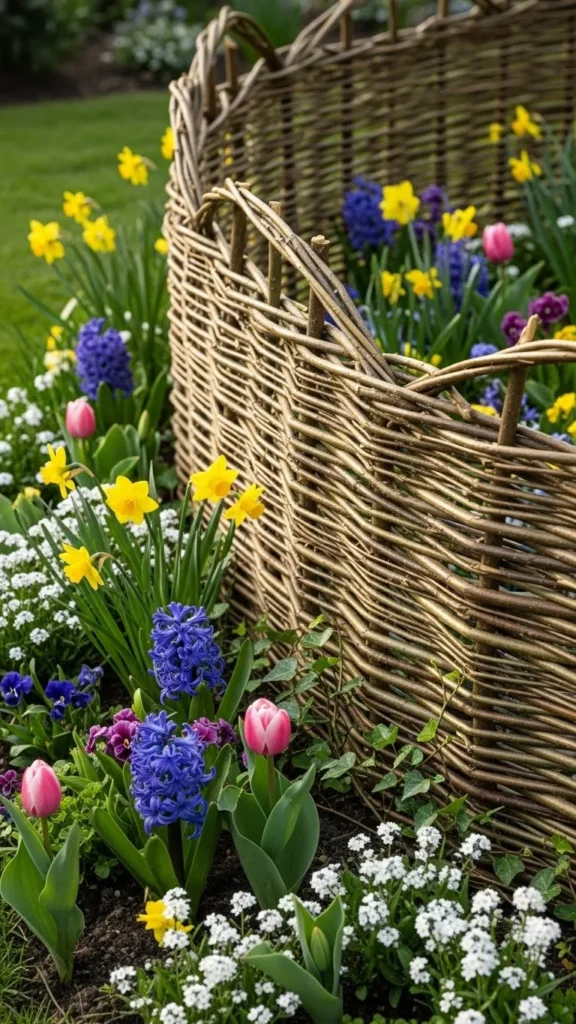
For a soft, rustic look, try woven willow edging. It adds texture and charm to cottage or wildflower gardens.
You can make it yourself using flexible willow branches or buy pre-made rolls. Push sturdy stakes into the ground, then weave the willow between them. This design keeps mulch in place while letting rainwater pass through. The natural tones blend beautifully with greenery, making it ideal for flower-rich spaces.
14. Plastic Roll Edging
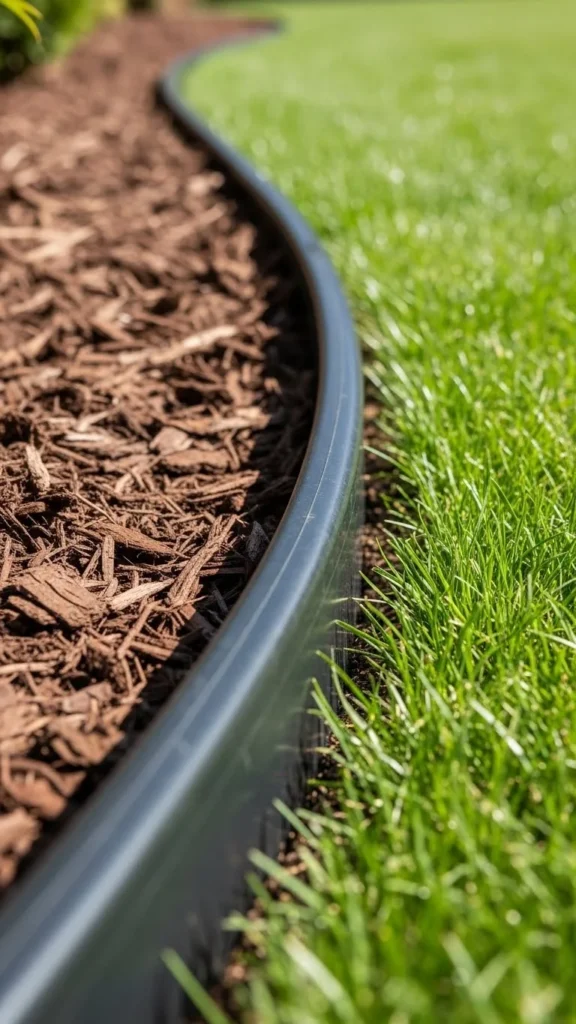
Plastic roll edging is budget-friendly and flexible, making it perfect for quick installs. It comes in rolls that you can easily cut to fit your design.
Use a spade to dig a narrow trench, insert the edge, and backfill with soil. It works great for curved garden layouts. Choose heavy-duty types for longer life, and hide the top edge slightly below grass level for a seamless finish.
15. Reclaimed Railroad Ties
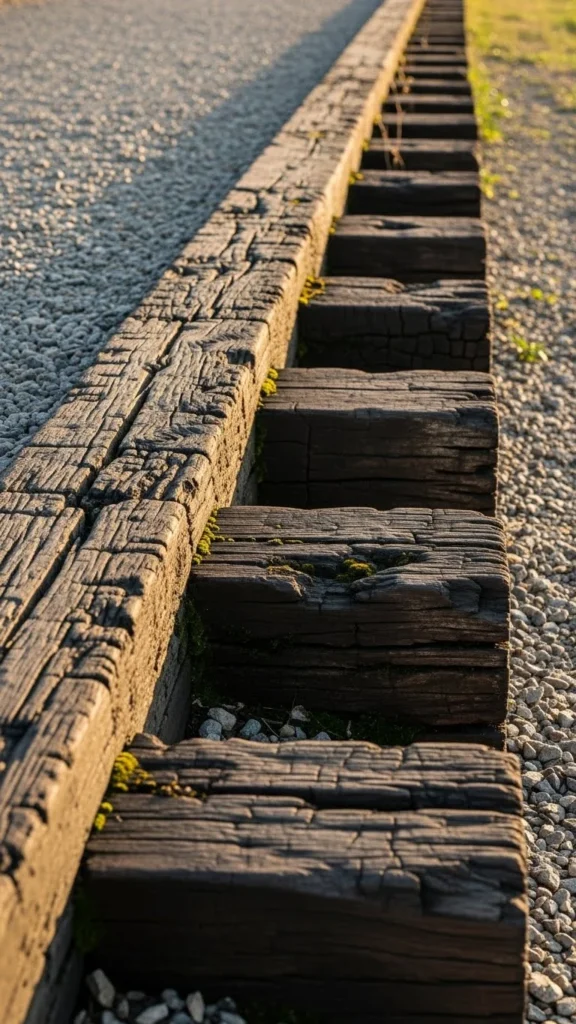
Reclaimed railroad ties create a bold, structured border. Their rugged texture fits perfectly in large gardens or sloped areas.
Lay them flat for a subtle edge or stack them to form mini-retaining walls. Make sure to use untreated ties if growing edibles nearby. These timbers can be sourced from old rail yards or reclaimed lumber yards. They’re sturdy, long-lasting, and give your yard a solid, grounded feel.
16. Shell Border
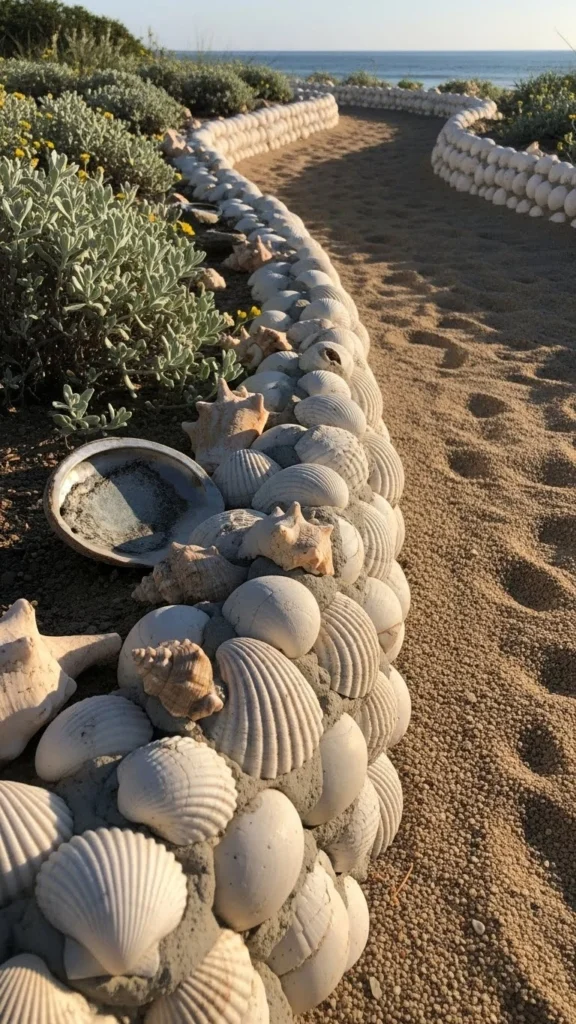
If you live near the coast, a shell border adds charm and character. Gather large shells and line them neatly along your beds.
They reflect sunlight and pair beautifully with beach grasses or succulents. Mix sizes for a more natural look. This edging is inexpensive and easy to refresh each season. It’s a creative way to bring seaside flair to your backyard retreat.
17. Slate Chippings
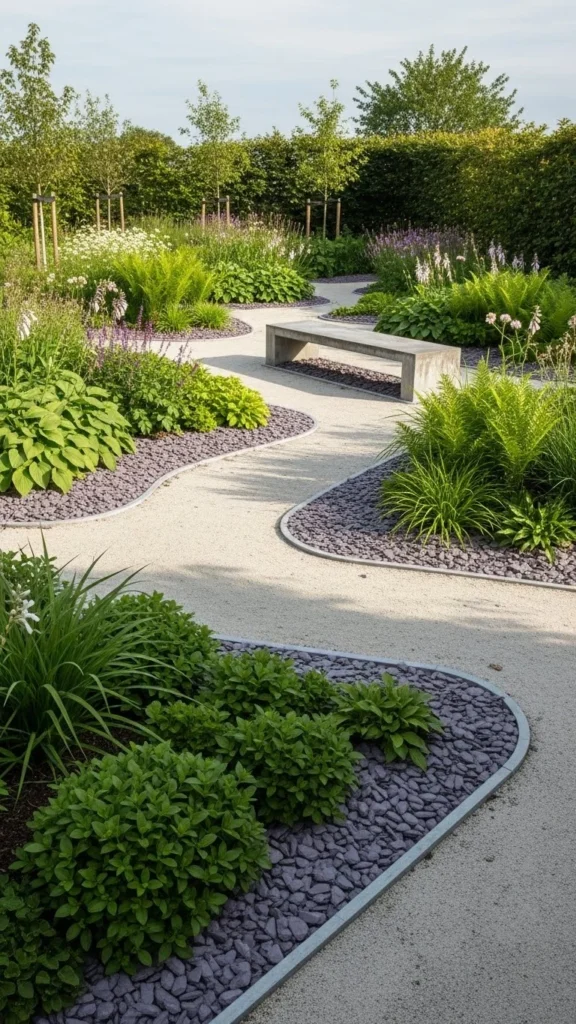
Slate chippings add a modern yet earthy tone to your borders. They’re low-maintenance and provide excellent drainage.
Spread them thickly to prevent weeds and use metal or stone edging to keep them contained. Their cool, dark tones work well with minimalist or contemporary garden designs. Slate can also be used as a mulch alternative to maintain soil moisture.
18. Gabion Wall Edge
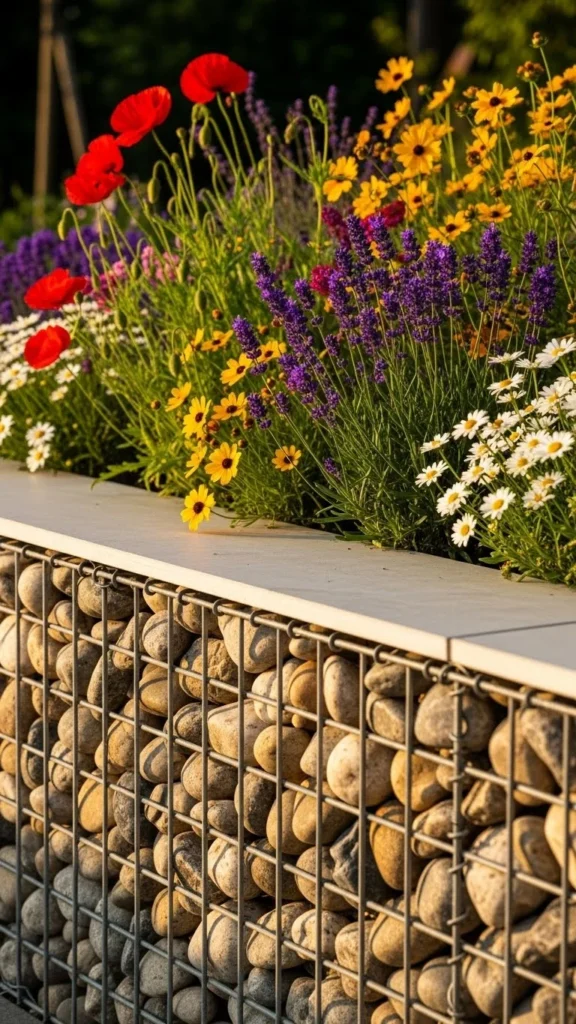
Gabion edging—metal cages filled with stones—adds texture and strength. It’s perfect for raised beds or sloped landscapes.
You can build your own with wire mesh and fill it with local rocks. This design allows good drainage and resists erosion. Gabion edges add industrial style to modern yards and look striking beside smooth gravel or concrete paths.
19. Rope Edge
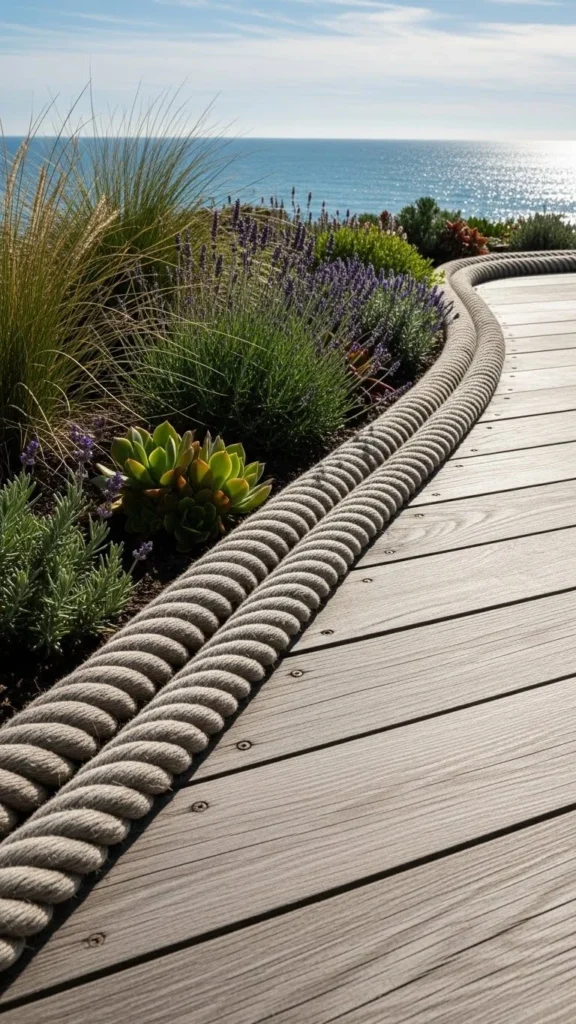
A rope border is a charming option for coastal or nautical themes. Use thick, weather-resistant rope and lay it in gentle curves around beds.
Secure it with wooden stakes or pegs at intervals. The rope softens the look of hard landscaping and works beautifully around wooden decks or sand-colored gravel. It’s simple, affordable, and easy to replace when needed.
20. Mossy Rock Edge
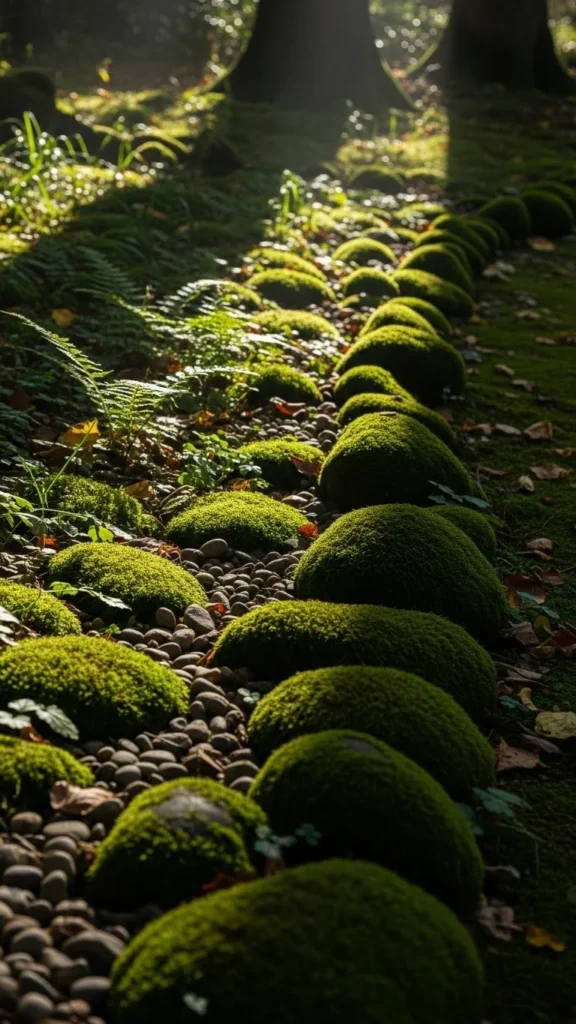
For a truly natural look, line your garden paths with moss-covered rocks. The soft texture and green tones create a peaceful, woodland vibe.
If you don’t have moss naturally, encourage growth by misting the rocks regularly in shady areas. This edge suits shaded corners, fern gardens, and water features. It’s low-cost, visually rich, and brings a calming energy to your yard.
Conclusion
Defining your garden’s edges isn’t just about tidiness—it’s about giving your space structure and personality. Whether you choose reclaimed wood, rustic stones, or modern metal, each edging idea helps create flow and balance. Pick a style that matches your garden’s mood, and you’ll turn ordinary borders into something truly special. Start small, use what you have, and enjoy the process of shaping a yard that feels finished and full of life.
Leave a Reply