

A minimalist garden isn’t about having less beauty — it’s about letting every element breathe. Instead of crowded flower beds and excessive décor, minimal garden design focuses on calm spaces, clean lines, and intentional choices. The result? A peaceful outdoor retreat that feels modern, balanced, and surprisingly easy to maintain.
If you’ve ever admired serene Pinterest gardens with soft greenery, neutral tones, and uncluttered layouts, you’re already drawn to minimalism. The good news is you don’t need a huge budget or professional landscaping skills to achieve this look.
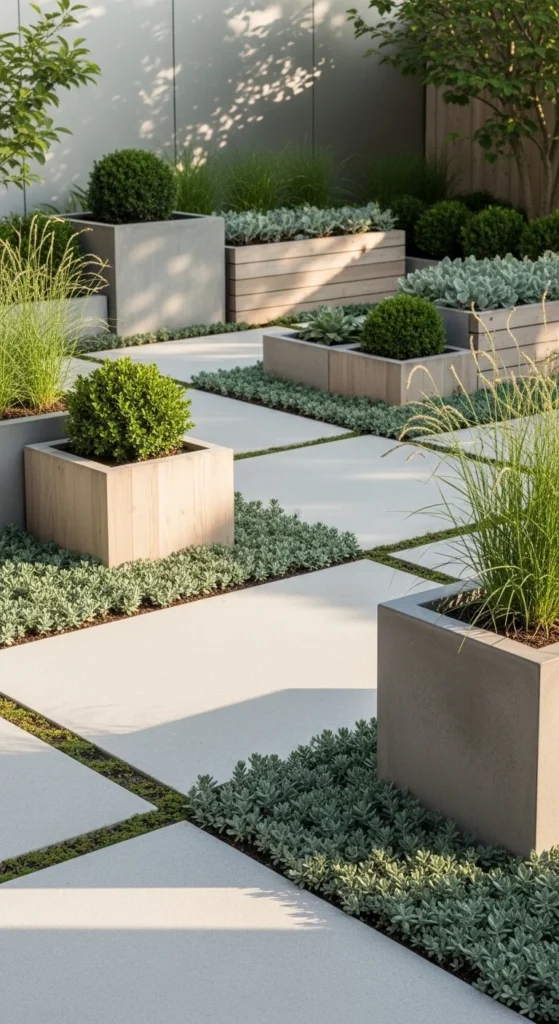
Let’s walk through simple, practical steps to transform your garden into a stylish minimalist sanctuary.
Start With a Clear Vision
Minimal design begins before you buy plants or furniture. The first step is deciding what not to include.
Ask yourself:
- Do you want a relaxing sitting area?
- A small green escape after work?
- A neat, modern space for guests?
Minimal gardens usually follow a single purpose instead of trying to do everything at once.
Keep these principles in mind:
- Choose simplicity over variety.
- Repeat shapes and colors.
- Leave intentional empty space.
A common mistake is filling every corner. In minimal design, empty areas create calmness and highlight what truly matters.
Choose a Limited Color Palette
Color plays a huge role in achieving a minimalist look. Too many bright shades can make a garden feel busy rather than peaceful.
Stick to:
- Neutral tones (white, beige, grey, sand)
- Natural greens
- One subtle accent color if desired
For example, white planters paired with deep green plants instantly create a modern aesthetic.
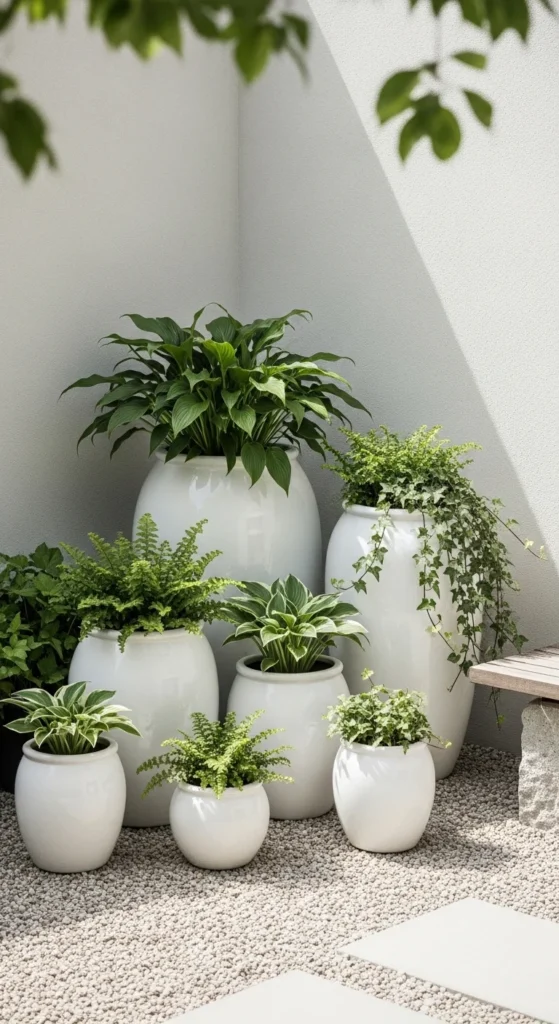
Easy color combinations:
- White + green + natural wood
- Grey stone + soft grasses
- Black planters + light paving
Consistency makes even a small garden look professionally designed.
Select Plants With Purpose
Minimalism doesn’t mean fewer plants — it means smarter plant choices.
Instead of mixing many species, repeat a few varieties throughout the garden. Repetition creates visual harmony.
Great minimalist plant options:
- Ornamental grasses
- Snake plants or succulents
- Bamboo or slim shrubs
- Lavender or rosemary for subtle texture
Focus on plants with strong shapes and clean silhouettes rather than overly colorful blooms.
Tips:
- Use groups of the same plant.
- Maintain equal spacing.
- Trim regularly for neat lines.
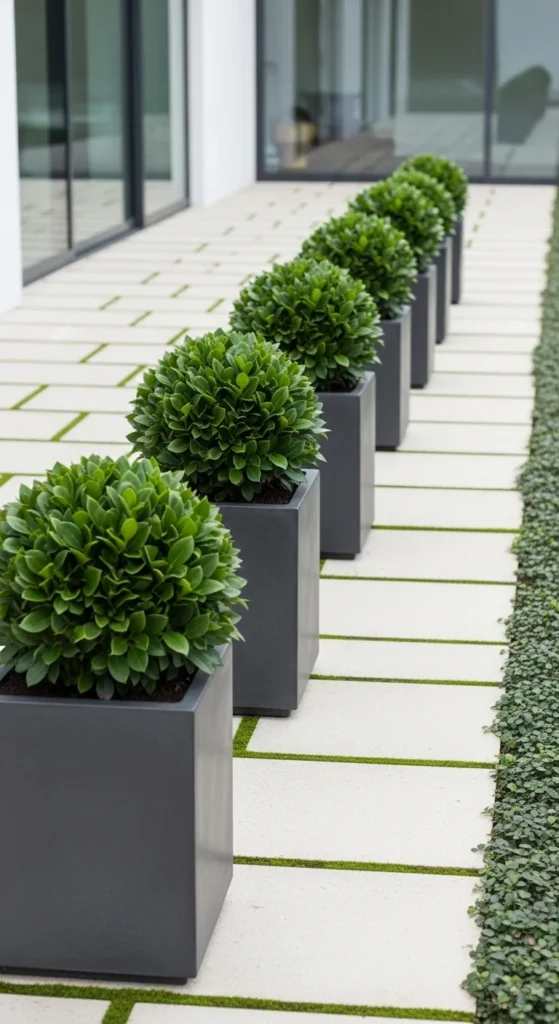
Simplify Pathways and Ground Cover
The ground design often defines whether a garden feels minimalist or cluttered.
Avoid mixing too many materials. Instead, choose one or two textures and repeat them.
Popular minimalist options include:
- Gravel or pebbles
- Concrete slabs
- Wooden decking
- Large stepping stones
Straight or gently curved paths work best because they guide the eye naturally.
Why this works:
- Clean lines create structure.
- Simple flooring reduces visual noise.
- Maintenance becomes easier.
Leave small open spaces between features — minimal gardens rely on balance, not density.
Add Functional, Simple Furniture
Furniture should feel like part of the design, not an afterthought.
Choose pieces that are:
- Low-profile
- Neutral in color
- Simple in shape
Avoid overly decorative chairs or bright patterns.
Good minimalist choices:
- Wooden benches
- Metal-framed chairs
- Concrete or stone seating
- Neutral outdoor cushions
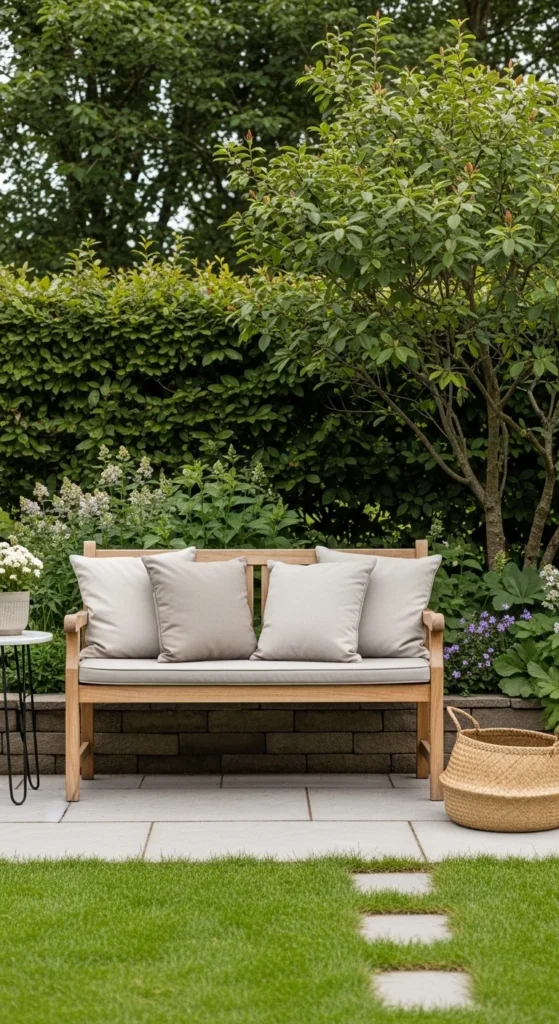
Arrange furniture thoughtfully instead of spreading items everywhere. One well-placed seating area often looks more elegant than multiple small setups.
Use Decor Sparingly (But Intentionally)
Minimal doesn’t mean boring. A few carefully chosen accents can elevate the entire space.
Consider adding:
- One sculptural planter
- A small water feature
- Soft outdoor lighting
- A single statement tree
The rule is simple: if every item demands attention, nothing stands out.
Lighting tips:
- Use warm lights for a cozy evening feel.
- Hide fixtures to maintain a natural look.
- Highlight pathways or one focal plant.
Subtle details create atmosphere without overwhelming the garden.
Maintain the Minimal Look
A minimalist garden looks best when it’s tidy. Fortunately, maintenance is usually easier because there are fewer elements.
Weekly habits:
- Trim plants lightly.
- Remove fallen leaves.
- Clean pathways.
- Keep furniture uncluttered.
Think of maintenance as part of the design process — neatness is what keeps minimalism looking intentional rather than unfinished.
Final Thoughts: Less Truly Becomes More
Decorating a garden in minimal style isn’t about removing personality — it’s about refining it. By limiting colors, repeating plants, simplifying layouts, and choosing purposeful décor, you create a space that feels calm, modern, and timeless.
Start small. Change one section at a time. Even a tiny balcony or backyard can transform into a peaceful minimalist retreat with thoughtful choices.
Save this guide for later and begin designing your own serene garden space today.
Leave a Reply