

Winter rhododendrons look delicate, but they’re tougher than they seem. When everything else in the garden fades, these evergreen shrubs hold their structure—and sometimes even their buds—through cold months. The secret is knowing how to protect roots, leaves, and flower buds before winter stress sets in.
If your rhododendron has ever turned brown, curled up, or failed to bloom after winter, you’re not alone. Let’s fix that with practical, proven steps.
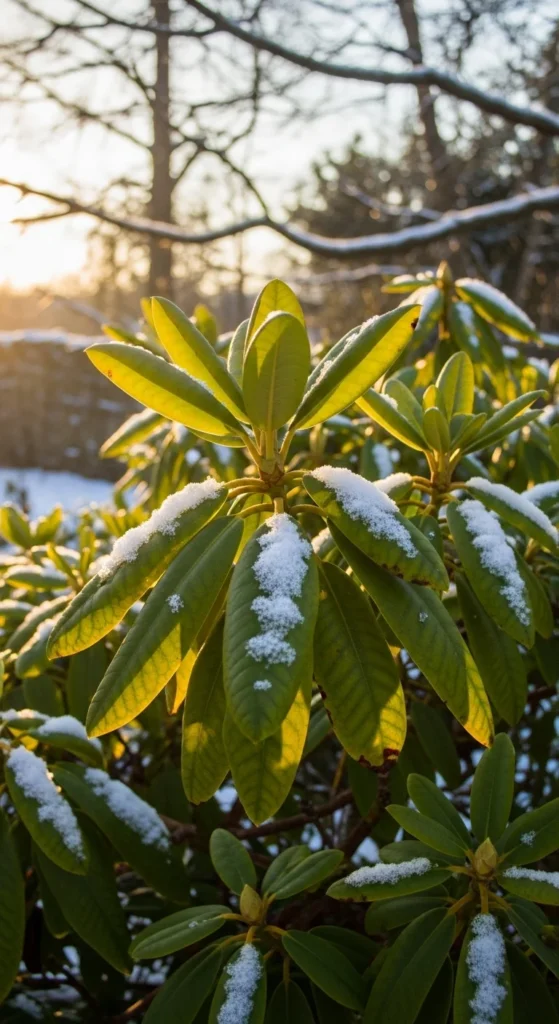
Understand Why Winter Is Hard on Rhododendrons
Rhododendrons don’t usually die from cold alone. They struggle because of winter desiccation—when frozen ground prevents roots from absorbing water, but wind and sun keep pulling moisture from the leaves.
Key winter stressors include:
- Dry winter winds
- Frozen or compacted soil
- Rapid freeze–thaw cycles
- Bright winter sun on exposed leaves
Once you understand this, the care steps make a lot more sense.
Choose the Right Variety for Cold Winters
Not all rhododendrons handle winter equally. Some are bred specifically for colder climates and bounce back much better in spring.
Look for varieties labeled:
- Cold-hardy or northern-hardy
- Suitable for your USDA hardiness zone
- Known for bud hardiness, not just leaf survival
If winters are harsh where you live, avoid varieties bred for mild coastal climates. The right plant choice can save you years of frustration.
Plant in the Right Location Before Winter Arrives
Where your rhododendron grows matters just as much as how you care for it.
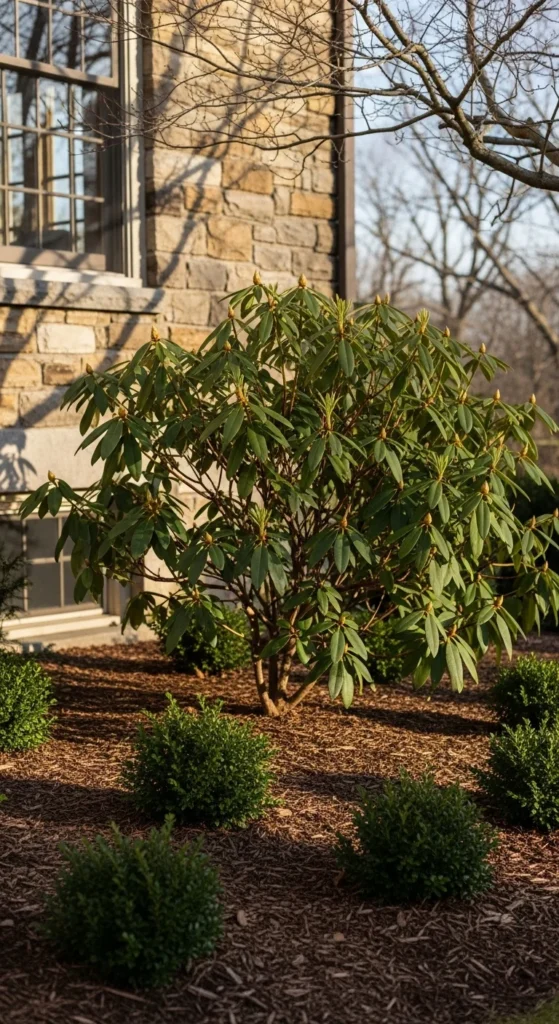
Ideal winter-friendly placement:
- Morning sun, afternoon shade
- Protection from strong winds (near a fence, wall, or larger shrubs)
- Well-draining, acidic soil
Avoid planting in:
- Open, windy areas
- Low spots where cold air settles
- Full winter sun exposure
Water Deeply Before the Ground Freezes
One of the most important winter-care steps happens before winter even begins.
In late fall:
- Water deeply during dry spells
- Focus on soaking the root zone
- Stop only once the ground freezes solid
Well-hydrated plants enter winter stronger and lose moisture more slowly through their leaves.
Mulch to Insulate Roots (But Do It Right)
Mulch acts like a winter blanket for rhododendrons.
Best mulching tips:
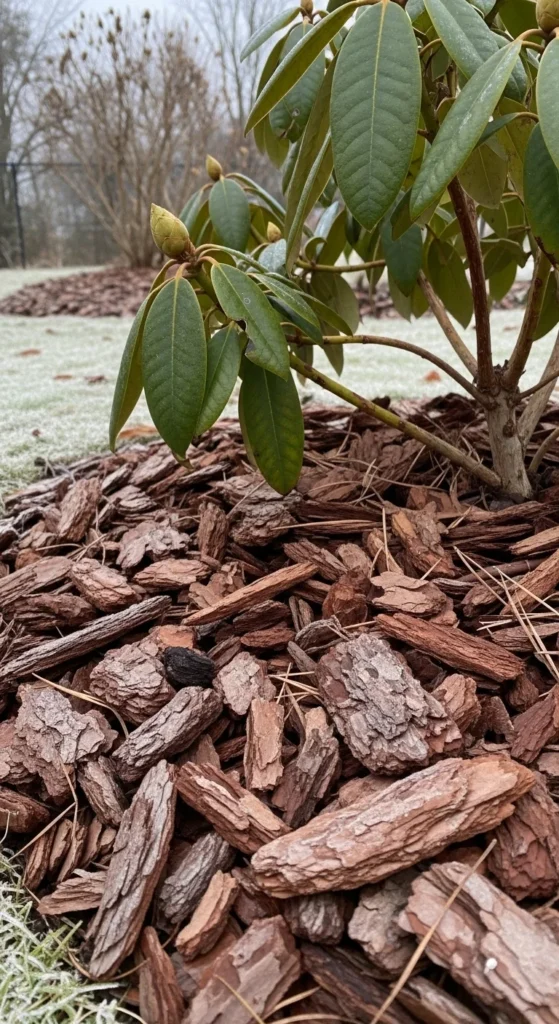
- Apply 2–4 inches of organic mulch
- Use pine bark, pine needles, or shredded leaves
- Keep mulch a few inches away from the stem
Mulch helps:
- Maintain soil moisture
- Reduce freeze–thaw damage
- Protect shallow roots from extreme cold
Protect Leaves From Wind and Sun
Ever notice rhododendron leaves curling into tight rolls during winter? That’s a self-defense mechanism against moisture loss.
You can help by adding extra protection:
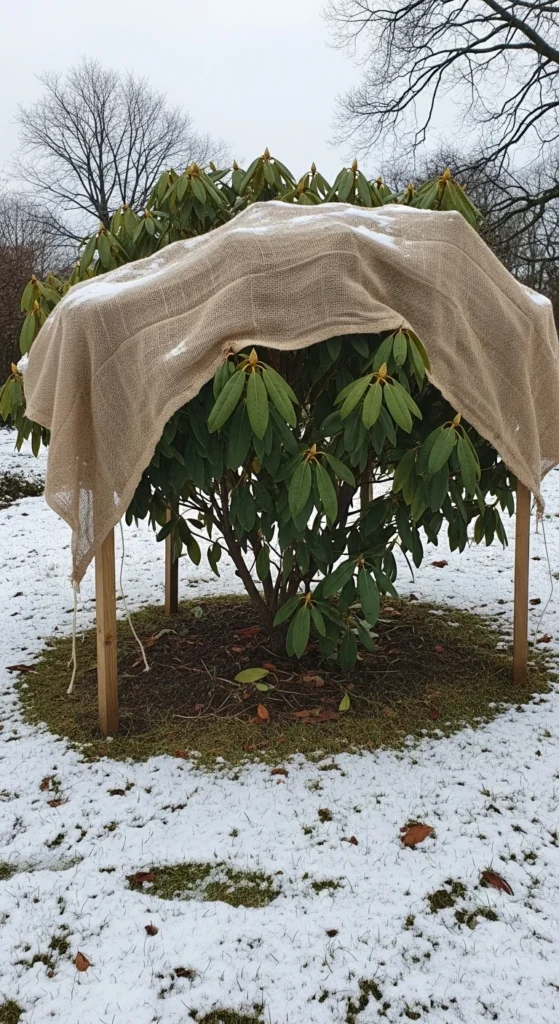
- Install burlap screens on the windward side
- Use stakes and breathable fabric, not plastic
- Focus on exposure, not wrapping tightly
Never wrap plants completely airtight. Airflow prevents mold and rot while still reducing wind stress.
Don’t Panic Over Leaf Curling or Drooping
Winter rhododendrons often look dramatic—but that doesn’t mean they’re dying.
Normal winter behaviors include:
- Leaf curling or folding
- Slight drooping in extreme cold
- Temporary dulling of leaf color
As long as:
- Stems remain flexible
- Buds look firm, not mushy
- Leaves re-expand during mild spells
Your plant is likely doing just fine.
Avoid Winter Pruning and Fertilizing
Winter is not the time to push growth.
Skip these until spring:
- Pruning (can expose tender tissue)
- Fertilizing (encourages weak growth)
If pruning is needed, wait until after flowering in spring. That protects next year’s buds and avoids winter damage.
Check Buds in Late Winter
Flower buds form the previous season and must survive winter to bloom.
In late winter:
- Gently inspect buds
- Healthy buds feel firm and plump
- Damaged buds look brown or dry
If buds were damaged, focus on improving protection next year rather than forcing blooms.
Spring Wake-Up Care Matters Too
How you transition out of winter affects recovery.
As temperatures rise:
- Remove burlap gradually
- Keep soil evenly moist
- Avoid sudden full sun exposure
This slow adjustment prevents shock and helps leaves rehydrate properly.
Final Takeaway
Growing winter rhododendrons successfully isn’t about luck—it’s about planning ahead and protecting against moisture loss. With proper placement, fall watering, mulching, and wind protection, these shrubs can come through winter healthy and ready to bloom.
Save this guide for fall prep, and your rhododendrons will reward you when spring arrives

Leave a Reply