

Roses may look delicate, but with the right winter care, they’re tougher than they seem. Cold temperatures don’t have to mean dead canes, blackened stems, or disappointing spring growth. With a few smart steps, you can protect your roses through winter and help them wake up healthy and strong.
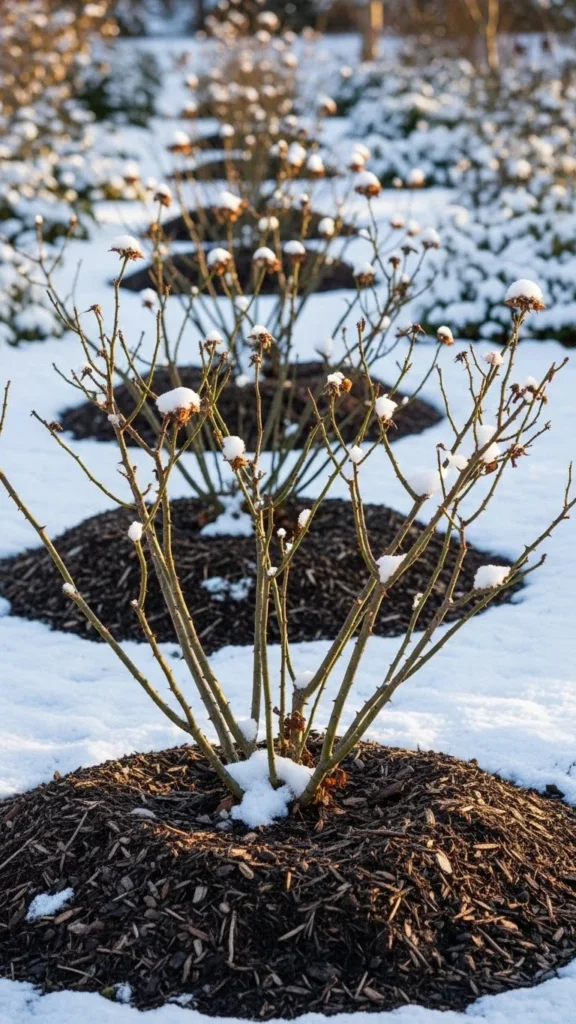
This guide breaks everything down into simple, doable actions—no complicated tools, no guesswork. Whether you grow roses in the ground or in containers, these tips help prevent winter dieback and keep your plants thriving year after year.
Understand Why Roses Get Winter Dieback
Before fixing the problem, it helps to know what causes it.
Winter dieback usually happens because of:
- Freeze-and-thaw cycles that crack canes
- Dry winter winds that pull moisture from stems
- Temperature swings that wake plants too early
- Poor soil insulation around roots
Roses don’t mind cold as much as they mind instability. Your job is to keep conditions steady and protective.
Stop Pruning Too Late in the Season
One of the biggest mistakes is heavy pruning in fall.
Late pruning:
- Encourages tender new growth
- Makes canes more vulnerable to freezing
- Increases dieback risk
What to do instead:
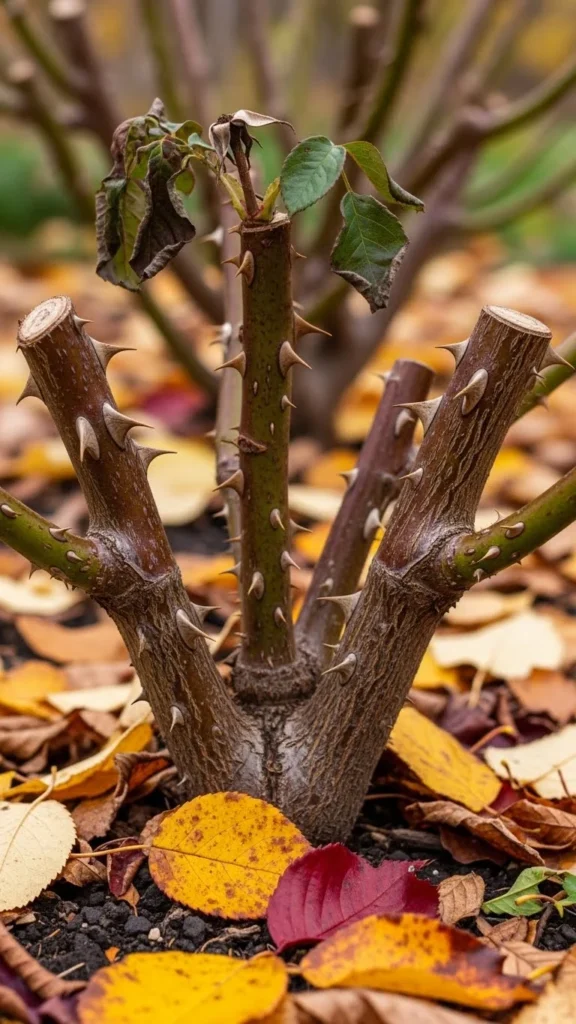
- Stop pruning 6–8 weeks before your first frost
- Only remove dead or diseased wood
- Leave most canes tall for winter protection
Tall canes help shield the plant’s crown and root area from cold stress.
Mulch Deeply to Protect the Roots
Roots are the heart of winter survival.
After the first hard frost:
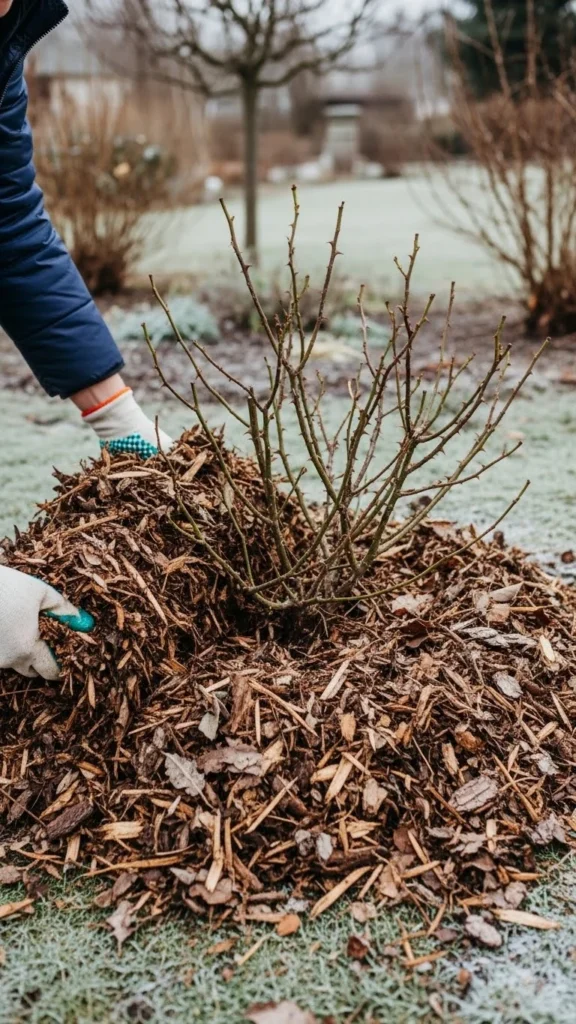
- Mound 8–12 inches of mulch around the base
- Cover the graft union completely if present
- Use materials like shredded leaves, straw, pine needles, or bark mulch
Mulch acts like a thermal blanket. It:
- Prevents soil temperature swings
- Reduces freeze-thaw damage
- Locks in moisture
Avoid packing mulch too tightly. Air pockets help insulate better.
Water Properly Before the Ground Freezes
Dry roses suffer more winter damage than hydrated ones.
Before the soil freezes solid:
- Water deeply during dry fall weeks
- Focus on the root zone, not the leaves
- Stop once the ground stays frozen
Moist soil:
- Holds heat longer
- Prevents root dehydration
- Reduces cane stress
This step is especially important in areas with dry winters and little snow cover.
Protect Canes From Wind and Extreme Cold
Wind can be just as damaging as freezing temperatures.
Helpful protection options:
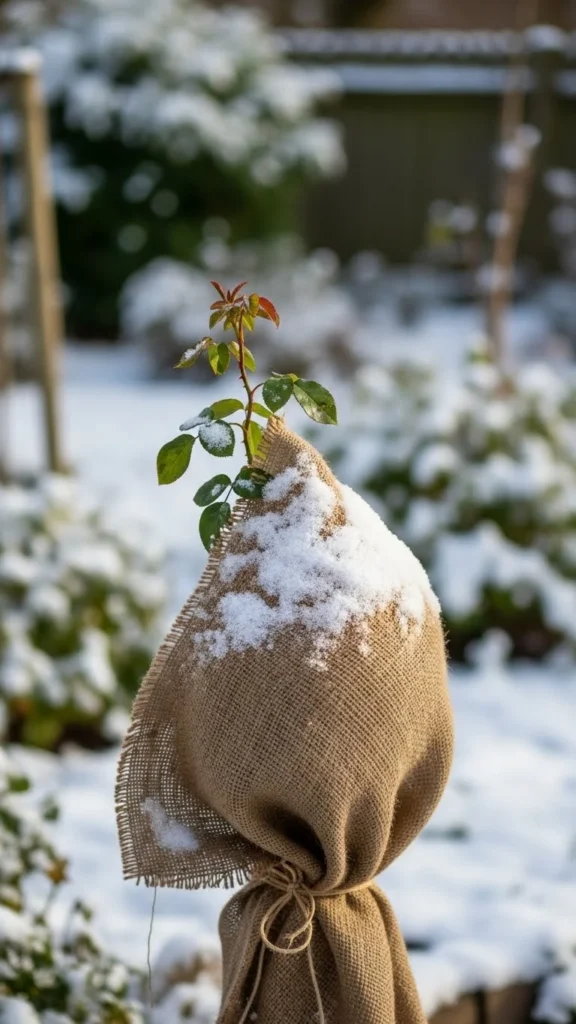
- Burlap wraps
- Rose cones with ventilation holes
- Wind barriers made from garden fabric
Wrap roses after they go fully dormant. Wrapping too early traps warmth and encourages growth.
For very cold climates:
- Tie canes together gently
- Wrap loosely so air can circulate
- Secure at the base to prevent wind lift
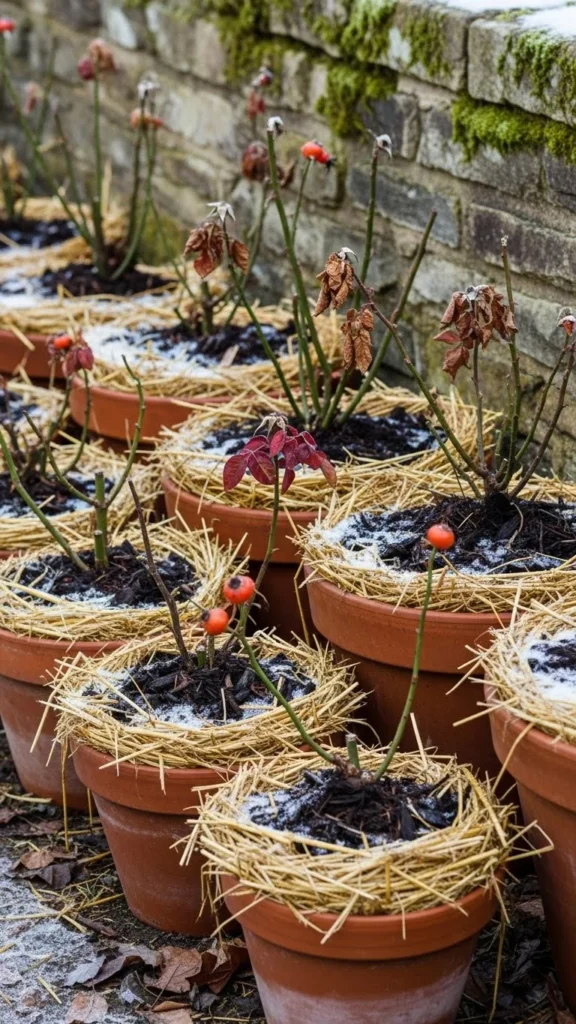
Special Care for Potted Roses
Container roses need extra attention.
Because pots freeze faster than ground soil:
- Move containers to an unheated garage or shed
- Or group them together and insulate with mulch or straw
- Raise pots slightly to prevent sitting in ice
Water lightly once a month if stored indoors. The goal is survival, not growth.
Don’t Rush Spring Cleanup
When winter ends, patience matters.
Avoid:
- Cutting back canes too early
- Removing mulch at the first warm day
Instead:
- Wait until buds start swelling
- Gradually pull mulch away
- Prune only what’s clearly dead
This prevents late frost damage and helps roses recover naturally.
Quick Winter Rose Survival Checklist
Use this simple list each year:
- Stop pruning early
- Mulch deeply after frost
- Water well before freeze
- Shield from wind
- Protect containers
- Prune slowly in spring
Small steps now mean healthier blooms later.
Final Takeaway
Keeping roses alive in winter without dieback isn’t about doing more—it’s about doing the right things at the right time. Protect the roots, stabilize temperatures, and let your roses rest. When spring arrives, you’ll be rewarded with strong canes, fresh growth, and beautiful blooms.
Save this guide for fall and winter prep—your roses will thank you.

Leave a Reply