

Winter doesn’t have to mean trouble for your pond or panic for your fish. With a few smart steps, you can keep your pond healthy, oxygenated, and calm all winter long—while your fish rest safely below the surface.
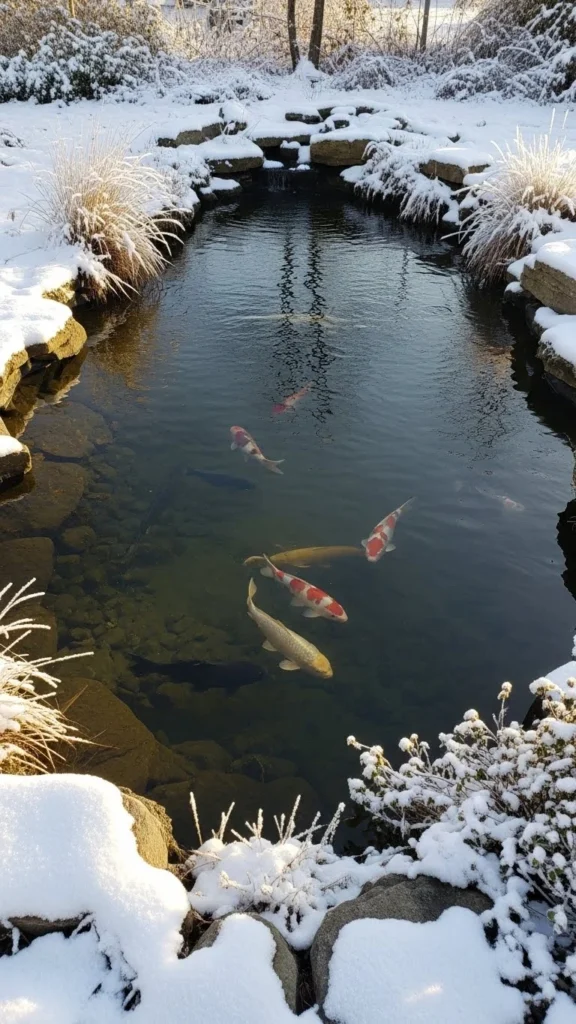
If you’ve ever worried about ice sealing over your pond or fish struggling in cold weather, you’re not alone. The good news? Winter pond care is more about preparation than constant work. Let’s walk through it step by step.
Understand What Fish Need During Winter
Fish don’t need feeding schedules or daily attention in winter. What they do need is stability.
As water temperatures drop:
- Fish slow down and conserve energy
- They stop eating entirely
- They settle near the bottom where temperatures are more stable
Your main goal is protecting water quality and oxygen levels, not active maintenance.
Stop Feeding at the Right Time
One of the biggest winter pond mistakes is feeding fish too late in the season.
When water temperatures drop below 50°F (10°C):
- Fish digestion slows dramatically
- Uneaten food sinks and pollutes the water
- Decaying food creates harmful gases
What to do instead:
- Gradually reduce feeding as temperatures cool
- Stop feeding completely once the water stays below 50°F
- Remove any leftover food immediately
This single step can prevent major water quality issues during winter.
Remove Debris Before the Pond Freezes
Clean water going into winter makes everything easier.
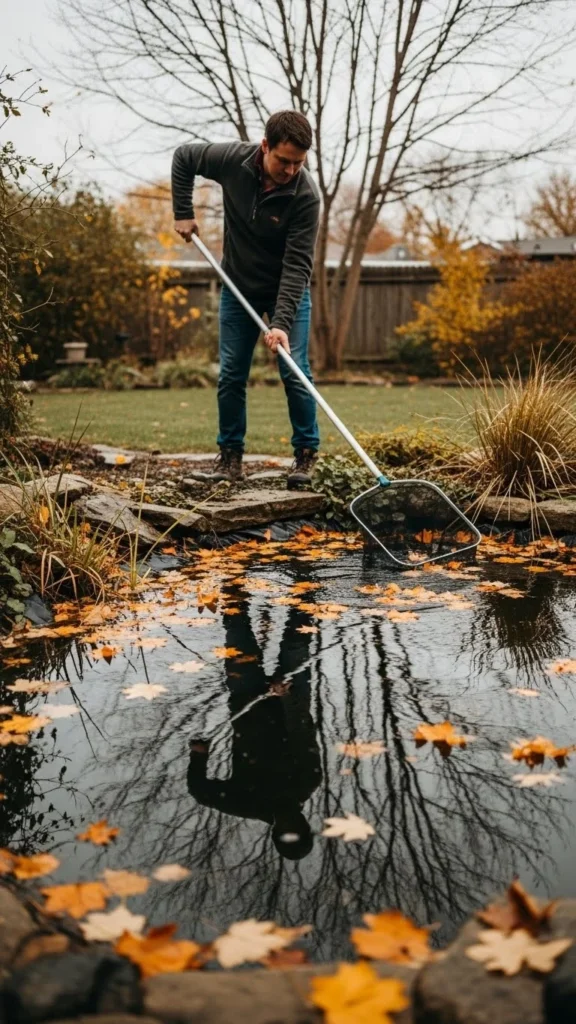
Before the first hard freeze:
- Net out fallen leaves and plant debris
- Trim back dead aquatic plants
- Remove decaying material from the pond bottom if possible
Why this matters:
- Decomposing debris releases toxic gases
- Gases get trapped under ice
- Fish can suffer even if they’re not visible
A quick cleanup now saves stress later.
Keep a Hole Open in the Ice
Your pond does not need to be ice-free all winter—but it does need a way to breathe.
[Image Prompt] A winter pond with a small ice-free opening created by a floating pond de-icer, gentle steam rising, snowy surroundings, natural outdoor photography, no text on image.
A small opening allows:
- Oxygen to enter the water
- Harmful gases to escape
Best ways to do this:
- Floating pond de-icer or heater
- Air pump with an airstone (placed mid-depth, not at the bottom)
Avoid this mistake:
Never smash ice with force. Shock waves can stress or injure fish.
Adjust Pumps and Filters for Winter
Your setup depends on pond depth and climate.
For colder climates or shallow ponds:
- Turn off pumps and filters
- Drain and store them indoors
- Prevent frozen pipes and cracked equipment
For milder winters or deeper ponds:
- Raise the pump off the bottom
- Keep gentle water movement
- Avoid stirring up sediment
The goal is slow circulation, not strong flow.
Add Extra Insulation for Harsh Winters
If your winters are long or extreme, insulation can make a big difference.
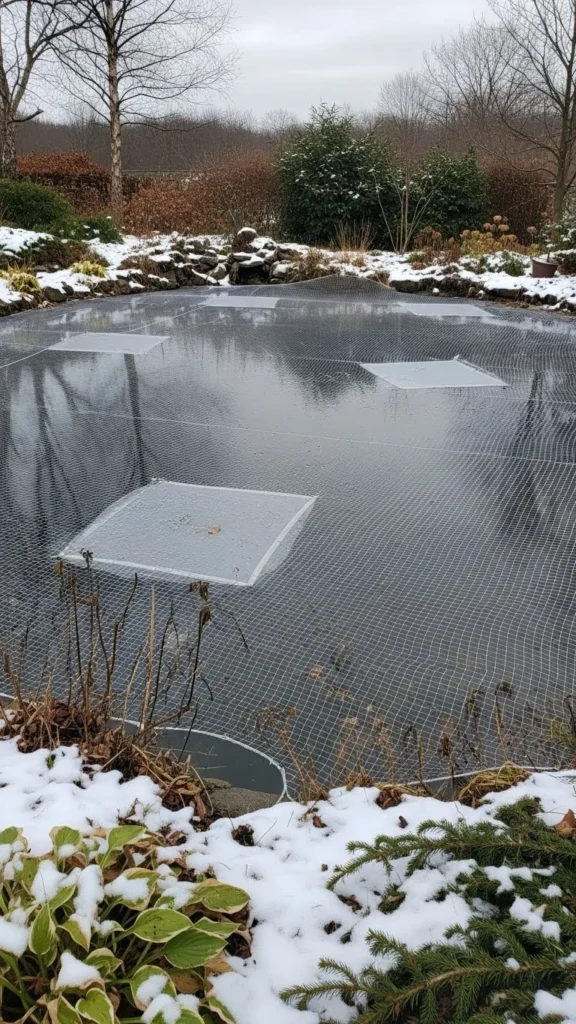
Helpful options:
- Pond netting to catch leaves before snowfall
- Floating insulation panels
- Wind barriers using fencing or shrubs
These reduce heat loss and help maintain stable water temperatures.
Check In—But Don’t Overdo It
Winter pond care is mostly hands-off, but occasional checks are smart.
Every week or two:
- Make sure the ice opening hasn’t closed
- Confirm heaters or air pumps are working
- Look for unusual odors or cloudy water
What not to do:
- Don’t stir the water
- Don’t chase or move fish
- Don’t add treatments unless absolutely necessary
Quiet, stable conditions are exactly what fish need.
Know When Fish Need Extra Help
Most healthy pond fish handle winter just fine—but keep an eye out.
Warning signs:
- Fish gasping near the surface
- Strong rotten smells from the pond
- Completely sealed ice for extended periods
If this happens:
- Open a small ice hole safely
- Increase aeration gently
- Remove obvious debris if accessible
Act calmly and slowly—sudden changes can do more harm than good.
Winter Pond Care Is About Prevention
The secret to a healthy winter pond isn’t constant effort—it’s smart preparation.
To recap:
- Stop feeding early
- Clean debris before freezing
- Maintain gas exchange
- Protect equipment
- Keep things calm and stable
Your fish will emerge in spring healthy, active, and ready to thrive.
Final Takeaway
A winter pond doesn’t need to be perfect—it just needs to breathe and stay clean. Take a little time now, then let nature do the rest.
Save this guide for later and come back to it before the first frost hits!

Leave a Reply