

Winter doesn’t have to mean a dull, empty garden. With the right layout, your outdoor space can stay productive, visually interesting, and surprisingly lively—even in cold weather. The secret isn’t working harder. It’s working smarter with placement, protection, and plant choices that actually enjoy winter conditions.
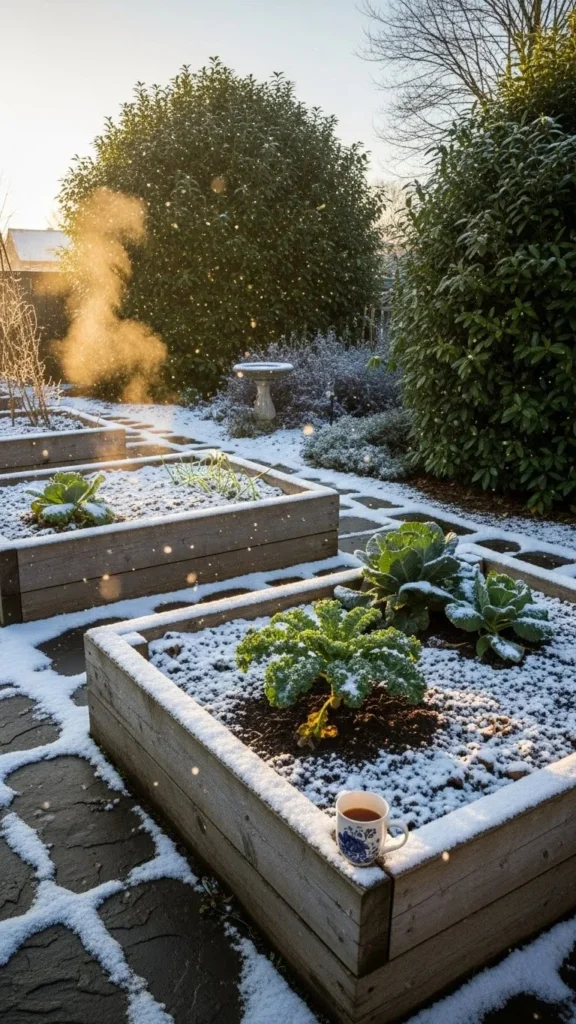
Below is a simple, step-by-step approach to designing a winter garden layout that truly thrives—not just survives.
Start With Sun and Shelter First
Before choosing plants or beds, look closely at where winter sun and wind actually fall in your yard.
Winter sunlight sits lower in the sky, so shadows are longer. Areas that get full sun in summer may be shaded in winter.
Focus on:
- South- or southwest-facing spots
- Areas near walls, fences, or hedges that block cold winds
- Spaces that stay dry and don’t collect icy runoff
These protected zones become the backbone of your winter layout.
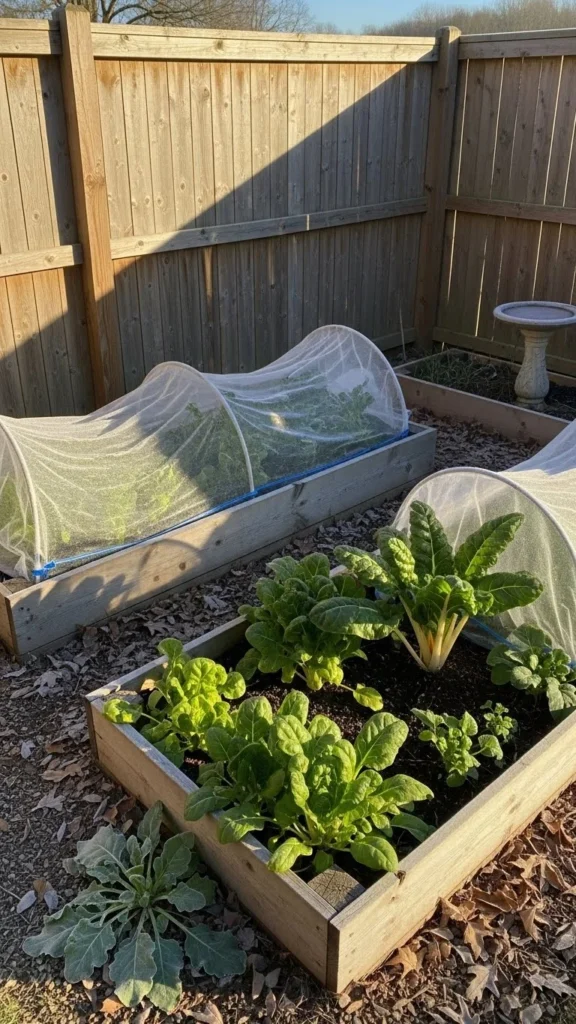
Quick tip: Even one extra hour of winter sun can make a big difference in plant growth.
Design in Zones, Not Rows
Traditional straight rows don’t work as well in winter. Instead, think in compact zones that conserve warmth and moisture.
Smart winter garden zones include:
- Cold-hardy greens zone near the sunniest area
- Root crop zone in deeper soil that insulates better
- Evergreen structure zone for visual balance
- Protected container zone near the house
Grouping plants helps trap heat and reduces exposure to cold air.
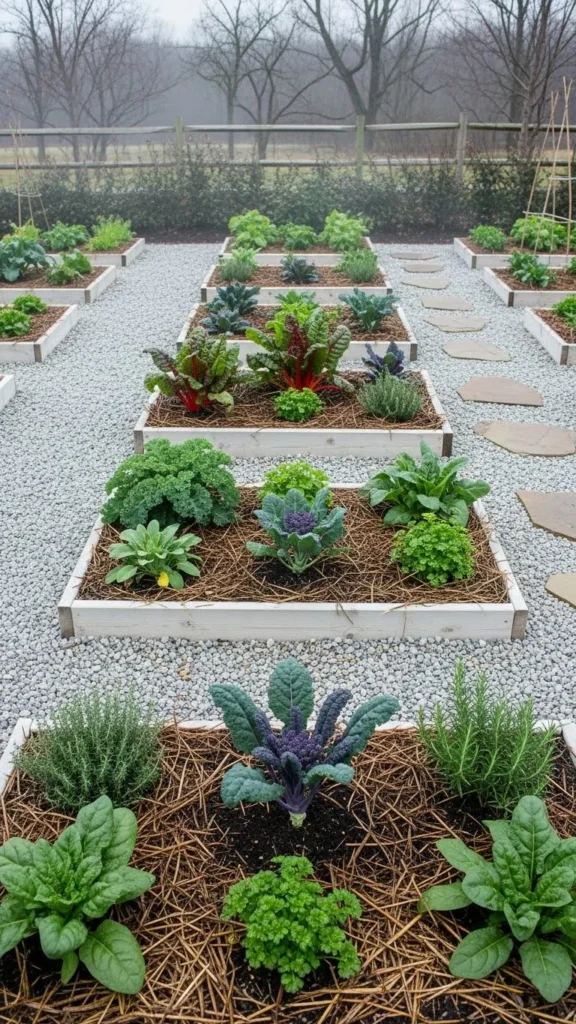
This layout also makes covering plants easier when temperatures dip.
Use Raised Beds and Edges to Your Advantage
Raised beds warm up faster than ground soil and drain better during winter rains. They’re one of the best upgrades for cold-season gardening.
Layout benefits of raised beds:
- Faster soil warming on sunny days
- Better root protection from soggy ground
- Easier placement of covers and hoops
If raised beds aren’t an option, define edges with:
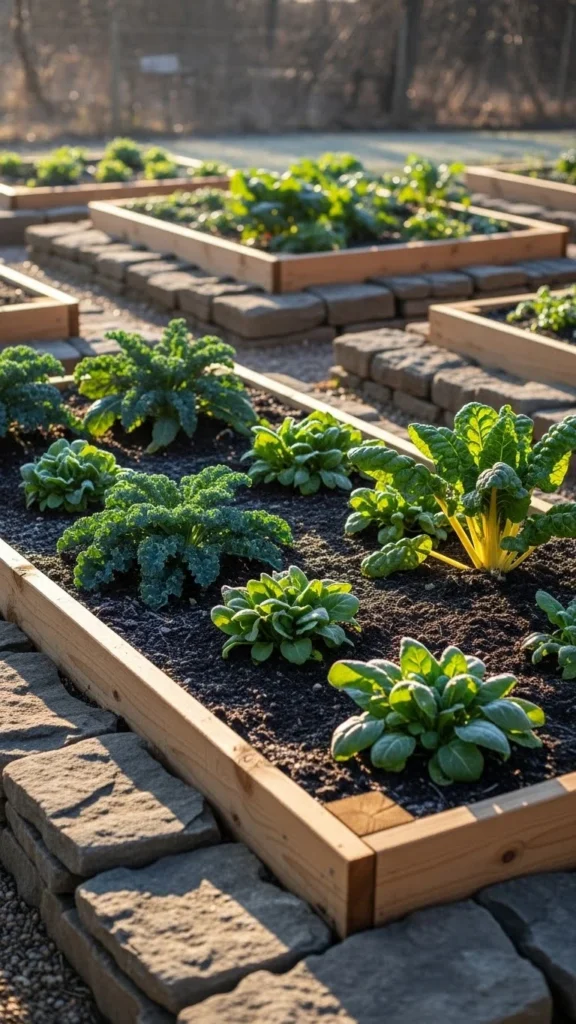
- Stones
- Bricks
- Wooden borders
These materials absorb daytime warmth and slowly release it overnight.
Leave Room for Covers and Access
One of the biggest winter layout mistakes is packing plants too tightly. Winter gardens need space for protection.
Plan clear areas for:
- Low tunnels
- Fabric covers
- Temporary frames
- Easy walking paths
Keep paths wide enough to move without stepping on frozen soil. Compacted winter soil takes longer to recover in spring.
Layout spacing tip:
- Fewer plants, better positioned, outperform crowded beds every time.
Add Evergreen Anchors for Structure
A thriving winter garden isn’t only about harvests—it’s also about how the space feels.
Evergreen plants provide:
- Wind buffering
- Visual stability
- A sense of life even on gray days
Use them to anchor corners, borders, or entrances to your garden.
Good evergreen layout ideas:
- Low shrubs along the north side
- Potted evergreens near beds
- Groundcovers to protect bare soil
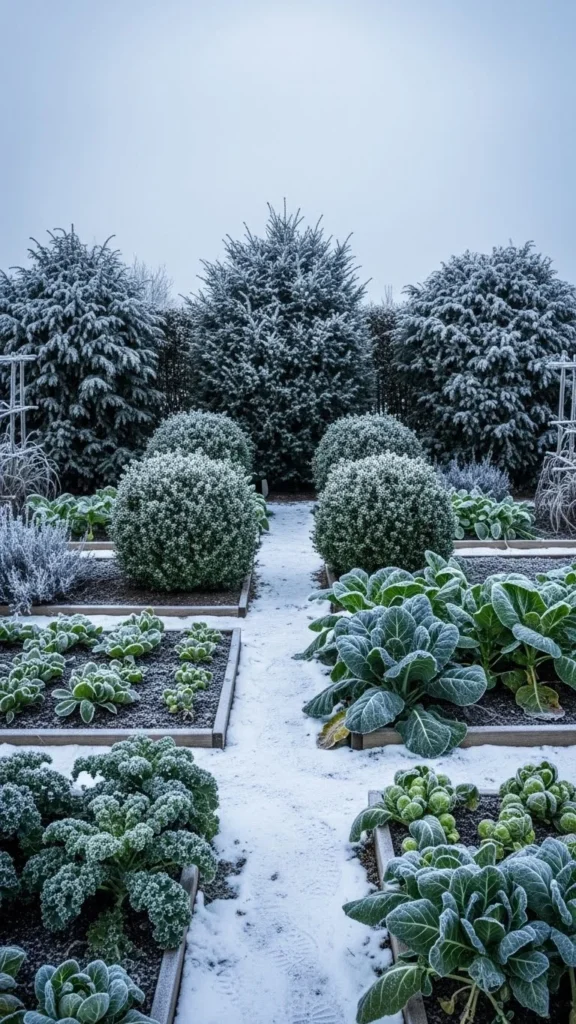
These elements keep your garden looking intentional, not abandoned.
Plan for Water, Drainage, and Winter Care
Winter layouts should make maintenance easier—not harder.
Think about:
- Where hoses can reach without freezing
- How water drains away from beds
- Where tools and covers are stored nearby
Slope beds slightly to prevent pooling water. Wet soil combined with cold temperatures is tough on plant roots.
Simple layout wins:
- Shorter distances
- Clear access points
- No unnecessary obstacles
Think Ahead to Early Spring
A smart winter garden layout naturally transitions into early spring growth.
Leave space for:
- Early sowing areas
- Compost top-ups
- Easy bed expansion
When winter fades, you’ll already be one step ahead—without tearing everything apart.
Final Takeaway
A thriving winter garden isn’t about fighting the season. It’s about designing with it.
Focus on:
- Sun and shelter
- Compact zones
- Raised or well-defined beds
- Space for protection
- Evergreen structure
Do that, and your winter garden will stay productive, balanced, and beautiful long after the first frost.
Save this guide for later—and start planning your winter garden layout today.

Leave a Reply