

Winter can be tough on gardens—but the right mulch, used the right way, can make all the difference. Done correctly, mulching protects roots from freezing temperatures, prevents soil from heaving, and keeps plants healthier through the cold months. Done wrong, it can trap moisture, invite rot, or even suffocate roots.
This guide walks you through how to mulch for winter protection without causing root damage, step by step, in a simple, gardener-friendly way.
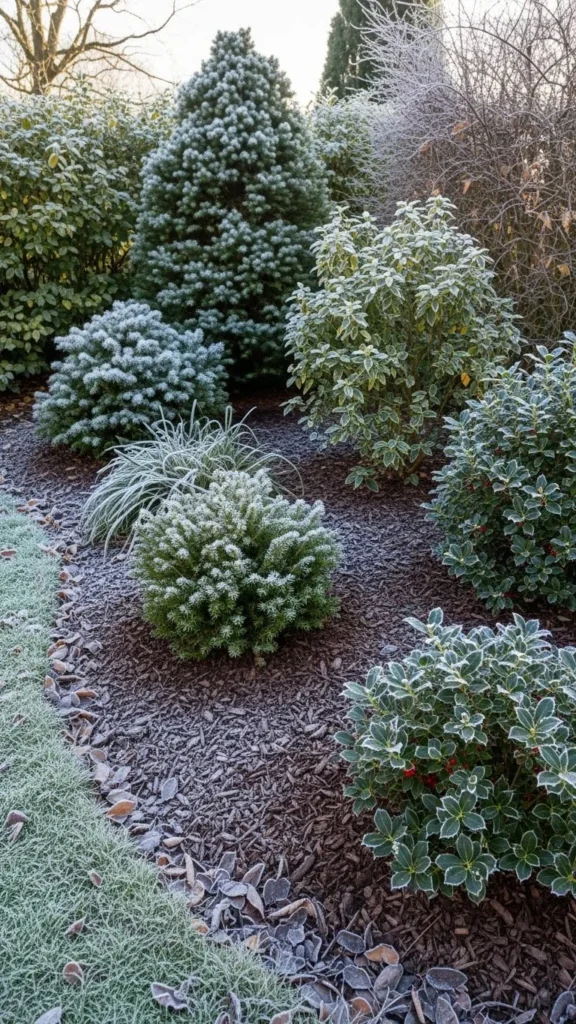
Why Winter Mulching Matters More Than You Think
Mulch isn’t just about insulation—it’s about temperature stability.
During winter, soil goes through repeated freeze-thaw cycles. These shifts can push roots upward, expose them to cold air, and weaken plants before spring even arrives.
Proper winter mulching helps by:
- Keeping soil temperatures more consistent
- Protecting shallow roots from frost
- Reducing moisture loss during cold, dry weather
- Preventing weeds from sprouting early
The key is applying mulch at the right time and in the right way.
When to Mulch for Winter (Timing Is Everything)
One of the most common mistakes is mulching too early.
You should wait until:
- The ground has started to freeze, but is not rock-hard
- Plants have entered full dormancy
This usually happens after a few hard frosts.
Why waiting matters:
- Early mulching can trap warmth, encouraging new growth
- Delayed dormancy makes plants more vulnerable to cold damage
Think of winter mulch as a blanket, not a heater.
Choosing the Right Mulch for Winter Protection
Not all mulch is created equal—especially in winter.
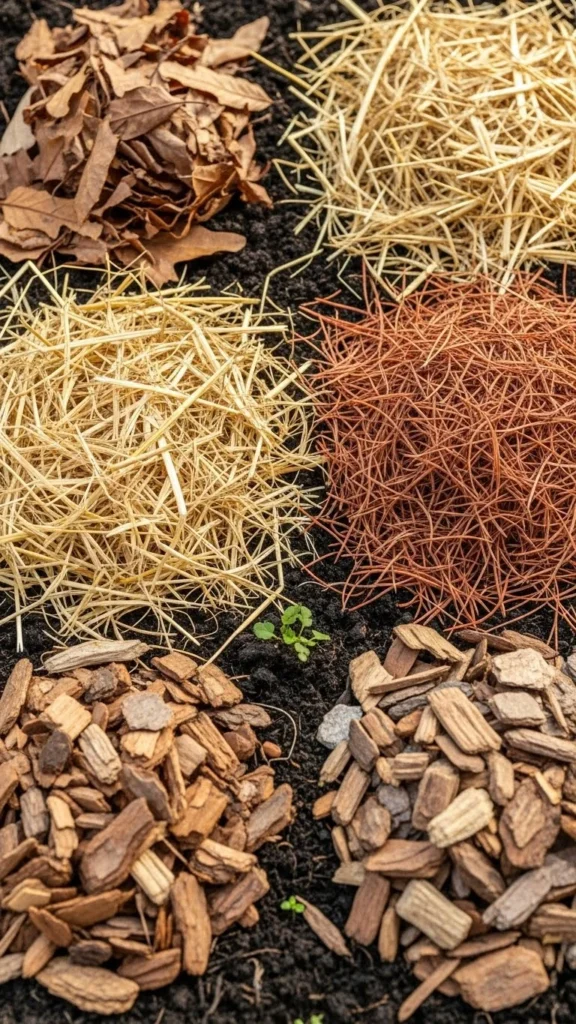
Best mulch options for cold weather:
- Shredded leaves (light, insulating, breathable)
- Straw or salt-free hay
- Pine needles (great for drainage)
- Wood chips (best for trees and shrubs)
- Compost (works well when layered thinly)
Avoid:
- Heavy, compacted mulch that mats down
- Fresh, unfinished materials that generate heat as they break down
How Deep Should Winter Mulch Be?
Depth matters more than most gardeners realize.
General guidelines:
- Perennials & garden beds: 2–4 inches
- Shrubs & trees: 3–5 inches
- Newly planted plants: stay closer to 2–3 inches
Too little mulch won’t insulate.
Too much mulch can:
- Hold excess moisture
- Limit air circulation
- Cause root stress or rot
The goal is insulation, not suffocation.
How to Mulch Without Smothering Roots
This is where many gardeners go wrong.
Follow these simple rules:
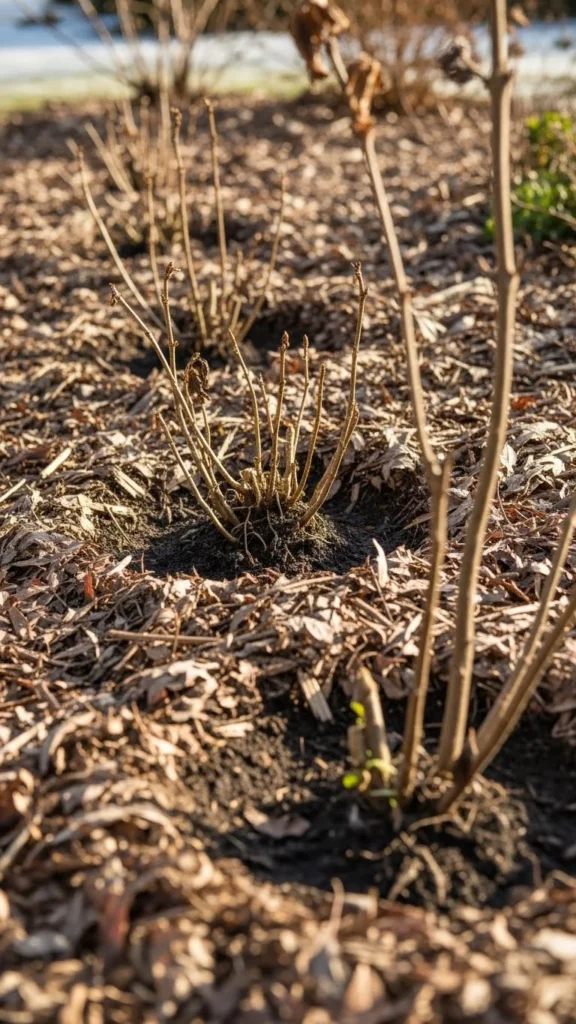
- Keep mulch 2–3 inches away from plant stems
- Never pile mulch directly against trunks
- Spread mulch evenly, not in thick mounds
Mulch should look like a flat, even layer, not a volcano.
Why this matters:
- Mulch piled too close traps moisture
- Wet crowns and bark are more likely to fail over winter
Special Mulching Tips for Trees and Shrubs
Woody plants benefit greatly from winter mulching—but placement is crucial.
Best practices:
- Create a wide mulch ring that extends to the drip line
- Keep the center area around the trunk clear
- Use coarse materials for better airflow
Mulching trees correctly helps:
- Protect feeder roots near the surface
- Reduce winter moisture stress
- Prevent soil cracking during cold snaps
Mulching Raised Beds and Containers in Winter
Raised beds and pots freeze faster than in-ground soil.
Extra protection ideas:
- Add an extra inch of mulch (without exceeding safe depth)
- Use straw or leaves for lighter insulation
- Wrap containers with burlap or fabric before mulching
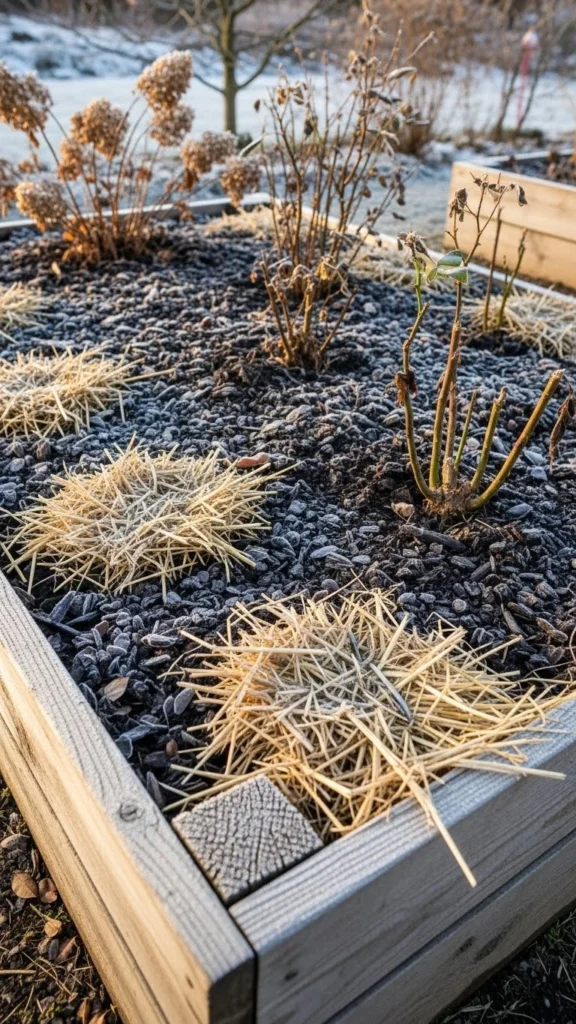
Common Winter Mulching Mistakes to Avoid
Even experienced gardeners make these errors:
- Mulching before plants are dormant
- Using mulch that compacts too tightly
- Overloading mulch depth “just to be safe”
- Forgetting to pull mulch back in early spring
When spring arrives:
- Gradually thin mulch layers
- Let soil warm naturally
- Avoid sudden exposure to cold air
Final Thoughts: Mulch Smart, Not Heavy
Winter mulching doesn’t need to be complicated—it just needs to be thoughtful.
By choosing breathable materials, waiting for proper timing, and keeping mulch away from stems and trunks, you give your plants exactly what they need: steady protection without stress.
Healthy roots in winter mean stronger growth in spring.
Save this guide for later and come back to it when the first frost hits!

Leave a Reply