

Winter can be beautiful, but it’s also one of the toughest seasons for trees. One sudden cold night after a sunny day can leave trunks split and damaged—a problem known as cold cracking or frost cracking. The good news? With a little preparation, you can protect your trees and help them come through winter strong and healthy.
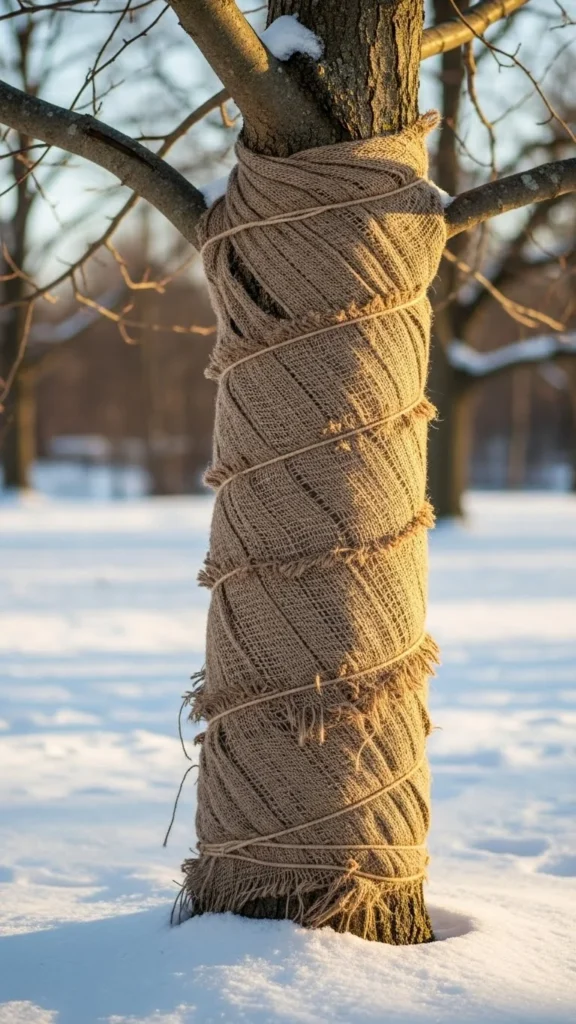
What Are Cold Cracks (and Why Do They Happen)?
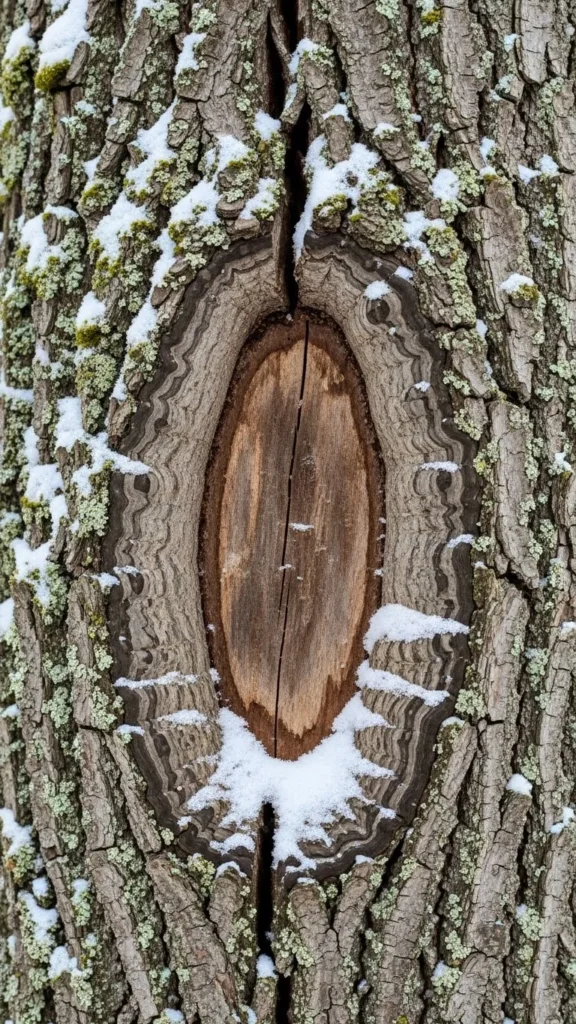
Cold cracks are long, vertical splits that form in tree bark during winter. They usually happen when daytime sun warms the trunk, causing it to expand, followed by a rapid nighttime temperature drop that makes it contract too quickly.
Trees most at risk include:
- Young or newly planted trees
- Thin-barked trees like maple, cherry, apple, and ash
- Trees in open areas with strong sun exposure
Once a crack forms, it can weaken the tree and make it more vulnerable to pests and disease. Prevention is far easier than repair.
Choose the Right Trees and Planting Spot
Protection starts long before winter arrives.
When planting new trees:
- Pick varieties known for cold hardiness in your region
- Avoid planting thin-barked trees in wide-open, south-facing spots
- Provide some shelter from harsh winter sun and wind
If you already have trees in risky locations, don’t worry—there are still effective ways to protect them.
Use Tree Wrap to Shield the Trunk
Tree wrap is one of the simplest and most effective ways to prevent cold cracks. It works by reducing temperature swings along the bark.
How to wrap properly:
- Use breathable, light-colored tree wrap
- Start at the base of the trunk and wrap upward
- Overlap slightly, but don’t pull too tight
- Secure with tape or twine
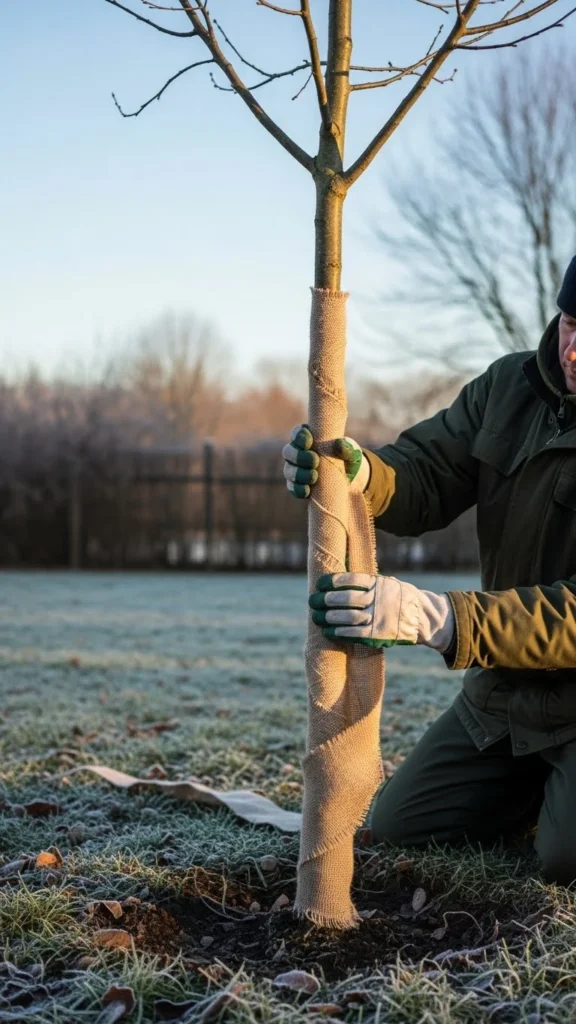
Pro tip: Apply tree wrap in late fall and remove it in early spring to avoid trapping moisture or insects.
Mulch the Base (But Keep It Off the Trunk)
Mulching helps regulate soil temperature and protects roots, which indirectly supports trunk health during winter stress.
Best mulching practices:
- Use shredded bark, wood chips, or leaf mulch
- Apply a 2–4 inch layer around the base
- Keep mulch a few inches away from the trunk
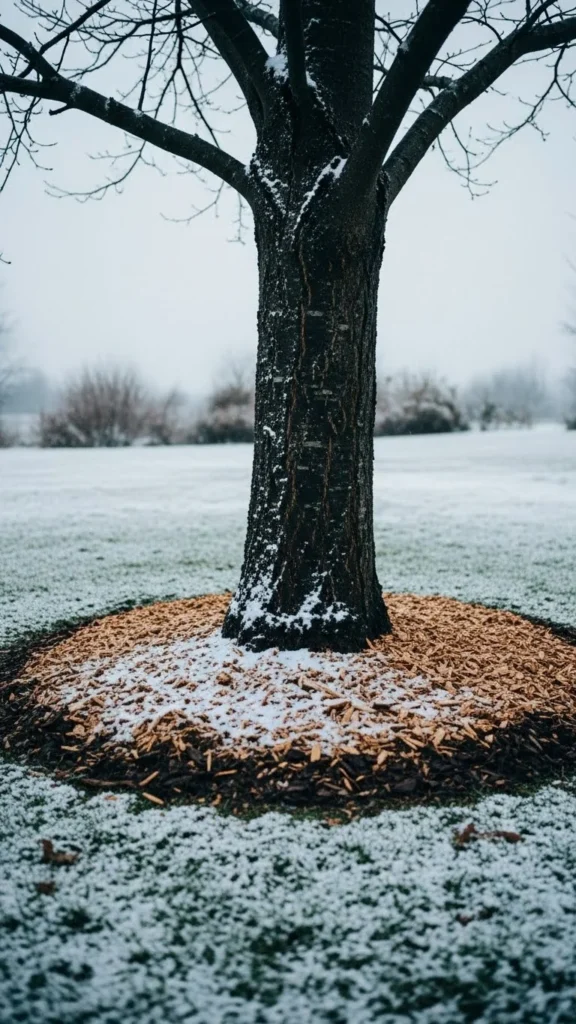
Mulch helps stabilize moisture levels and prevents freeze-thaw cycles that can add extra stress to trees.
Water Trees Before the Ground Freezes
Dry trees are more prone to damage. Proper hydration going into winter helps trees maintain healthy tissue that’s more flexible during temperature swings.
Watering tips:
- Give trees a deep soak in late fall
- Focus on young and recently planted trees
- Stop watering once the ground freezes
Healthy, hydrated trees handle winter conditions far better than stressed ones.
Protect Trees From Sunscald
Sunscald often goes hand-in-hand with cold cracking. It happens when winter sun warms the bark too much during the day.
Ways to reduce sun damage:
- Use tree wrap or trunk guards
- Plant evergreen shrubs nearby for partial shade
- Avoid heavy pruning in late summer or fall

Reducing direct winter sun exposure helps keep bark temperatures more stable.
Avoid Winter Pruning
Pruning at the wrong time can make trees more vulnerable to cold damage.
Instead:
- Prune in late winter or early spring
- Remove dead or damaged branches only if necessary
- Avoid stimulating new growth before cold weather
Let trees stay dormant and protected during the coldest months.
What to Do If a Cold Crack Appears
If you spot a crack, don’t panic. Many trees can heal naturally over time.
What not to do:
- Don’t fill cracks with sealants or paint
- Don’t wrap tightly over an open wound
What helps:
- Keep the tree healthy with proper watering and care
- Protect the trunk from further temperature swings
- Monitor the crack for signs of pests or decay
Winter Tree Care Made Simple
Cold cracks may look alarming, but with the right prevention steps, they’re largely avoidable. A little wrapping, mulching, and seasonal care can make a huge difference—especially for young and thin-barked trees.
Takeaway: Protect your trees before winter hits, and they’ll reward you with healthy growth come spring.
Save this guide for later and give your landscape the winter care it deserves.

Leave a Reply