

Winter can turn even the prettiest garden path into a slippery obstacle course. One frosty morning is all it takes to realize that untreated paths aren’t just inconvenient—they can be unsafe. The good news? With a little planning and a few smart upgrades, you can winterize your garden paths so they stay walkable, attractive, and ice-free all season long.
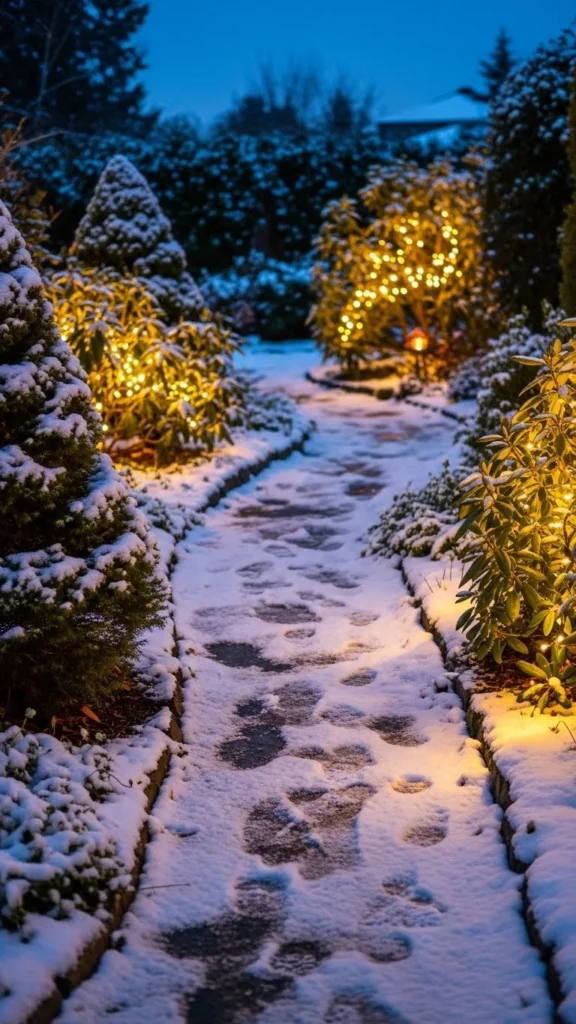
Below is a simple, step-by-step guide to help you prepare your paths before winter weather hits hard.
Understand Why Garden Paths Get Icy
Ice forms on garden paths for a few common reasons:
- Poor drainage that allows water to pool and freeze
- Uneven surfaces where moisture collects
- Shaded areas that don’t get enough winter sun
- Materials like smooth stone or concrete that freeze easily
Once you know what’s causing the problem, it’s much easier to fix it. Walk your paths after rain or snowmelt and note where water lingers. Those spots deserve extra attention.
Clear and Repair Before Cold Weather Sets In
Before winter arrives, start with a clean slate.
- Sweep away fallen leaves, dirt, and debris
- Remove moss or algae, which become slick when frozen
- Repair loose stones, cracked pavers, or uneven edges
Small fixes now prevent big hazards later.
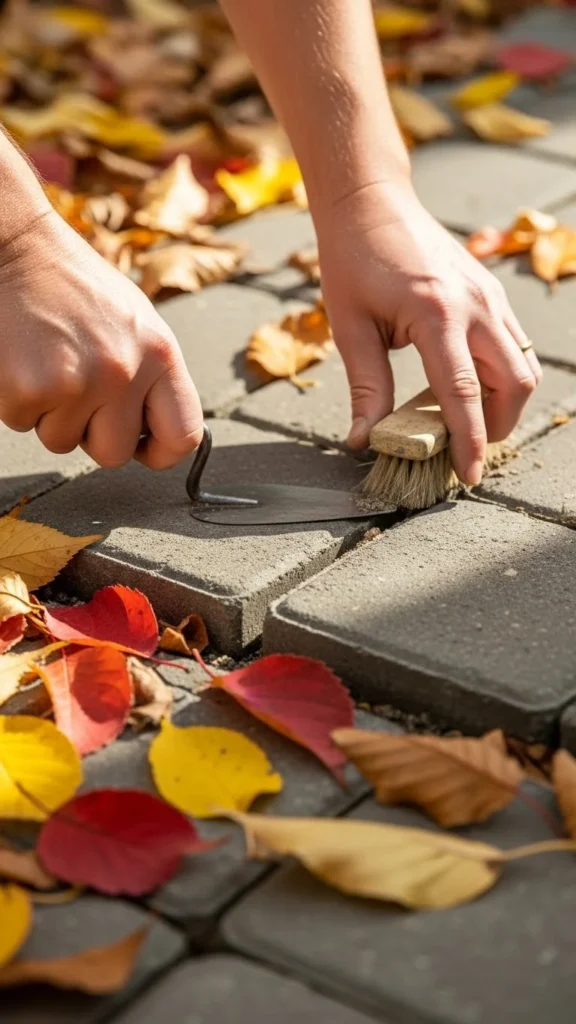
Pay special attention to low spots. Even shallow dips can collect water that freezes overnight.
Improve Drainage Along the Path
Good drainage is one of the most effective ways to prevent ice buildup.
Try these easy upgrades:
- Add gravel or crushed stone along the edges to absorb excess moisture
- Regrade soil so water runs away from the path
- Install narrow drainage channels beside problem areas
If your path is surrounded by garden beds, loosening compacted soil can help water drain faster instead of pooling on the surface.
Choose Ice-Smart Path Materials
If you’re updating or rebuilding a path, material choice matters more than you think.
Winter-friendly options include:
- Textured stone or rough pavers for better traction
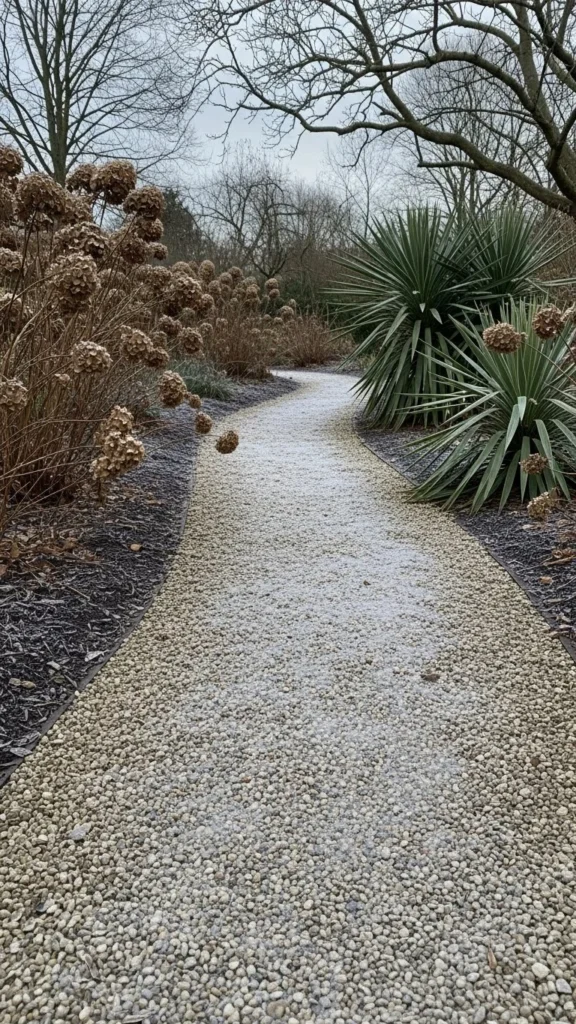
- Gravel paths that drain quickly and resist icing
- Brick laid with sand joints instead of mortar
Smooth concrete or polished stone looks nice but becomes slippery fast in freezing conditions.
Add Natural Traction for Safer Walking
Even well-designed paths can ice over during extreme cold. Adding traction makes a big difference.
Safe, garden-friendly options include:
- Coarse sand sprinkled lightly over icy areas
- Fine gravel for extra grip
- Wood ash from untreated firewood (use sparingly)
Avoid piling on too much material—it should improve traction without burying the path.
Use Outdoor Mats and Temporary Covers
High-traffic areas like steps, slopes, or entrances benefit from added protection.
Consider:
- Weather-resistant outdoor mats with non-slip backing
- Temporary rubber runners during icy weeks
- Removable wooden slats over problem sections
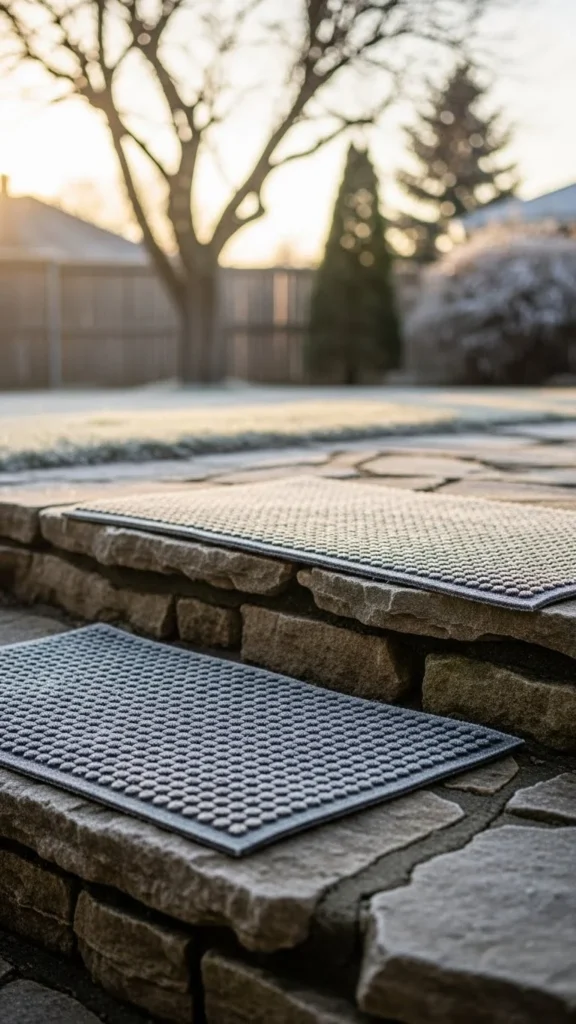
These solutions are especially helpful if you don’t want permanent changes.
Install Path Lighting for Winter Visibility
Ice is easier to avoid when you can see it.
Good winter lighting ideas include:
- Low solar lights lining the edges of the path
- Warm LED stake lights to highlight steps and curves
- Motion-sensor lights near entrances
Lighting doesn’t stop ice, but it helps prevent slips by making hazards visible during dark winter mornings and evenings.
Maintain Paths After Snow and Frost
Winterizing doesn’t end once the snow falls. Regular upkeep keeps paths safe all season.
- Clear snow promptly before it compacts into ice
- Reapply traction materials after freezing rain
- Check drainage paths after thaws
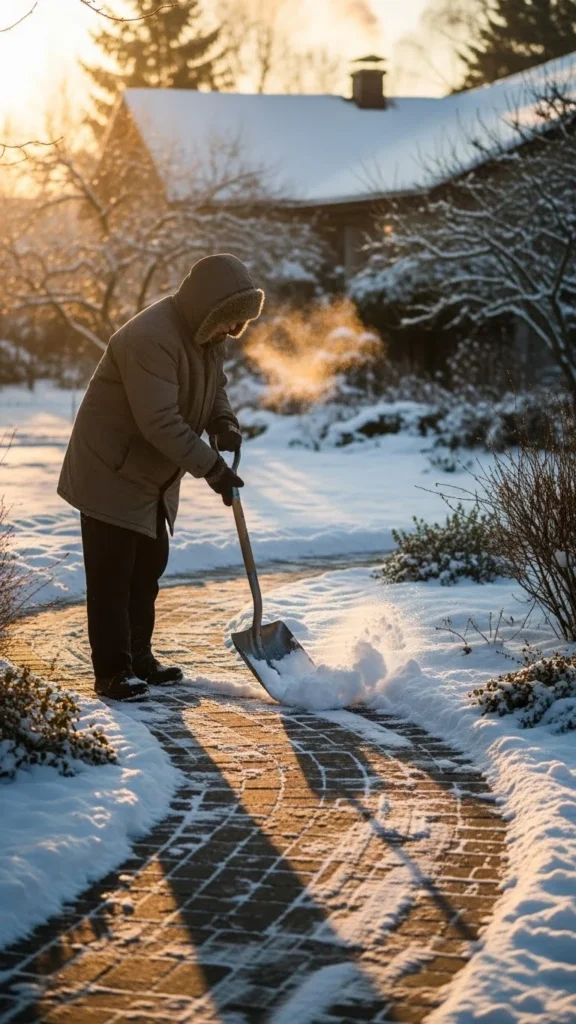
Consistency is key. A few minutes of maintenance can prevent dangerous buildup.
Think Long-Term for Future Winters
If icy paths are a recurring problem, plan upgrades during warmer months:
- Replace slick materials with textured alternatives
- Redesign paths to improve slope and drainage
- Add permanent edging to control water flow
These changes not only improve winter safety but also make your garden more functional year-round.
Final Takeaway
Winter doesn’t have to make your garden paths risky. With smart preparation, better drainage, the right materials, and a little ongoing care, you can keep your walkways safe and welcoming all season long. A winter-ready path means fewer slips, less stress, and more confidence stepping outside—even on frosty mornings.
Save this guide for later and winterize your garden paths before the first freeze hits!

Leave a Reply