

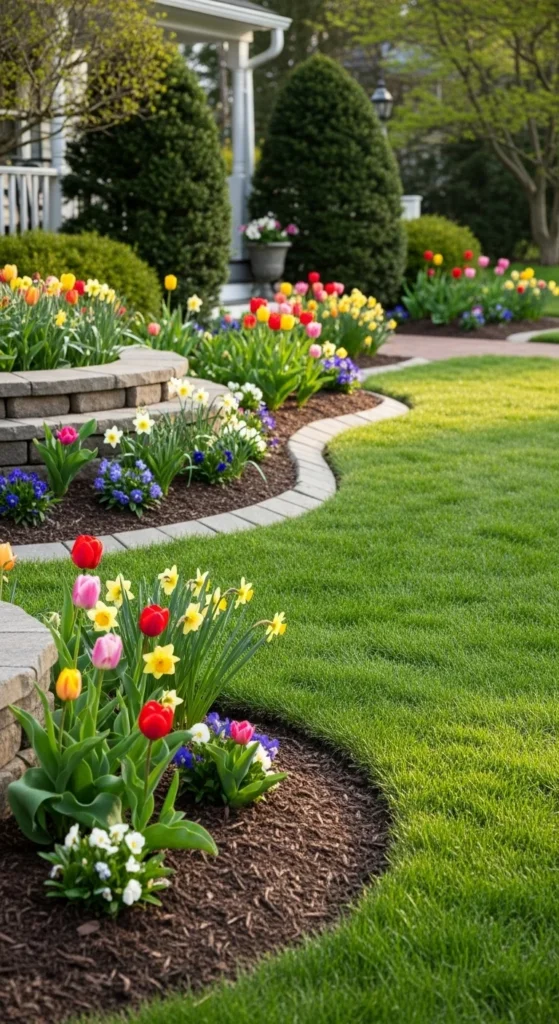
Spring is when front yards start pulling their weight again. After months of bare beds and tired grass, this is the season when small changes make a visible difference. Many people search for front yard spring gardening ideas because they want their home to look cared for without spending a lot or hiring help. The good news is that curb appeal grows from simple actions. Thoughtful plant choices, clean edges, and a few weekend projects can reshape how your home feels from the street. These ideas focus on practical steps that fit real budgets and real schedules.
1. Define Garden Beds With Clean Edging
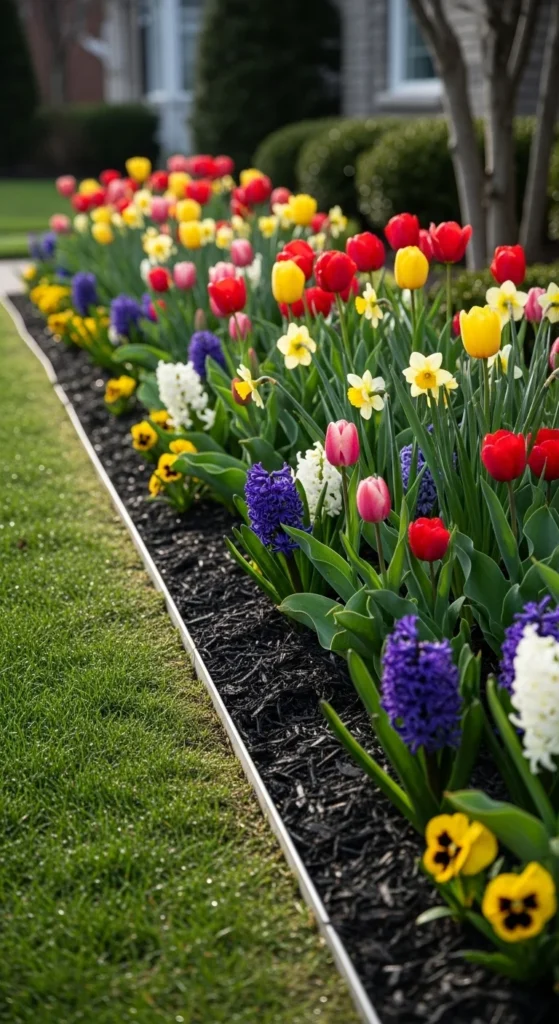
Clear edges change everything. When garden beds blur into the lawn, the yard looks unfinished. Adding edging creates instant order. You can use plastic edging, metal strips, bricks, or even stones you already have. Install it in one afternoon using a shovel and a rubber mallet.
Once the edge is in place, pull back grass runners and refresh the soil line. This small step makes even basic plants look intentional. Edging also keeps mulch where it belongs, which saves money over time.
If your budget is tight, trench edging works well. Cut a shallow V-shaped groove along the bed line. It costs nothing and still gives a sharp outline. Recut it each spring to keep it neat.
Defined beds guide the eye and frame your plants. They also make mowing easier, which keeps the whole yard looking tidy without extra work.
2. Plant Early-Blooming Bulbs Near Walkways
Early blooms bring life back fast. Bulbs like daffodils, crocus, and tulips show up when little else is happening. Planting them near walkways means they get noticed right away.
If you planted bulbs last fall, tidy the area now so they stand out. Remove old leaves and add a thin mulch layer. If not, many garden centers sell potted bulbs in spring. Drop them into the ground for instant color.
Group bulbs in clusters instead of straight lines. Odd-numbered groupings look more relaxed and natural. Stick to one or two colors for a calmer look.
After blooms fade, let the leaves yellow naturally. This feeds the bulb for next year. You can hide fading leaves by planting low perennials nearby. Bulbs are a one-time cost that keep working year after year.
3. Refresh Mulch for a Clean Ground Layer
Mulch does more than cover soil. It gives beds a finished look and helps plants hold moisture. Old mulch fades and breaks down, so spring is the right time to refresh it.
You do not need to remove everything. Rake the surface to loosen compacted areas. Add a thin layer on top. Two inches is enough. More than that can cause problems for plant roots.
Choose one mulch type for the whole front yard. This keeps the look consistent. Bark chips, shredded wood, or pine mulch all work. Pick what fits your budget and what is easy to find locally.
Mulching also cuts down on weeds. That means less time pulling and more time enjoying the yard. It is one of the fastest ways to improve how the space looks from the street.
4. Add Low-Maintenance Shrubs for Structure
Shrubs anchor the yard. They give shape even when flowers are not blooming. Choose compact varieties that will not outgrow the space. Boxwood alternatives, dwarf evergreens, and small flowering shrubs work well.
Place shrubs near the house, along fences, or at bed corners. These spots need structure the most. Spacing matters. Check the mature size on the plant tag and leave room.
For budget savings, buy smaller plants. They cost less and catch up in a few seasons. Keep them watered during the first year so roots establish well.
Shrubs reduce the need to replant each season. Once in place, they provide a steady backdrop for everything else. This balance makes the yard look settled instead of scattered.
5. Create a Simple Path Border With Plants
Paths guide visitors to your door. Planting along the edges makes the walk feel welcoming. Choose low plants so they do not spill onto the path.
Ground covers, small grasses, or compact perennials work well. Space them evenly and keep the line straight for a clean look. If the path curves, follow the curve closely.
If planting feels like too much work, use potted plants along the edge. This gives the same effect with less digging. Move them as needed.
A planted path border draws the eye forward. It makes the yard feel planned without adding complexity. Even a short walkway benefits from this treatment.
6. Use Symmetry Near the Front Door
Symmetry brings calm. Matching planters or shrubs on each side of the front door create balance right where people look first. This works with any home style.
Choose sturdy containers that can handle outdoor conditions. Fill them with soil and plants that handle your light levels. Keep the plant choice simple. One main plant with a filler works well.
If containers are not an option, plant matching shrubs in the ground. Keep them trimmed to similar sizes.
This approach does not require many plants. It relies on repetition. The result feels organized and welcoming without extra effort.
7. Introduce Perennials That Return Each Year
Perennials save time and money. Once planted, they come back every year. Choose varieties suited to your climate and sun exposure.
Mix leaf textures and heights. This adds interest even when flowers are not open. Space plants so they can grow without crowding.
If budget is a concern, start small. Add a few perennials each season. Many can be divided after a couple of years, giving you more plants for free.
Perennials create rhythm in the yard. They help the space feel settled and cared for across seasons.
8. Fill Bare Spots With Annual Color
Annuals handle gaps well. Use them to fill empty areas between shrubs and perennials. This keeps beds full while other plants grow.
Stick to a limited color palette. Too many colors can feel busy. Choose shades that match your home exterior.
Annuals work well near the front edge of beds where they are easy to see. They also work in containers for quick updates.
Because they only last one season, they are flexible. Try new colors or layouts without long-term commitment.
9. Prune and Shape Existing Plants
Before buying new plants, look at what you already have. Many front yards improve just by pruning. Remove dead branches and shape overgrown shrubs.
Use clean tools and take your time. Step back often to check balance. The goal is to reveal structure, not force shapes.
Pruning improves airflow and light. This helps plants grow better during the season.
This step costs nothing but time. It often makes the biggest difference because it restores order.
10. Add Container Gardens Near Entry Areas
Containers are flexible. Place them near steps, porches, or corners that feel empty. They add height and interest.
Use sturdy pots that match the home style. Fill them with soil and plants that suit the location. Water regularly since containers dry out faster.
If buying new pots is not an option, repaint old ones. Neutral colors work with most homes.
Container gardens let you adjust the look easily. Move them or change plants as the season goes on.
11. Layer Plants by Height
Layering makes beds look full and natural. Place taller plants at the back, medium in the middle, and low plants at the front.
This setup allows every plant to be seen. It also creates depth from the street.
If space is limited, choose compact plants and repeat the pattern in smaller sections.
Layered beds look intentional even with basic plants. They guide the eye smoothly across the yard.
12. Use Native Plants for Easier Care
Native plants are adapted to local conditions. They usually require less watering and care once established.
Visit a local garden center or extension service for recommendations. Choose plants that match your sun and soil.
Mix natives with other plants if you prefer. They still provide a reliable base.
This choice reduces maintenance and helps plants perform well through the season.
13. Improve Soil With Simple Amendments
Healthy soil supports healthy plants. In spring, mix compost into planting areas. This improves texture and nutrients.
You do not need special products. Homemade compost or bagged compost works fine. Spread it and lightly work it into the top layer.
Good soil helps roots spread and hold moisture. This reduces stress on plants during warm days.
Soil care pays off all season and supports everything you plant.
14. Add a Small Tree for Scale
A small tree adds scale and balance. It breaks up the space between house and ground plantings.
Choose trees that stay compact. Ornamental varieties work well in front yards.
Planting a young tree costs less and adapts better. Water it regularly during the first year.
A tree becomes a long-term feature that shapes the yard over time.
15. Create a Focal Point With One Feature
A focal point gives the eye a place to land. This could be a large shrub, a small tree, or a garden ornament.
Keep it simple. One feature is enough. Surround it with lower plants so it stands out.
Avoid placing too many features. This can feel cluttered.
A clear focal point makes the yard feel organized and planned.
16. Keep Lawn Edges Sharp
Lawn edges frame the garden. Use an edger or shovel to keep lines clean.
Do this early in the season and touch up as needed. Sharp edges make mowing easier.
This small task improves the whole yard. It highlights beds and paths without extra cost.
Clean edges signal care and attention.
17. Group Plants in Odd Numbers
Grouping plants creates rhythm. Odd numbers feel natural and relaxed.
Plant three or five of the same plant together instead of spacing singles.
This approach fills space faster and looks intentional.
It also simplifies planting plans and shopping lists.
18. Use Repetition for Visual Flow
Repeating plants ties the yard together. Use the same shrub or flower in several spots.
This guides the eye across the space. It prevents a patchwork look.
Repetition works even in small yards. Choose one or two plants to repeat.
This method brings unity without extra work.
19. Add Ground Covers to Reduce Weeds
Ground covers fill gaps and block weeds. They reduce maintenance once established.
Choose varieties suited to your light conditions. Plant them close so they spread evenly.
This option costs more upfront but saves time later.
Ground covers also soften bed edges and add texture.
20. Clean and Repair Garden Borders
Loose borders look messy. Reset stones or bricks so they sit evenly.
Remove weeds between borders. Rinse off dirt.
This simple fix makes old beds look new again.
It also keeps soil and mulch in place.
21. Add Spring Color Near the Mailbox
The mailbox is often the first thing seen. Plant a small bed around it.
Use hardy plants that handle sun and foot traffic.
Keep the design simple so it stays neat.
This small area adds charm without much effort.
22. Keep Plant Choices Simple
Too many plant types can feel busy. Limit choices to a few reliable plants.
Repeat them across beds and borders.
This simplifies care and creates a calm look.
Simple plans are easier to maintain over time.
23. Maintain Clear Sightlines
Avoid blocking windows or paths with tall plants. Keep heights in check.
Trim regularly and plan plant placement carefully.
Clear sightlines make the yard feel open and welcoming.
They also improve safety and visibility.
24. Keep Up With Weekly Light Maintenance
Consistency matters. Spend a little time each week pulling weeds and checking plants.
Small tasks prevent bigger problems later.
Set a short routine that fits your schedule.
Regular care keeps the yard looking cared for all season.
Conclusion
Front yard spring gardening works best when it focuses on simple, repeatable actions. Clean edges, thoughtful plant placement, and steady care shape how a home feels from the street. You do not need expensive plants or complex plans. Start with one or two ideas from this list and build from there. Each small step adds clarity and order, helping your front yard look cared for throughout the season.
Leave a Reply