

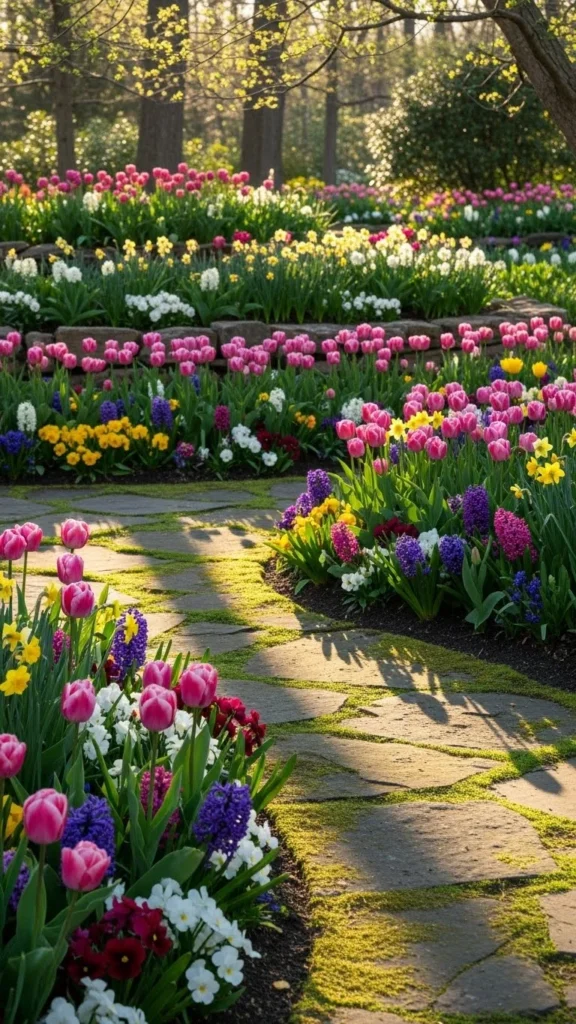
Spring is the season when gardens shift from quiet and bare to colorful and lively. A thoughtful color plan can completely change how a space feels, even when working with a small yard or a tight budget. The ideas below focus on simple plant pairings, easy swaps, and creative use of everyday materials. Each one is designed to help you add eye-catching color without complicated layouts or costly supplies.
Pink and Purple Flower Pairings
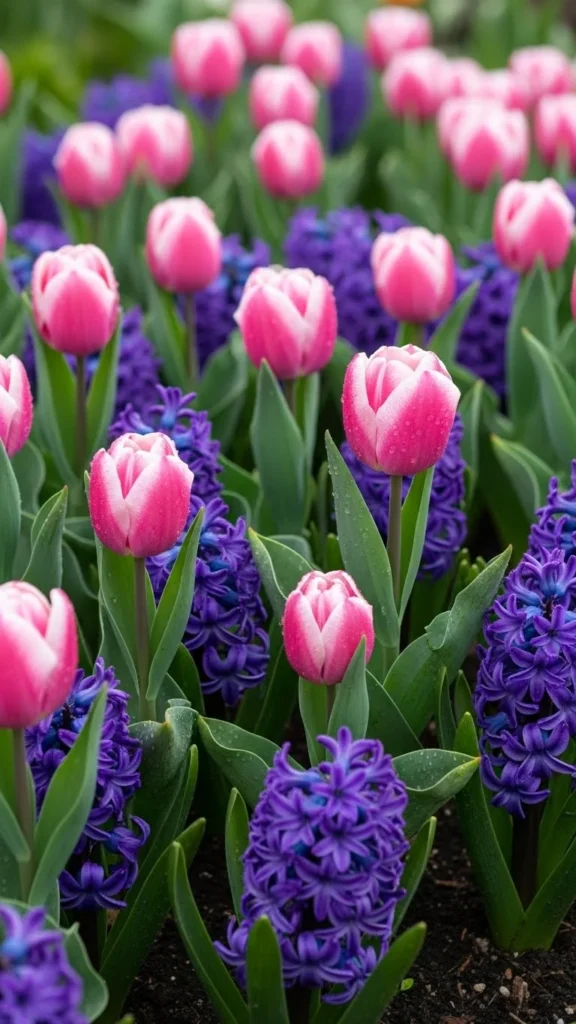
Pink and purple work well together because they share a gentle harmony while still standing apart. Plant tulips, hyacinths, or pansies in loose clusters rather than straight rows. This keeps the look relaxed and natural. If buying plants feels expensive, start with seed packets and mix them before planting so the colors blend naturally as they grow.
Use this pairing near walkways or entry points. The color mix draws the eye without feeling loud. Old containers, buckets, or chipped pots can hold extra plants and repeat the same colors around the space. This repetition helps the garden feel connected.
If space is limited, use one large container instead of many small ones. Choose pink blooms for the center and ring them with purple varieties. Even a single container like this can make a patio or balcony feel full of life.
[Image Prompt: A sunny spring garden filled with yellow daffodils and white narcissus, softly blurred background, crisp details on petals, high-end camera photography, no text or words.]
Yellow and White for Bright Corners
Yellow and white create a cheerful look that works well in shaded or narrow areas. Daffodils, narcissus, and white crocus are easy to find and simple to grow. These colors reflect light, which helps smaller spaces feel open.
Plant yellow flowers in small groups and let white ones fill the gaps. This spacing keeps the garden from feeling crowded. If you already have white flowers, add yellow through painted pots or recycled containers. A simple coat of yellow paint can tie everything together.
This color mix looks great along fences or walls. It also works well near seating areas, where the lighter tones feel calm and welcoming. Even a short border planted with these shades can change the mood of the whole garden.
[Image Prompt: A spring garden with coral snapdragons and teal-painted planters, greenery surrounding the bold colors, shot with a high-end camera, no text or words.]
Coral Blooms with Teal Accents
Coral flowers bring warmth, while teal adds contrast without overpowering the space. Snapdragons, ranunculus, or dianthus are good coral choices. Teal can come from painted pots, old chairs, or simple garden stakes.
You do not need many coral plants. A few grouped together will stand out. Place them near teal elements to guide the eye. If painting feels like too much work, look for thrifted items in similar tones.
This idea works especially well on patios or near doorways. The color mix feels playful and creative without being overwhelming. It is also easy to adjust year after year by repainting or moving containers.
[Image Prompt: A spring garden bed with red tulips and soft green foliage, clean soil lines, high-end camera capture, no text or words.]
Red Tulips with Soft Green Backdrops
Red tulips create a strong focal point, so they work best when balanced with calm greenery. Hostas, ferns, or ornamental grasses help soften the look. Keep the planting simple by limiting the number of red blooms.
Plant red tulips in a tight cluster and surround them with green plants. This framing makes the red stand out without taking over. If tulips are already growing in your garden, add green plants in pots around them.
This setup works well near entrances or garden corners. It gives the eye a place to rest while still feeling bold. Even a small patch can make a strong impression.
[Image Prompt: A spring garden featuring lavender plants and soft silver foliage, sunlight catching leaf textures, high-end camera photography, no text or words.]
Lavender and Silver Tones
Lavender flowers paired with silver-toned leaves create a calm and stylish look. Plants like dusty miller or lamb’s ear are affordable and easy to grow. They also handle different conditions well.
Plant lavender in rows or clusters, then tuck silver plants around the edges. This creates a layered effect without extra effort. If planting in the ground is not an option, use long planters to repeat the same pattern.
This color idea works well along pathways or seating areas. The soft tones feel relaxing and tidy. It is also a smart choice for gardeners who prefer low-maintenance plants.
[Image Prompt: A spring garden bed with orange marigolds and deep blue pansies, vivid color contrast, high-end camera capture, no text or words.]
Orange and Blue Contrast Beds
Orange and blue create a bold contrast that draws attention quickly. Marigolds and pansies are budget-friendly options that grow well together. Keep the layout simple by alternating small clusters of each color.
Use this idea in areas where you want strong visual interest, such as near fences or garden signs. If the colors feel too strong, add green plants between clusters to soften the look.
This pairing also works in containers. One orange plant and one blue plant per pot can make even a small space feel lively.
[Image Prompt: A spring garden with pastel blooms in peach, mint, and soft yellow, gentle lighting, high-end camera photography, no text or words.]
Pastel Mix for Small Gardens
Pastel shades work well in small spaces because they feel light and open. Choose plants in peach, mint, and pale yellow tones. Mixing these colors keeps the garden from feeling flat.
Plant pastels close together so the colors blend naturally. Avoid straight lines. A loose layout feels more relaxed and welcoming. Old bowls or baskets lined with plastic can hold extra plants without extra cost.
This idea is perfect for balconies or courtyards. It creates color without making the space feel crowded.
[Image Prompt: A spring garden bed featuring white flowers with dark purple foliage accents, dramatic contrast, high-end camera capture, no text or words.]
White Flowers with Dark Foliage
White blooms stand out when paired with deep-colored leaves. Plants with purple or near-black foliage create contrast without adding more flowers. This keeps the look clean and balanced.
Plant white flowers in front and darker foliage behind them. This layering adds depth. If you already have green plants, add darker tones through small shrubs or painted planters.
This idea works well near walls or fences. The contrast helps each plant stand out clearly.
[Image Prompt: A spring garden with pink flowering shrubs and gray stone pathways, soft light, high-end camera photography, no text or words.]
Pink Shrubs with Stone Elements
Pink shrubs bring lasting color, while stone paths or borders keep the look grounded. Choose shrubs that fit your space and plant them where they can grow without crowding.
Use stones or bricks to edge the planting area. This adds structure and highlights the pink tones. Reused bricks or stones from old projects work just as well as new ones.
This setup feels organized and easy to maintain. It also looks good even when flowers are not in bloom.
[Image Prompt: A spring garden bed with mixed wildflowers in bold colors, natural arrangement, high-end camera capture, no text or words.]
Mixed Wildflower Color Bursts
Wildflowers offer many colors with little effort. Scatter seeds in open areas and let them grow naturally. The mix of shades creates a lively look that changes over time.
Use this idea in areas that feel empty or unused. Even a narrow strip can become colorful. If you want more control, thin out plants as they grow.
Wildflowers are budget-friendly and attract pollinators. They are a great option for gardeners who prefer a relaxed style.
[Image Prompt: A spring garden featuring blue flowers against warm wooden planters, natural textures, high-end camera photography, no text or words.]
Blue Blooms with Warm Wood
Blue flowers stand out against wood tones. Use wooden planters, raised beds, or fences as the backdrop. The contrast feels balanced and welcoming.
Plant blue flowers close to the wood elements so the colors interact. If wood looks worn, a light sanding can improve its appearance without repainting.
This idea works well on decks or patios. It combines color with texture in a simple way.
[Image Prompt: A spring garden bed with yellow-green foliage and pops of red flowers, clean composition, high-end camera capture, no text or words.]
Chartreuse Leaves with Red Accents
Chartreuse leaves add brightness even without many flowers. Pair them with small red blooms for contrast. This keeps the look sharp and focused.
Use chartreuse plants as the base layer and add red flowers in small amounts. Too much red can feel heavy. A few blooms are enough.
This idea suits modern or tidy gardens. It also works well in containers.
[Image Prompt: A spring garden with purple flowering vines climbing a light-colored trellis, high-end camera photography, no text or words.]
Purple Vines on Light Trellises
Purple vines bring height and color at the same time. A light-colored trellis helps the blooms stand out. Simple wooden trellises are affordable and easy to install.
Plant the vine at the base and guide it upward as it grows. This saves ground space and adds visual interest.
This setup works well in small yards or along fences.
[Image Prompt: A spring garden bed with soft blue flowers and white gravel paths, high-end camera capture, no text or words.]
Blue and White Garden Paths
Blue flowers along white gravel paths create a clean and calm look. Use low-growing plants so the path stays visible.
Gravel is often inexpensive and easy to spread. It also helps define walkways clearly.
This idea keeps gardens looking organized without heavy maintenance.
[Image Prompt: A spring garden with orange flowers set against gray stone walls, high-end camera photography, no text or words.]
Orange Against Neutral Backgrounds
Orange blooms stand out when placed near gray or beige surfaces. Walls, fences, or stones make a great backdrop.
Use orange sparingly. A few plants are enough to draw attention. This keeps the look balanced.
This works well in urban gardens or courtyards.
[Image Prompt: A spring garden with layered green shades and small white flower accents, high-end camera capture, no text or words.]
Green Layers with White Highlights
Different green shades add depth. White flowers add small points of interest without overpowering the scene.
Layer plants by height. Taller greens at the back, shorter ones in front.
This idea suits calm garden styles and works year after year.
[Image Prompt: A spring garden featuring pink containers filled with mixed blooms, high-end camera photography, no text or words.]
Colorful Containers in Groups
Grouping containers creates impact. Use similar colors for the pots and vary the plants inside.
This allows easy changes when seasons shift. Containers can be moved as needed.
It is also ideal for renters or small spaces.
[Image Prompt: A spring garden bed with blue and yellow flowers mixed evenly, high-end camera capture, no text or words.]
Blue and Yellow Balance
Blue and yellow balance each other well. Plant them evenly to avoid one color dominating.
This pairing works in both beds and containers.
It creates a cheerful and steady look.
[Image Prompt: A spring garden with pale pink flowers and gray planters, high-end camera photography, no text or words.]
Soft Pink with Neutral Pots
Neutral pots let pink blooms shine. Gray or beige containers work best.
This idea is simple and easy to repeat.
It suits patios and entryways.
[Image Prompt: A spring garden featuring bold purple flowers surrounded by green ground cover, high-end camera capture, no text or words.]
Purple Focal Points
Use purple flowers as focal points. Surround them with green plants.
This draws the eye without clutter.
A single focal area can change the whole garden.
[Image Prompt: A spring garden bed with mixed warm tones, reds, oranges, and yellows, high-end camera photography, no text or words.]
Warm Color Zones
Group warm colors together. This creates energy in specific areas.
Keep other parts of the garden calm to balance it out.
This helps guide movement through the space.
[Image Prompt: A spring garden with pale blue flowers and silver containers, high-end camera capture, no text or words.]
Cool Tones for Calm Spaces
Cool tones suit quiet corners. Blue and silver feel relaxed.
Use this near seating areas.
It helps create a peaceful mood.
[Image Prompt: A spring garden bed with white flowers scattered among green plants, high-end camera photography, no text or words.]
Simple White Scattering
White flowers scattered throughout connect different areas.
This creates unity without effort.
It also works with any color scheme.
[Image Prompt: A spring garden with colorful ground cover plants forming patterns, high-end camera capture, no text or words.]
Colorful Ground Covers
Ground covers add color close to the soil. They fill gaps easily.
They also reduce maintenance.
Choose colors that match nearby plants.
[Image Prompt: A spring garden featuring pink and yellow flowers along a fence line, high-end camera photography, no text or words.]
Fence-Line Color Runs
Plant colors along fences to soften edges.
Use repeating patterns for consistency.
This adds color without using much space.
[Image Prompt: A spring garden with mixed pastel and bold blooms in one bed, high-end camera capture, no text or words.]
Mixed Intensity Beds
Mix soft and bold colors carefully. Let one shade lead.
This keeps the bed interesting.
It also allows flexibility with plant choices.
[Image Prompt: A spring garden featuring coordinated flower colors repeated in multiple spots, high-end camera photography, no text or words.]
Repeating Color Themes
Repeat the same colors in different areas. This ties the garden together.
Even small repeats make a difference.
It helps the space feel planned and calm.
Conclusion
Color has the power to change how a garden feels without major work or spending. By mixing thoughtful plant choices with simple containers, reused materials, and clear groupings, any outdoor space can feel lively and inviting. Start with one idea, try it in a small area, and build from there. Each color choice adds personality and makes the garden a place you want to spend time in again and again.
Leave a Reply