

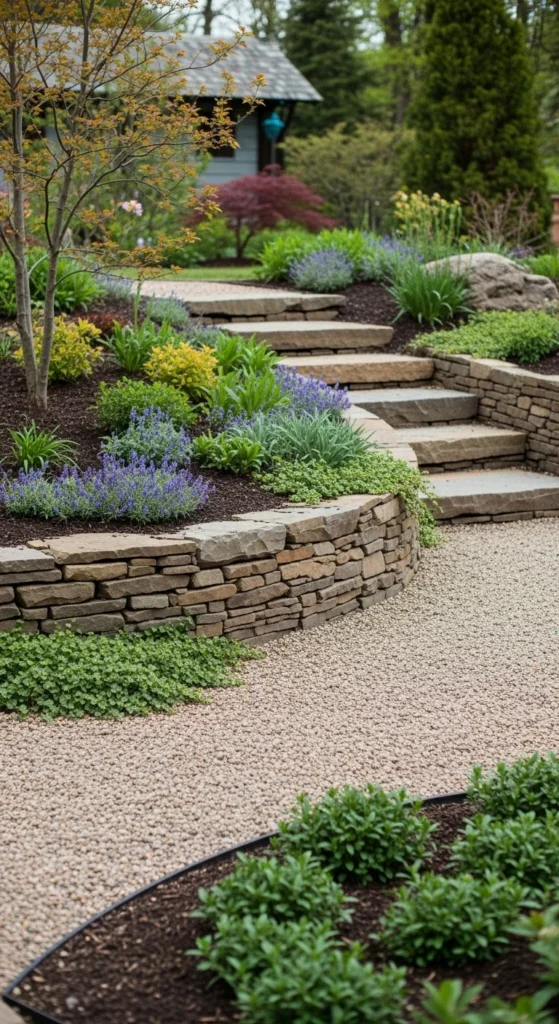
Spring rock gardens are a smart choice for anyone who wants curb appeal without constant watering. These setups rely on stone, gravel, and hardy plants that handle dry soil with ease. They also reduce maintenance and water use while still feeling intentional and styled. Whether your yard is large or compact, a low-water rock garden can be shaped to fit your space, budget, and time. The ideas below focus on simple layouts, easy sourcing, and realistic DIY steps you can start this season.
1. Layered River Rock Beds With Native Plants
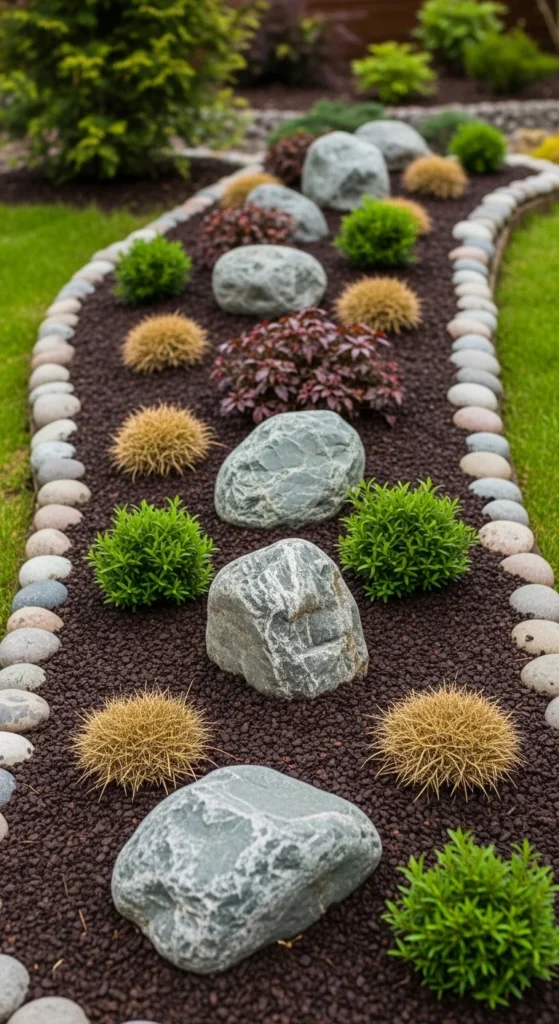
Layered river rock beds create structure without extra watering.
Start by clearing grass or weeds from a shallow area.
Lay landscape fabric to limit regrowth.
Use larger river stones along the edges.
Fill the center with smaller rounded rocks.
This keeps the surface tidy and drains well after rain.
Native plants fit perfectly in gaps between stones.
They handle local conditions with less care.
Many thrive on rainfall alone once established.
Space plants loosely so roots spread.
Add soil only where needed.
Avoid thick mulch that holds moisture.
For a budget approach, source river rocks from local suppliers in bulk.
Some landscaping yards sell mixed sizes at lower prices.
Native plants are often affordable at local garden sales.
This setup works well along fences, walkways, or house foundations.
It looks clean and intentional.
Water use stays low while the garden stays attractive.
2. Gravel Path Rock Garden Border
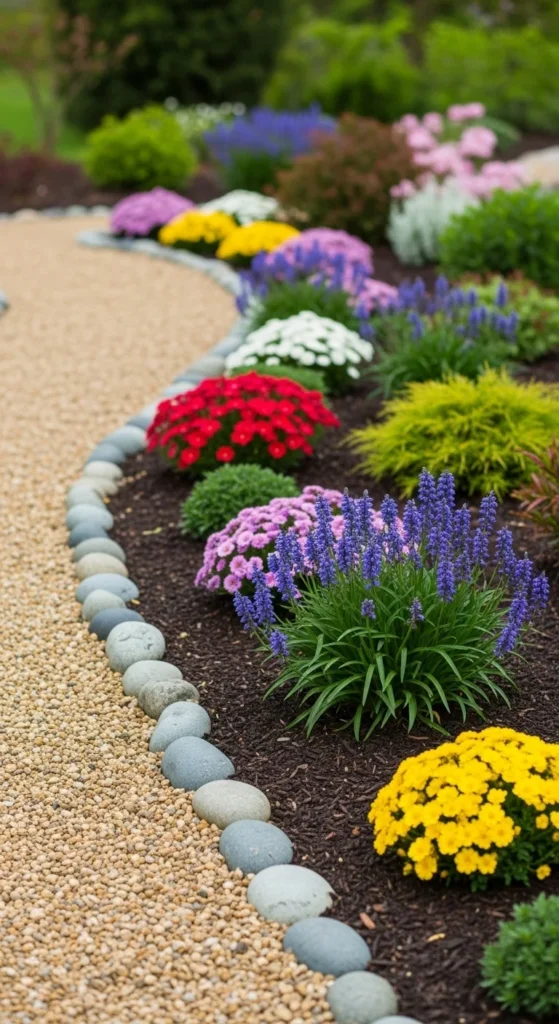
A gravel path framed by stones adds function and style.
Choose crushed gravel or pea gravel for easy walking.
Outline the path with medium stones to keep gravel in place.
On each side, plant low-water ground covers or hardy perennials.
They soften the edges without demanding attention.
Spacing matters more than plant quantity.
This layout reduces lawn size.
Less grass means less watering.
The stones also help manage foot traffic.
DIY installation is simple.
Level the ground.
Lay fabric.
Add gravel in thin layers.
For savings, reuse stones from other areas of your yard.
Gravel is often cheaper in bulk bags.
This idea suits side yards and narrow spaces.
It guides movement while adding texture.
Maintenance stays minimal all season.
3. Raised Stone Rock Garden Mounds
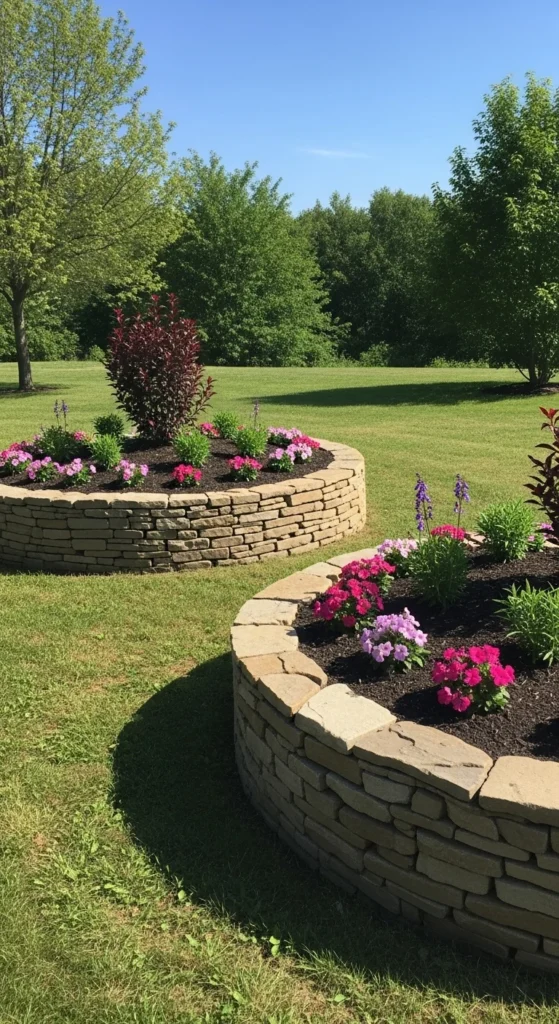
Raised stone mounds add height and interest.
They also improve drainage.
That means less water sits around roots.
Stack flat stones to form shallow retaining rings.
Fill the center with sandy soil.
Top with gravel to reduce evaporation.
Choose plants that handle dry conditions well.
Space them with room to grow.
Let the stones do most of the visual work.
This method works even in compact yards.
One or two mounds can change the layout.
They act as focal points without heavy planting.
Use leftover pavers or broken concrete pieces to cut costs.
Many people repurpose materials already on hand.
Water lightly during early growth.
After that, rainfall often does the job.
The result is sculptural and easy to manage.
4. Desert-Style Rock Garden With Sand and Stone
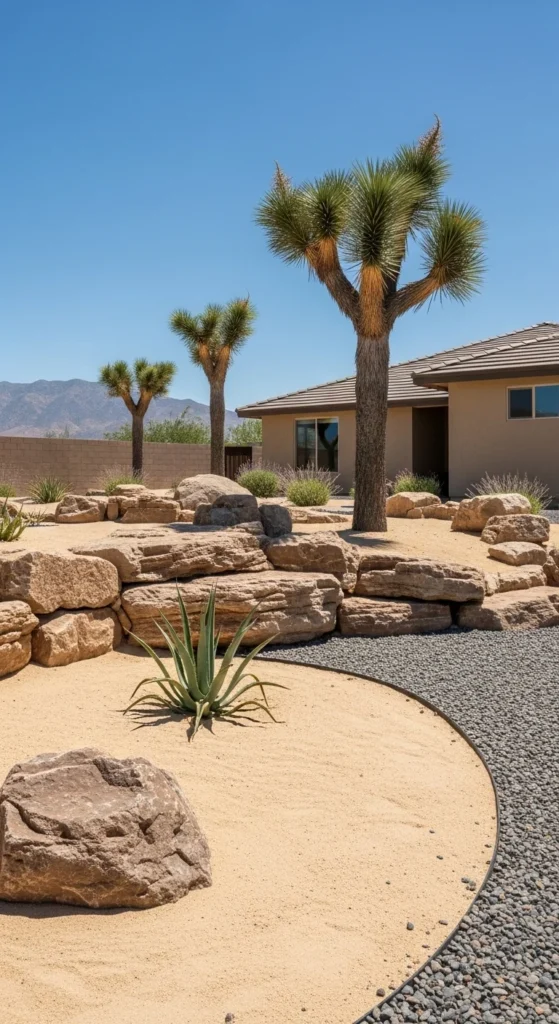
A desert-style layout uses sand, gravel, and bold stones.
It keeps water use very low.
It also looks intentional and clean.
Start with a base of compacted sand.
Add clusters of rocks in varied sizes.
Avoid symmetry for a natural feel.
Plants should be spaced widely.
This reduces competition for moisture.
It also makes upkeep easier.
Many drought-tolerant plants thrive here.
They prefer dry soil and good airflow.
This garden works well in sunny areas.
It handles heat without constant care.
Sand and gravel are usually inexpensive.
Local suppliers often sell them by the yard.
Use this style near driveways or patios.
It connects hard surfaces with greenery.
The look stays neat with little effort.
5. Rock Garden With Ground-Level Stepping Stones
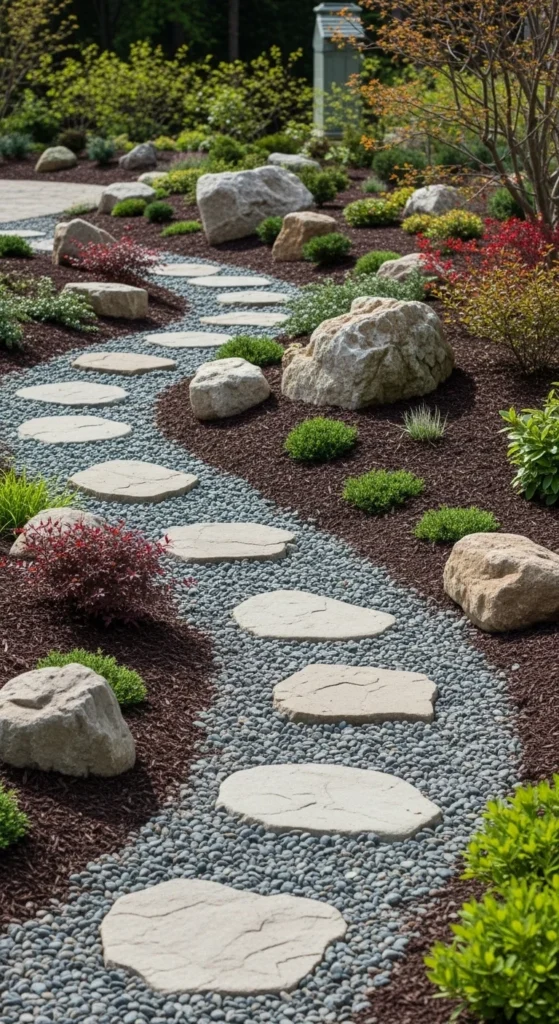
Stepping stones add movement through a rock garden.
They also reduce wear on planted areas.
Place them flush with the surface.
Surround each stone with gravel or small rocks.
This keeps soil from shifting.
It also improves drainage.
Plants can fill spaces between paths.
Choose low-water varieties that spread slowly.
This avoids overcrowding.
Installation is simple.
Dig shallow spaces for stones.
Set them level with the ground.
For a lower cost option, use concrete pavers.
They work just as well as natural stone.
This design fits front yards and back gardens.
It invites use while staying practical.
Water use stays minimal throughout the season.
6. Mixed Stone Texture Rock Garden
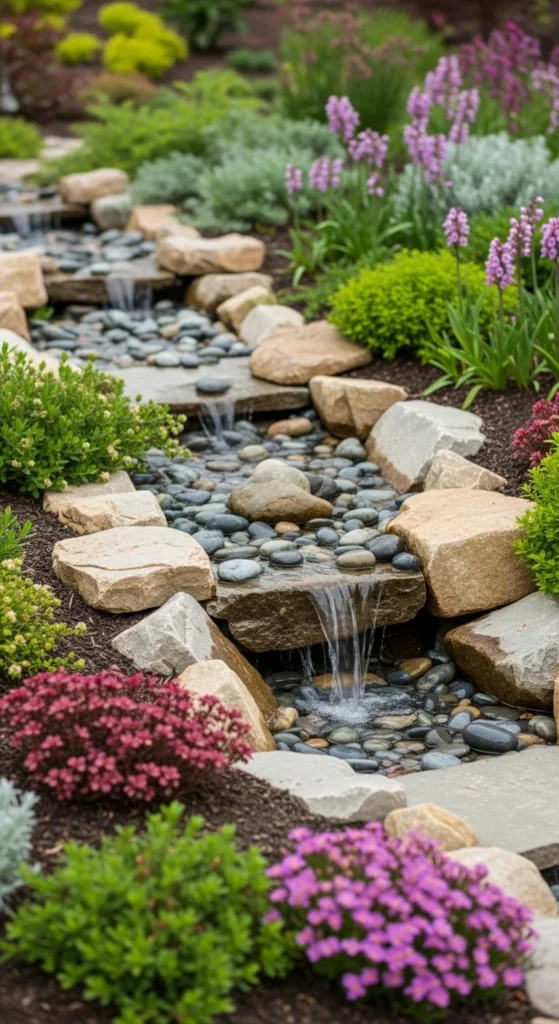
Mixing stone textures adds visual depth.
Combine smooth pebbles with rough stones.
Stick to one color family for balance.
Use larger stones as anchors.
Fill gaps with smaller gravel.
This prevents erosion and keeps things tidy.
Plants should be minimal.
Let stones take the lead visually.
Choose compact varieties that stay contained.
This idea works well in modern yards.
It also fits small spaces nicely.
To save money, buy mixed stone pallets.
They often cost less than sorted batches.
Maintenance involves occasional raking.
No regular watering is required.
The result stays sharp all spring.
7. Low-Water Rock Garden Around Trees
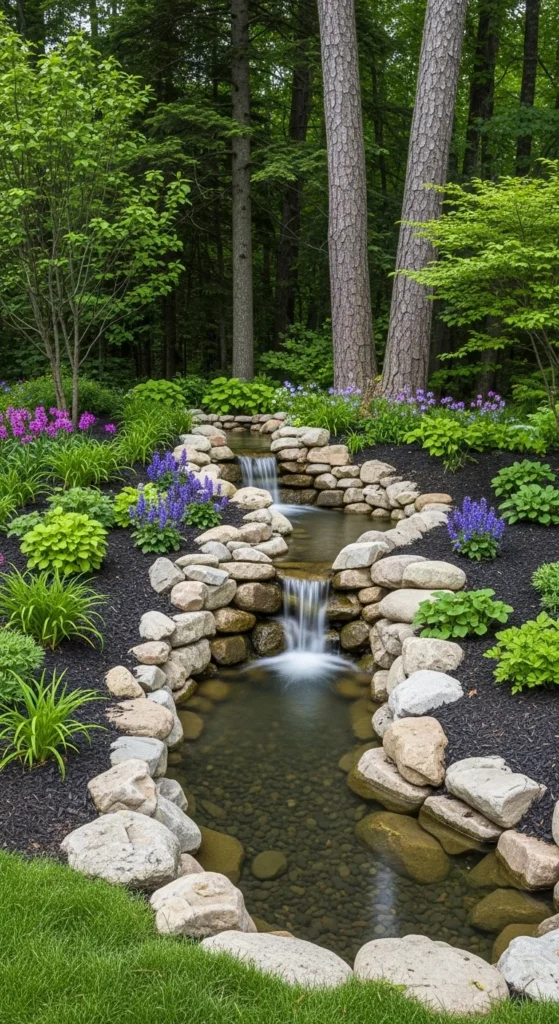
Rock gardens around trees reduce competition for water.
They also keep mowers away from trunks.
Create a wide ring.
Lay fabric carefully to protect roots.
Add gravel or stones on top.
Keep rocks a few inches from the trunk.
This allows airflow.
It also protects bark.
Use shade-tolerant low-water plants at the edge.
They soften the look.
They also require little care.
This setup works for mature trees.
It also helps young ones establish roots.
Use stones you already have on hand.
Even simple gravel works well.
The area stays clean and manageable.
Watering stays focused where needed.
8. Sloped Yard Rock Garden Solution
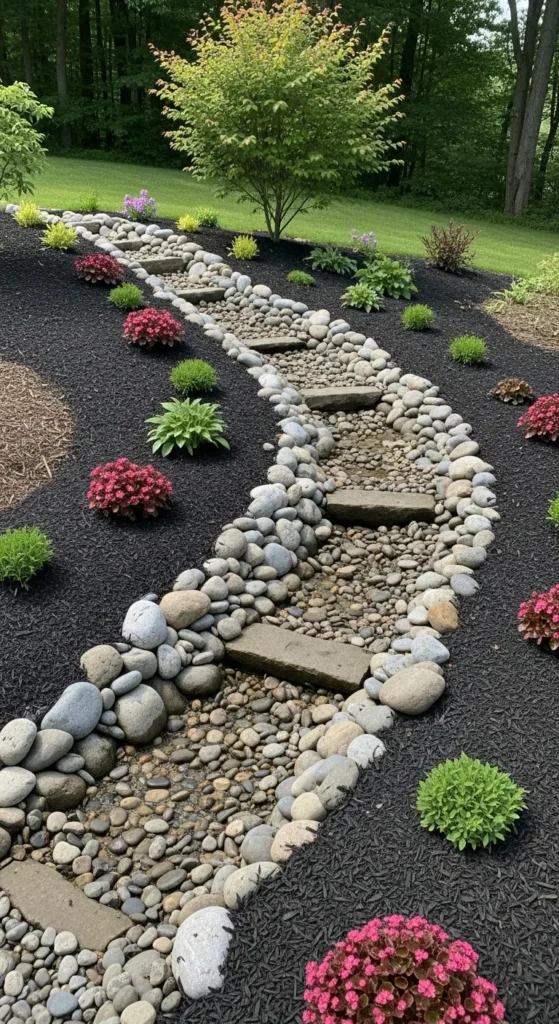
Sloped yards drain quickly.
Rock gardens suit them perfectly.
Start by stabilizing soil with stones.
Place larger rocks at the base.
Work upward in layers.
Plants fit between rocks.
Roots help hold soil in place.
Water runoff slows naturally.
Gravel fills gaps and limits erosion.
Fabric underneath helps long term.
This approach avoids costly retaining walls.
It also lowers watering demands.
Source stones locally to cut costs.
Many suppliers offer irregular pieces cheaply.
The slope becomes usable space.
The look stays structured and low effort.
9. Minimalist Rock Garden With Few Plants
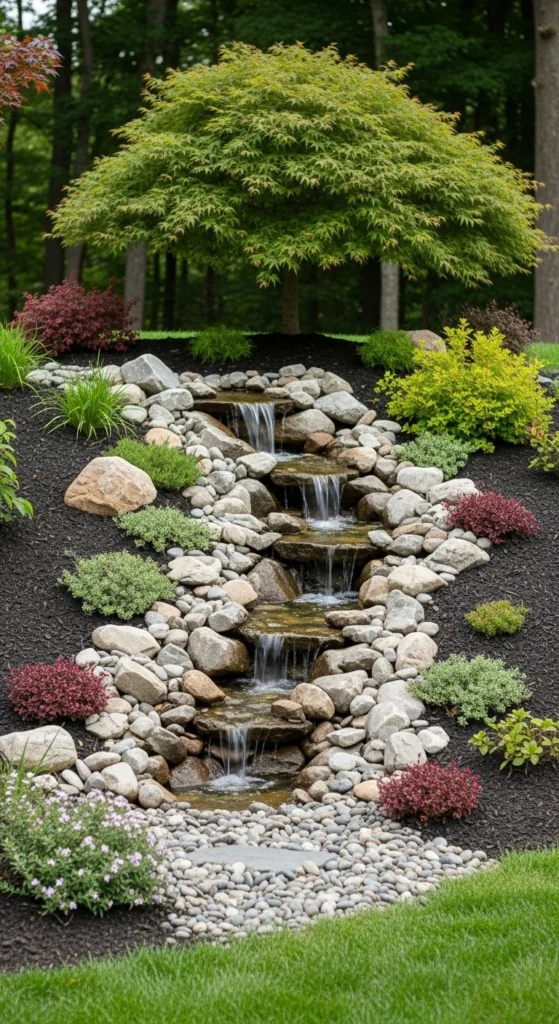
Minimalist designs rely on restraint.
Use stones as the main feature.
Choose a limited color palette.
Repeat shapes for cohesion.
Avoid overcrowding.
Plants appear only in select spots.
Each one has space to stand out.
Water use stays very low.
This layout suits modern homes.
It also works in tight spaces.
DIY costs stay manageable.
Fewer plants mean fewer purchases.
Maintenance involves checking alignment.
Occasional sweeping keeps stones clean.
The result feels calm and intentional.
10. Rock Garden With Reclaimed Stone
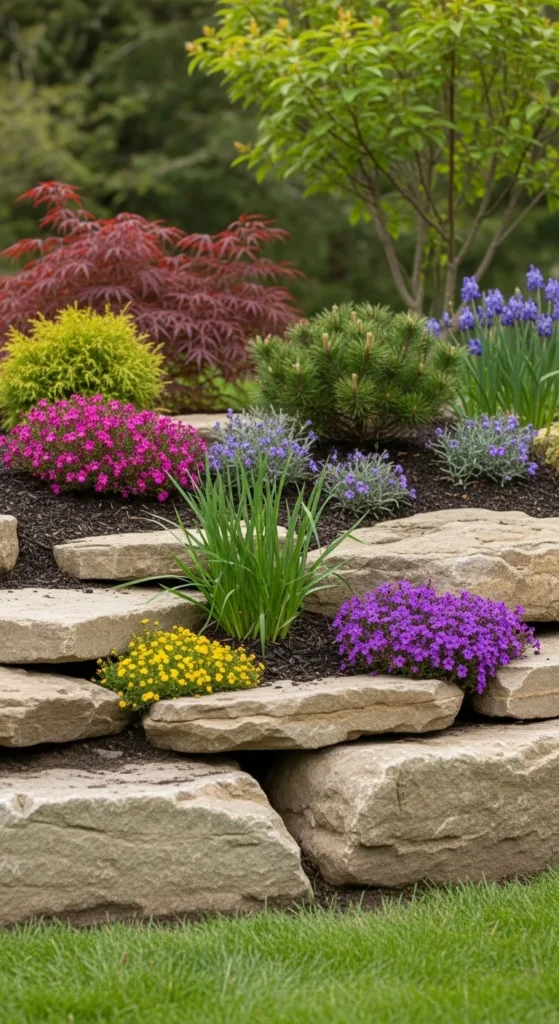
Reclaimed stone adds character.
Old bricks and pavers work well.
Lay them irregularly.
This avoids a rigid look.
Fill gaps with gravel.
Plants grow between stones.
They stay contained with less watering.
This idea reduces material costs.
It also reuses what you have.
Check for sharp edges before placement.
Safety matters during installation.
The finished garden feels established.
Water demands stay low all season.
11. Small Backyard Corner Rock Garden
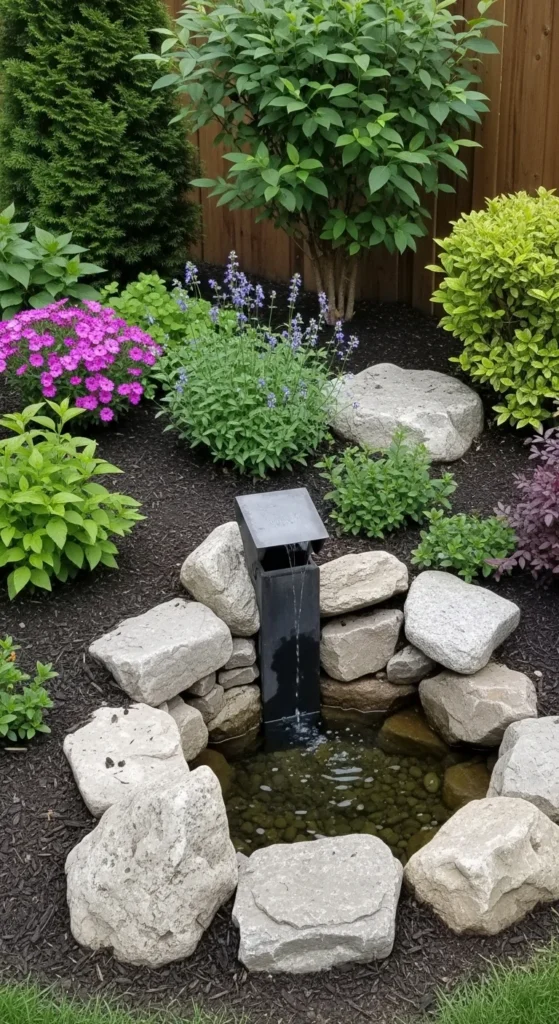
Unused corners become features with rocks.
Define the area clearly.
Use stones to frame the space.
Add gravel inside the border.
Plants should stay compact.
Choose ones that spread slowly.
This reduces watering and trimming.
It also cleans up awkward spots.
Budget stays low due to size.
Even small stone bags work.
The corner feels finished.
Maintenance remains simple.
12. Rock Garden With Dry Creek Bed
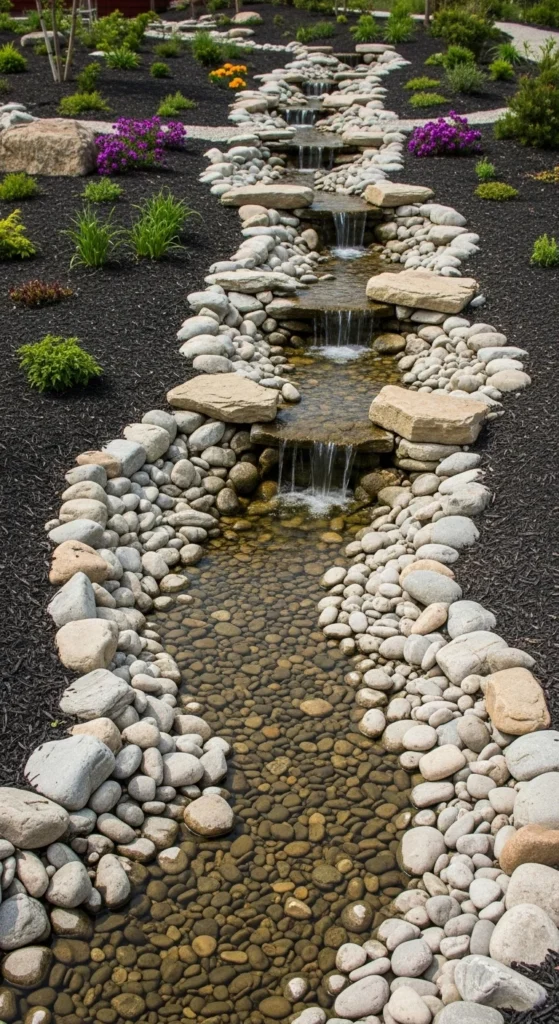
Dry creek beds manage runoff.
They also add visual flow.
Use rounded stones of mixed sizes.
Lay them in a winding pattern.
Gravel fills smaller spaces.
This improves drainage.
Plants line the edges.
They need little water once rooted.
DIY installation takes a weekend.
Costs stay reasonable with bulk stone.
The garden handles rain naturally.
Watering stays limited afterward.
13. Rock Garden With Mulch-Free Design
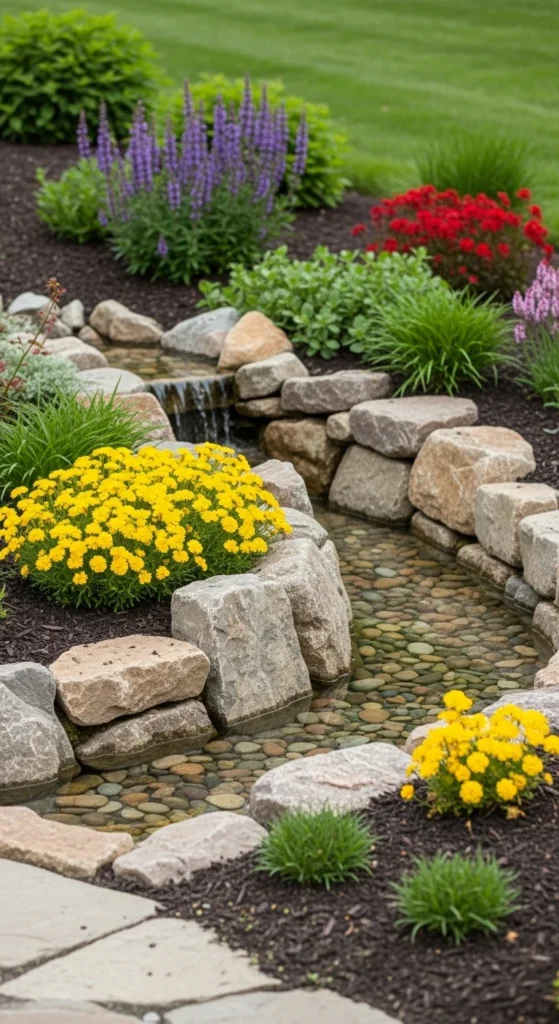
Skipping mulch lowers maintenance.
Gravel replaces it easily.
Gravel does not trap moisture.
Roots stay healthier.
Weeds struggle to grow.
That saves time.
Plants sit in small soil pockets.
Water only during early growth.
This style works near patios.
It also fits walkways.
Gravel costs less long term.
Replacement is rare.
The garden stays tidy with little work.
14. Front Yard Statement Rock Garden
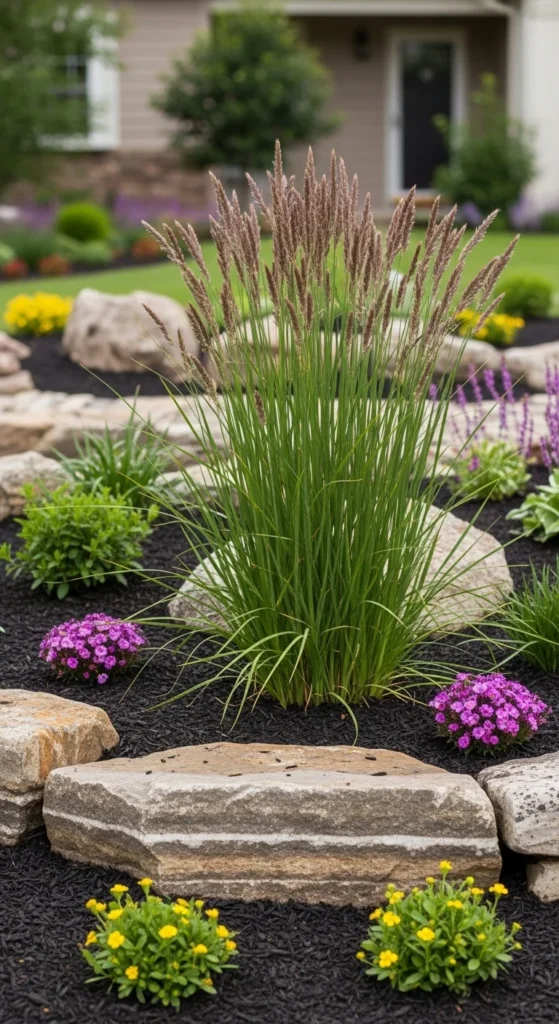
Front yards benefit from clear structure.
Rocks define shapes clearly.
Limit plant variety.
Repeat stone types.
This keeps the look cohesive.
Water use remains low.
DIY layouts save money.
Sketch ideas before placing stones.
The yard gains presence.
Care stays minimal.
15. Rock Garden With Natural Boulders
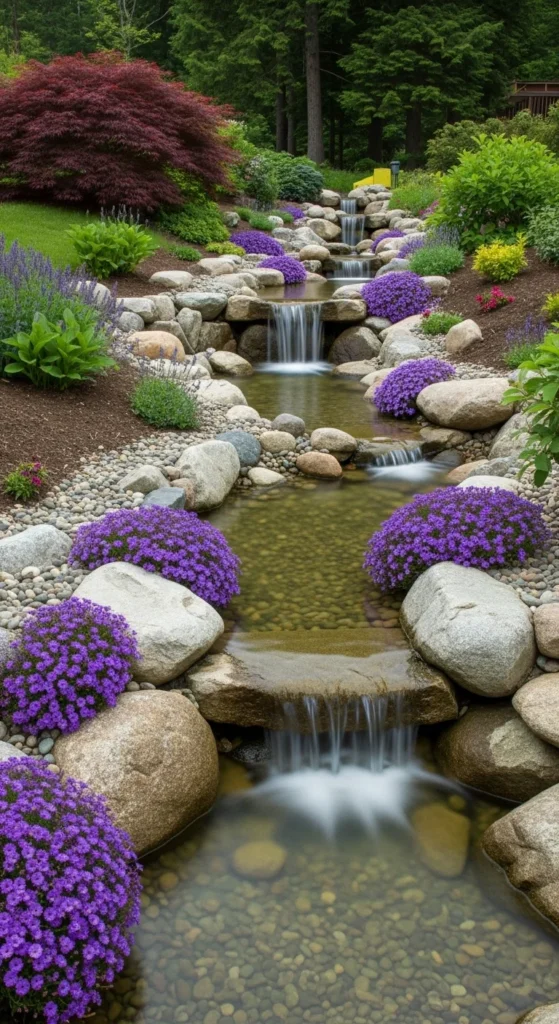
Boulders anchor the design.
They also reduce planting needs.
Place them partially buried.
This looks natural.
Smaller rocks surround them.
Plants fill small gaps.
Watering stays minimal.
Shade helps retain moisture.
Local boulders cost less.
Delivery may be the main expense.
The result feels grounded and lasting.
16. Rock Garden With Ornamental Grasses
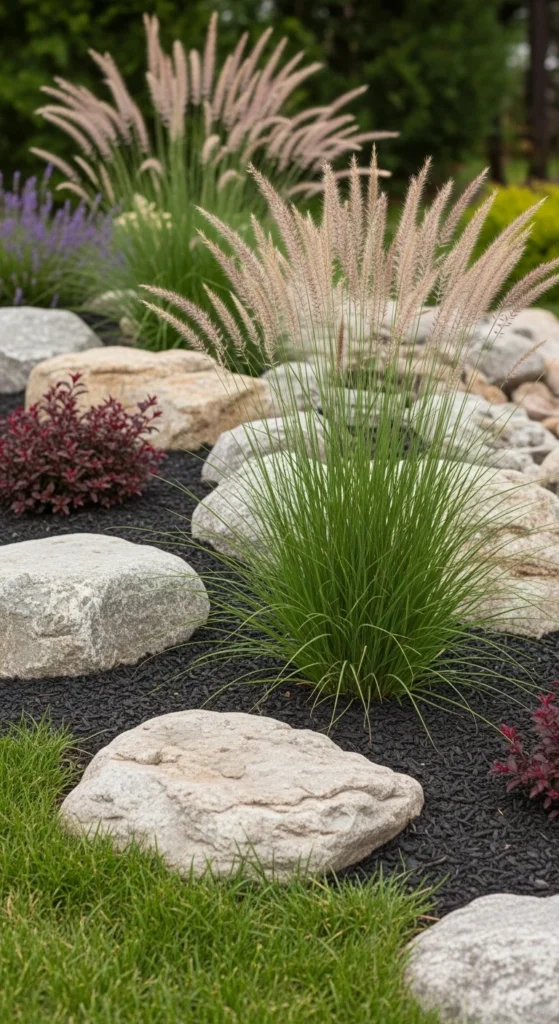
Ornamental grasses pair well with stone.
They sway with wind.
Many need little water.
They handle dry soil well.
Plant in clusters.
Leave space between.
Gravel supports drainage.
Maintenance stays light.
Grasses are often affordable.
They cover space quickly.
The garden gains movement without extra care.
17. Rock Garden With Ground Cover Focus
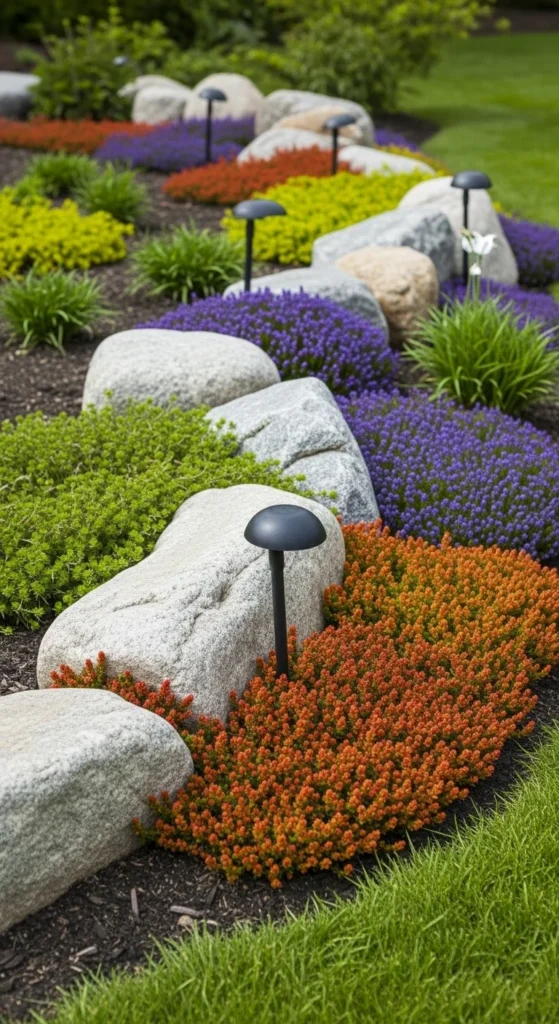
Ground covers reduce bare soil.
They also limit watering.
Plant between stones.
Allow time to spread.
Gravel helps roots stay dry.
Fabric limits weeds.
This approach works on slopes.
It also suits open areas.
Start small to save money.
Expansion happens naturally.
The garden fills in gradually.
18. Rock Garden With Terraced Levels
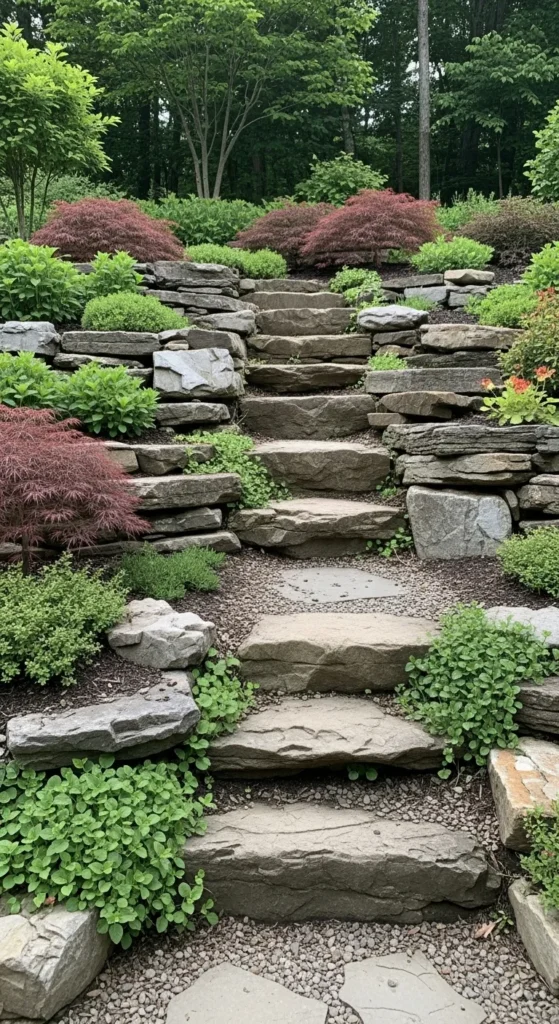
Terraces manage uneven ground.
They also reduce runoff.
Use stacked stones.
Keep walls low.
Each level holds plants.
Water drains efficiently.
DIY terraces save money.
Use local stone.
The layout adds interest.
Care stays simple.
19. Rock Garden With Color-Matched Stones
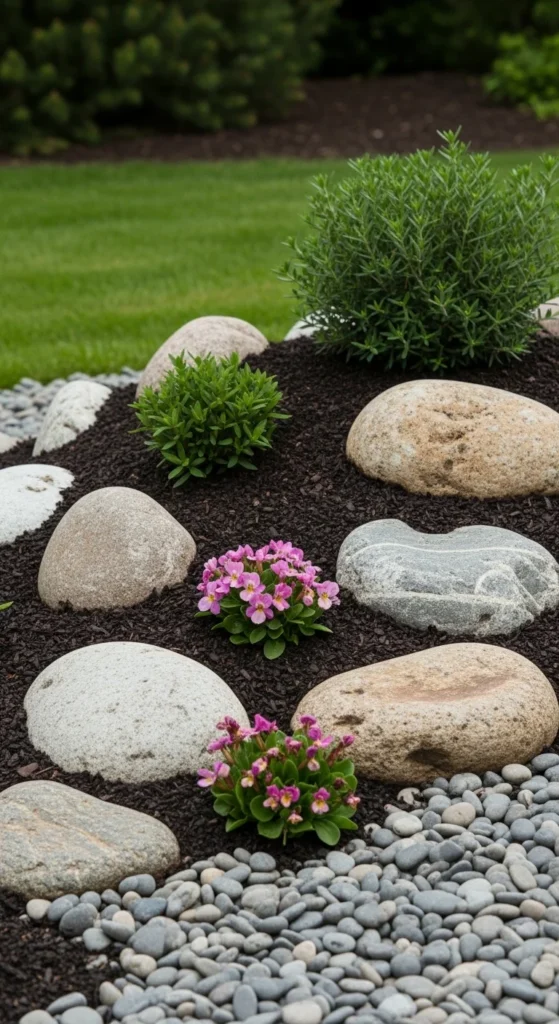
Color consistency matters.
Choose stones in one tone.
This creates visual calm.
Plants stand out more.
Water use stays low.
Maintenance stays easy.
Bulk stone purchases lower cost.
Planning helps avoid waste.
The result feels intentional and clean.
20. Rock Garden Around Patio Edges
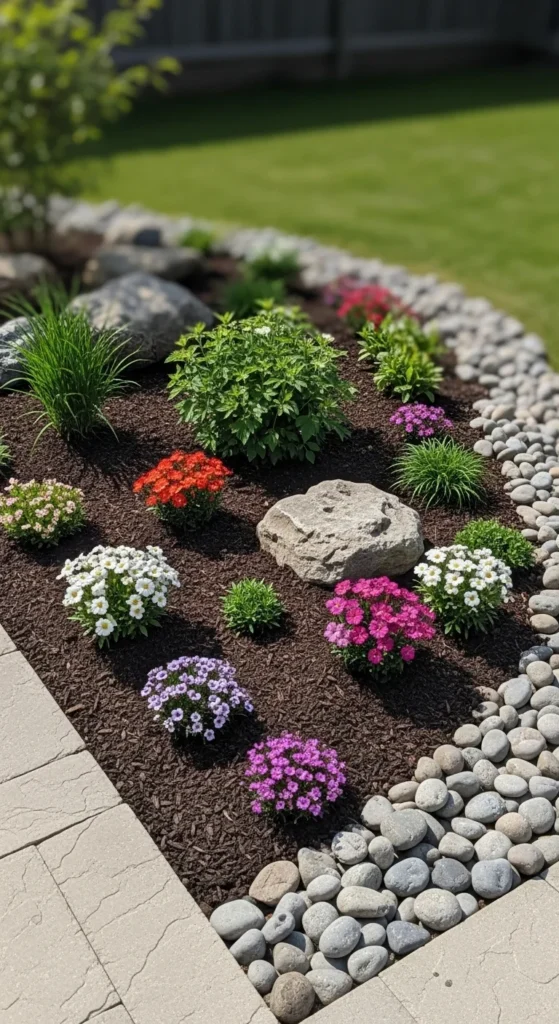
Patio edges often dry out.
Rock gardens suit them well.
Frame the patio with stones.
Add gravel inside.
Plants soften hard lines.
They need little water.
This reduces lawn care.
It also defines space.
Costs stay manageable.
Small areas need fewer materials.
The patio feels connected to the yard.
21. Low-Water Rock Garden With Open Space
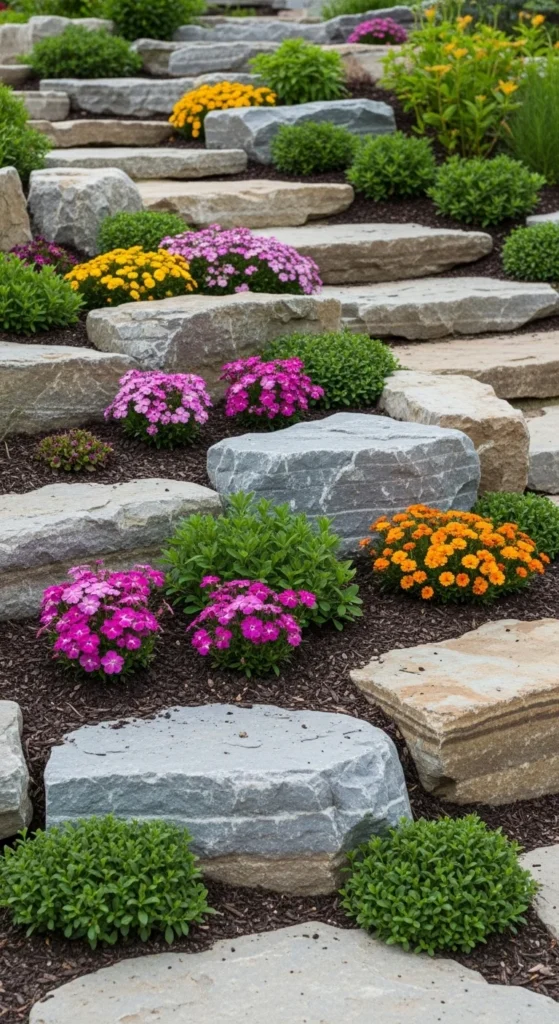
Open space is part of the design.
Not every area needs plants.
Stones create shape on their own.
Gravel fills gaps.
Watering stays minimal.
Upkeep stays light.
This idea suits busy schedules.
It also fits modern homes.
The garden feels calm and ordered.
Conclusion
Low-water spring rock gardens make outdoor spaces easier to manage while still feeling intentional and styled. By focusing on stone placement, spacing, and hardy plants, you can reduce watering and upkeep without sacrificing visual interest. Many of these ideas rely on simple layouts and affordable materials, making them realistic for DIY projects of any size. Choose one approach or combine a few to shape a garden that fits your space, your budget, and your routine this season.
Leave a Reply