


Wildflower gardens are pure magic — they buzz, bloom, and burst with life. Unlike manicured lawns, they welcome imperfection and reward patience with waves of seasonal color. Whether you have a tiny backyard or a sweeping landscape, wildflowers can turn your space into a sensory escape full of movement, fragrance, and sound. Here are 23 wildflower garden ideas that anyone can try — simple, low-cost, and overflowing with natural charm.
1. Mix Native Wildflowers
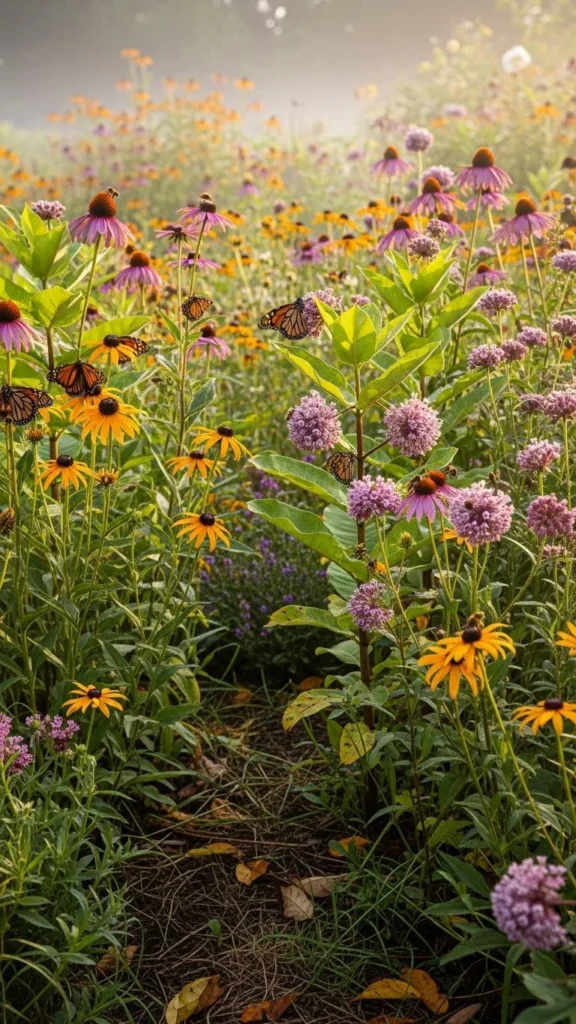
Start with native species — they’re adapted to your soil and climate, so they thrive with little effort. In the U.S., try coreopsis, milkweed, or purple coneflowers. These plants attract pollinators naturally and require less watering. Group similar colors for impact, or scatter seeds for a more organic look. You can buy affordable native seed packets online and sprinkle them over loosened soil in early spring. Add mulch around the edges to define your garden while letting the center grow wild.
2. Create a Wildflower Meadow Path
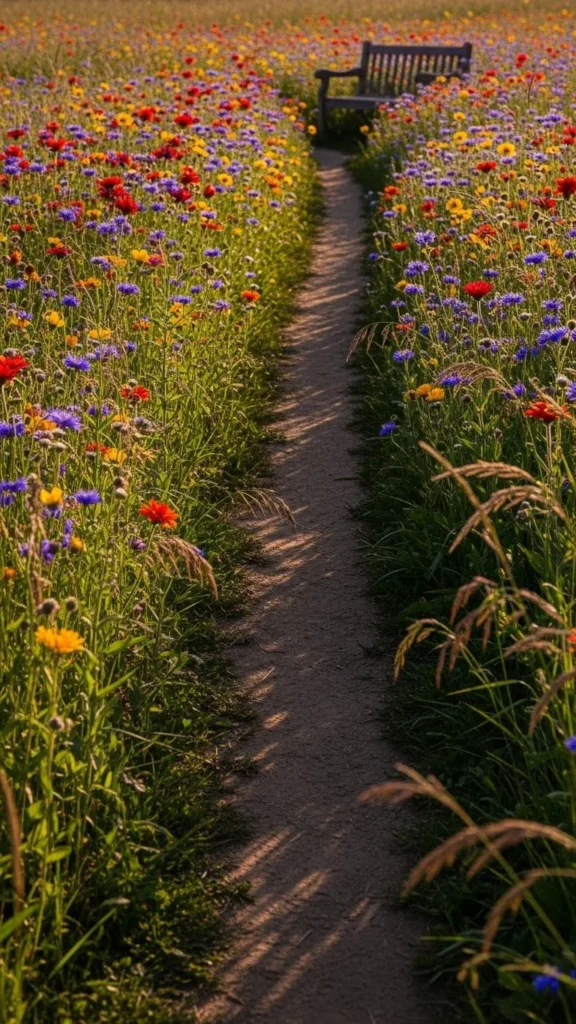
Turn your garden into a mini meadow by cutting winding paths through tall flowers. Use a mower or trimmer to define natural walkways. The contrast between open paths and dense flower patches feels immersive and adventurous. You can line paths with low-growing varieties like yarrow or clover to soften the edges. This approach works beautifully in large or uneven yards and gives visitors a place to explore without disturbing pollinators.
3. Add a Rustic Birdbath
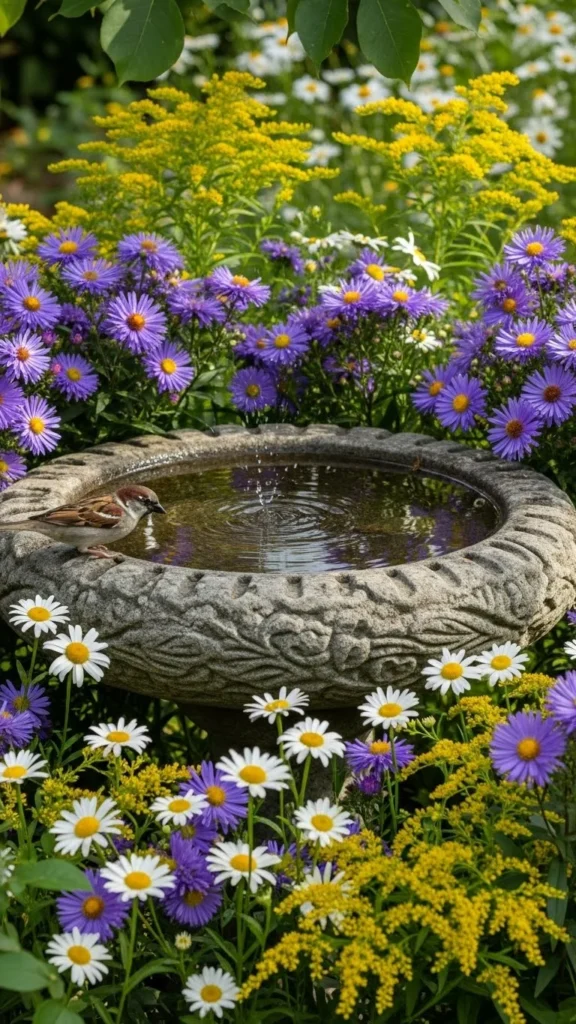
A simple birdbath adds life and movement to your wildflower patch. Choose a natural material like stone, clay, or metal with a weathered finish. Place it among taller blooms so birds feel safe. Keep it shallow — no more than 2 inches deep — and refill regularly. Birds and butterflies will both appreciate the water source. You can DIY one using an old terracotta dish set on a brick base — charming and almost free.
4. Use a Color Theme
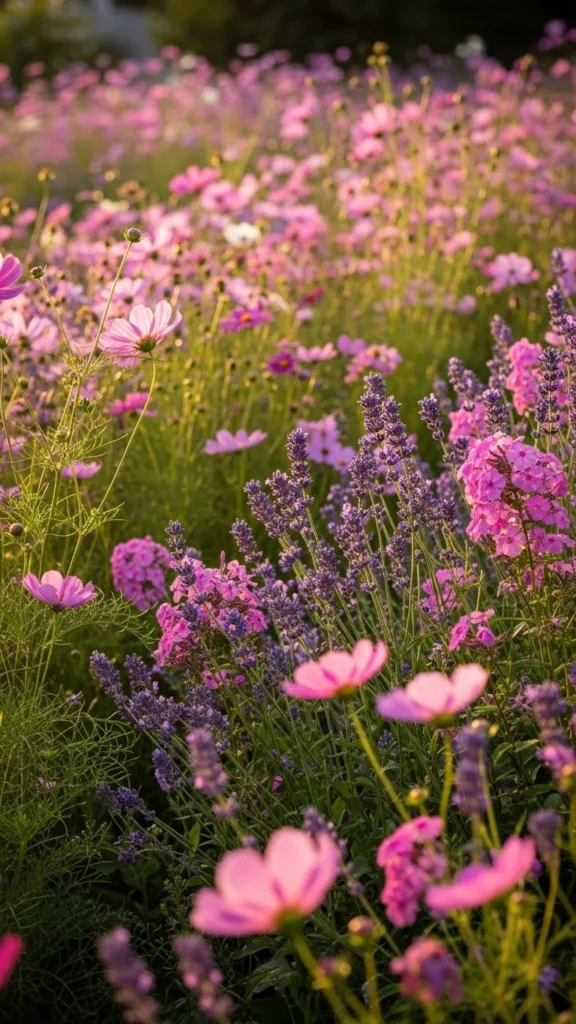
Wildflower gardens can still have structure. Pick a color palette — such as pink and purple, or orange and yellow — and stick to it. This creates harmony without losing the wild feel. Look for species with overlapping bloom times to keep the color going all season. You can also vary height within your chosen shades for a layered effect that feels intentional yet spontaneous.
5. Plant Around Old Tree Stumps

Transform a forgotten stump into a wildflower focal point. Scatter seeds around its base or plant small perennials like violets and primroses in the crevices. As the stump decays, it adds nutrients to the soil, making your flowers even healthier. Add a few stones or wood chips for a woodland vibe that looks completely natural.
6. Grow in Raised Beds

Raised beds help control soil quality and drainage, making them ideal for wildflower beginners. Mix annuals and perennials for variety. Use compost-rich soil and scatter seeds in clusters rather than neat rows. Raised beds are also great for smaller spaces — you can fit one on a patio or balcony for a compact, colorful display.
7. Attract Pollinators

Design your garden to welcome bees, butterflies, and hummingbirds. Include nectar-rich species like bee balm, black-eyed Susan, and milkweed. Avoid pesticides — even “natural” ones can harm pollinators. Add small flat rocks for resting spots and shallow dishes of water. The more diverse your plants, the more wildlife you’ll attract.
8. Try Container Wildflowers
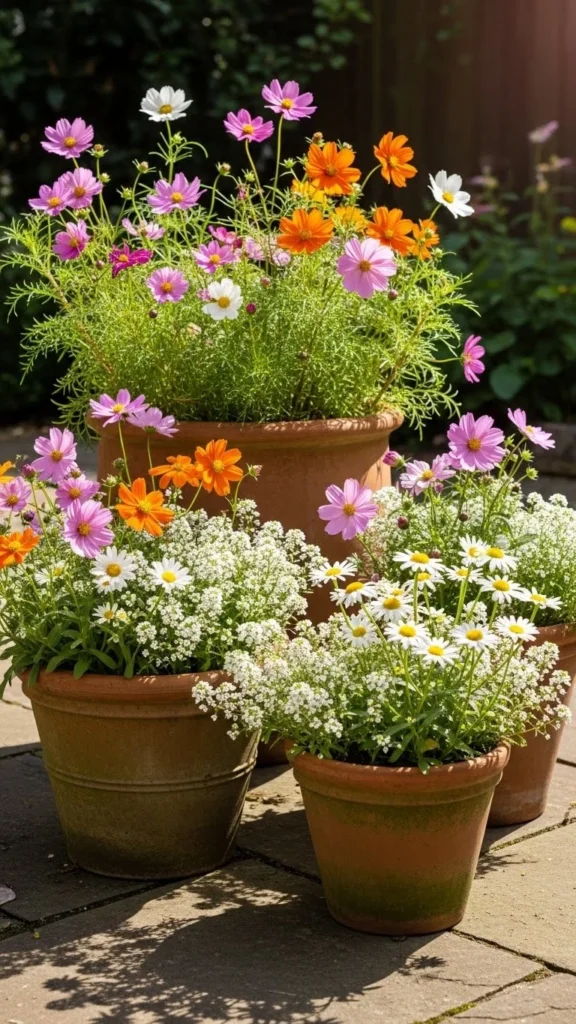
If you’re short on space, grow wildflowers in containers. Mix different heights and textures for a full, layered effect. Choose drought-tolerant varieties like California poppy or coreopsis. Containers are easy to move, letting you rearrange your garden through the seasons. Reuse old metal buckets or wooden crates for a rustic touch.
9. Combine Wildflowers with Grasses
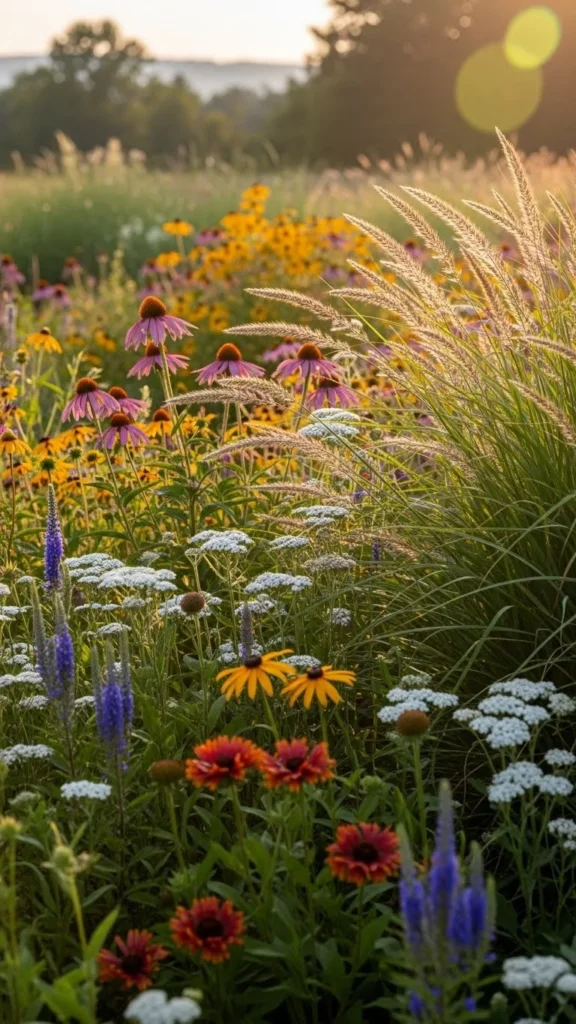
Wildflowers and ornamental grasses complement each other beautifully. The grasses add movement and texture, while the flowers bring color. Try switchgrass, fescue, or little bluestem with cosmos or daisies. This combination looks great in windy areas, swaying gracefully while needing minimal care.
10. Edge with Stones
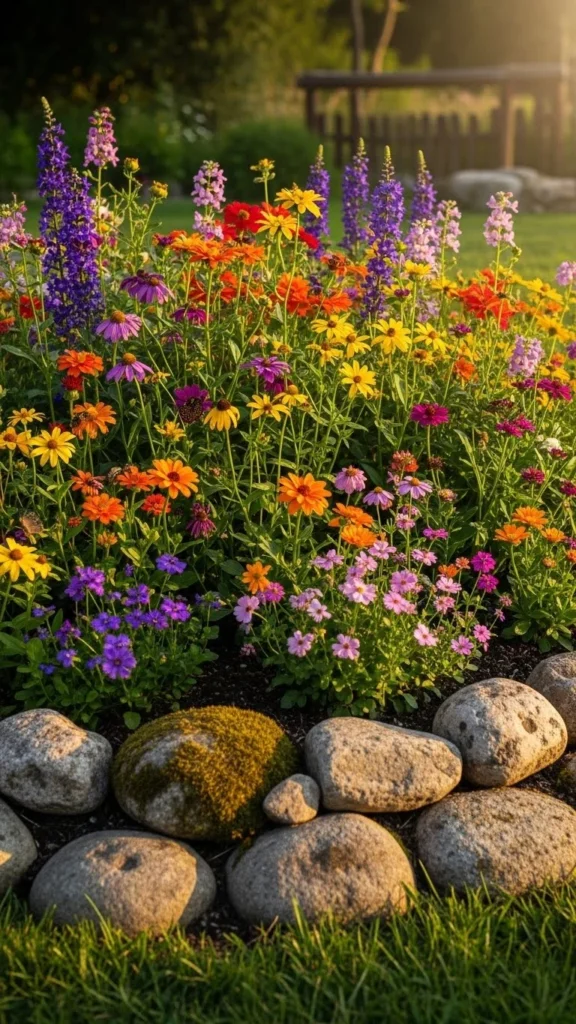
Define your wildflower area with stone edging. It helps contain the spread while giving a finished appearance. Use irregular rocks or fieldstone for a natural look. This simple DIY can be done in a day, and it adds durability to paths or bed borders without losing the rustic charm.
11. Grow Along a Fence
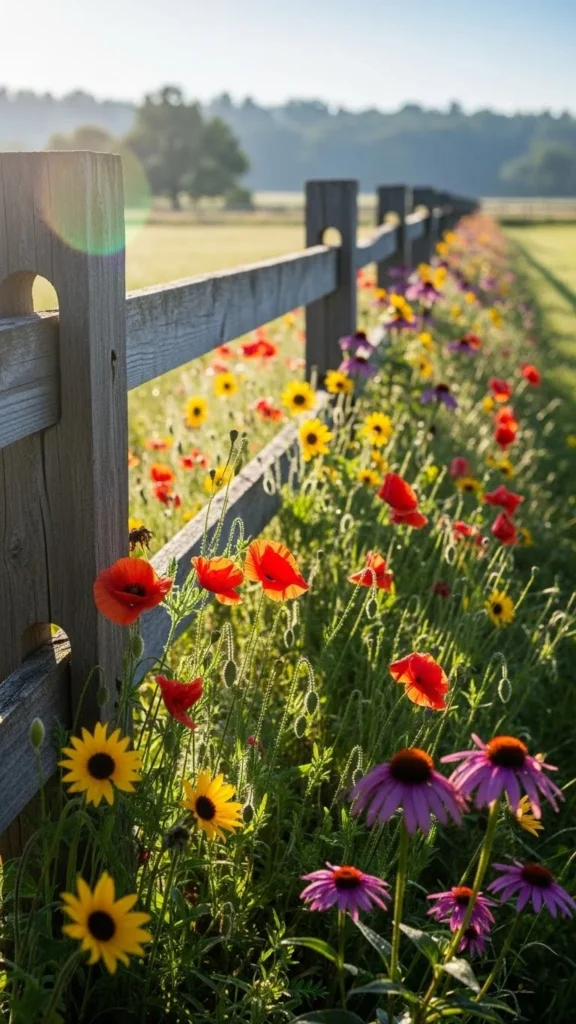
Fences make great backdrops for wildflower walls. Choose climbing or tall varieties like larkspur, hollyhock, or sunflowers. Plant them close together for density. You can let vines like morning glory weave through for extra interest. This trick instantly softens harsh fence lines and brings a lively border to your yard.
12. Add Solar Lights
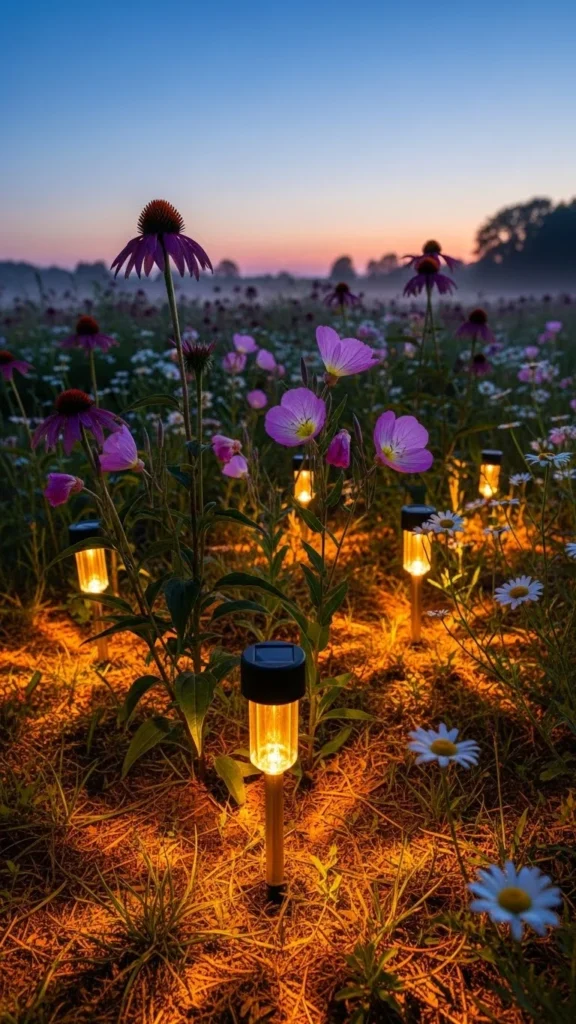
Add a touch of nighttime magic with solar lights hidden among the blooms. Choose warm white tones that highlight colors without overpowering them. Stake lights near paths or birdbaths to create subtle ambiance. Since solar lights charge during the day, they’re eco-friendly and require zero wiring.
13. Choose Self-Seeding Varieties
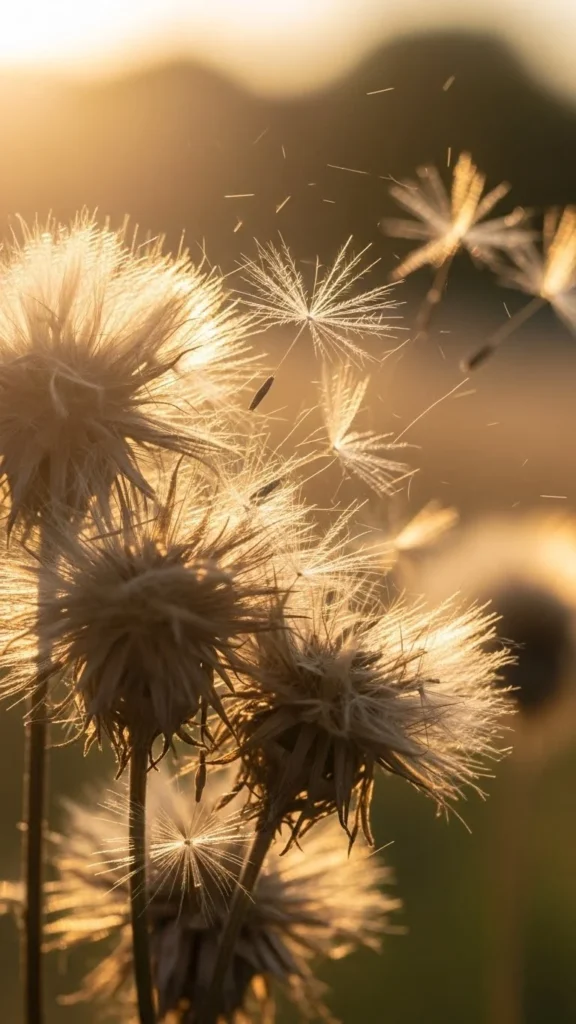
For effortless regrowth, plant self-seeding wildflowers like cosmos, calendula, or bachelor’s buttons. Once established, they’ll come back every year with little effort. Let some seed heads dry naturally to drop seeds in place. It’s the easiest way to keep your garden thriving year after year.
14. Include Fragrant Blooms
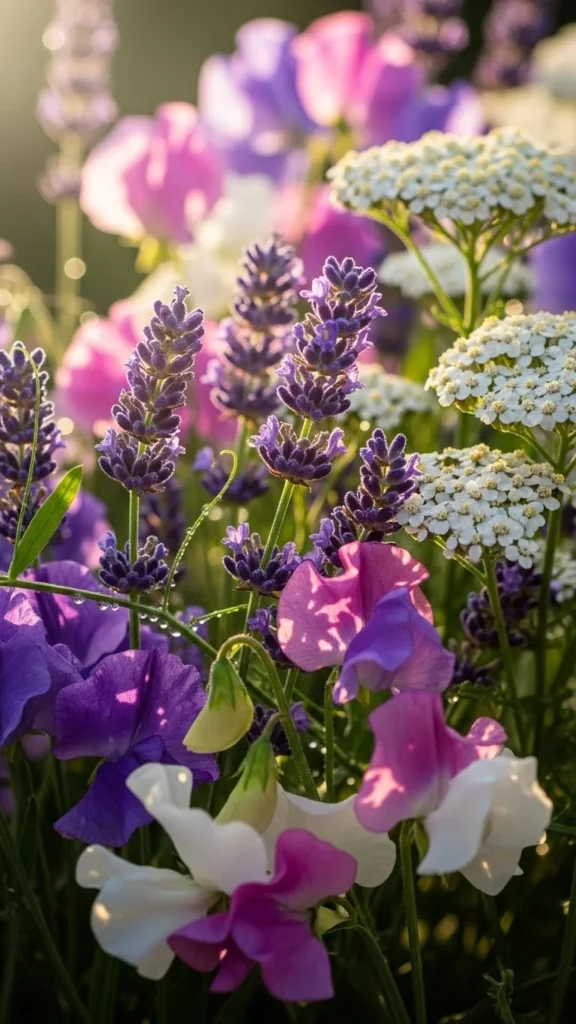
Fragrance adds another layer of sensory pleasure. Mix in scented flowers like lavender, sweet alyssum, or bee balm. Plant them near seating areas or paths so you catch the scent as you pass. You can also hang dried stems indoors to enjoy their aroma beyond the garden.
15. Grow Along Driveways
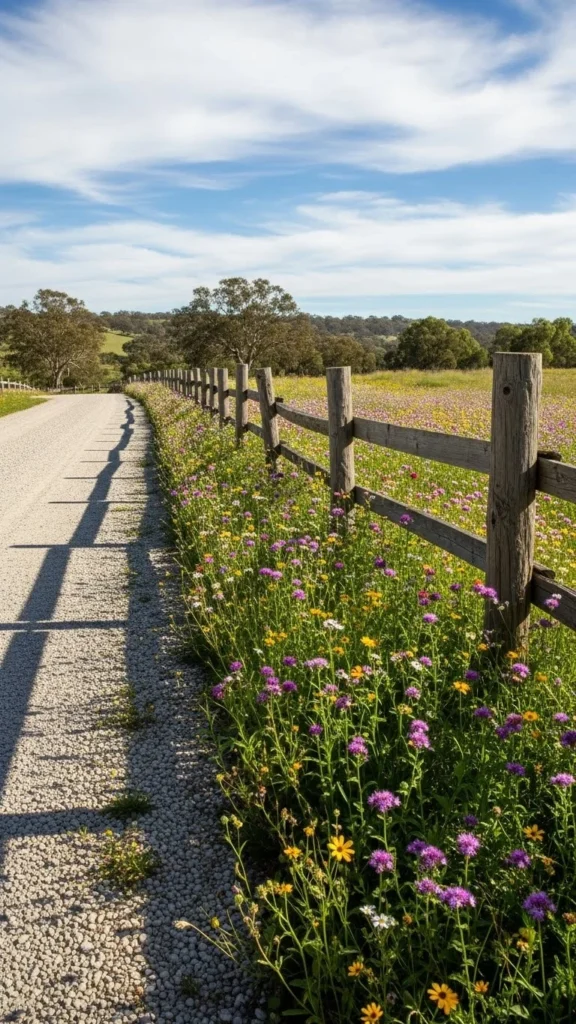
Turn plain driveways into scenic entrances with wildflower borders. Use tough species like blanket flower, coreopsis, or black-eyed Susan that tolerate heat and compact soil. They’ll soften the edges of gravel or pavement while attracting pollinators to your property line.
16. Try a Butterfly Corner
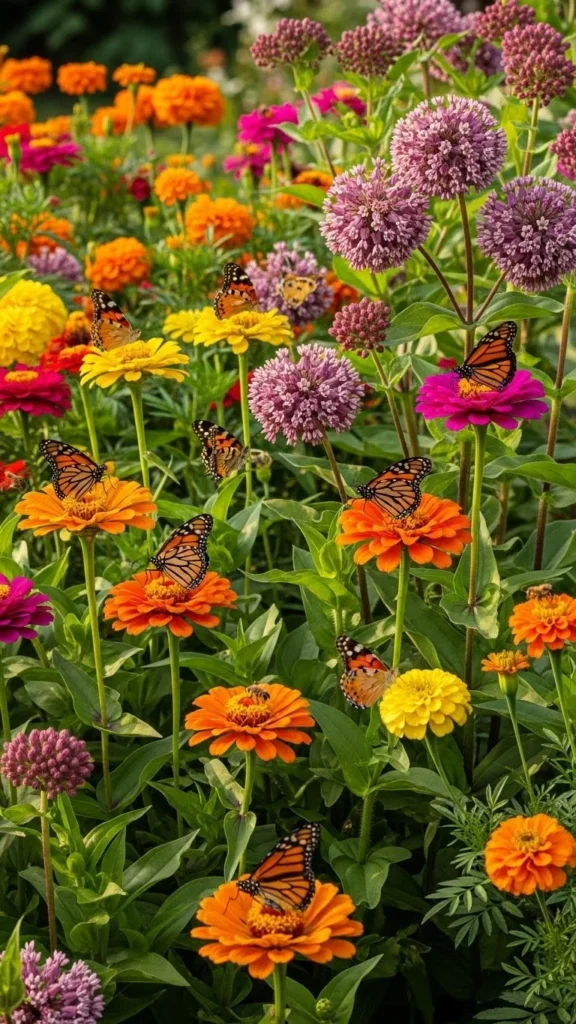
Create a dedicated butterfly zone filled with host plants like milkweed and nectar-rich flowers. Add flat stones for sunbathing and small water dishes. This colorful corner will hum with life all summer, and you’ll enjoy daily visitors without much upkeep.
17. Let It Spill Over Walkways
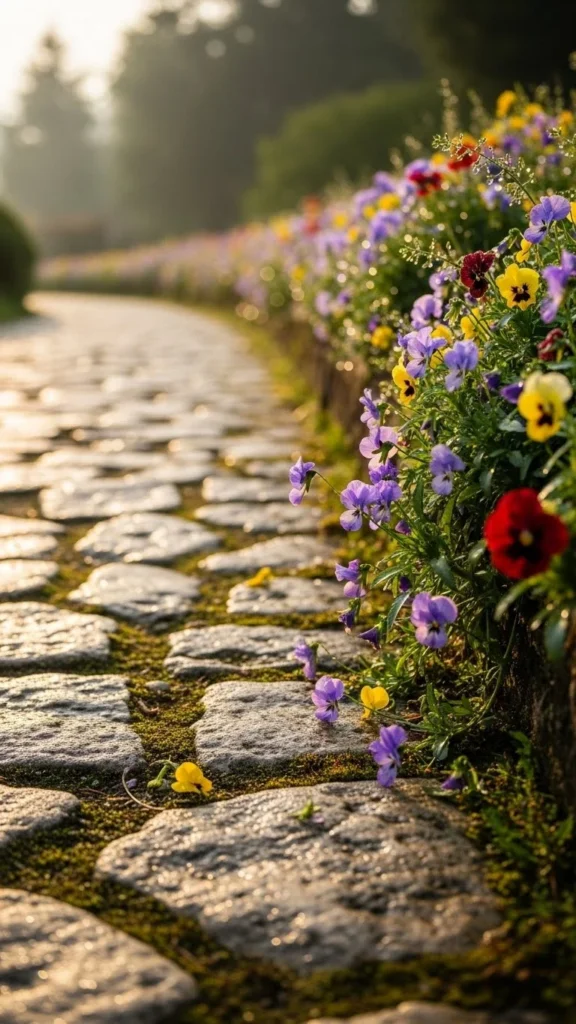
Allow your flowers to spill naturally over paths or borders. It softens hard edges and makes everything feel lush and inviting. Use spreading varieties like alyssum or coreopsis. You can trim back lightly if needed, but a little overgrowth adds to the wild charm.
18. Mix Annuals and Perennials
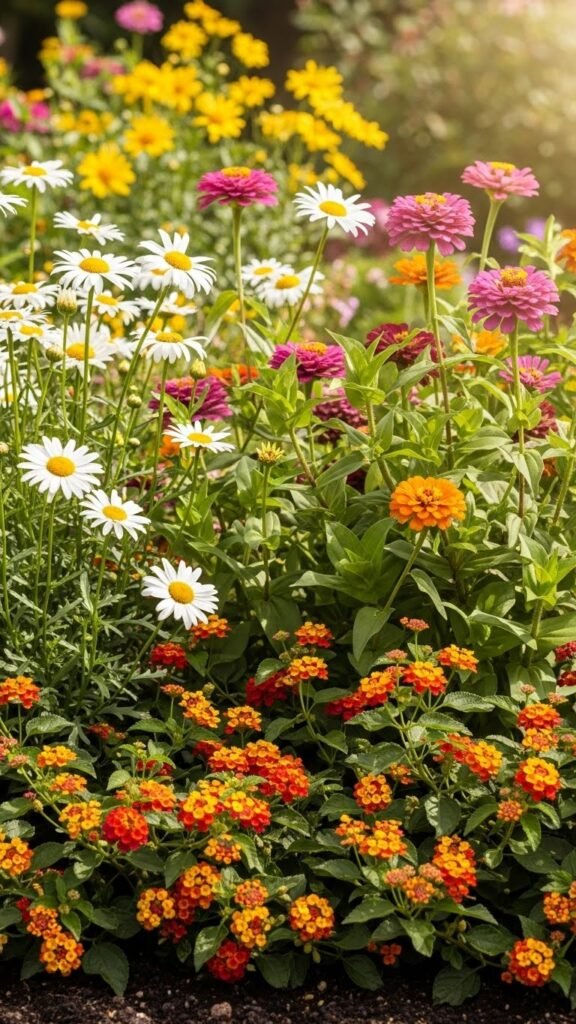
Combining annuals and perennials ensures color across the seasons. Annuals like poppies bloom quickly, while perennials like echinacea return stronger every year. Mix both in seed blends or scatter them manually for a natural sequence of color.
19. Add a Seating Spot
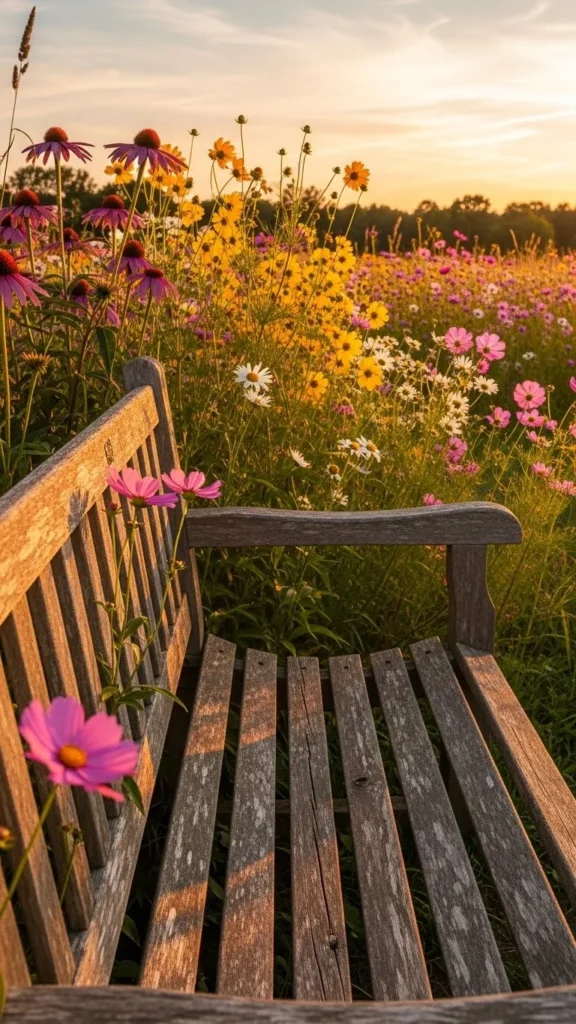
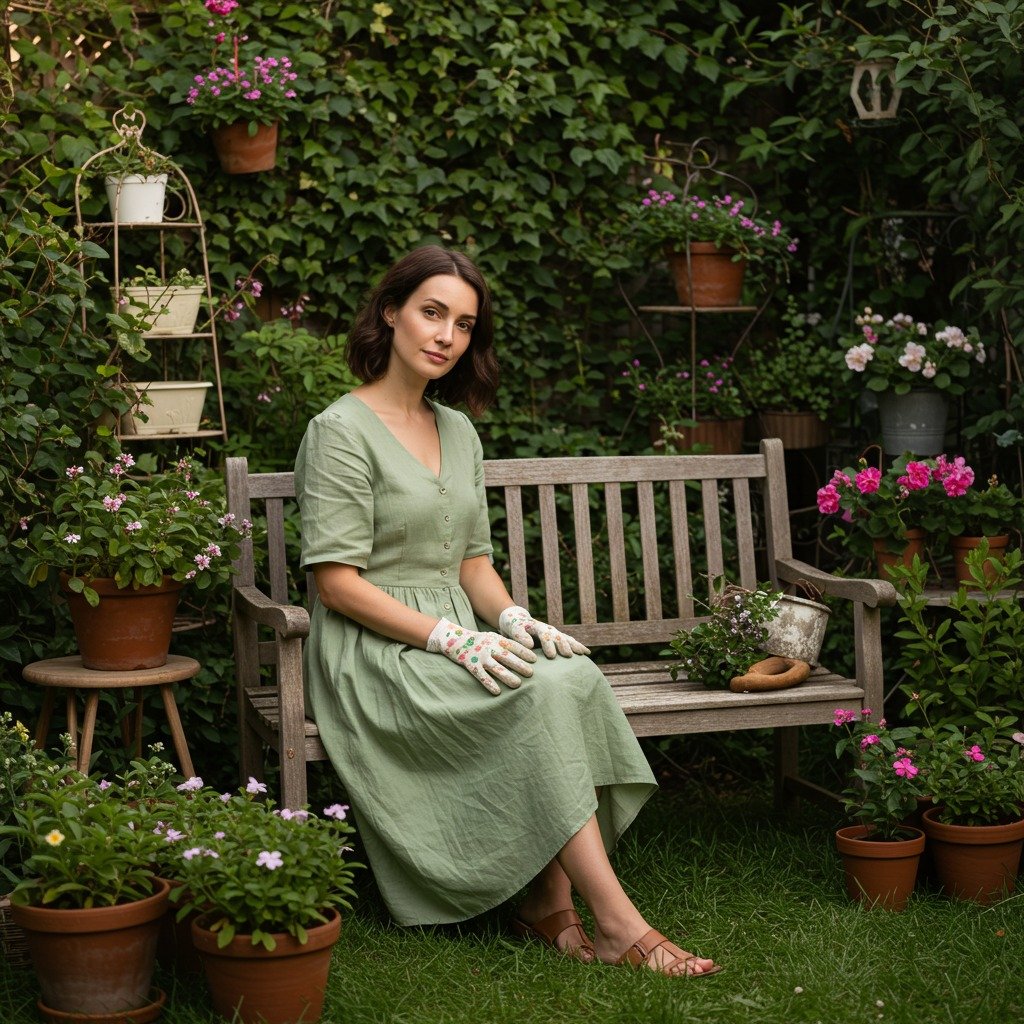
Tuck a bench or garden chair into your wildflower patch. It gives you a peaceful place to sit and enjoy the sound of rustling stems and buzzing bees. You can make your own bench using reclaimed wood for an eco-friendly touch.
20. Use Wildflower Mixes
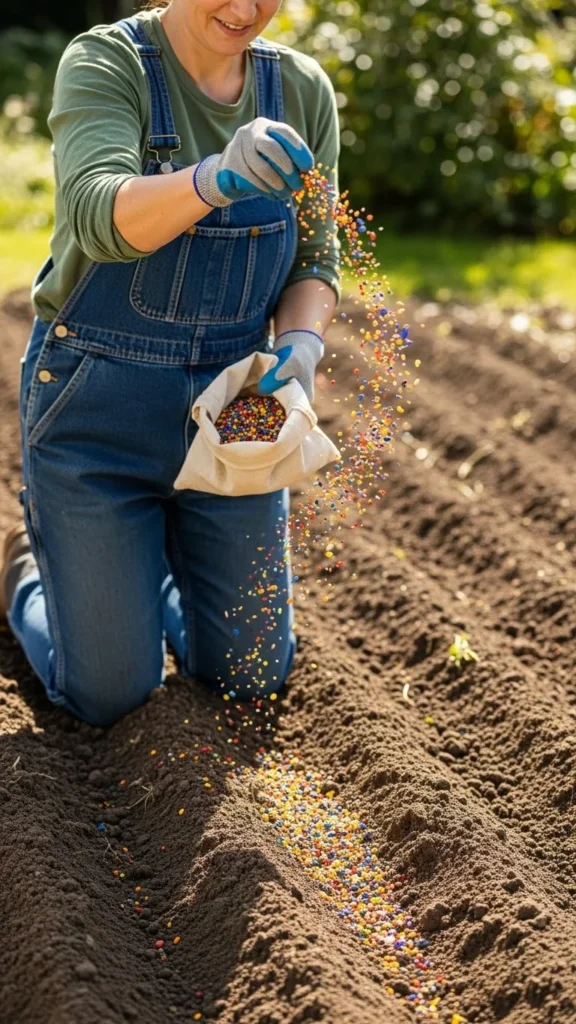
Seed companies sell region-specific wildflower mixes that make planting easy. They include a variety of species suited to your climate. Scatter them over a prepared patch and water gently. Within weeks, you’ll see a tapestry of blooms — no fancy equipment needed.
21. Add a Water Feature
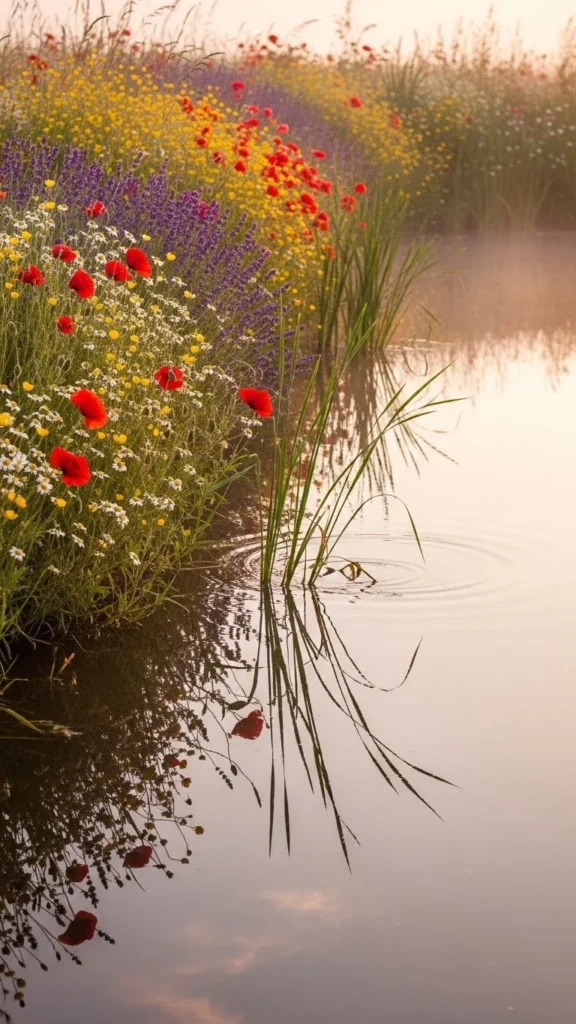
A pond or mini water feature adds serenity and attracts wildlife. Surround it with flowers that enjoy moisture, like swamp milkweed or cardinal flower. Even a repurposed tub can work as a small pond for frogs, dragonflies, and bees.
22. Create Seasonal Layers
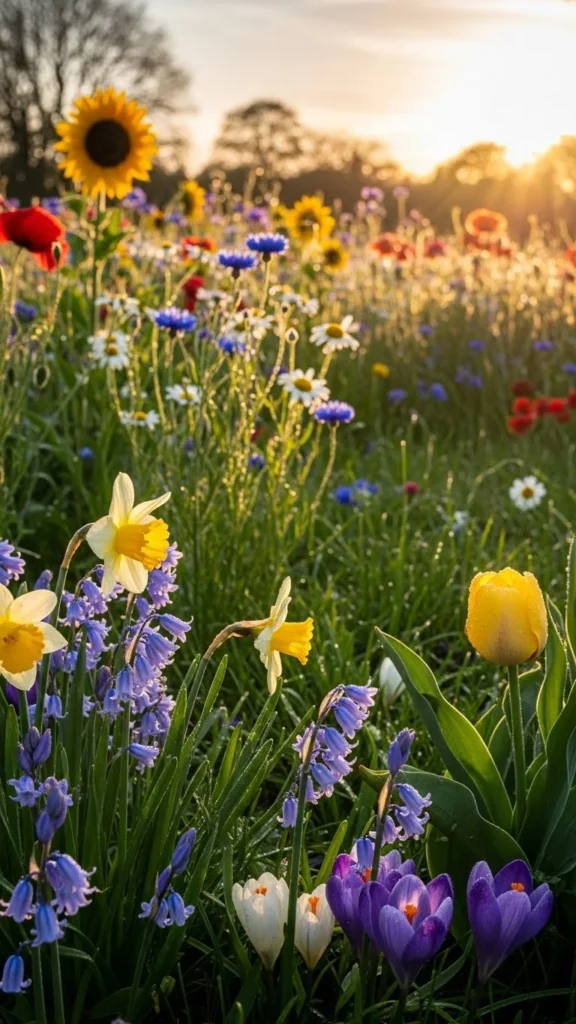
Plant for seasonal succession — early bloomers like lupines, midsummer cosmos, and late asters. This layering keeps your garden colorful from spring through fall. It’s a smart way to extend interest and support pollinators longer.
23. Let Nature Take Over
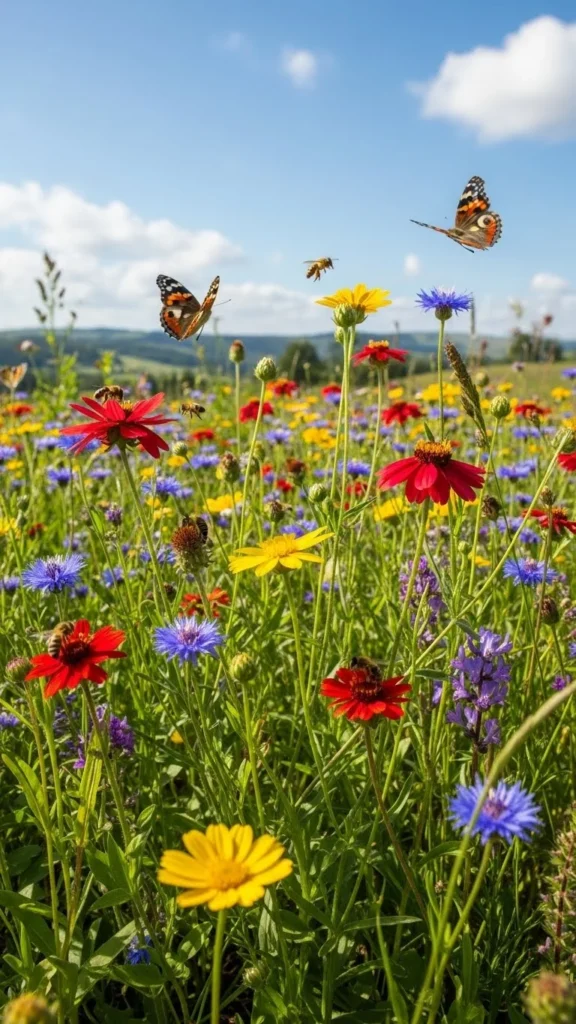
Sometimes the best wildflower garden is the one you barely manage. Allow native weeds and self-seeders to mingle. Mow paths but leave patches untouched. This natural approach fosters biodiversity, saves time, and rewards you with a true slice of nature.
Conclusion
A wildflower garden isn’t about perfection — it’s about harmony. By mixing native plants, creating variety, and letting nature play its part, you’ll craft a living space full of color, sound, and motion. Whether your plot is big or small, these ideas will help you grow a thriving haven that delights every sense — all season long.
Leave a Reply