

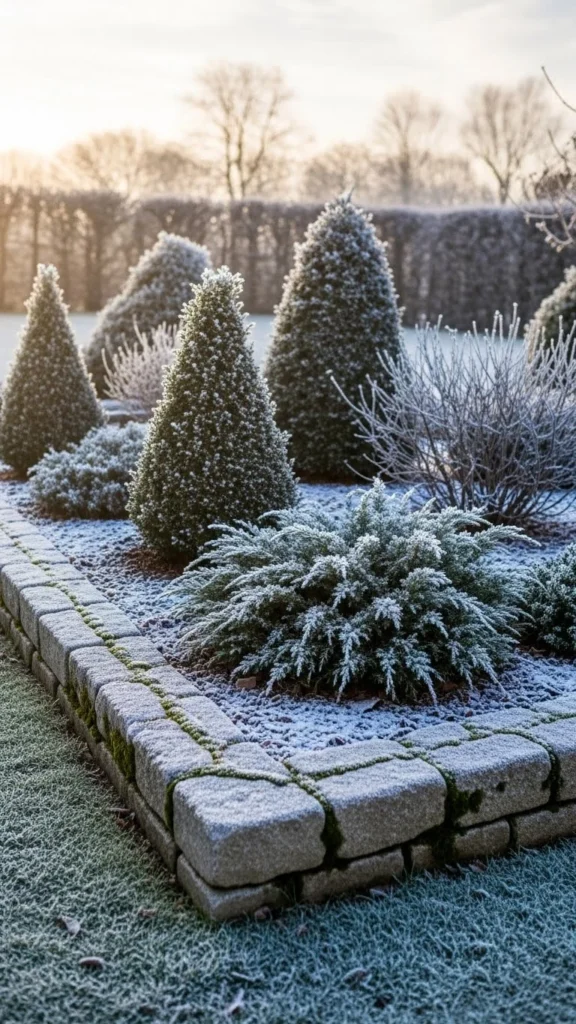
Winter gardens can look flat, dull, or empty once flowers fade, but well-designed borders bring shape back instantly. The right edging keeps beds tidy, frames your pathways, and adds clean structure even when the landscape is covered in frost. Below, you’ll find simple ideas that are easy to build, budget-friendly to maintain, and perfect for gardeners who want attractive lines all season long.
1. Natural Stone Edging
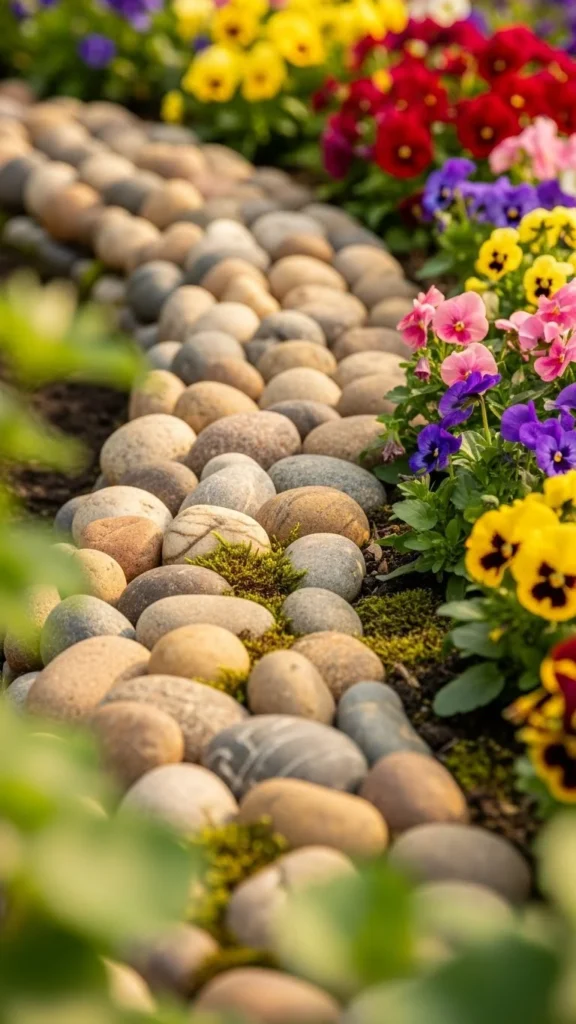
Natural stone edging creates a solid frame that works well all winter. Each stone adds weight and texture, giving your garden a grounded look when most plants are resting. You don’t need fancy tools to start. Collect stones from local suppliers or reuse leftover pieces from older projects. Stack them tightly to keep the border stable. If your stones wobble, push a little soil underneath to secure each piece. A weekend project is often enough to outline a full bed. Try mixing sizes for a more organic feel. Keep taller stones toward the back to avoid blocking pathways. Add a few small evergreens behind the stones for contrast. Their color helps the stone stand out even more in the cold months.
2. Low Evergreen Hedges
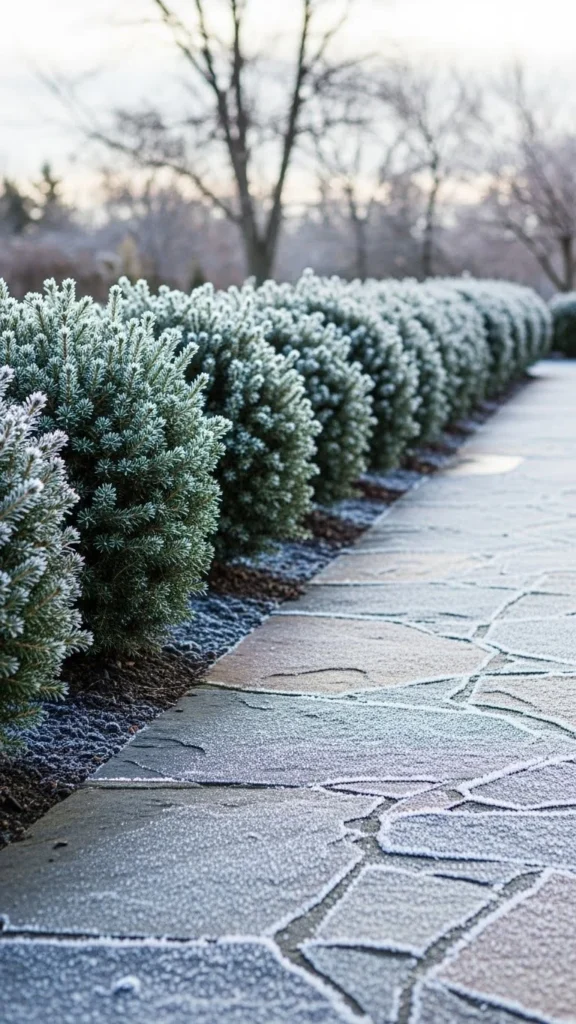
A row of low evergreens is a simple way to give your winter garden structure. These plants stay full and colorful even in cold weather. Choose varieties like boxwood or dwarf yaupon. They stay small, so trimming is easy. Space them evenly to create a smooth line. If you’re working with a tight budget, buy smaller plants and let them grow into place over time. Mulch the base with dark wood chips for contrast. A narrow hedge works especially well around patios and walkways because it softens hard edges. Water the shrubs before freezing temperatures set in and add a little compost in fall to help them stay healthy through winter.
3. Recycled Brick Borders
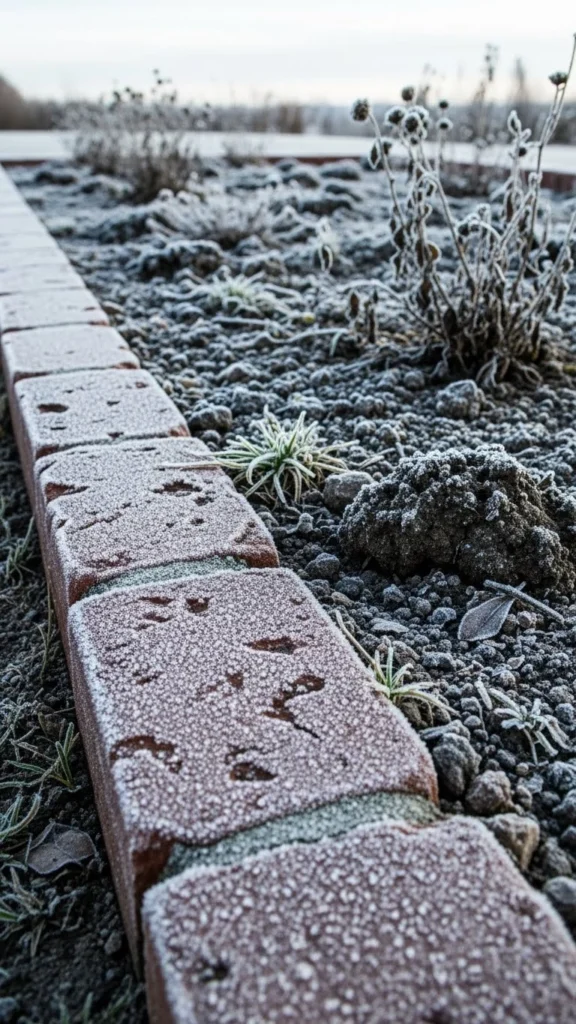
Old bricks offer character without much cost. You can often find them at salvage yards or online marketplaces. Set each brick at a slight angle or stand them upright for more height. A border like this looks tidy with snow or frost on top. Use sand or loose soil to level the bricks before you line them up. If you want a more polished look, stick with your brightest bricks. For a rustic style, mix colors. This edging works well around raised beds, pathways, and beds filled with winter herbs. Add a line of gravel beside the bricks to help with drainage.
4. Frost-Proof Ceramic Edging
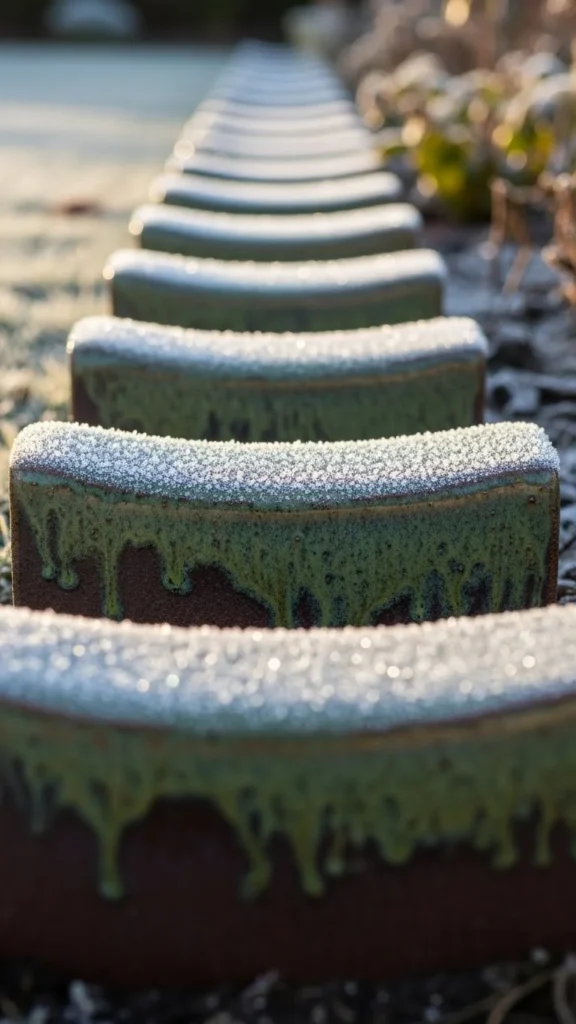
Ceramic edging pieces add color and charm. Choose frost-proof styles so they don’t crack in cold temperatures. These pieces line up easily, making them perfect for curved beds. Start by digging a shallow trench so they sit firmly in the soil. If your garden slopes, use smaller pieces at the top of the hill and larger ones at the bottom to keep things visually balanced. Look for seconds or discounted sets at local garden centers to save money. Their smooth surfaces catch winter light beautifully.
5. Woven Willow Edges
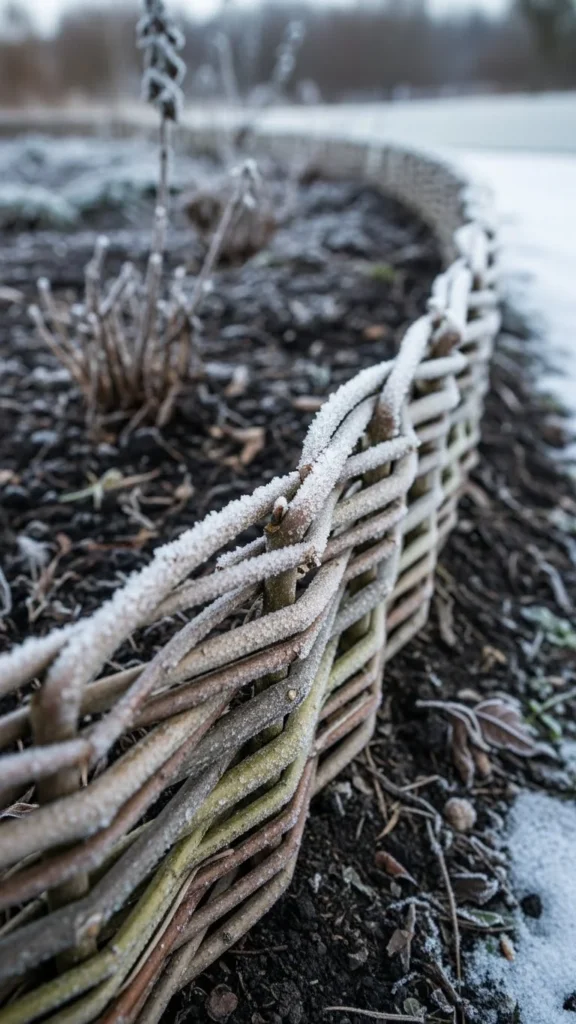
Woven willow edging adds a soft, natural feel. The flexible branches bend easily, so they work for curved or irregular beds. You can buy pre-made sections or weave your own from fresh willow rods. Push sturdy stakes into the ground and weave branches around them. This edging stays low, which helps highlight plants behind it. Over time, the willow will weather into warm brown tones. Willow borders pair well with winter herbs, pansies, and evergreen groundcovers. They are affordable and simple to repair—just replace a few branches when needed.
6. Layered Log Borders
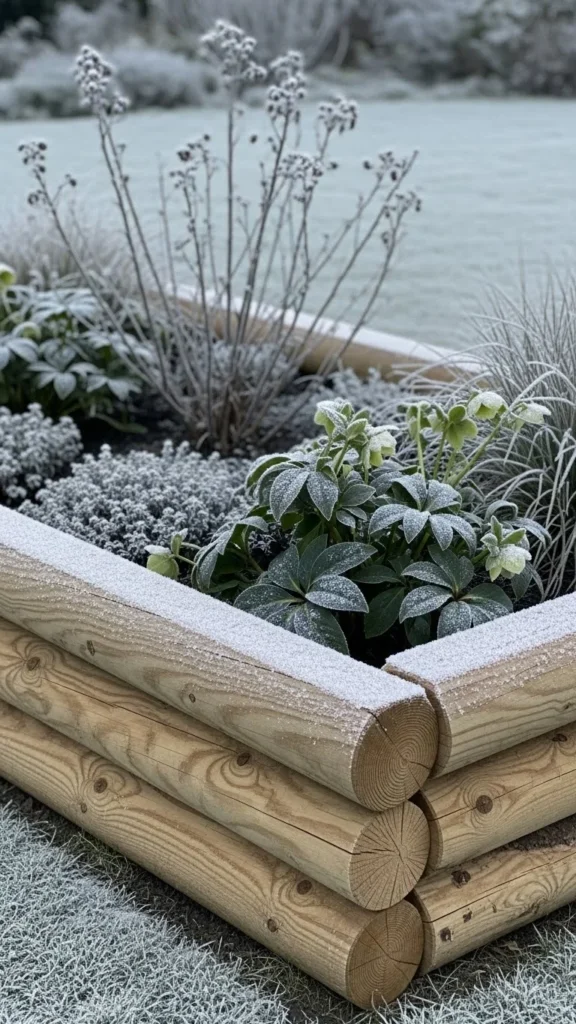
Small logs or log slices make a warm, rustic border. Cut branches into evenly sized pieces and place them upright in a row. For stability, dig a narrow trench to hold them. If you have leftover firewood, this is a perfect free project. Treat the wood with a natural sealant if you want it to last longer. Cluster evergreen plants or dried grasses behind the log border for soft texture. Logs look especially nice in cottage-style winter gardens. Add a layer of dark mulch to highlight the wood grain.
7. Simple Gravel Strips
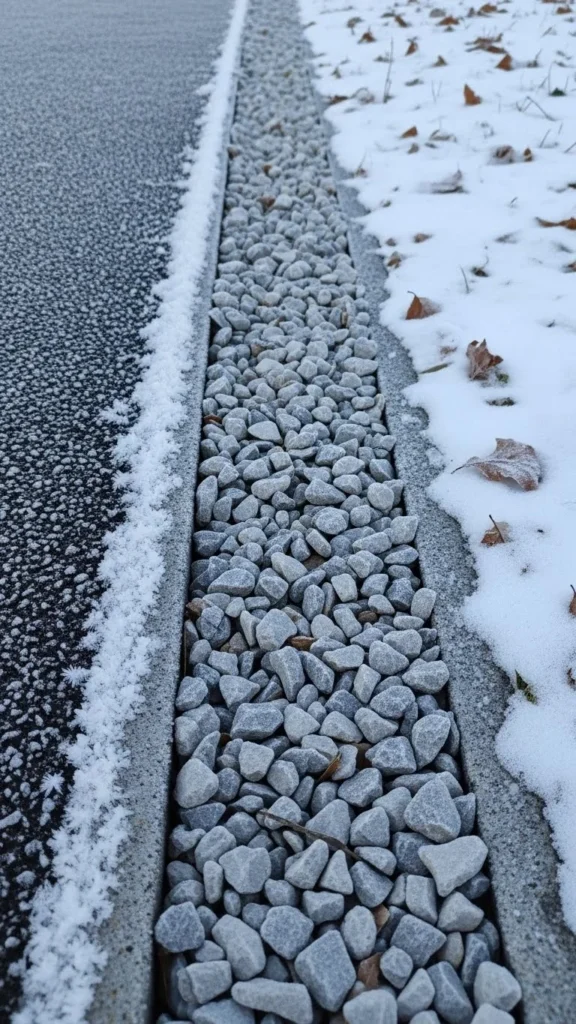
Gravel edges are clean, minimal, and easy to maintain. Pour a strip of small stones along your beds to create a tidy separation. Gray or black gravel works well in winter because it contrasts with pale soil and frost. You don’t need a deep trench—just flatten the soil and pour. Add a plastic or metal edging underneath if you want to keep the stones in place. Gravel borders also improve drainage, which helps plants handle wet winter soil. They’re an affordable option for long pathways or wide beds.
8. Metal Landscape Strips
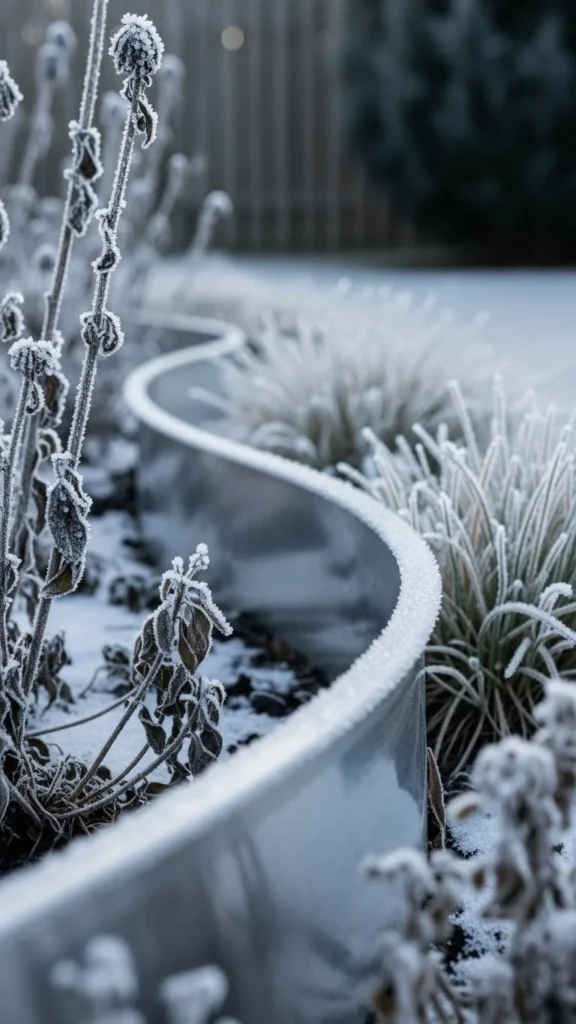
Metal edging creates precise, modern lines. It bends easily, so you can follow curves or straight edges. Choose a weather-resistant style like steel or aluminum. Install it by hammering stakes into the ground and sliding each strip into place. The thin profile almost disappears under snow, leaving clean shapes. Metal edging works well around stone paths and evergreen beds. To cut costs, use shorter sections only where you want the sharpest definition.
9. Driftwood Borders
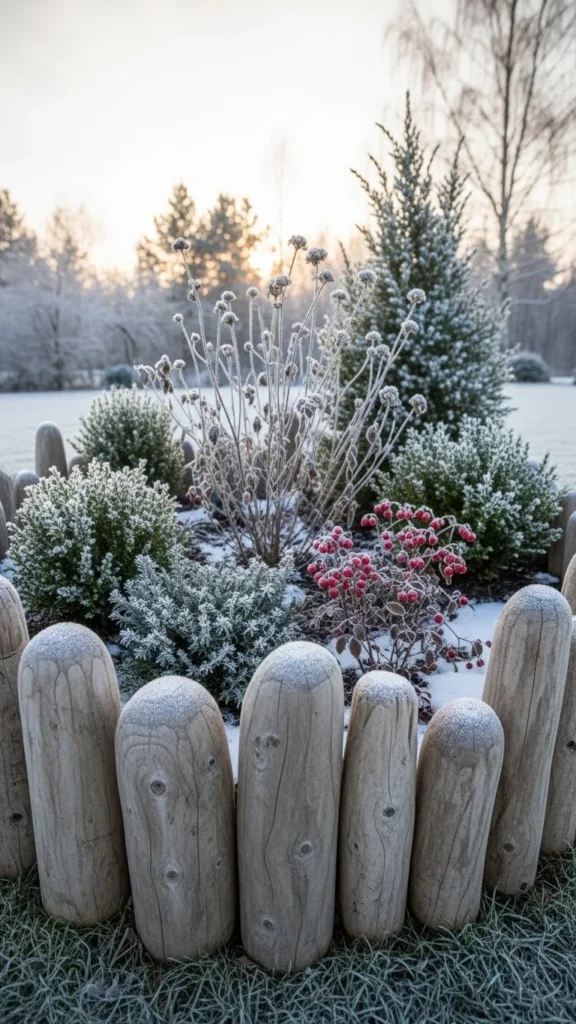
Driftwood edges bring a soft, beach-like feel to winter gardens. Look for pieces with interesting shapes and place them in a loose row. Because driftwood is irregular, your border will look organic and relaxed. Combine it with cool-toned gravel or silver-leaf plants for a coastal style. If your pieces are lightweight, push them slightly into the soil or secure them with hidden stakes. Driftwood is usually inexpensive or free if collected responsibly, making it a great budget option.
10. Staggered Slate Pieces
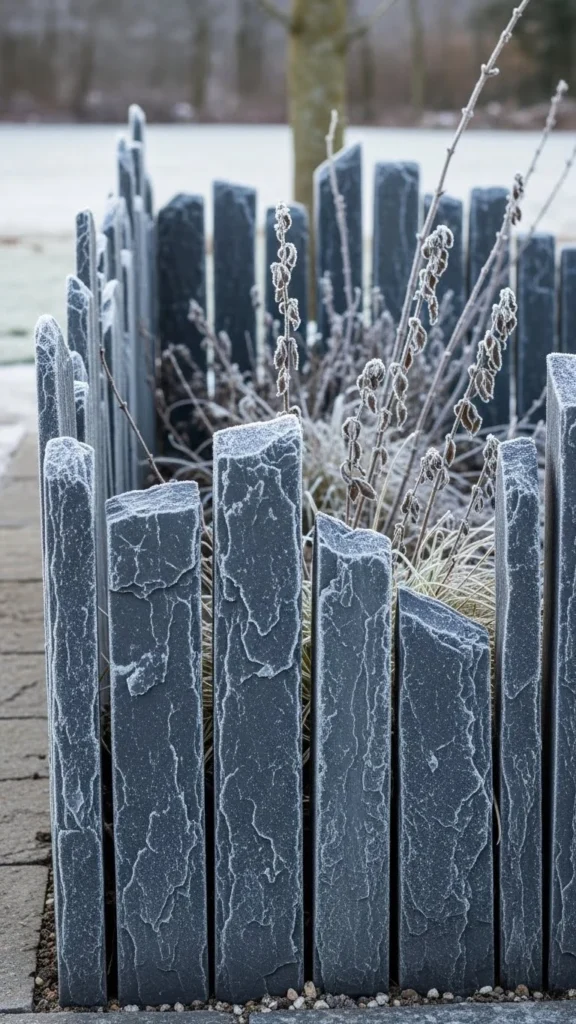
Standing slate pieces upright creates a dramatic border with lots of texture. Dig a narrow trench, place the slabs vertically, and pack soil around them. Slight height variations add interest. Slate holds color well in winter, especially its deep grays and blues. You can buy broken pieces at a discount and still achieve a stylish edge. Surround the border with gravel or evergreen groundcovers to complete the look.
11. Rustic Rope Line
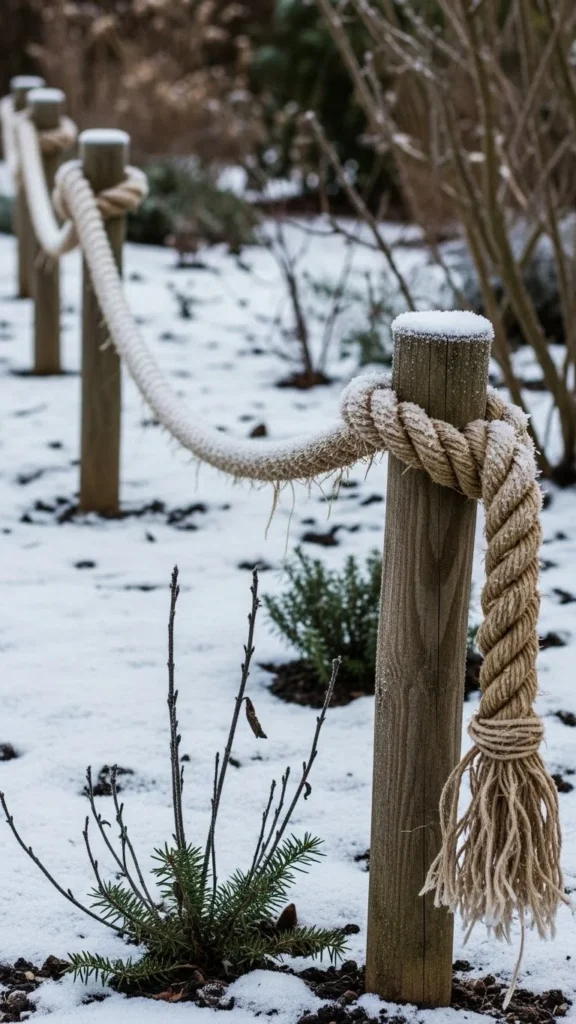
A simple rope border instantly defines pathways without feeling heavy. Tie the rope between wooden stakes and space them evenly. The rope should hang slightly for a relaxed style. This idea works well for winter gardens with tall grasses or shrubs because it adds a soft frame without blocking views. Replace the rope once a year if it begins to weather. You can stain the stakes for extra contrast.
12. Frost-Safe Concrete Blocks
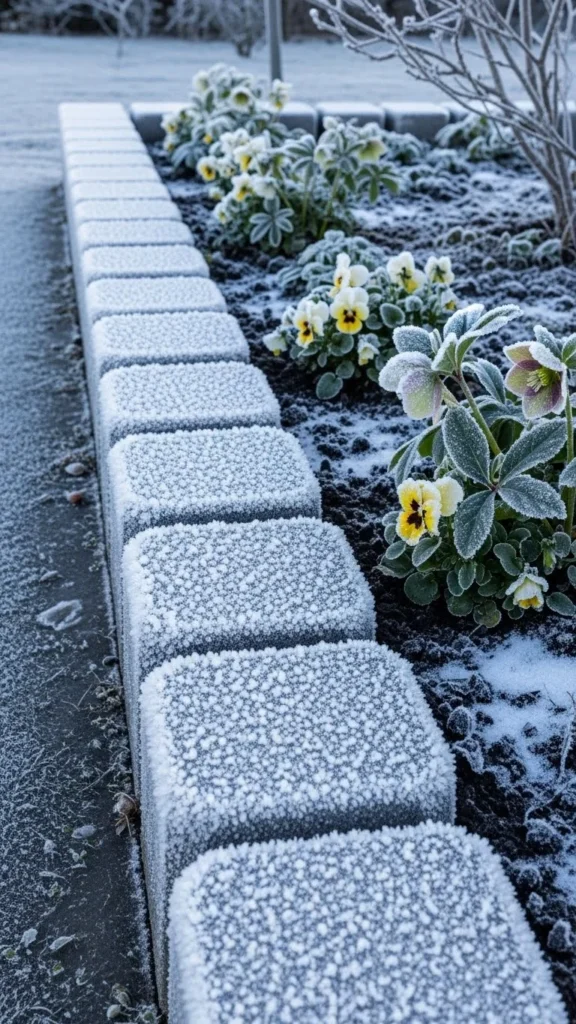
Concrete blocks are strong, easy to stack, and blend into modern gardens. Choose small blocks for lower borders or interlocking ones for tall edges. Their neutral gray color pairs well with winter foliage. Use leftover blocks from construction projects or buy them individually to keep costs low. Add a strip of gravel at the base to help with drainage. Concrete borders stay stable through freeze-thaw cycles and require almost no upkeep.
13. Raised Timber Edging
[Image Prompt: Straight wooden boards forming a raised border around a winter garden bed with frost-covered soil.]
Timber boards create bold, raised outlines that help contain mulch and soil. Cedar or treated pine holds up well outdoors. Measure your space, cut the wood to length, and secure it with screws and corner stakes. If you’re saving money, use reclaimed boards. Timber borders look great around rectangular beds or along long walkways. Their clean lines help guide the eye through winter landscapes. Add a few evergreen shrubs behind the wood to soften the design.
14. Curved Plastic Edging
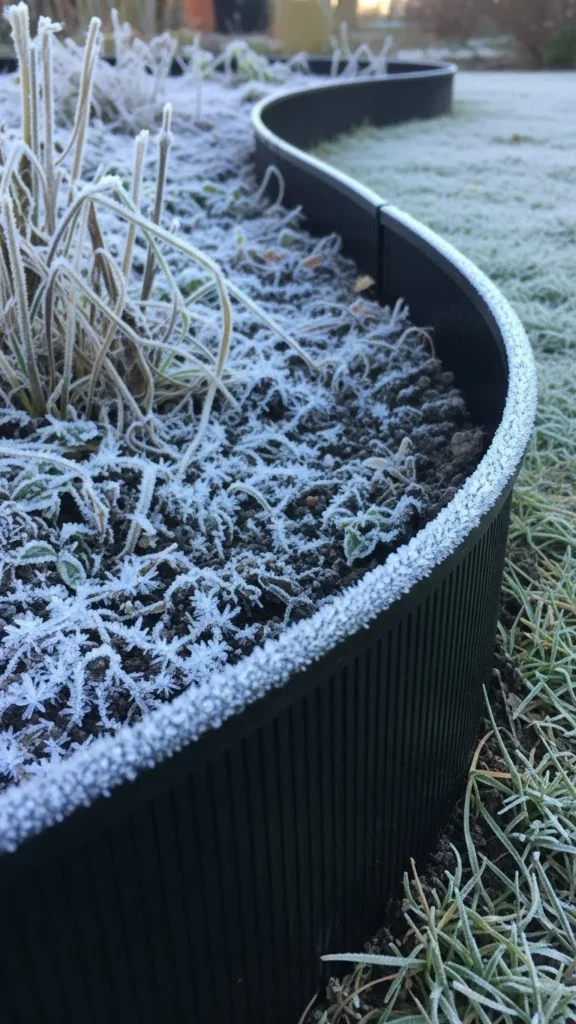
Plastic edging is flexible and affordable. It’s perfect for gardeners who want curved beds without spending much. Unroll the edging, warm it in the sun to make it more pliable, and press it into the soil. Secure it with stakes as you go. Dark plastic almost disappears in winter, letting the shape of the bed shine. This simple border pairs well with gravel paths and winter herbs. It’s also easy to replace if sections wear out.
15. Mossy Boulder Borders
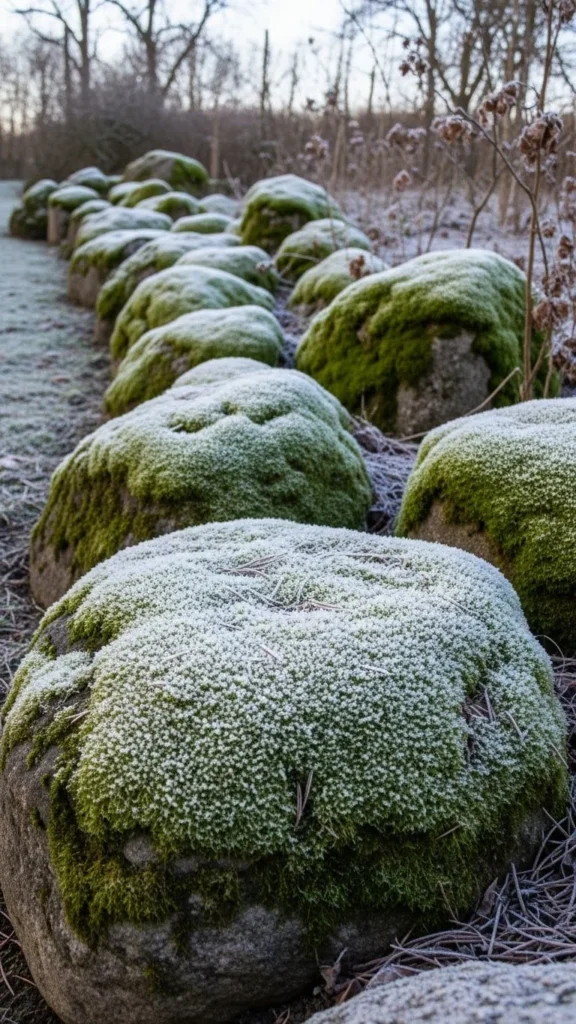
Large boulders create dramatic winter structure. If you have natural stones on your property, this project can be nearly free. Arrange the boulders in a staggered line. Leave small gaps for low-growing plants or groundcovers. Moss and lichen develop naturally over time, adding color even on cold days. Place taller boulders at corners or entrances to draw attention. This border works especially well in woodland-style gardens with tall evergreens.
16. Brick-on-Edge Patterns
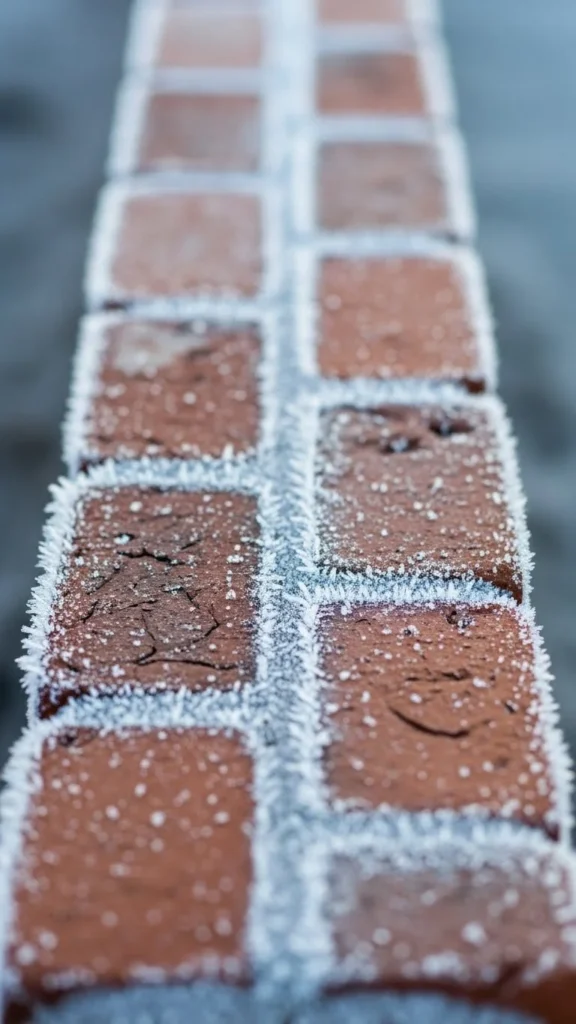
Standing bricks upright adds height and pattern. This classic style works well in winter gardens because the brick ends create a sharp texture. Dig a trench just deep enough to hold each brick steadied by soil on both sides. You can alternate colors or keep the tones simple. It’s a helpful option for edging winding paths. Buying used bricks keeps the project budget-friendly and gives the border a worn, lived-in look.
17. Steel Mesh Panels
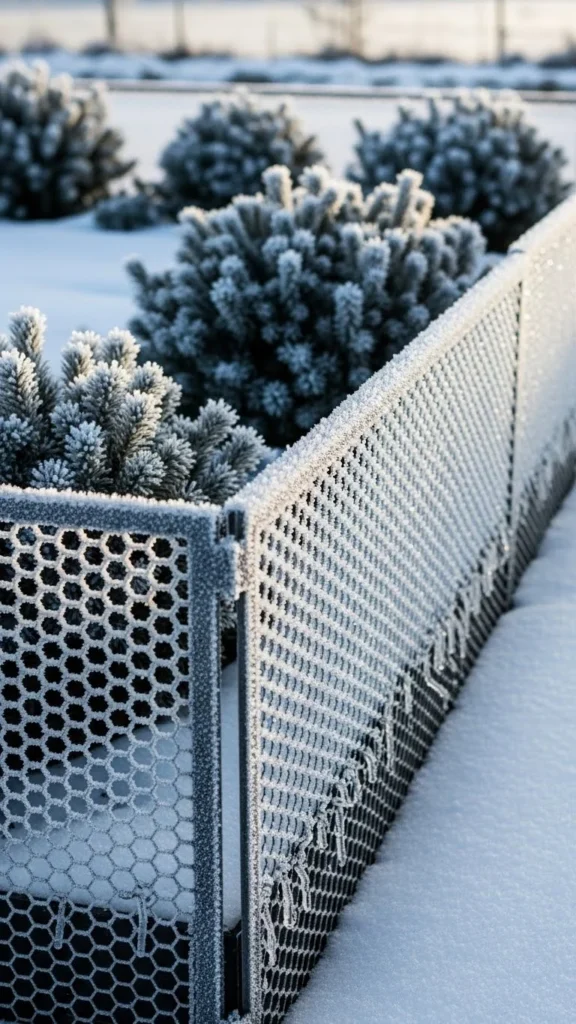
Steel mesh adds a modern industrial edge. Cut panels to size and insert them into the ground. The open grid allows plants to grow through in warmer months while still giving winter structure. Use thicker mesh for stability. Spray the metal with a matte finish if you want a darker tone. For a budget option, look for leftover mesh sections at hardware stores. This style pairs well with gravel and drought-tolerant winter plants.
18. Smooth River Rock Lines
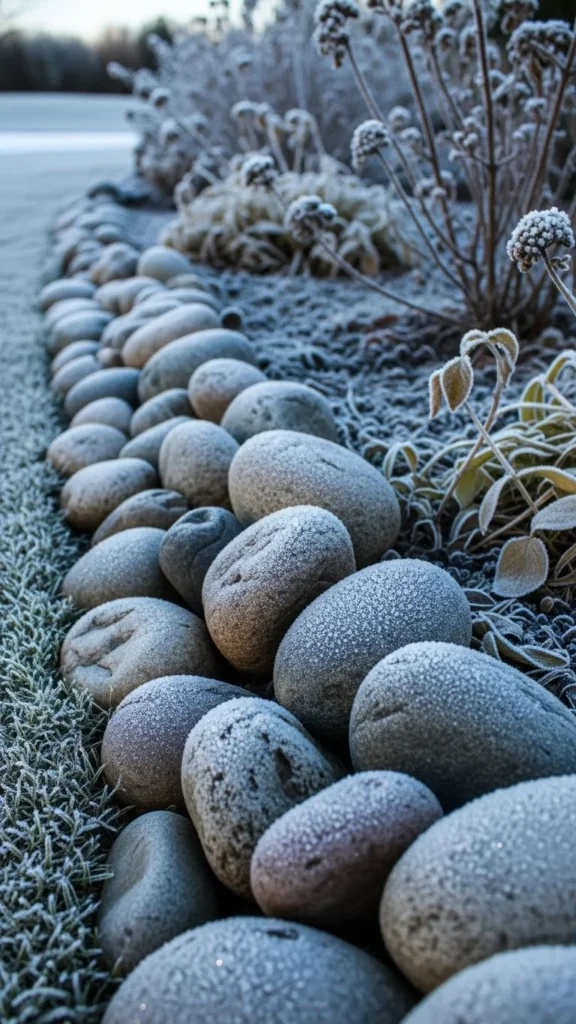
River rocks are gentle and calming. Their smooth surfaces shine under frost. Create a single row for a soft border or stack them slightly for more shape. To keep rocks from shifting, dig a shallow groove and settle them inside. Choose cool gray or mixed tones depending on your style. River rock borders work around water features, evergreen shrubs, and simple pathways. Buying stones in bulk reduces cost.
19. Evergreen Groundcover Edges
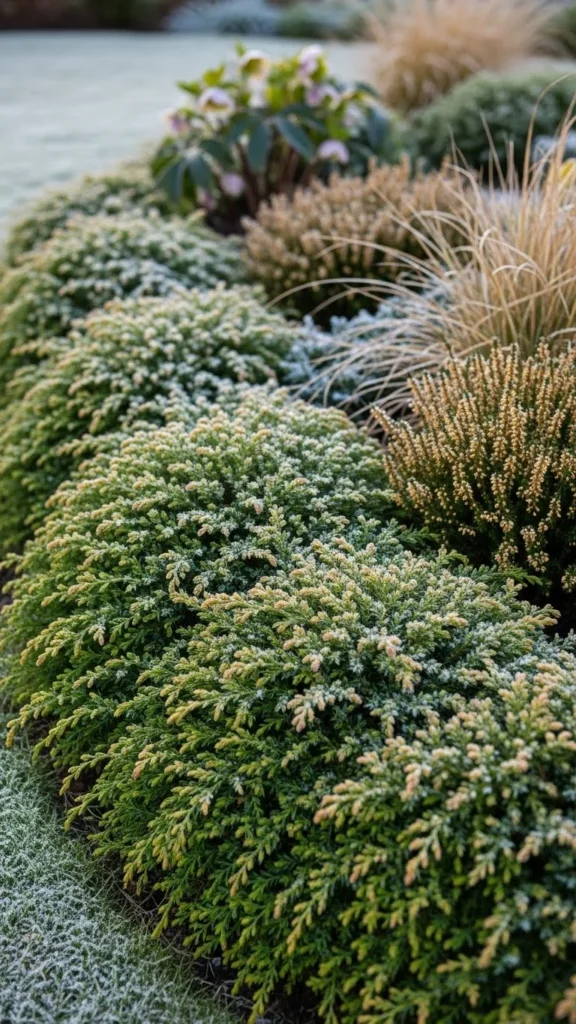
Low groundcovers like creeping juniper or thyme create living borders that stay green all winter. Plant them close together so they form a tight edge as they grow. Dark mulch behind them adds contrast. These plants spread slowly but steadily, making them a budget-friendly choice. Clip edges in early fall to keep the line neat. Living borders are perfect around patios, raised beds, and rock gardens.
20. Reclaimed Metal Pipes
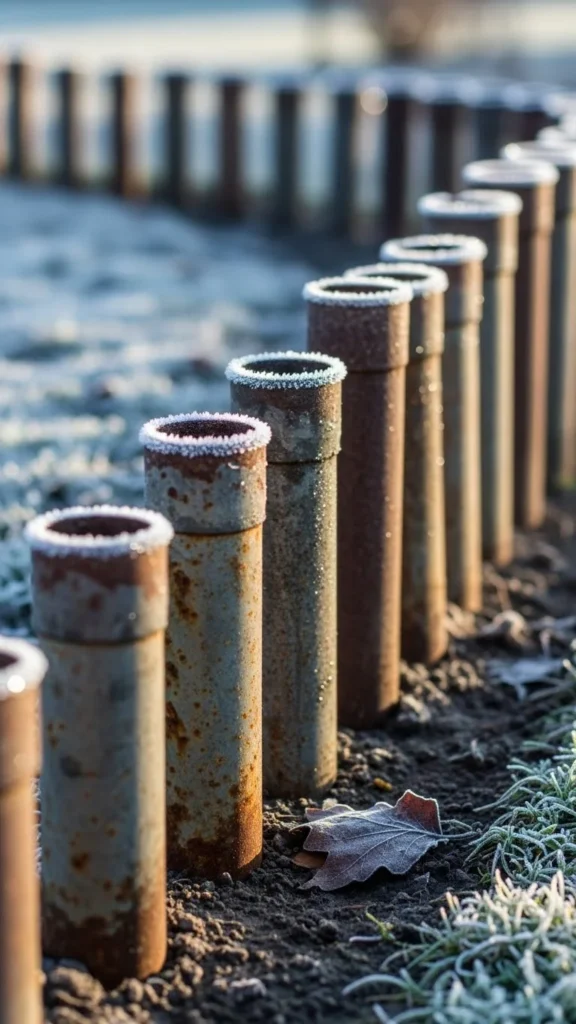
Short metal pipes create a geometric border with a lot of personality. Cut pipes into equal lengths and stand them upright in a row. Their circular openings add a unique pattern. Look for scrap metal at salvage yards to save money. For a cleaner style, spray the pipes in matte black or leave them raw to weather naturally. This border pairs well with gravel paths and winter grasses.
Conclusion
Winter doesn’t have to flatten your garden. These border ideas bring shape, color, and character to outdoor spaces even on the coldest days. Whether you reuse old materials or invest in long-lasting edging, each option above helps create a tidy, inviting garden you can enjoy all season. Pick one idea, start small, and build from there—your winter landscape will feel organized and welcoming with just a few simple additions.

Leave a Reply