

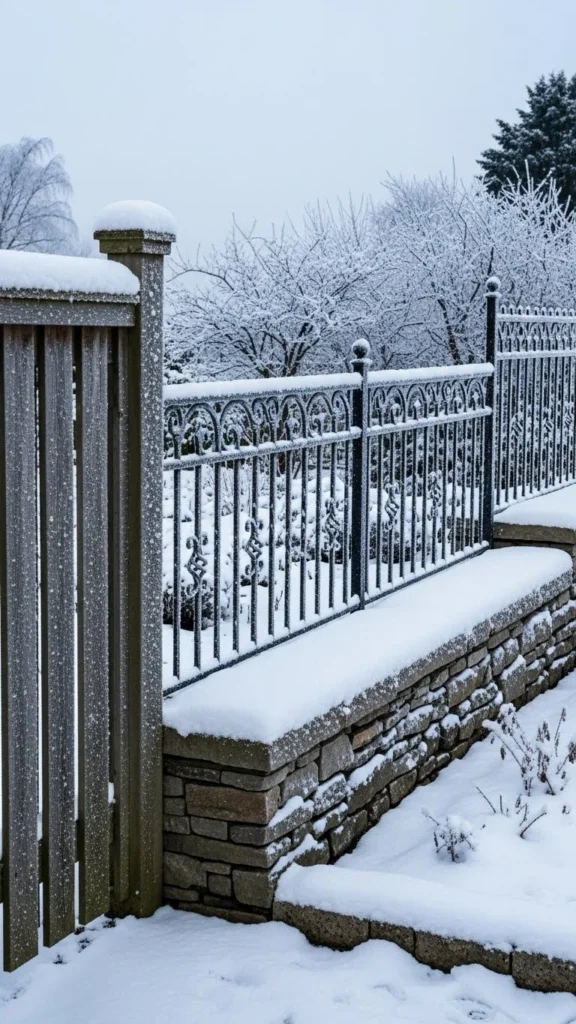
Cold months test every part of a garden, and fencing often takes the hardest hit. Snow weight, icy wind, frozen soil, and repeated thaw cycles can weaken poorly built barriers fast. A strong winter garden fence protects plants, keeps pets safe, and holds its shape when conditions turn rough. The ideas below focus on fence styles that stay reliable through winter while staying realistic for everyday budgets and DIY skills. Each option highlights materials, simple build tips, and small upgrades that help fences stay upright, steady, and good-looking all season long.
1. Pressure-Treated Wood Panel Fence
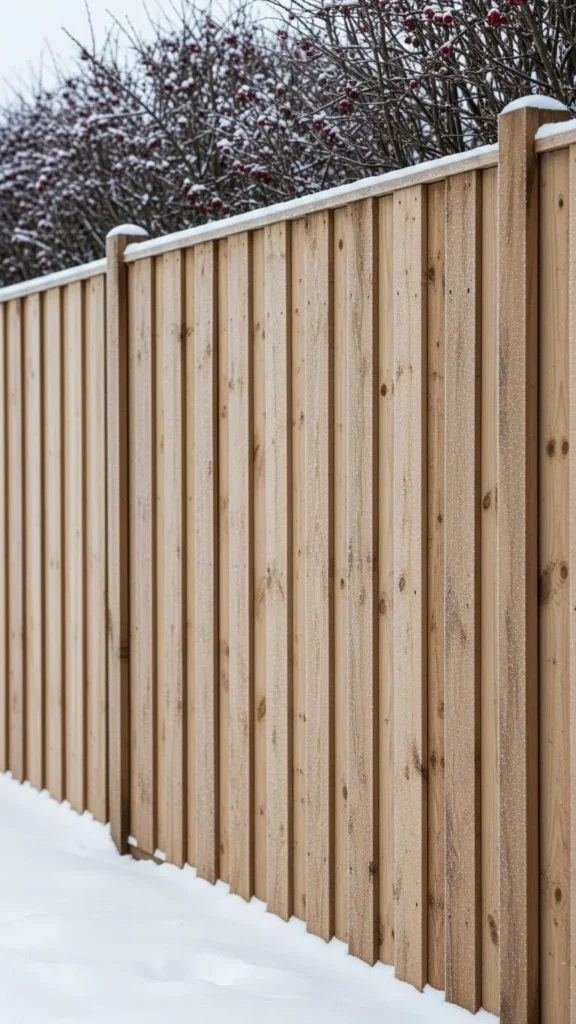
Pressure-treated wood panels handle winter better than standard lumber. The treatment helps boards resist moisture soaking in during snowmelt. That slows warping and cracking. For gardens, shorter panels work best since they catch less wind. A smart budget move is using pre-made panels and reinforcing them with thicker posts. Set posts deeper than summer fences, below the frost line if possible. Gravel at the base helps water drain away before freezing. For DIY builds, add a horizontal brace along the bottom to reduce movement when soil shifts. Leaving a small gap under the fence keeps boards from sitting in snow for weeks. A basic water-sealing coat each fall extends life without adding much cost. This fence style suits vegetable plots, backyard borders, and side yards where strength matters more than decoration. With steady spacing and solid posts, pressure-treated panels stay straight even after repeated freeze and thaw cycles.
2. Cedar Slat Garden Fence
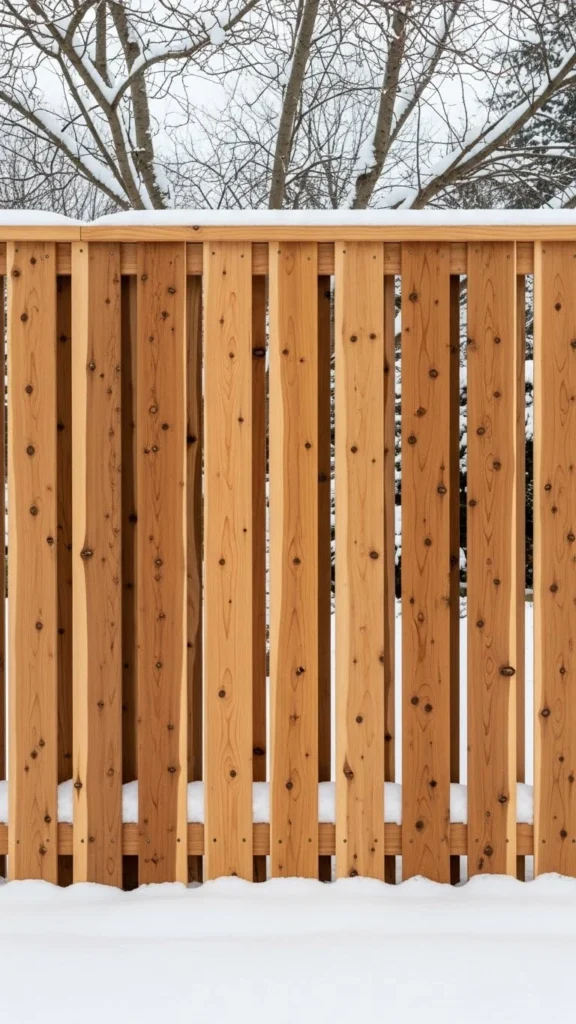
Cedar handles cold weather well due to natural oils that resist moisture. Vertical slats shed snow instead of holding it. That reduces strain on fasteners. For winter strength, slats should be slightly spaced to let wind pass through. This lowers pressure during storms. A budget-friendly approach is using thinner cedar boards paired with sturdy posts. Metal post anchors hidden at ground level add stability without hurting the look. DIY builders can pre-drill holes to avoid splitting when temperatures drop. A simple clear sealant once a year keeps the wood from drying out and cracking. Cedar fences fit cottage gardens and mixed borders where a natural look matters. Even when frost coats the boards, cedar keeps its shape better than many softwoods. With smart spacing and solid footing, this fence stays reliable through long cold spells.
3. Galvanized Steel Mesh Fence
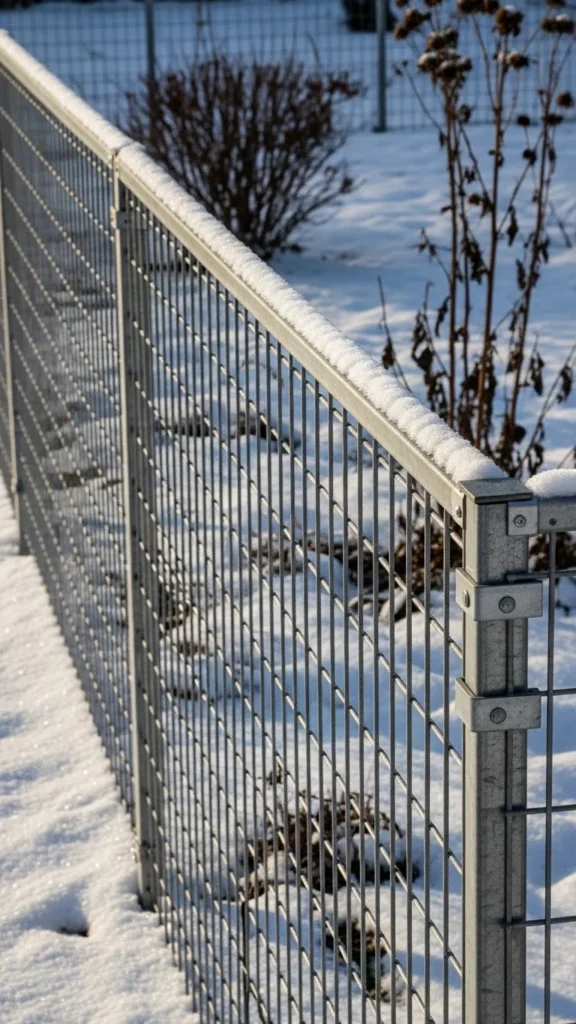
Galvanized steel mesh fences stand up to winter moisture and ice without bending. The zinc coating slows rust even when snow sits against it. Mesh allows wind to pass through, reducing stress during storms. This makes it ideal for exposed gardens. A cost-saving tip is combining metal T-posts with rolled mesh panels. Drive posts deep before ground freezes. For extra hold, pack gravel around the base. DIY gardeners often add a wooden top rail to improve rigidity and appearance. This also helps keep mesh straight over time. Steel mesh fences work well for keeping animals out without blocking views. They pair nicely with raised beds and winter-hardy shrubs. Even under heavy snow, the open design prevents sagging. It’s a simple, low-maintenance option that performs well year after year.
4. Vinyl Privacy Fence Panels
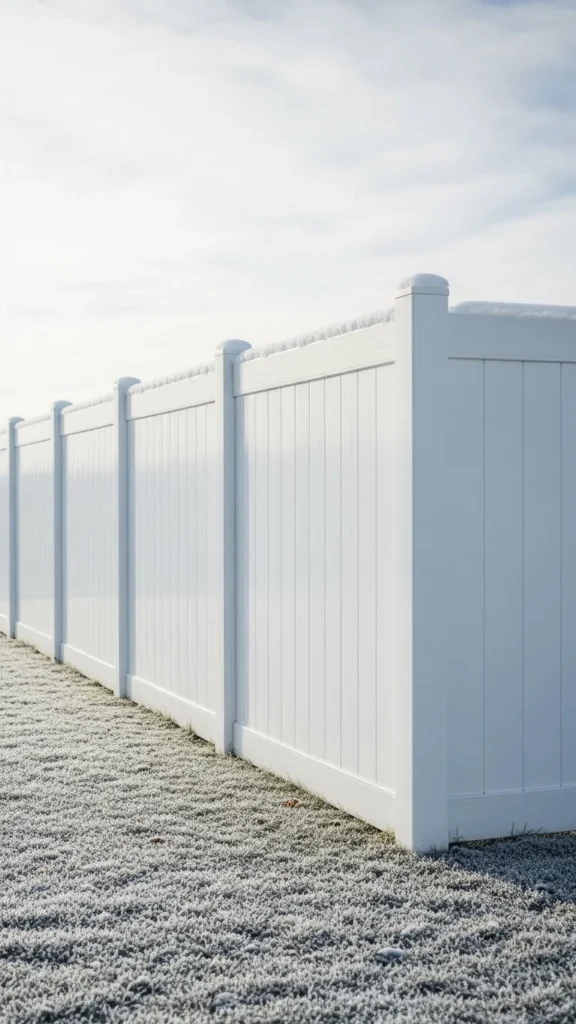
Vinyl fencing resists moisture and doesn’t rot in winter conditions. Quality panels stay flexible enough to handle cold without cracking. For garden use, shorter privacy sections reduce wind load. Installation matters most. Posts must be set deep and straight to stop shifting when soil freezes. A DIY trick is adding concrete collars below ground while leaving the surface area free for drainage. Choose panels rated for cold climates, as thinner vinyl may become brittle. Vinyl fences work well near patios or garden seating areas where a clean look is preferred. Snow brushes off easily without staining. Though upfront cost is higher, minimal upkeep balances it over time. With proper installation, vinyl fences hold their shape through harsh winters and return to form once temperatures rise.
5. Stone Garden Wall Fence
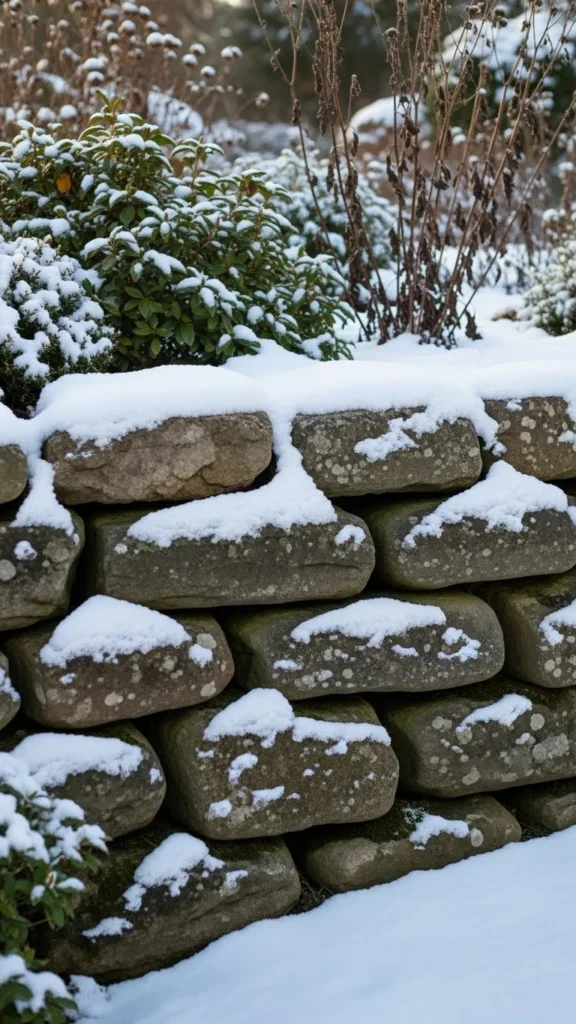
Stone fences handle winter better than most materials. Weight keeps them grounded even when frost shifts soil. Dry-stacked stone walls allow slight movement without cracking. This makes them well suited for freeze cycles. For budget builds, use local stone or reclaimed materials. Keep walls low for garden borders to reduce labor. A gravel base helps drainage and prevents frost heave. DIY builders can start small, lining paths or raised beds. Stone fences block wind and protect delicate plants nearby. They also hold warmth from daylight, helping soil stay slightly warmer. Even after snowstorms, stone walls remain stable. This style works best where permanence matters and a natural look fits the landscape.
6. Wrought Iron Garden Fence
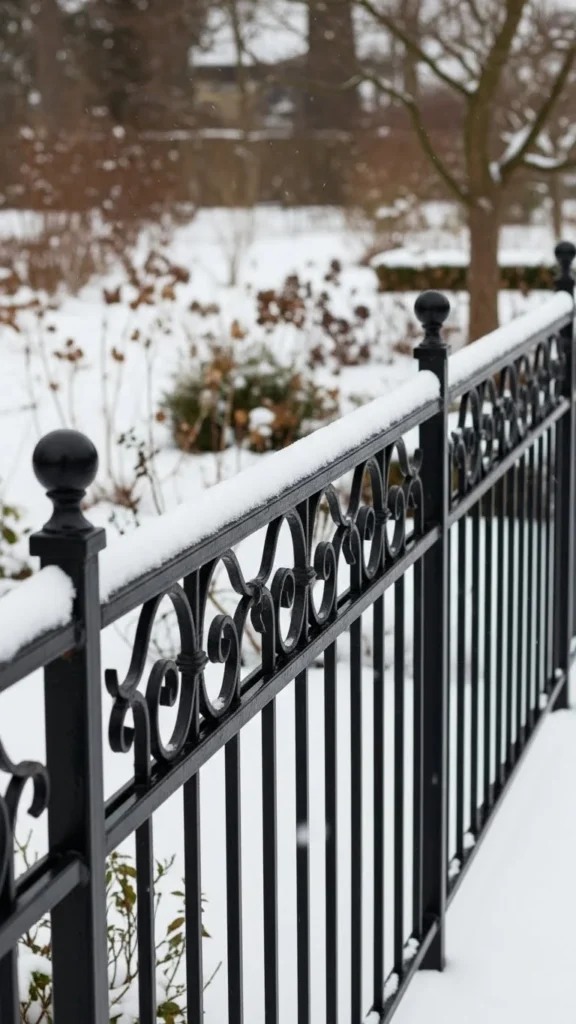
Wrought iron fences stay strong in cold weather when properly coated. Metal resists cracking and bending under snow weight. The open design lets wind pass through, reducing stress. For winter performance, rust protection matters most. A fresh coat of outdoor metal paint before winter keeps moisture out. Budget options include modular iron panels that bolt together easily. Set posts in concrete below frost depth for best results. These fences suit front gardens and formal layouts. Snow slides off bars rather than piling up. Even after storms, iron fences keep their shape. With basic seasonal care, they remain dependable through many winters.
7. Composite Wood Fence Boards
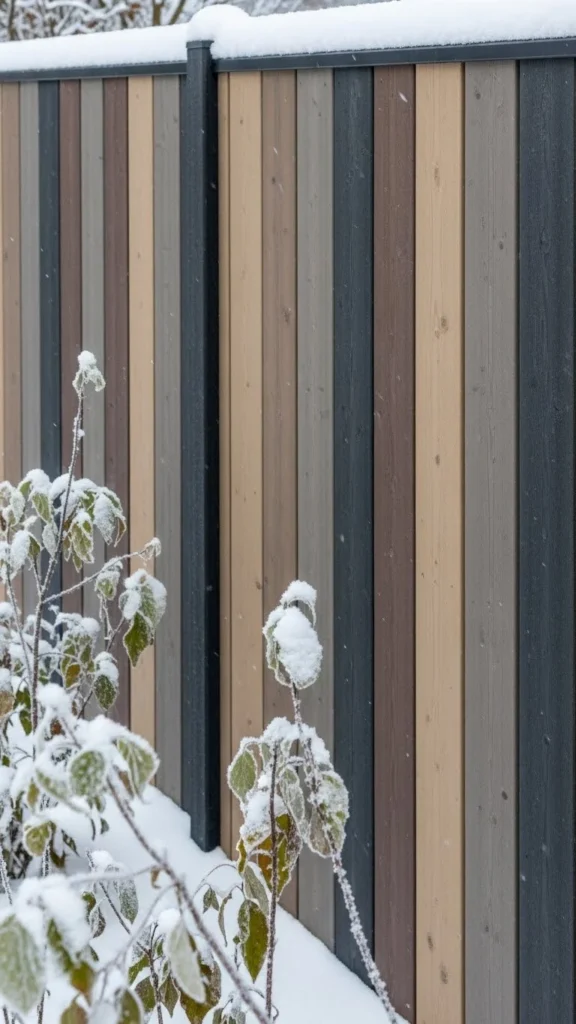
Composite boards blend wood fibers with plastic, making them resistant to moisture. This reduces swelling during winter thaws. Boards stay straight even when temperatures swing. For garden fencing, combine composite boards with metal posts for added strength. DIY builders save money by spacing boards slightly to lower wind resistance. Composite fences suit modern gardens and small yards. They don’t need sealing, which saves time each fall. Snow brushes off easily without staining. While materials cost more, long life offsets repairs. Composite fences offer steady performance when winter weather turns unpredictable.
8. Split Rail Fence with Wire Backing
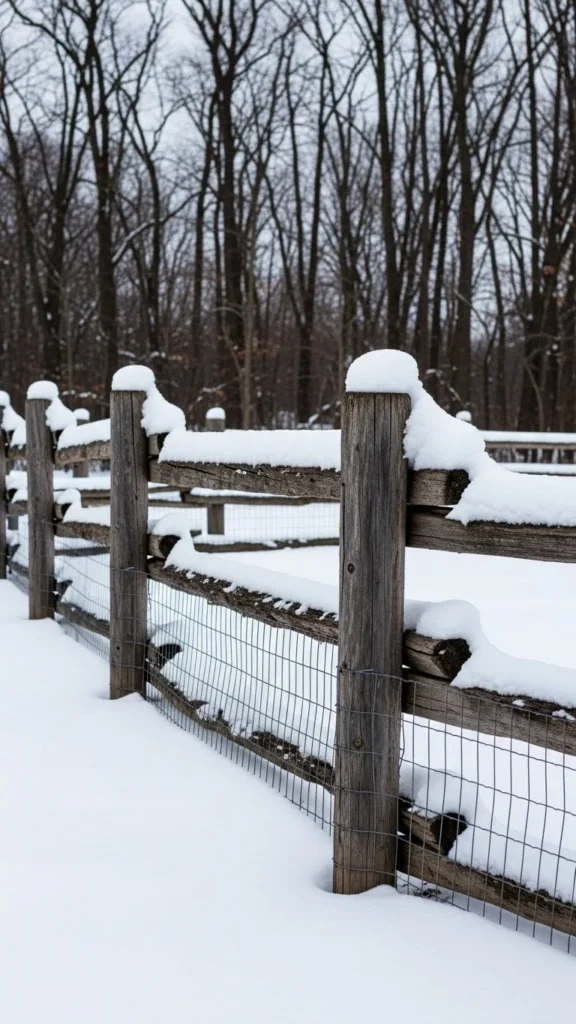
Split rail fences alone struggle in winter wind, but wire backing adds strength. The wire holds rails steady and keeps animals out. Use pressure-treated rails for better moisture resistance. Set posts deeper than usual to handle frozen ground movement. A budget-friendly wire mesh adds function without changing the rustic look. This fence works well for large gardens and rural settings. Snow passes through easily, reducing pressure. Repairs are simple since individual rails can be replaced. With added wire support, split rail fences last longer through harsh seasons.
9. Bamboo Fence with Reinforced Frame
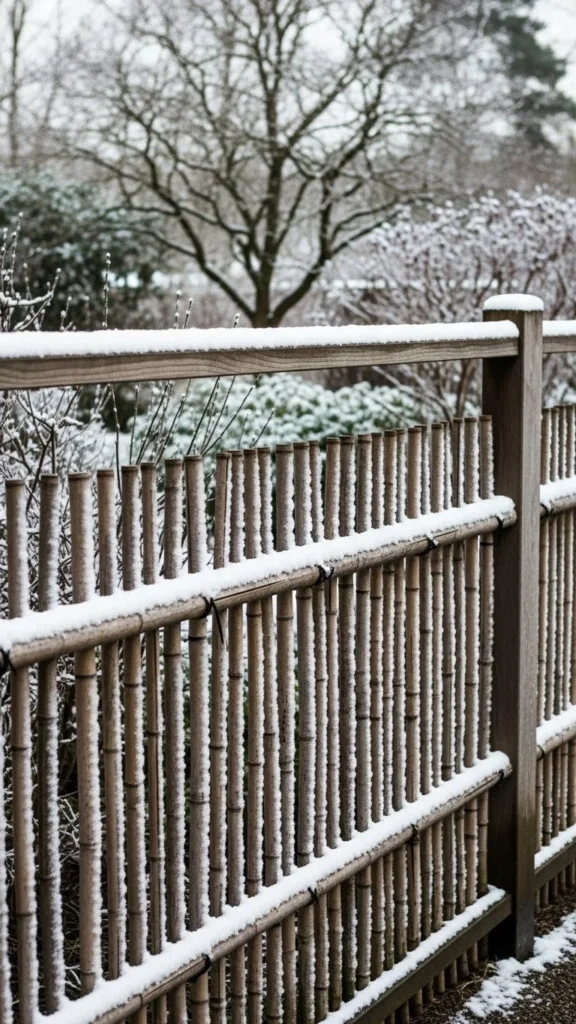
Bamboo fences need support for winter use. A solid wooden frame prevents snapping under snow weight. Bamboo itself resists moisture but can crack if unsupported. Budget builds use bamboo rolls attached to pressure-treated posts. Leave small gaps for wind flow. This style suits decorative garden sections rather than perimeter fencing. Snow should be brushed off after storms to reduce strain. With a reinforced frame, bamboo fences hold up better than expected in cold weather.
10. Horizontal Wood Slat Fence
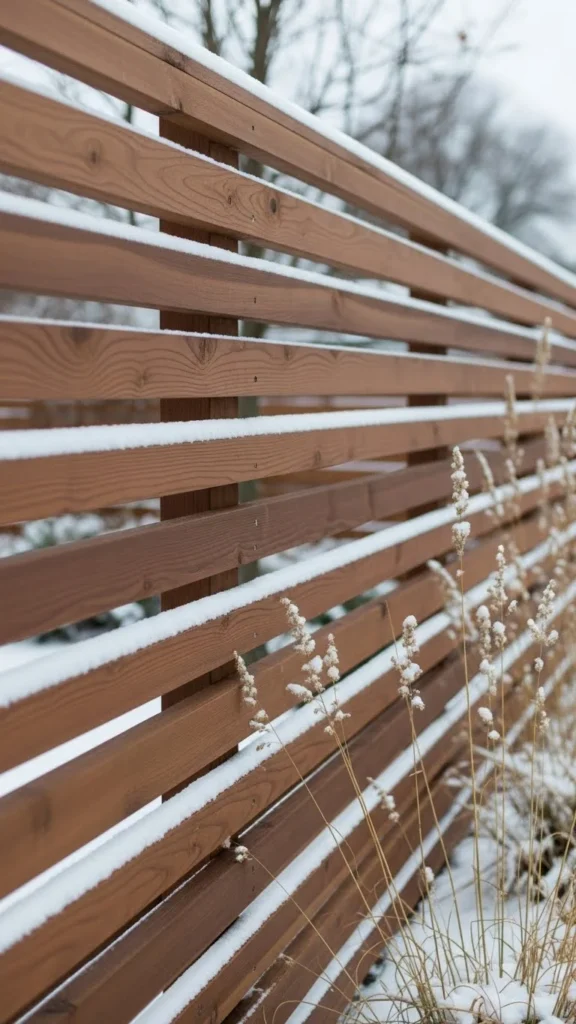
Horizontal slat fences catch wind, so spacing matters. Small gaps between boards reduce pressure. Use treated lumber or cedar for winter durability. Strong posts set deep keep the fence steady. A DIY trick is adding a hidden metal rail behind the slats for reinforcement. This fence suits modern gardens and patios. Snow buildup stays minimal due to flat surfaces. With smart spacing and solid posts, horizontal fences stay straight through winter months.
11. Recycled Plastic Garden Fence
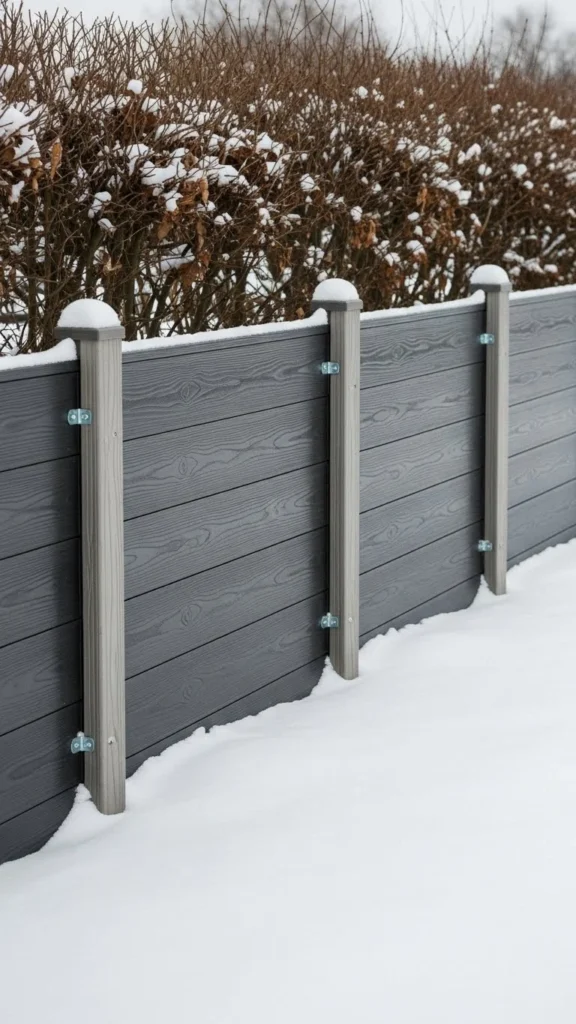
Recycled plastic fencing resists moisture and cold without rotting. Panels flex slightly, helping them handle freezing temperatures. Installation mirrors vinyl fencing, with deep-set posts for stability. Budget options exist for smaller garden sections. These fences work well for eco-focused gardens. Snow doesn’t stick easily, reducing load. Minimal upkeep makes them practical for winter-heavy areas.
12. Concrete Panel Fence
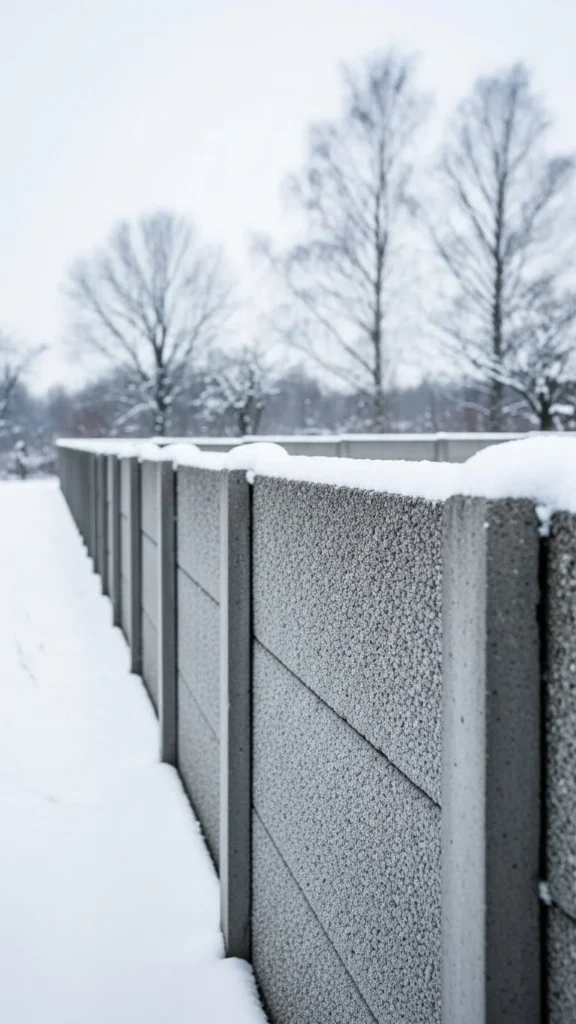
Concrete panels handle cold with ease when properly installed. They resist moisture and shifting soil. For gardens, low panels reduce cost and labor. A gravel base improves drainage. DIY projects may use precast panels for easier setup. Concrete fences block wind and protect plants. Even after freezing temperatures, they remain steady and reliable.
13. Hog Wire Fence with Wood Frame
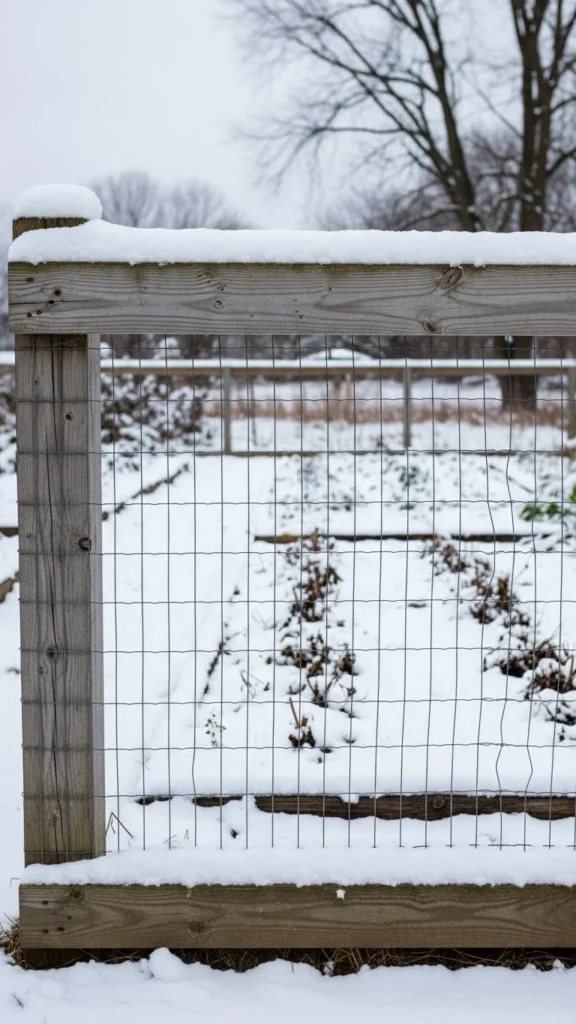
Hog wire fences combine strength and visibility. Thick wire resists bending under snow. A wooden frame adds rigidity. Use treated wood to prevent rot. Set posts deep and brace corners. This fence style suits vegetable gardens and keeps animals out. Snow passes through mesh easily, reducing stress.
14. Pallet Wood Garden Fence
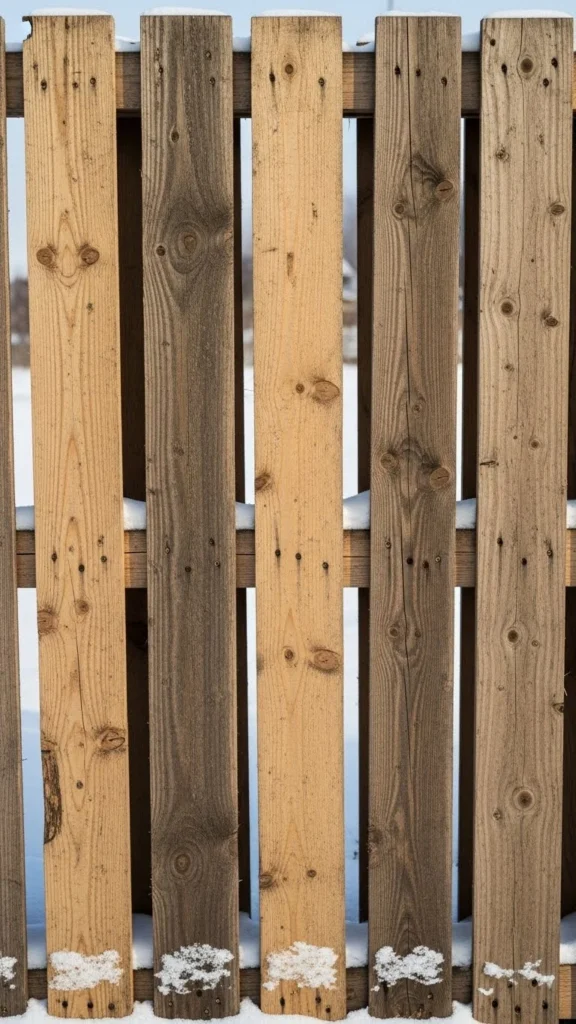
Pallet fences can survive winter with preparation. Use heat-treated pallets only. Reinforce them with solid posts. Seal boards to reduce moisture absorption. Keep pallets raised slightly off the ground. This budget option works for temporary fencing. With added bracing, pallet fences stay upright through cold months.
15. Metal Panel Fence
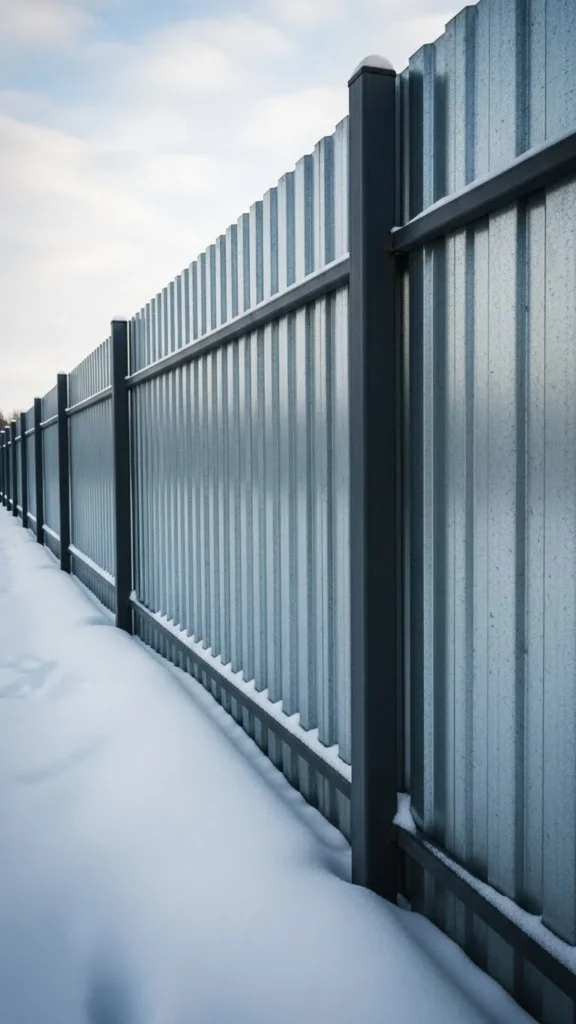
Metal panels resist moisture and snow weight. Secure them to strong posts to prevent rattling. Leave small gaps at ground level for drainage. This fence style suits modern gardens and wind-prone areas. Panels remain straight even during storms.
16. Willow Woven Fence with Frame
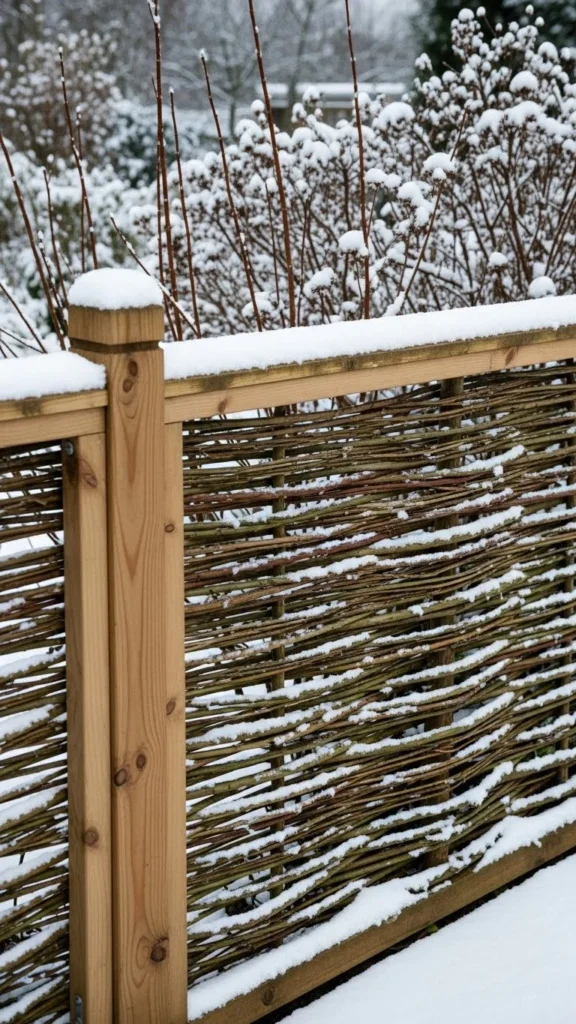
Willow fencing requires a frame for winter strength. The weave allows wind through. Use treated posts and rails. This fence suits decorative borders. Brush off heavy snow to extend life. With support, willow fences handle winter better than expected.
17. Chain Link Garden Fence
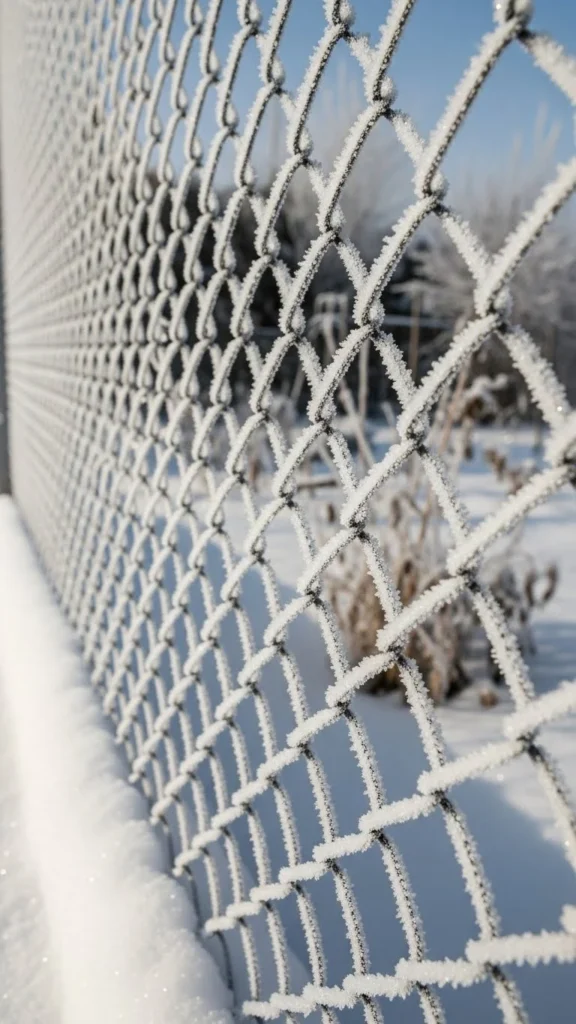
Chain link fences perform well in winter due to flexibility. Snow passes through easily. Galvanized coating prevents rust. Set posts deep and tighten mesh properly. This fence works for large gardens and pet areas. Low upkeep makes it a winter-friendly option.
18. Timber Post and Board Fence
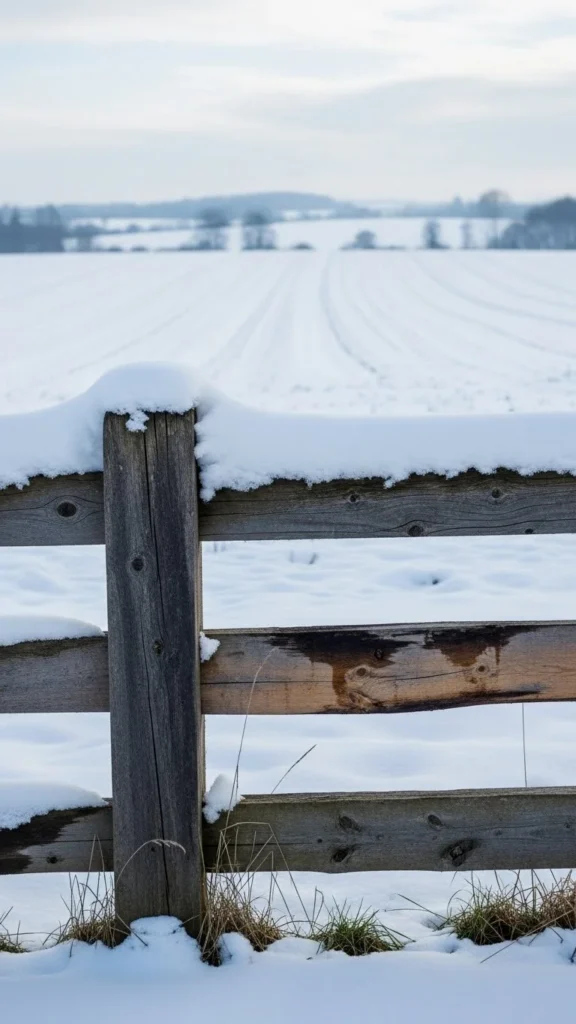
Thick timber posts provide stability during freeze cycles. Boards allow wind flow. Use treated wood and gravel bases. This fence suits open gardens and rural spaces. Simple repairs keep it functional year after year.
19. Gabion Wire Stone Fence
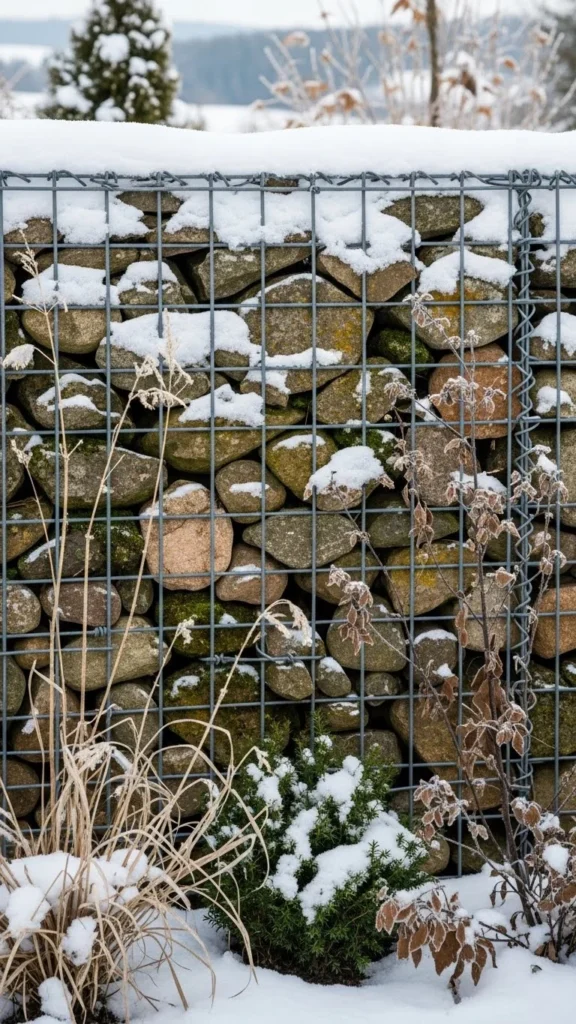
Gabion fences combine wire cages with stone fill. Weight keeps them grounded. Drainage prevents frost damage. DIY builds use local stone to cut cost. These fences block wind and stay steady through winter.
20. Low Brick Garden Border Fence
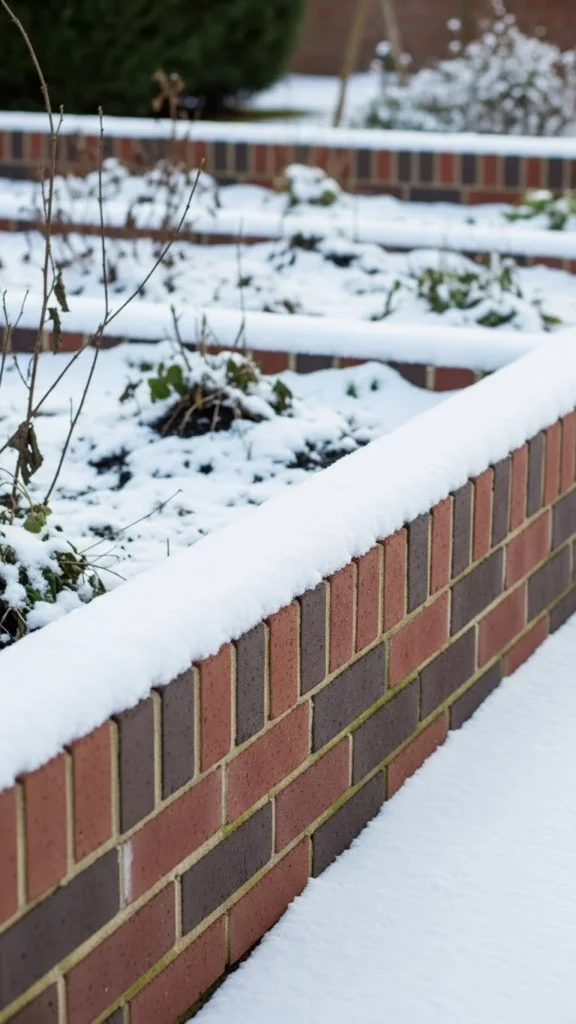
Brick borders work well for garden edges. Mortar-free designs allow movement during freezes. Use compacted gravel bases. These fences protect beds and paths. With proper setup, brick borders stay intact through cold months.
Conclusion
A winter-ready garden fence does more than mark boundaries. It protects plants, handles snow and wind, and saves time on repairs once spring arrives. Strong materials, deep posts, good drainage, and simple reinforcements make the biggest difference. Whether working with wood, metal, stone, or composite, small upgrades help fences stay steady when temperatures drop. Choose a style that fits your garden size, budget, and winter conditions, then focus on solid installation. A fence that holds up through winter keeps your garden secure and ready for the next growing season.

Leave a Reply