

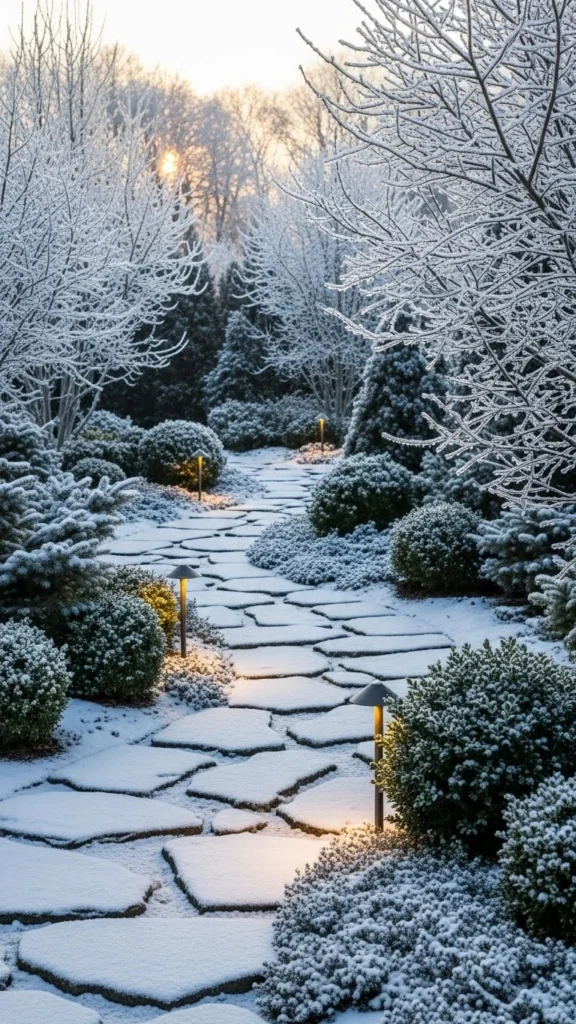
A winter garden pathway can completely change how your landscape feels during the colder months. Simple materials paired with smart layout choices help guide the eye, add structure, and create charm even when most plants are sleeping. These pathway ideas work for small yards, large gardens, and everything in between. Each approach is practical, pretty, and friendly for budget DIYers who want a seasonal yard that still looks welcoming.
1. Snow-Dusted Flagstone Steps
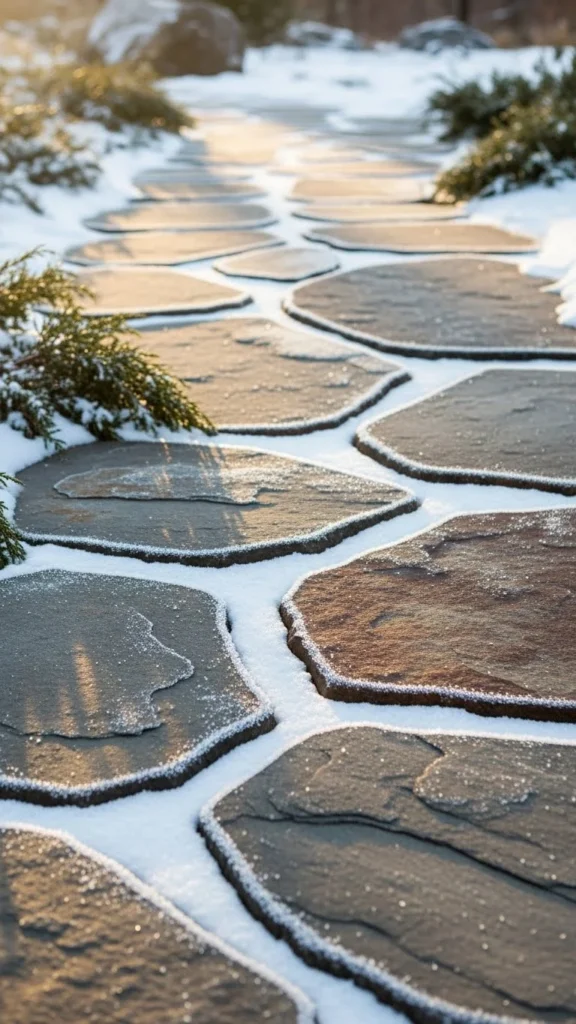
Flagstone holds up well during cold months and instantly adds shape to a winter landscape. The irregular edges soften the look, which feels comforting next to bare branches. Keep the stones spaced with small gaps so melted snow drains naturally. If your yard slopes, create shallow steps using wider stones for better footing. Add evergreen groundcovers on each side for color when other plants fade. For a low-cost approach, mix full stones with smaller leftover pieces. You can also brush off snow only in the center line to create a charming “well-traveled” look. A few solar stake lights along the edges help the stones stand out during long winter evenings. This pathway works nicely near patios, sheds, or seating corners that still get used when the weather is chilly.
2. Gravel Walkway With Frosted Edging
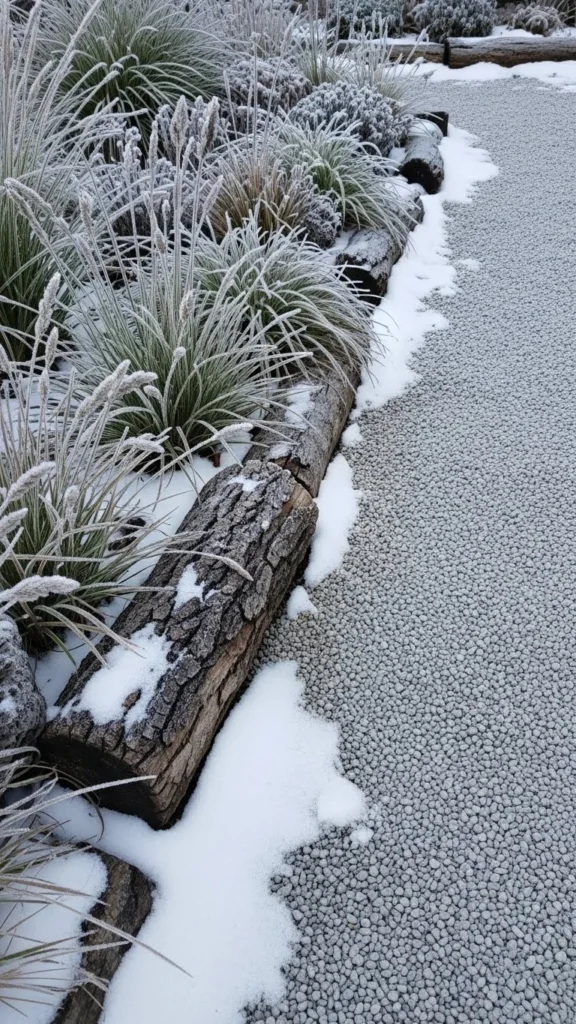
Gravel walkways are simple, affordable, and easy to refresh after storms. They also create a subtle crunch underfoot, which brings sound and warmth to the winter garden. Choose pea gravel or crushed gravel depending on your preference for firmness. Add landscape edging using wood, stone, or metal to keep everything tidy when snow melts. For color, cluster evergreen grasses or dwarf conifers along both sides. They hold shape through winter and help frame the walkway. Rake the gravel occasionally after heavy snow to keep it even. For a DIY touch, add a bucket of river stones at curves to create a more natural feel. If you deal with icy mornings, sprinkle sand—not salt—along the center to avoid plant damage. This pathway is ideal for connecting side yards, sheds, or compost areas.
3. Lantern-Lit Wooden Boardwalk
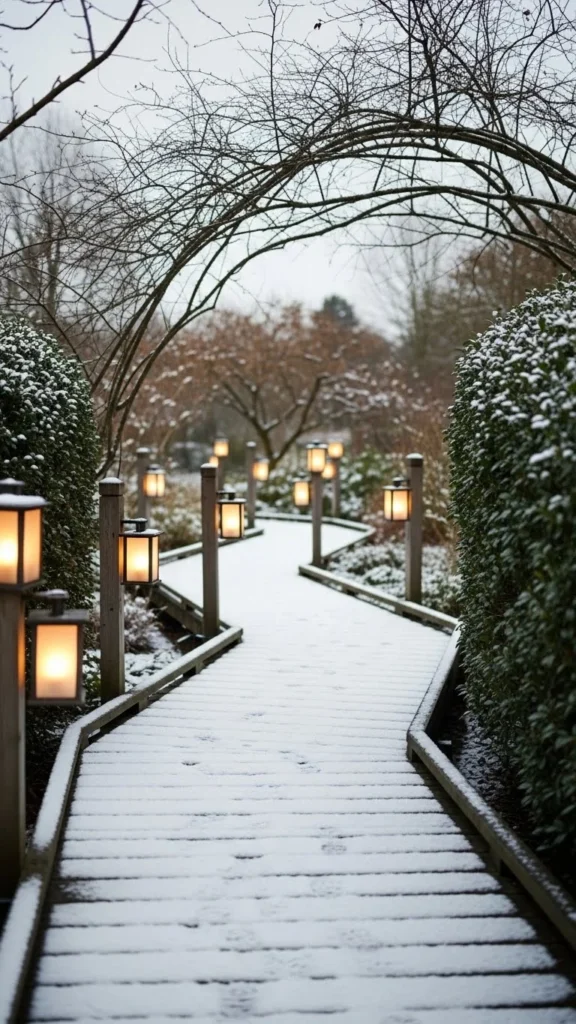
A wooden boardwalk brings a cozy, rustic charm to a winter garden. It works well in damp or low areas where soil freezes unevenly. Use treated lumber or composite boards for longevity. Keep gaps between planks small so snow doesn’t pack tightly. Line the path with lantern stakes or solar lanterns to create a warm ribbon of light on dark afternoons. For a quick upgrade, stain the boards in a deep, earthy tone before cold weather arrives. Add simple rope railings if the path crosses through a sloped area or near a pond. This style pairs beautifully with winterberry shrubs or twig dogwoods, which add pops of red against the wood. A boardwalk is great for guiding guests toward a firepit, deck, or greenhouse.
4. Curved Brick Pathway Through Evergreens
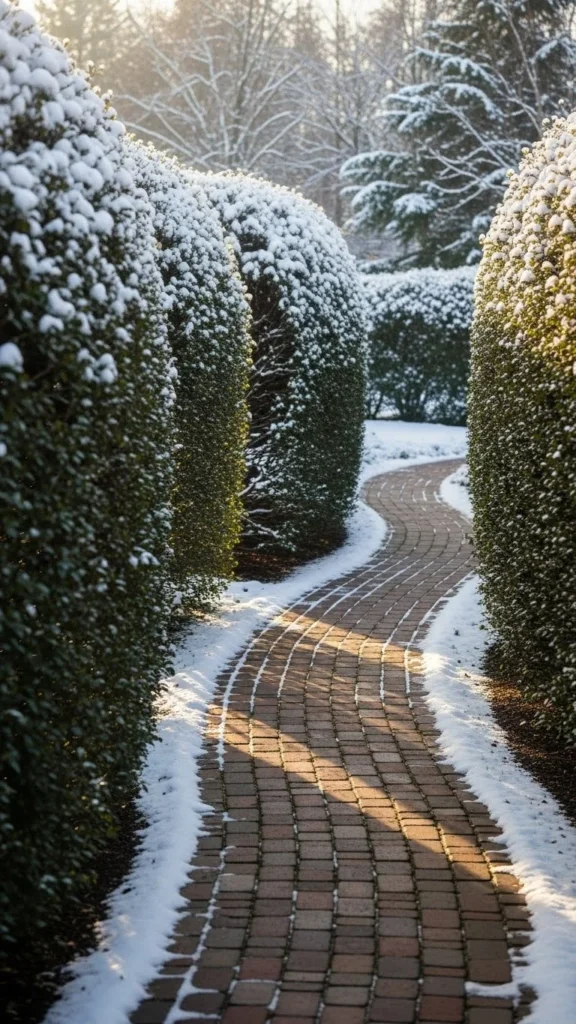
Brick pathways stay visually warm during winter, which helps balance the cooler landscape tones. A curved layout feels inviting, especially when framed with compact evergreens. Use reclaimed bricks for a low-cost option, and lay them in a herringbone or basket-weave pattern for extra grip in icy weather. Keep the joints narrow, and fill them with sand for better drainage. If your yard gets heavy snow, brush a narrow walkway rather than clearing fully—this keeps frost tucked into joints and adds texture. To dress it up, tuck small winter-friendly planters along the curves. Consider boxwoods, dwarf yews, or winter heather for long-lasting structure. Brick paths are wonderful near front entrances or between outdoor rooms.
5. Pine-Needle Woodland Trail
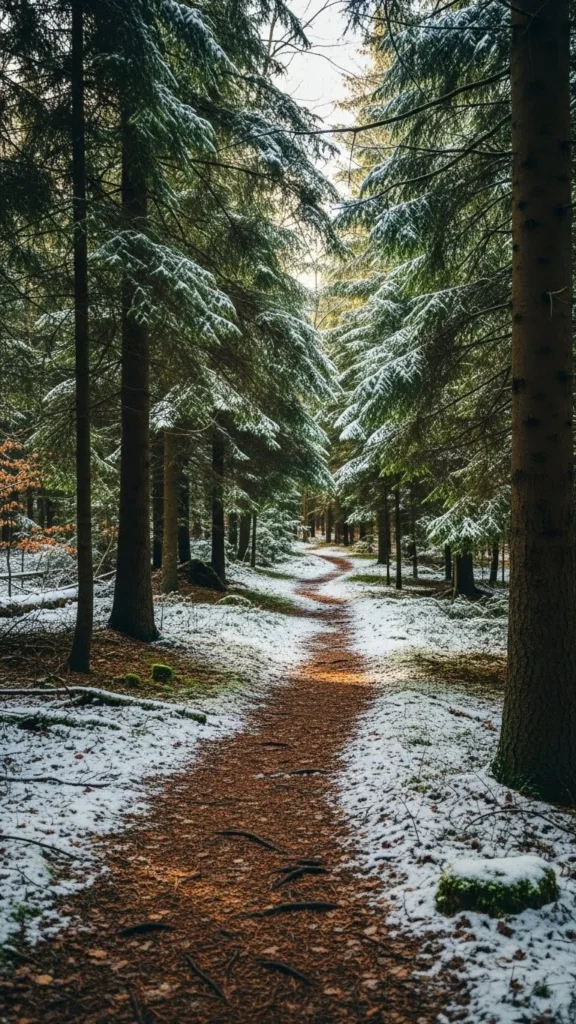
Pine-needle pathways create a gentle, quiet feel—perfect for wooded yards. The material is soft, earth-scented, and easy to refresh by sweeping new layers into place. It also helps suppress weeds and drains quickly after snow. Outline the trail with fallen branches, logs, or stones for natural definition. Add small stepping stones at muddy spots. Because the color stays warm even in winter, pine needles contrast beautifully with snow. You can enhance the look with small solar spots aimed upward into branches. If you have pine trees nearby, this path is nearly free to maintain. It works wonderfully for winding routes leading to hidden benches or birdwatching corners.
6. Frost-Kissed Cobblestone Lane
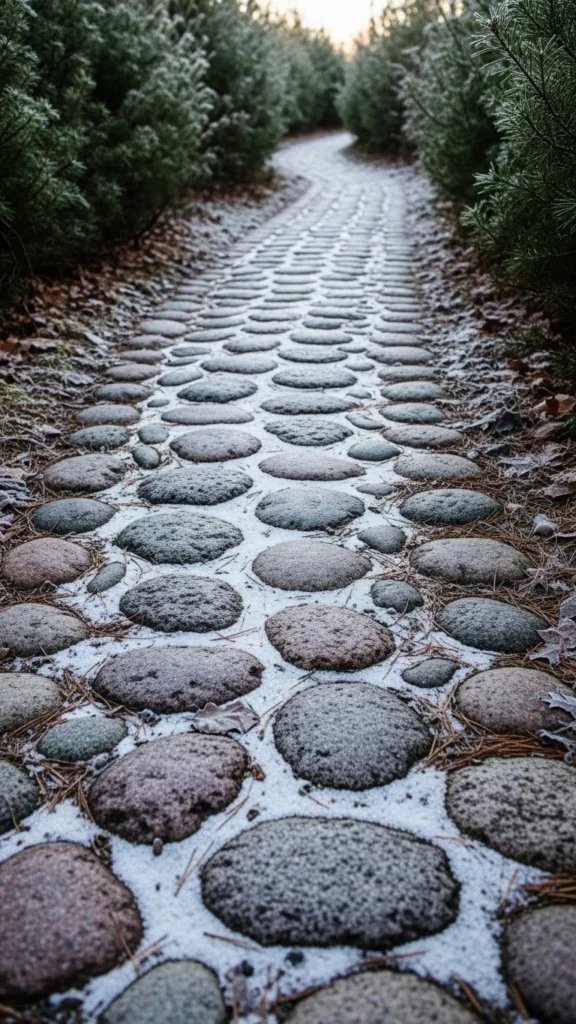
Cobblestone brings old-world charm that stands out in winter. The round stones catch frost beautifully, creating shimmering highlights when sunlight hits. Lay cobblestones on a compact base so they stay stable through freeze-thaw cycles. Keep the pathway slightly arched in the center so water drains easily. Add evergreen edges or low hedges to bring structure during bare months. For budget projects, mix real cobbles with textured concrete cobblestones to stretch materials further. A gentle curve helps soften the hard texture and makes the pathway feel storybook-like. This style is excellent for cottages, garden gates, and front yards.
7. River Rock Stream Path
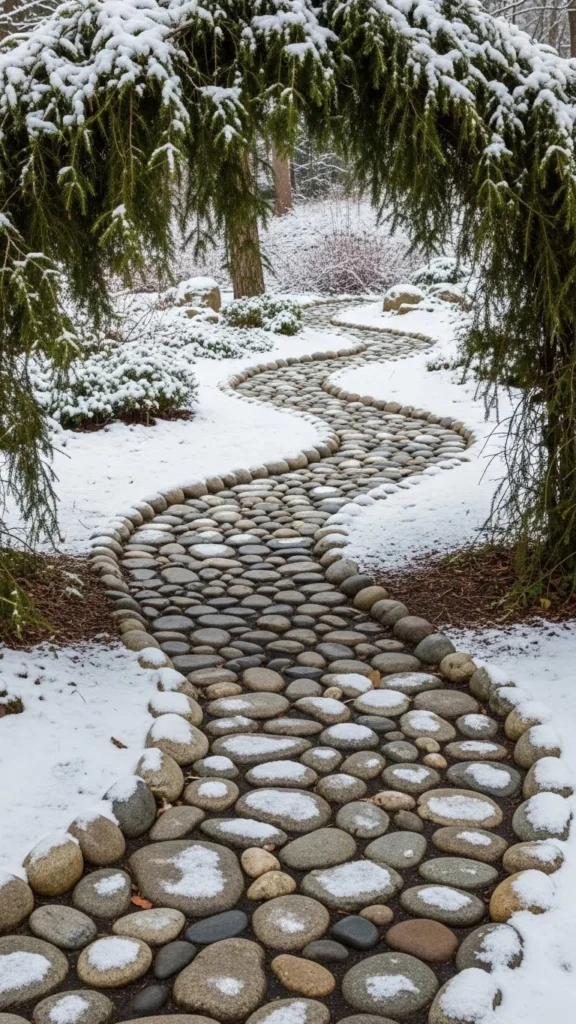
River rocks create a flowing, natural motion that works beautifully in winter. The smooth stones peek through snow and mimic a frozen stream. Use mixed sizes for character. Set them firmly in sand or mortar to keep the surface walkable. Add driftwood or low shrubs along the sides to help define the shape. If the rocks feel too cold-toned, introduce warm-toned pebbles near transition points. For a simple DIY, outline the path first, then fill with stones as you find them. This pathway pairs well with Japanese-style gardens, water features, or minimal plantings.
8. Compact Stepping-Stone Trail
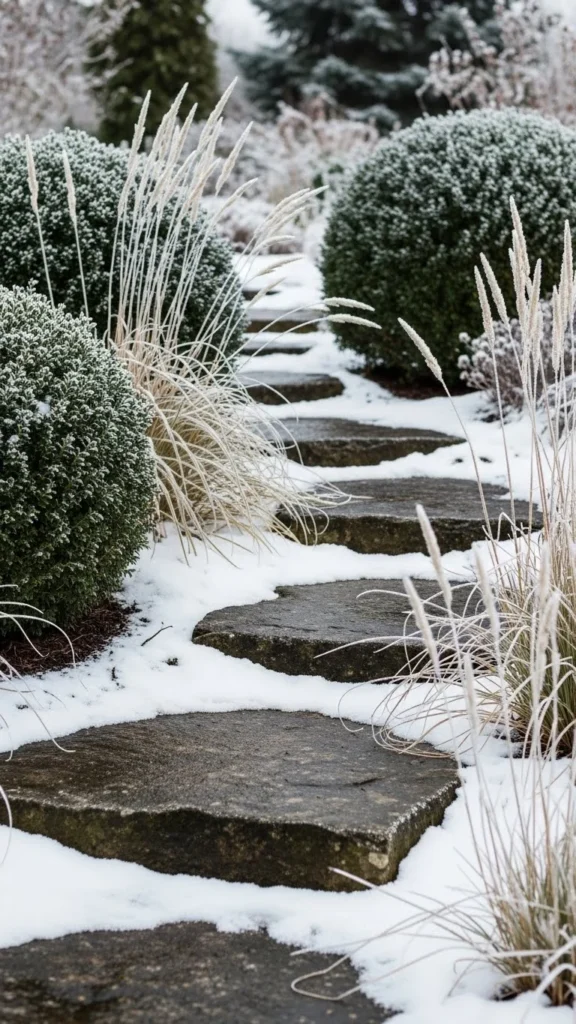
Stepping stones offer flexibility, affordability, and quick installation. They’re great for creating informal winter paths, especially when you want to protect garden beds from foot traffic. Choose large stones to make walking easy during icy days. Keep spacing equal so the rhythm feels intentional. Add bark mulch or pea gravel around each stone to keep it tidy. For a charming touch, place small evergreen plants or ceramic accents between sections. If snow piles heavily, leave the stones slightly visible by brushing off the tops only. This helps guide guests safely without clearing the entire area.
9. Snow-Lined Mossy Walk
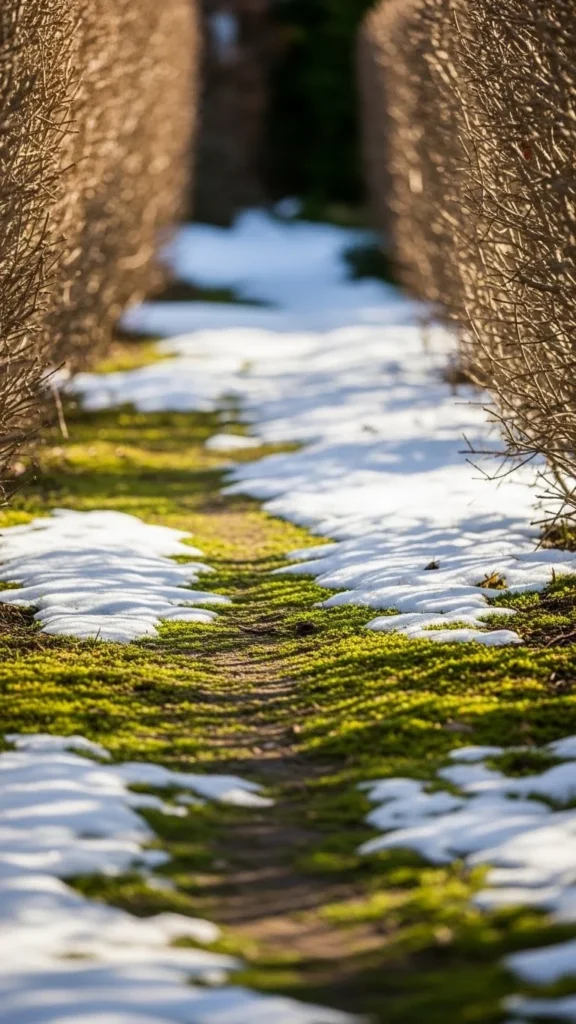
A mossy walkway brings softness to winter landscapes. Moss stays green even in very cold weather, offering a natural carpet that contrasts against snow. Use stepping stones surrounded by hardy moss varieties to keep the surface durable. Mist the moss occasionally during dry spells to keep the color rich. Add stone borders or logs to keep the space contained. For a budget trick, transplant small moss patches from shaded areas of your yard to help fill gaps. This pathway works beautifully under trees or along curved borders. It adds charm and calm through the quiet season.
10. Rustic Log Slice Path
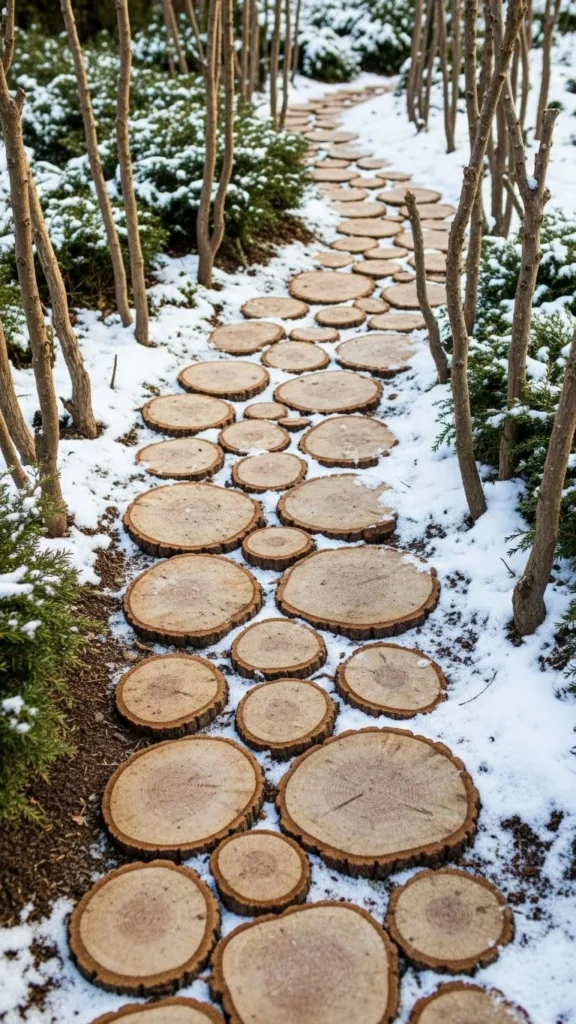
Log slice pathways feel warm and inviting, especially during cold months. Use thick slices from hardwood logs so they last longer. Arrange them in a varied pattern for a playful look. Add sand underneath each slice to help with leveling. Fill gaps with pea gravel or mulch to prevent shifting. Even when snow covers the edges, the round shapes peek through and create a cozy woodland feel. Add lantern stakes or small twig bundles to guide the eye. This style is perfect for cabins, play areas, or woodland gardens.
11. Minimal Gravel-and-Paver Mix
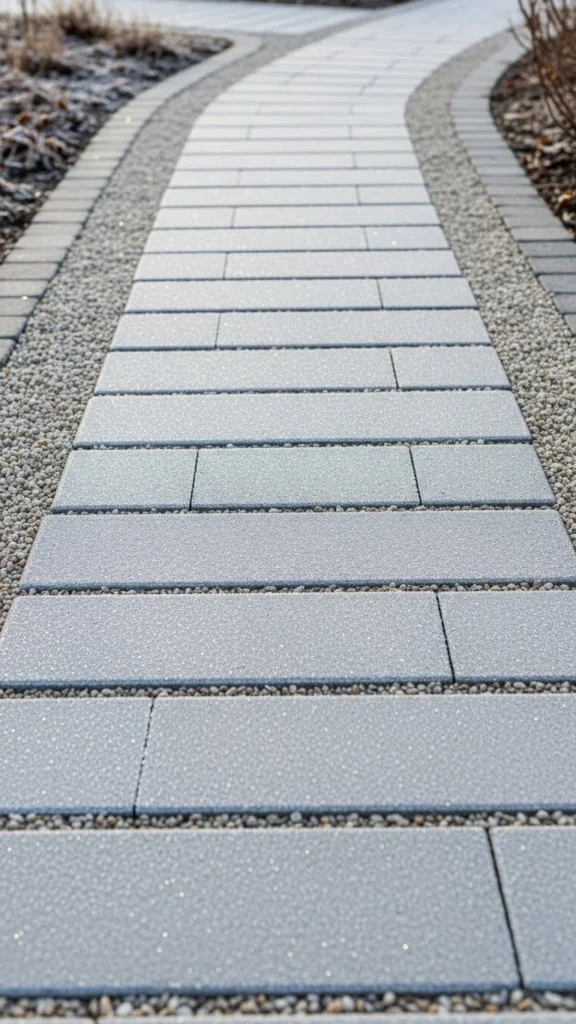
This layout blends modern style with winter durability. Use wide rectangular pavers spaced evenly in a grid or linear pattern. Fill the gaps with fine gravel for contrast. The combination handles freeze-thaw cycles well and requires little upkeep. For softness, add low-growing evergreens or small boulders at intervals. If you want more visual warmth, choose pavers with slight beige or clay tones. You can sweep away only the paver tops after snowfall to create a crisp pattern that still feels approachable. Great for side yards or near patios.
12. Hedge-Framed Straight Path
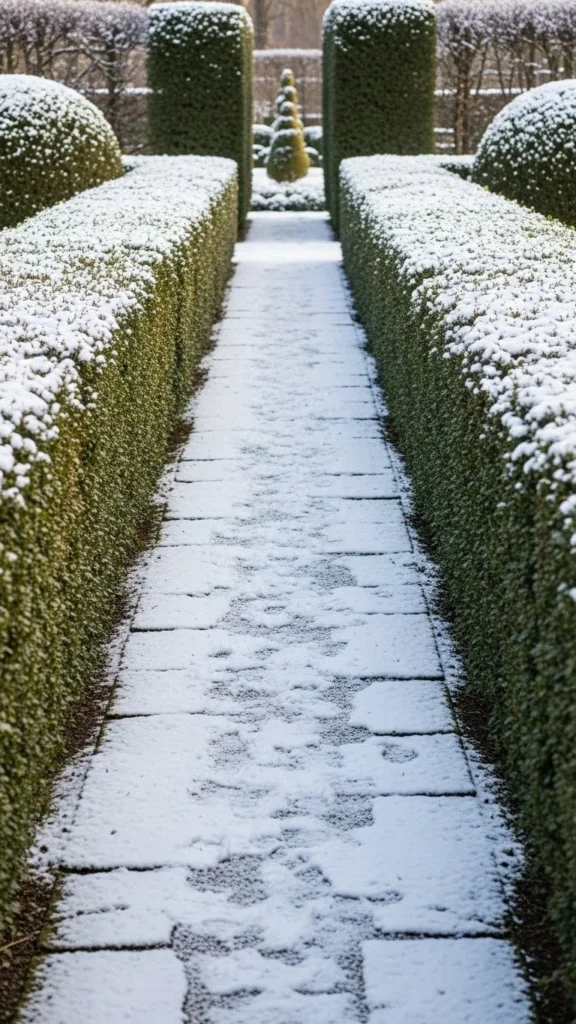
A straight pathway framed by hedges brings order to the winter garden. Evergreens keep their shape when everything else goes dormant. Use gravel, pavers, or brick depending on your style. Keep the hedges trimmed before the cold season so snow sits neatly on top. Add solar stake lights for clarity on dark evenings. If you want more softness, place winter pots at intervals along the hedges. This pathway style works especially well leading to a front door or a garden shed.
13. Twinkling Solar-Lighted Trail
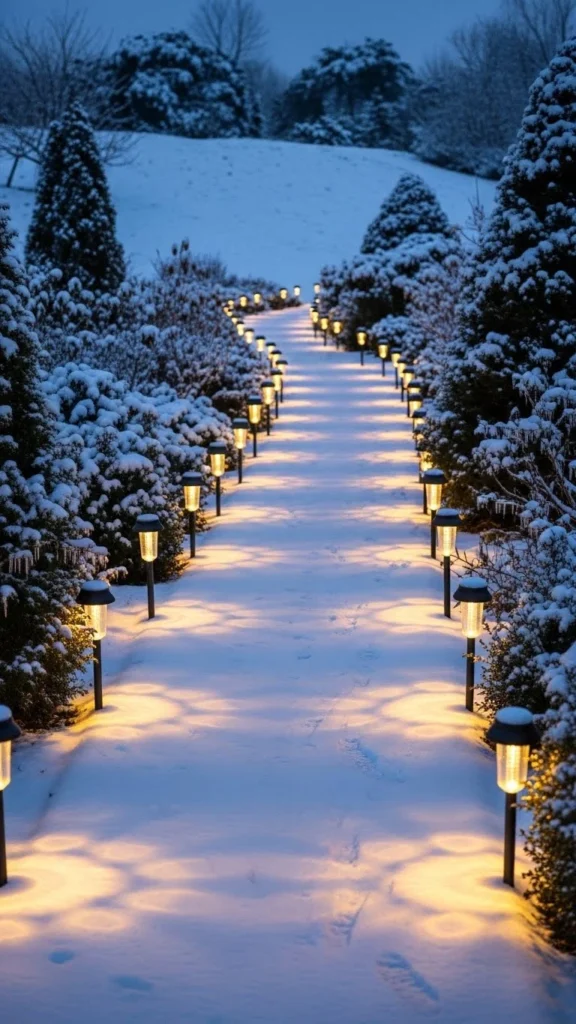
A lighted pathway brings warmth to long winter nights. Solar lights are easy to install and don’t require wiring. Pick warm-toned lights for a cozy feel. Space them evenly on both sides to guide the eye. Brush snow away from the tops to keep panels working. Add low shrubs or winter-friendly planters near each light for depth. This pathway is perfect for connecting driveways, porches, or seating areas that you still use through winter.
14. Crushed Granite Curve
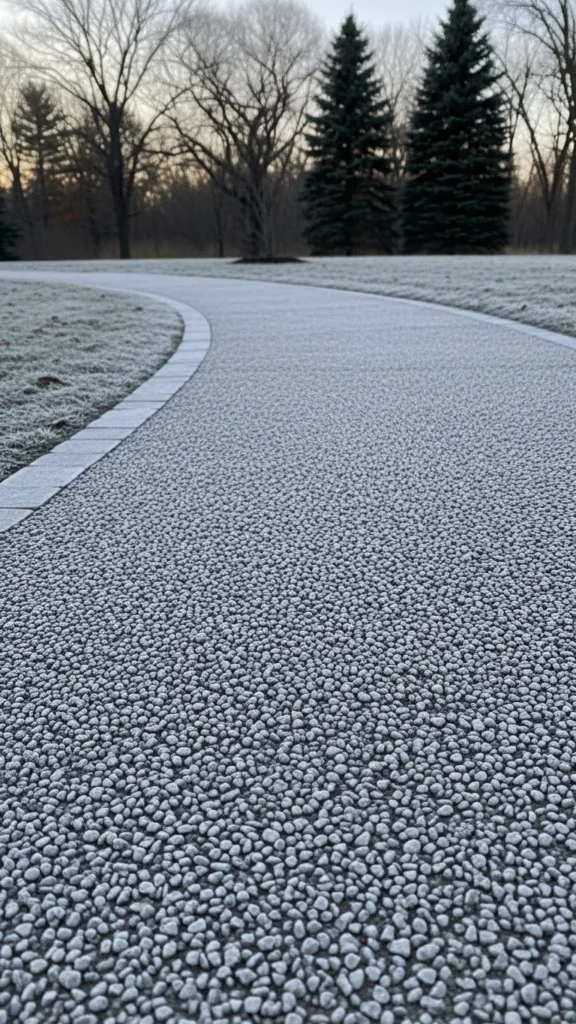
Crushed granite forms a firm yet natural-looking winter path. The tiny particles lock together well and create a smooth walking surface. Curved layouts work best because they soften the dense texture. Add a simple metal or stone edge to keep the surface neat after snow melts. For color, place dark boulders or evergreen spheres near the curves. Rake the granite lightly when it shifts after storms. This pathway works well for large yards or broad garden beds.
15. Reclaimed Brick-and-Stone Blend
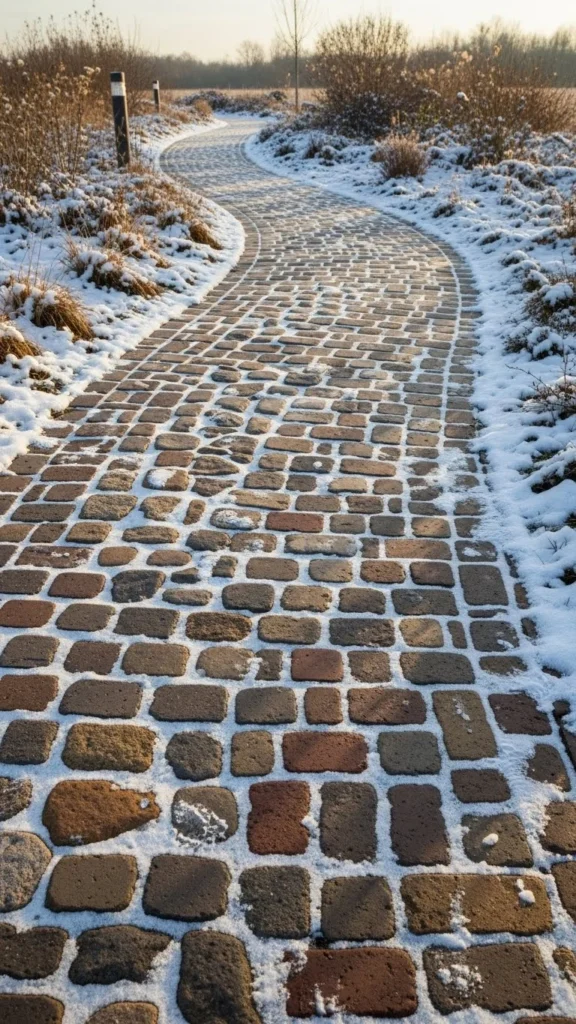
Mixing bricks and stones gives you a charming, collected-over-time look. It’s an affordable method if you have leftover materials from past projects. Create a patchwork layout or alternate materials in repeating rows. Add compact sand or gravel underneath to prevent movement during freeze cycles. The varied textures stand out beautifully when snow settles into the crevices. If you want more color, add small winter pots nearby. This path suits cottage-style gardens and creative yards.
16. Evergreen Archway Path
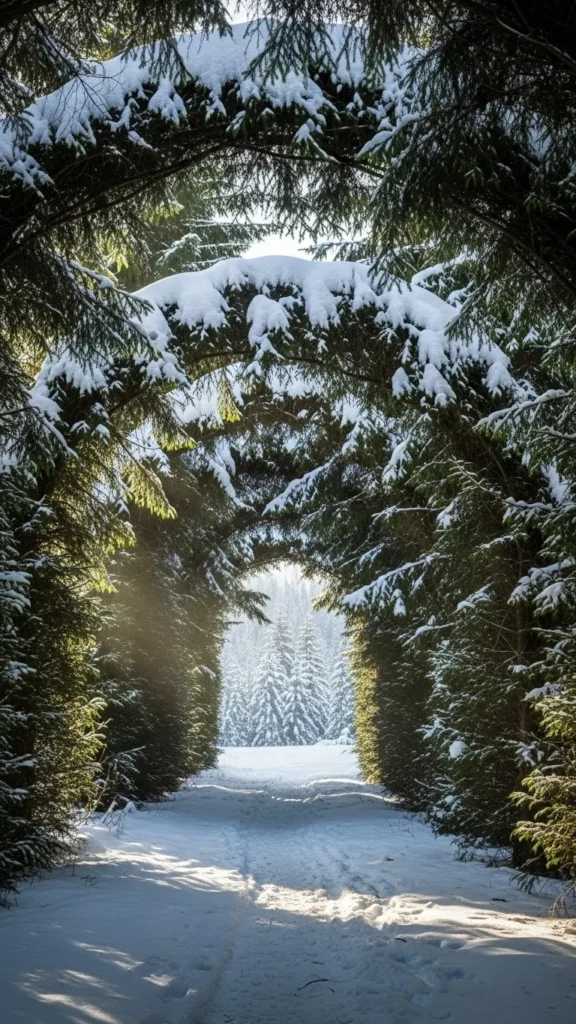
Archways bring a sense of invitation to a winter garden. Simply train tall evergreens or flexible shrubs to shape an overhead canopy. Keep the path material simple—gravel, mulch, or pavers all work. Add subtle lighting beneath the arches for nighttime charm. Brush snow gently from branches so they don’t droop too low. If you’re working with a small budget, start with two shrubs and slowly bend them inward over the years. This pathway feels magical and works well near garden entrances or along main walkways.
17. Frosty Woodland Bark Path
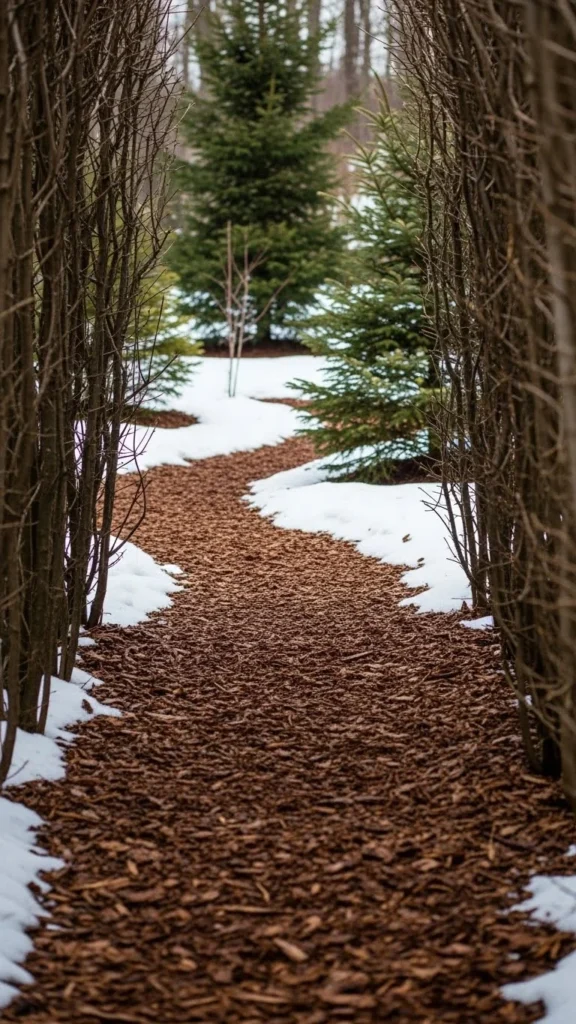
Bark mulch walkways are soft, inexpensive, and quick to refresh. The dark brown color contrasts well with snow, making the path easy to spot. Keep the mulch layer thick so it insulates the soil underneath. Add log borders or stone accents for shape. Sweep mulch back into place after heavy wind or snow. For a touch of charm, tuck small bird feeders or twig bundles near the path. This style works nicely in natural, low-maintenance gardens.
18. Snow-Framed Boulder Walk
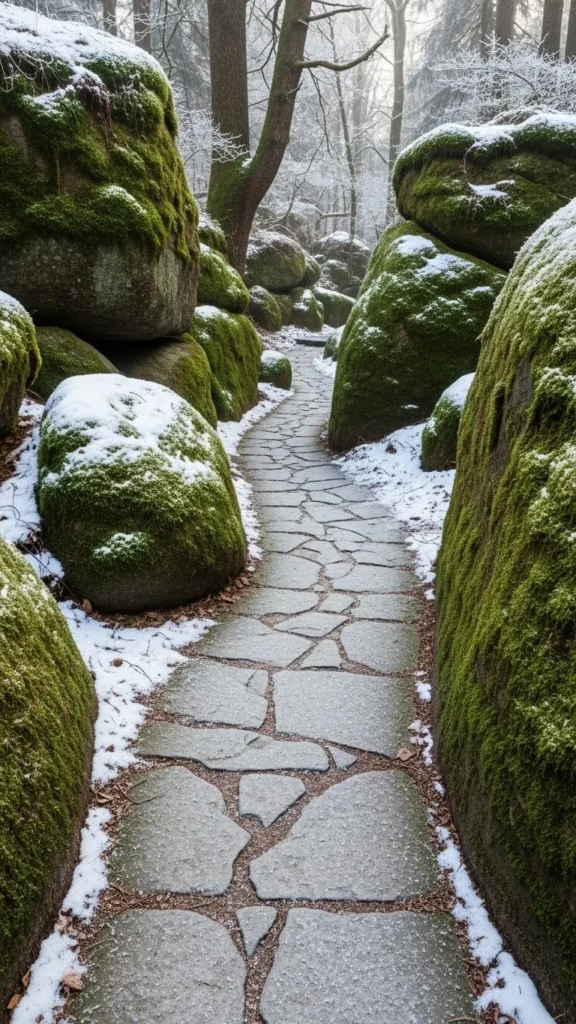
Boulders add drama to winter landscapes. They hold frost beautifully and help guide the path naturally. Use pea gravel, compact sand, or stepping stones between the rocks. If your yard slopes, boulders also help prevent soil movement. Add evergreens at the base of each boulder to soften the edges. For thriftier projects, use smaller stones for most of the path and save large boulders for key moments. This design works well in sloped yards or rock gardens.
19. White Pebble Ribbon
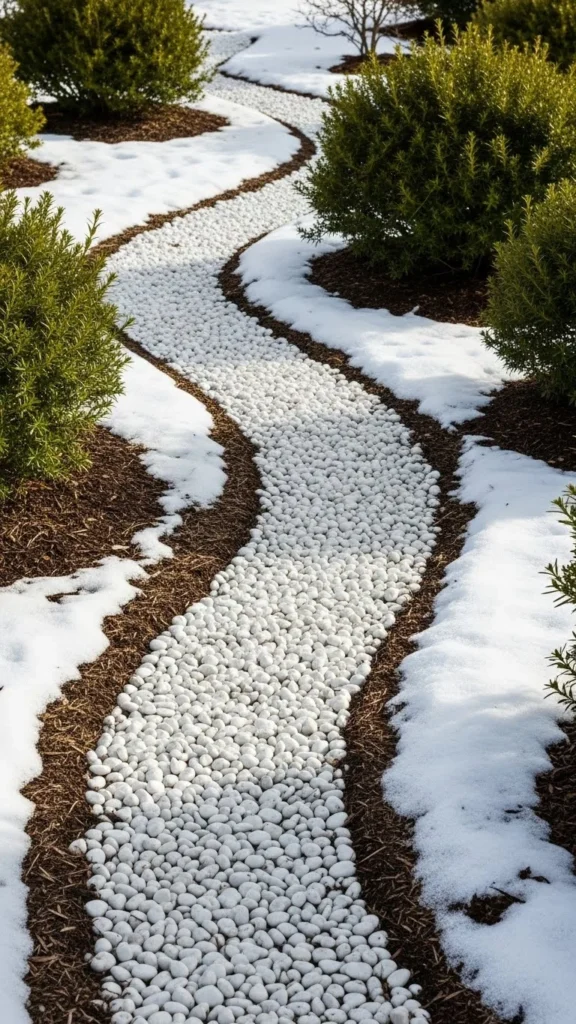
White pebbles shine during winter and brighten even dark corners. They reflect light nicely on snowy days. Use landscape fabric beneath the pebbles to prevent weeds and shifting. Add dark edging stones for contrast. If the pebbles scatter after storms, sweep them back into place with a wide broom. You can also mix in a few larger stones to create a varied pattern. This pathway is excellent for modern yards that need brightness during cold seasons.
20. Low-Glow Rope Light Path
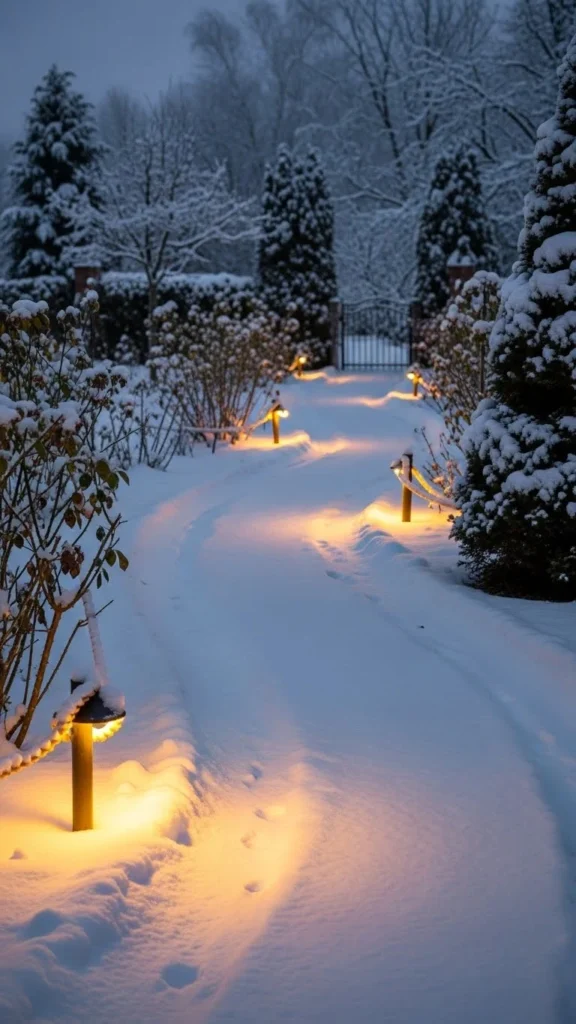
Rope lighting offers a gentle glow that highlights curved or straight winter pathways. Install it slightly above soil level to avoid snow coverage. Choose warm-toned lighting for a cozy feel. Add gravel or stepping stones in the center to keep footing stable. This is a quick upgrade when you want safe nighttime visibility. Replace sections easily if damage occurs. Perfect for guiding guests toward patios, porches, or driveways.
21. Slate Tile Walkway
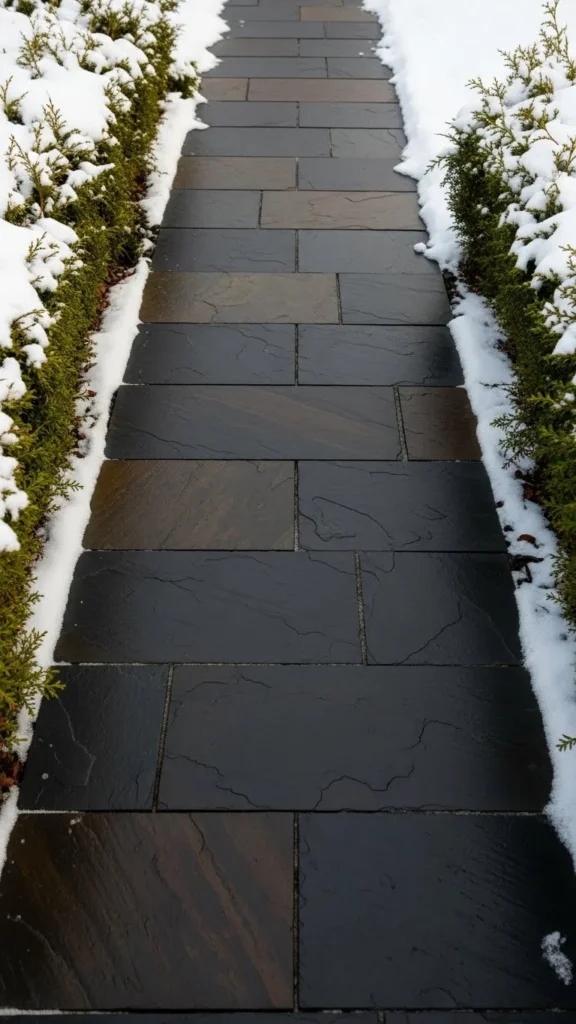
Slate brings a rich, natural look to winter gardens. The darker tones look sleek against snow. Install tiles on a compact base so they stay level. Keep spacing tight for a clean finish. Add evergreens or sculptural grasses nearby for softness. If the tiles develop frost, brush gently rather than scraping to preserve the surface. For a budget option, lay slate pieces in a looser pattern with gravel filler. This pathway suits modern or rustic gardens.
22. Mulch-and-Stone Hybrid Trail
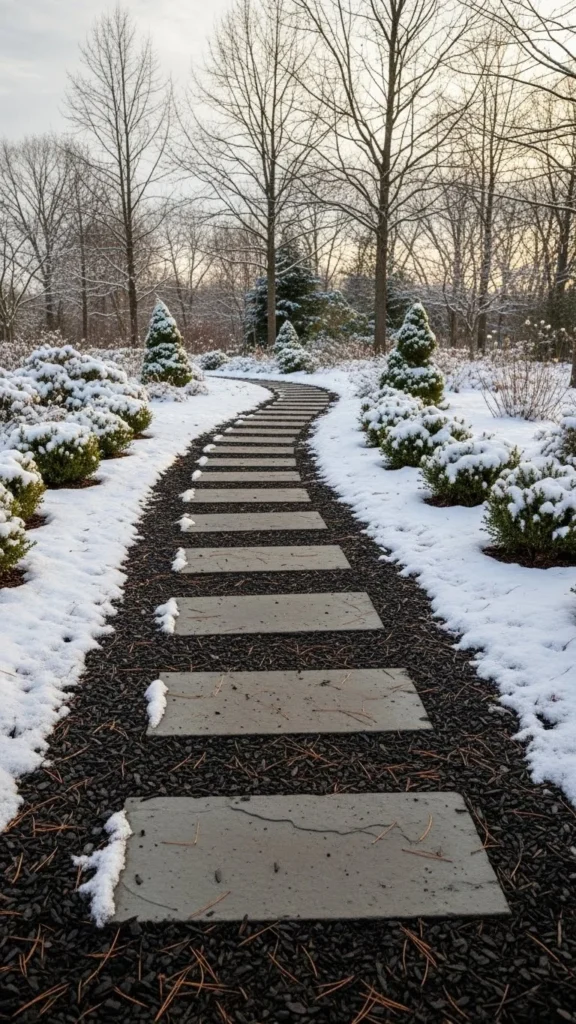
Mixing mulch and stone helps break up large spaces and adds visual interest. Use stones at intervals to create stepping points, with mulch in between. This layout drains well and stays walkable through winter. Replace mulch sections each season for a fresh look. Add winter shrubs or groundcovers along both sides to keep the trail lively. If working with a tight budget, use recycled pavers or found stones for the stepping points. This approach suits informal gardens.
23. Cedar Chip Pathway
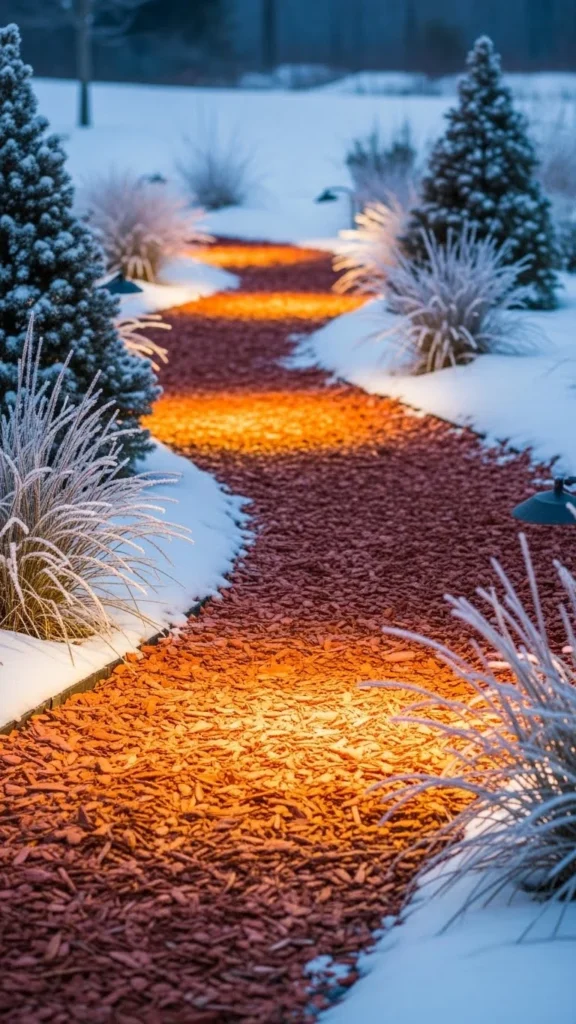
Cedar chips smell pleasant and resist decay. Their warm color pops against snow. Spread the chips thickly so they cushion each step. Add simple log or stone edging to define the space. If chips scatter after storms, sweep them back into place. Refreshing the top layer once a year keeps everything tidy. Cedar works beautifully near vegetable gardens, orchards, or kids’ areas, especially when you want softness during winter.
24. Frost-Friendly Circular Courtyard Path
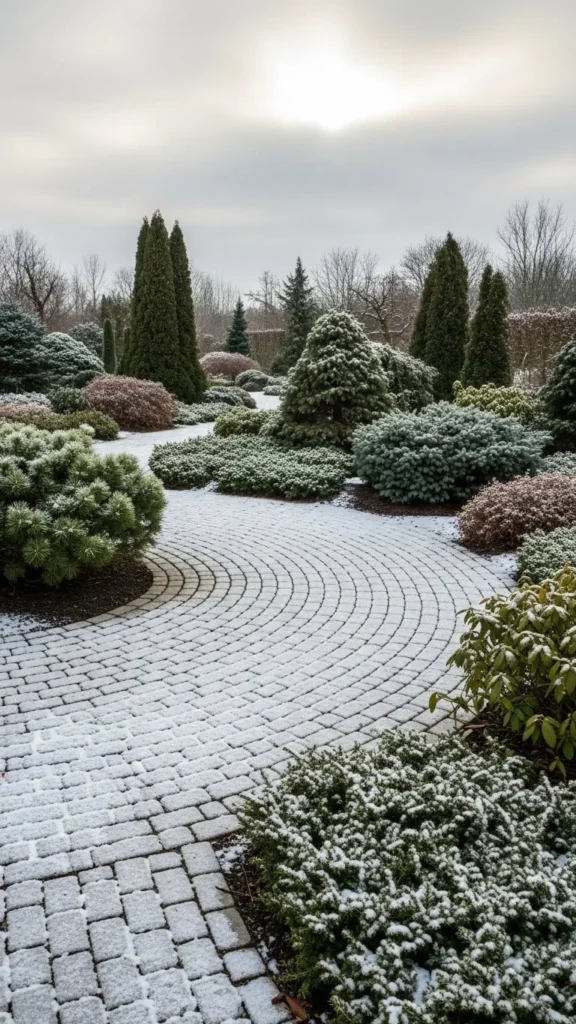
Circular layouts bring calm and symmetry to winter yards. Use pavers or bricks arranged in rings. Keep joints narrow so snow sits neatly between them. Add a small winter planter or statue in the center for a focal point. If you want extra interest, alternate paver colors in subtle tones. This design works well near patios or in larger open garden spaces.
25. Stepped Slope Pathway
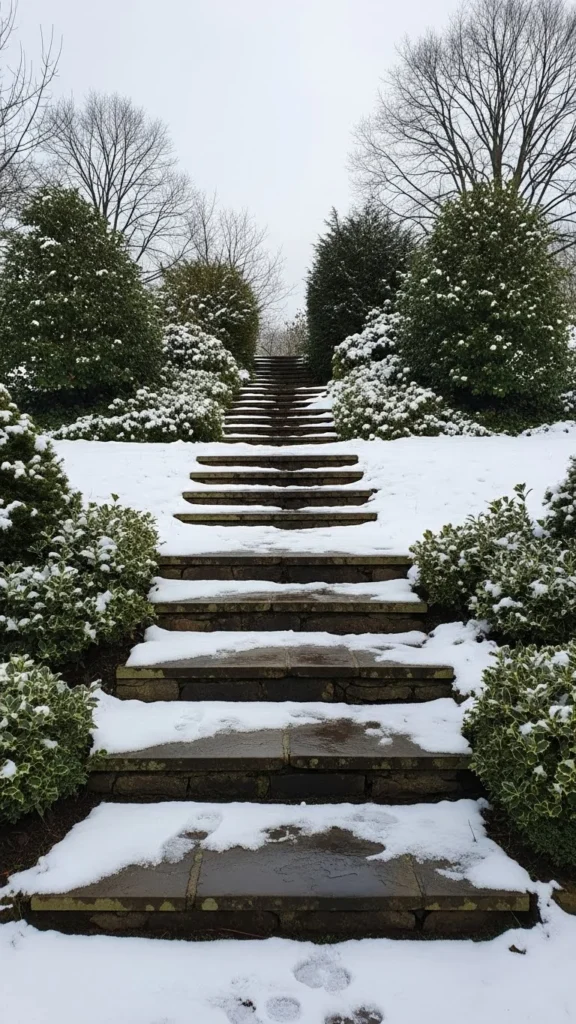
Stepped pathways make sloped yards safer during winter. Use wide stones or timber risers for stable footing. Keep step height low for comfort during icy days. Add gravel or compact soil between steps. Place small evergreens or boulders along the slope for support and visual weight. Sweep snow from the center of each step to keep the route clear. This pathway is ideal for hillside yards, terraced gardens, or raised beds.
26. Twig-Lined Narrow Passage

Twig borders create a charming handmade feel. Gather fallen branches and bundle them with natural twine. Line them along both sides of a mulch or gravel path. Add small stones between bundles for stability. Replace bundles as needed—they’re nearly free if sourced from your yard. This pathway feels whimsical and works well near play areas or woodland corners.
27. Winterberry Accent Path
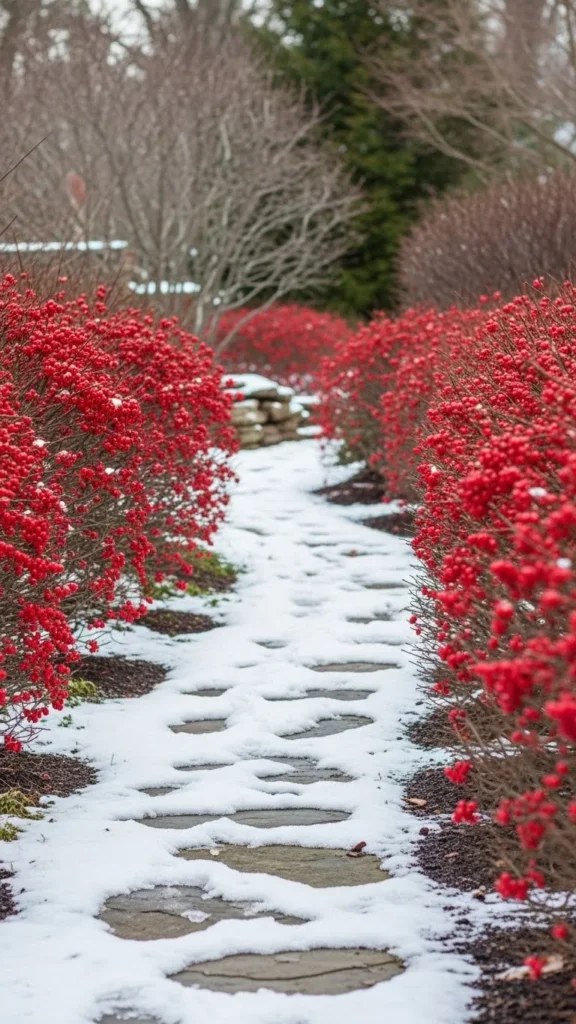
Winterberry shrubs brighten gardens when little else offers color. Their red berries pop beautifully beside a simple gravel or stepping-stone path. Keep shrubs pruned so they don’t crowd the walkway. Add small evergreen companions for balance. If you want extra charm, place a decorative bench or birdbath at the end of the path. This layout works wonderfully in front yards or seating areas.
Conclusion
Winter pathways turn quiet gardens into welcoming spaces full of shape, structure, and charm. With simple materials, thoughtful edges, and a few evergreen touches, your yard can stay inviting even during the coldest months. Choose one idea or mix several to create a path that fits your space and brings year-round enjoyment.

Leave a Reply