

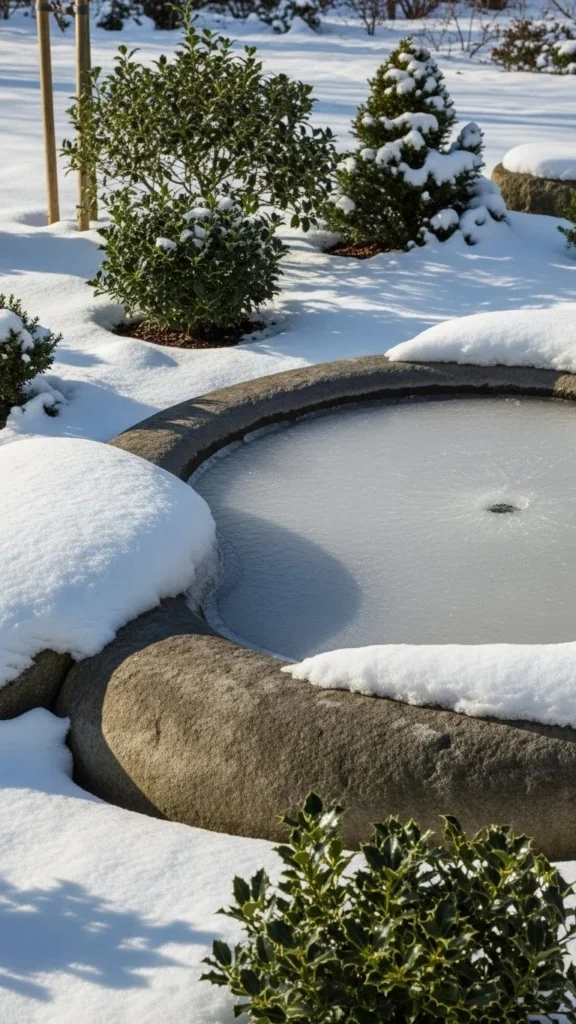
Cold weather doesn’t mean your outdoor space has to lose charm. The right water features keep their visual appeal even when temperatures drop. Ice, snow, and still water can add texture and contrast when paired with sturdy materials and smart placement. These ideas focus on durability, calm movement, and easy upkeep. Each option below works well for winter conditions and can be adapted with budget-friendly materials or simple DIY tweaks.
1. Stone Basin With Floating Ice Patterns
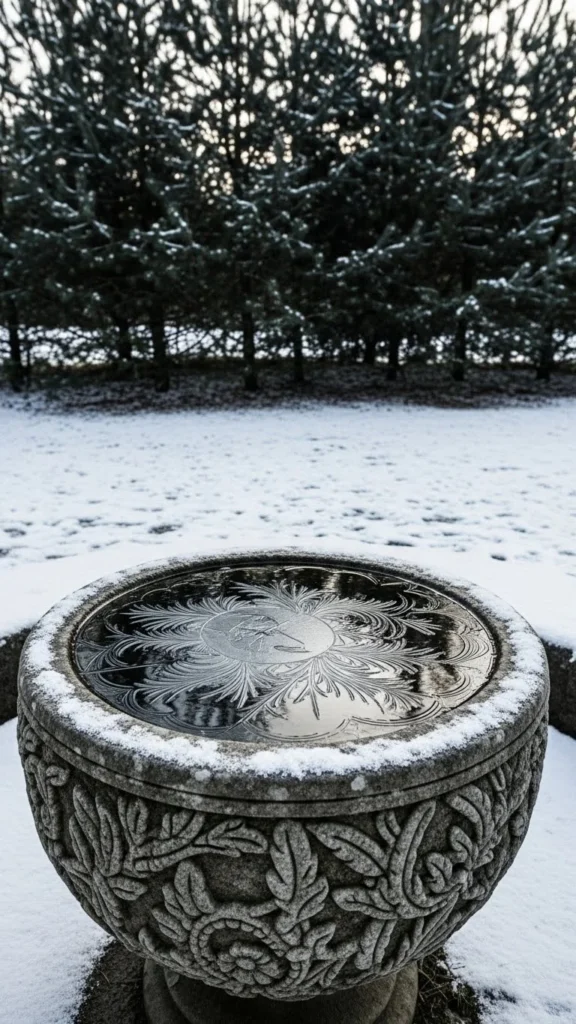
A stone basin holds up well during cold months. Thick stone resists cracking and keeps its shape through freeze cycles. When water freezes lightly, it forms natural patterns that feel decorative without extra effort. Place the basin where melting snow can refill it slowly.
For a budget option, use a concrete bowl sealed for outdoor use. Keep water levels low to allow room for expansion. Skip pumps in deep winter. Still water works just fine here.
Add visual weight by placing gravel or flat stones around the base. This helps with drainage and keeps the area tidy. Even without movement, the basin draws attention through texture and contrast.
2. Tiered Rock Fountain Built for Stillness
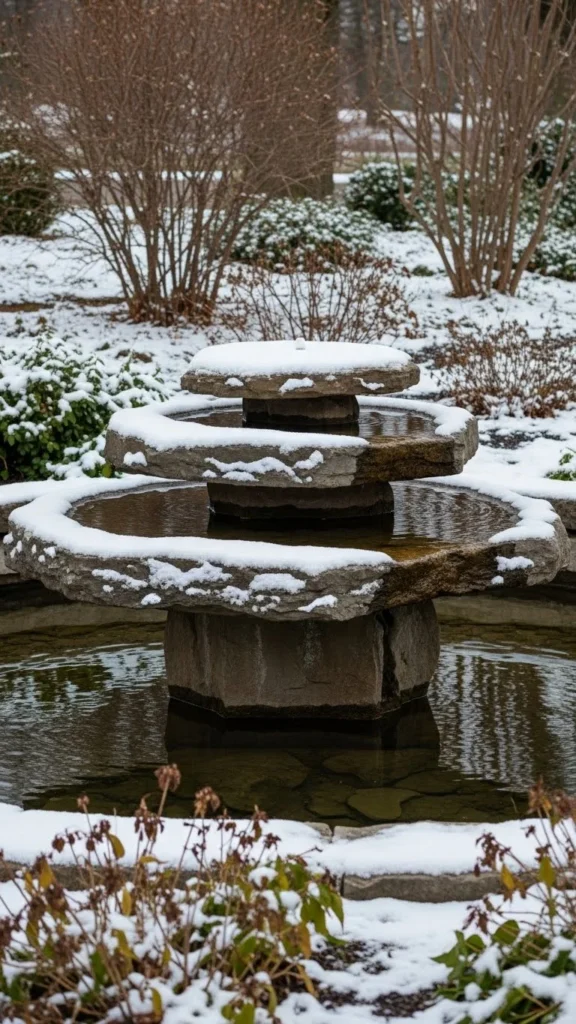
Tiered rock fountains can stay attractive even when turned off. Natural stone blends well with winter gardens. When water settles into shallow levels, ice forms in layers that echo the stone shape.
You can build a simple version using stacked flat rocks and a hidden basin. During freezing weather, shut off the pump and let the structure act as sculpture.
Choose rocks with rough edges for grip and visual interest. Keep the fountain slightly elevated to avoid ground frost pressure. This setup stays calm, grounded, and visually balanced all season.
3. Frost-Tolerant Ceramic Water Bowl
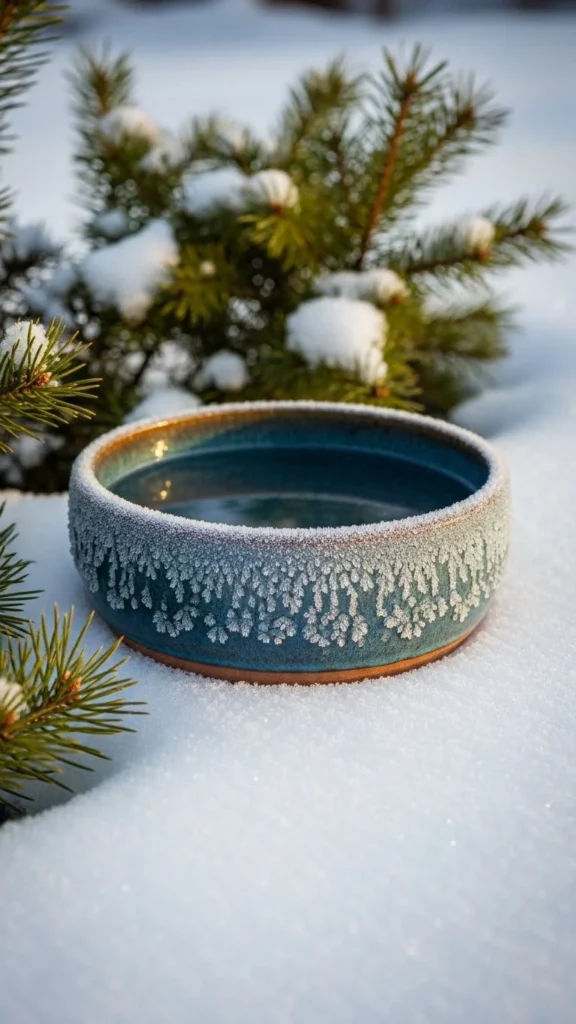
High-fired ceramic bowls rated for outdoor use can handle cold when water levels are managed. Their glazed surfaces reflect light even on gray days.
To save money, look for end-of-season garden bowls labeled frost-safe. Keep water at half depth so ice has space to expand upward.
Place the bowl near shrubs to block harsh wind. Even when frozen, the glossy surface adds contrast against snow and bark. This is an easy way to keep a water element visible without moving parts.
4. Granite Block With Carved Water Channel

Granite handles cold extremely well. A single block with a carved groove can collect rain and snowmelt. When frozen, the channel becomes a subtle design detail.
You can create a similar look using a reclaimed stone slab and a masonry chisel. No pump required. Just let nature do the work.
Set the block on compacted gravel for stability. This feature works well near walkways or entrances where simple lines stand out in winter light.
5. Raised Concrete Water Table
[Image Prompt: A modern concrete water table raised on a pedestal, shallow water with ice edges, winter garden setting, clean lines, natural daylight.]
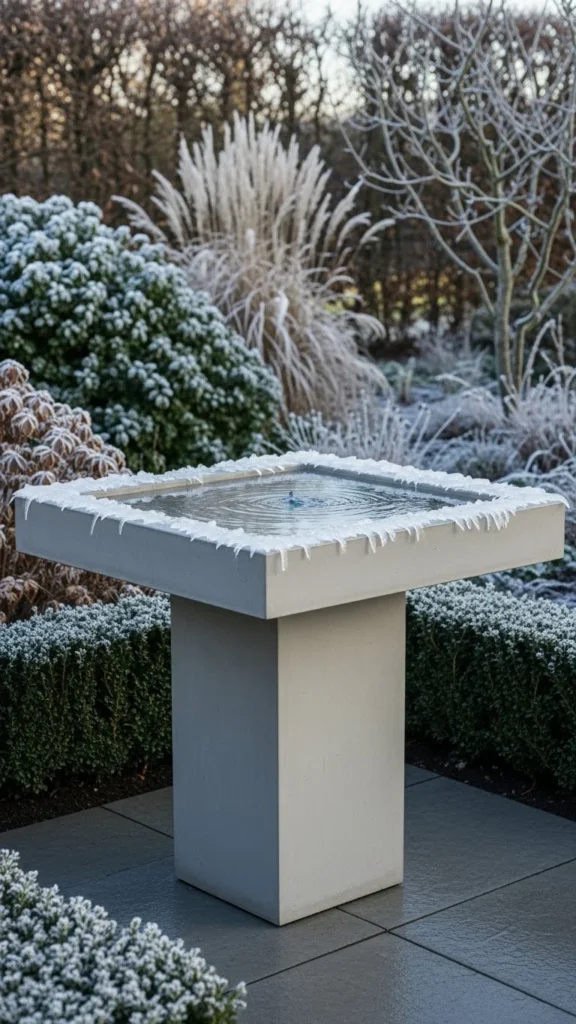
Concrete water tables bring structure to cold-season gardens. Raised designs reduce ground freeze stress. When water turns still, the surface becomes reflective or lightly iced.
DIY versions can be poured using molds and reinforced mix. Seal thoroughly. Keep water shallow.
Pair with metal or stone planters nearby for balance. This feature reads as modern sculpture when temperatures drop.
6. Natural Boulder With Water Pocket
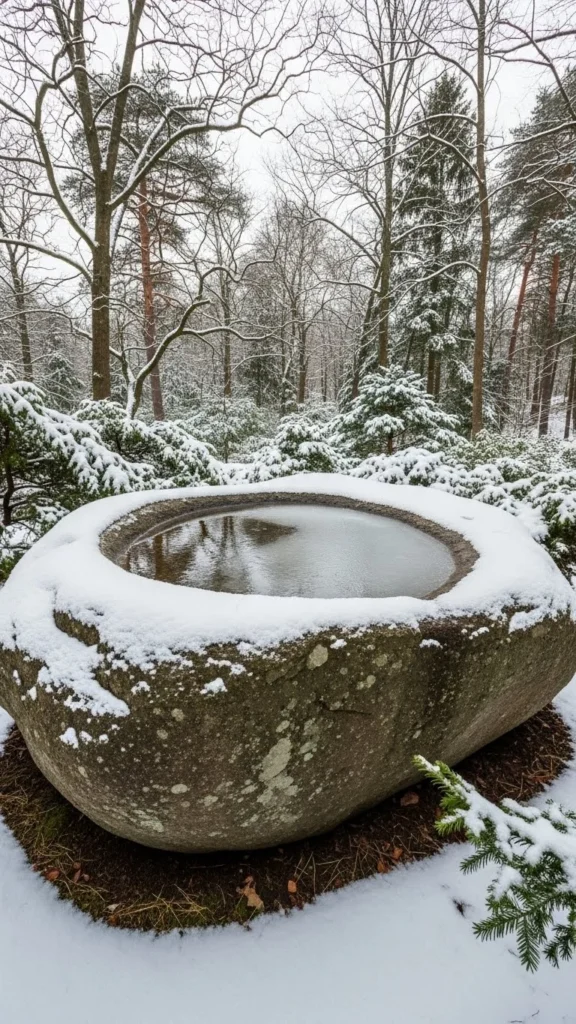
A boulder with a natural dip collects water naturally. Ice forms without damaging the stone.
If you don’t have one, carve a shallow pocket into a large rock using masonry tools. Keep edges smooth.
Position it where snow falls gently rather than drifting. This feature feels organic and requires almost no care.
7. Metal Basin With Patina Finish
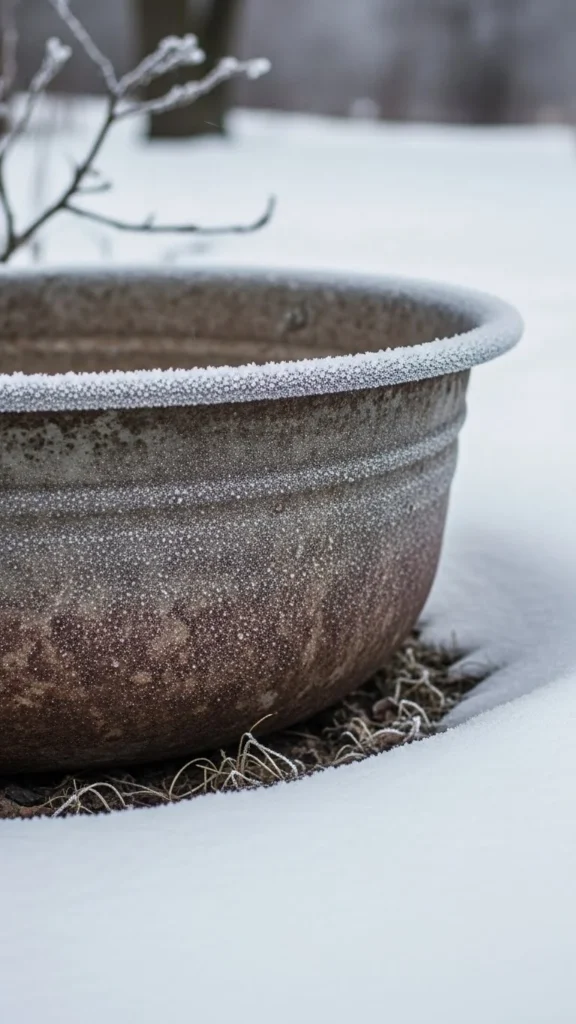
Thick metal basins develop surface texture over time. Cold weather adds to the look. Ice clings to edges without harm when water levels stay low.
Use reclaimed steel or iron planters as basins. Drill drainage holes just below rim level.
Set on stone feet to keep it off frozen ground. The contrast between metal, ice, and snow adds depth.
8. Japanese-Inspired Stone Tsukubai
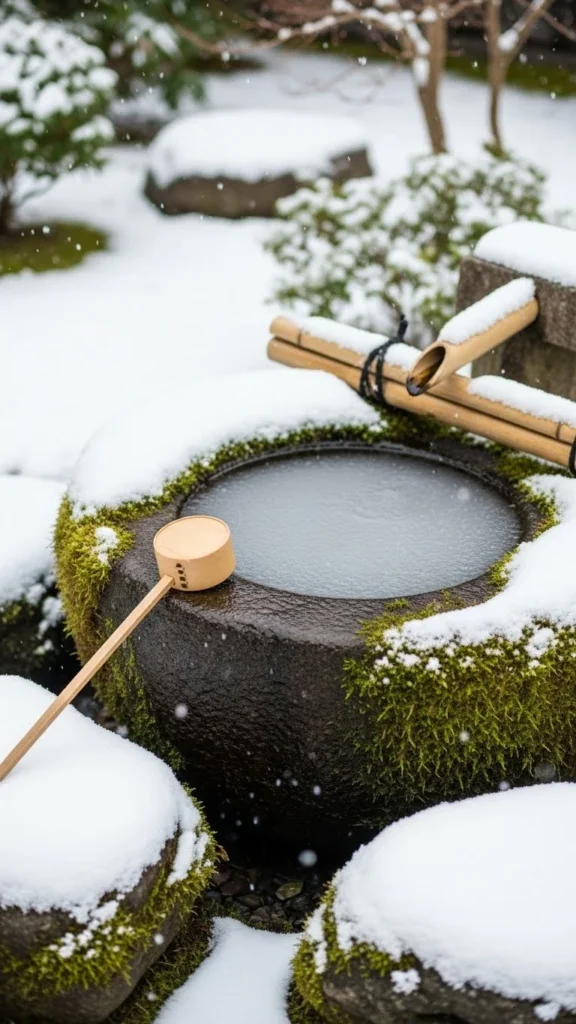
Low stone basins used in Japanese gardens work well in cold climates. Their simple form suits winter calm.
DIY versions can be made from carved stone bowls. Skip running water in freezing weather.
Place near evergreens or gravel paths. Ice enhances the quiet feel without any extra setup.
9. Shallow Reflecting Pool With Winter Shutdown
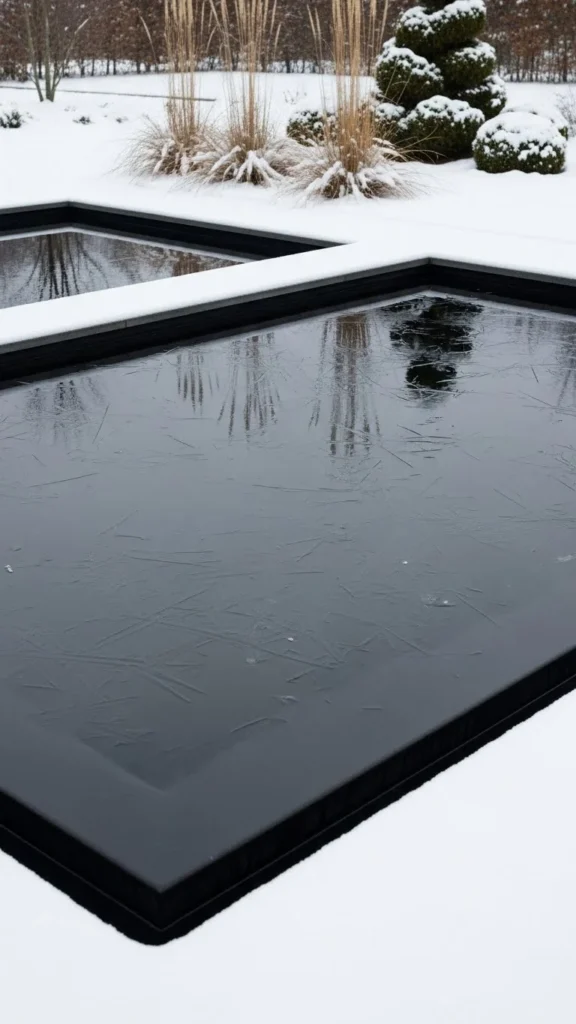
A shallow pool doesn’t lose appeal when pumps are off. Clean lines remain visible under ice.
Budget builds use pond liners framed with stone or concrete edging. Drain slightly before hard freezes.
Keep debris out to maintain a clean look. Even frozen, the pool reflects sky and branches.
10. Carved Sandstone Trough
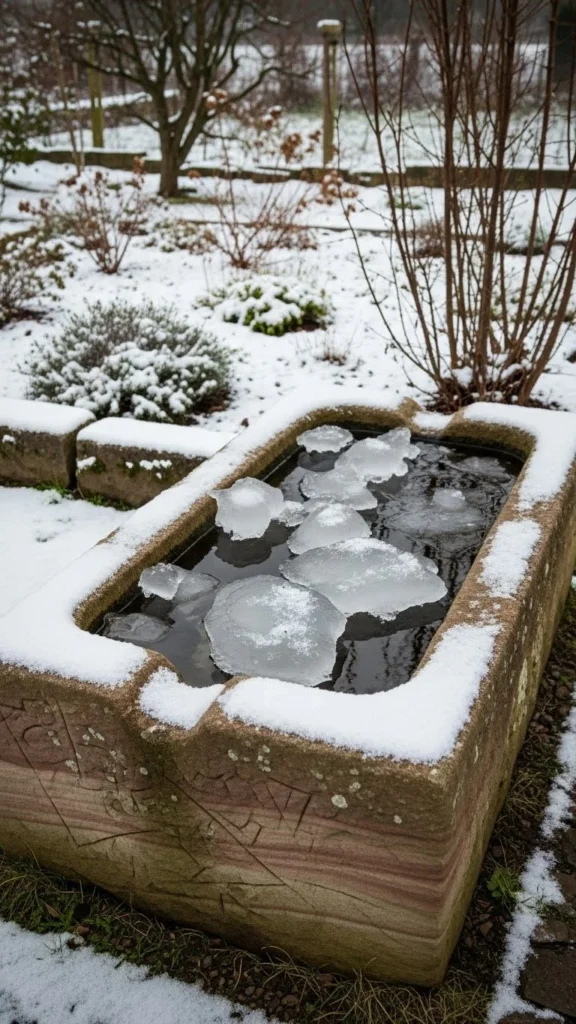
Old-style troughs made of sandstone hold up well. Their porous surface adds texture when iced.
Look for reclaimed stone pieces. Seal lightly but allow breathing.
Place where water won’t overflow onto paths. This feature reads rustic and grounded all winter.
11. Minimalist Stone Cube Fountain
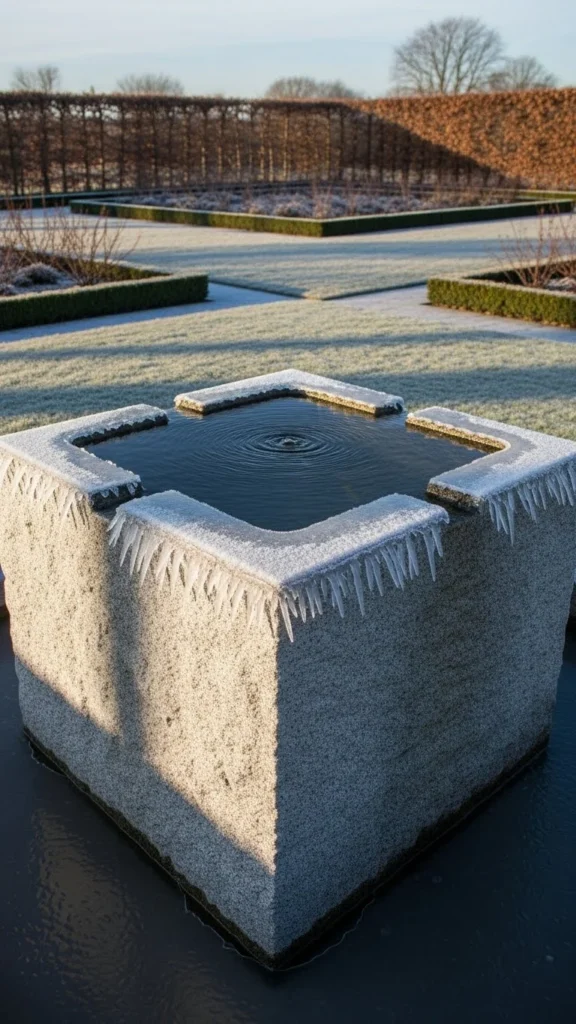
Stone cubes feel architectural. When pumps stop, the top surface becomes a visual plane for ice.
DIY using precut stone blocks stacked over a basin. Turn off flow early.
This works well in small courtyards where structure matters more than motion.
12. River Rock Bowl Set Into Gravel
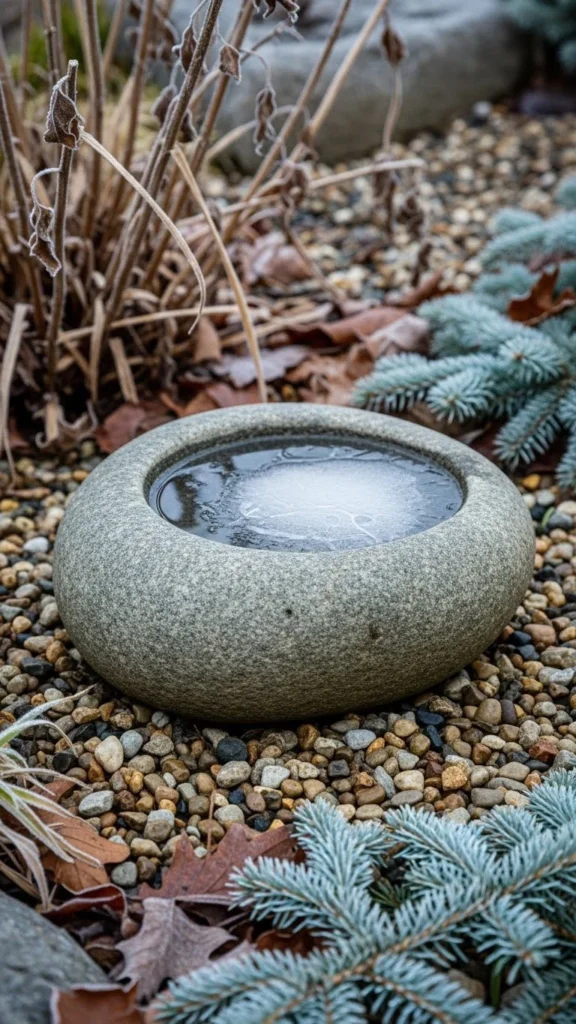
Rounded rock bowls sit naturally in winter settings. Gravel helps drainage and stability.
Use a carved stone bowl or thick concrete version. Keep water shallow.
Surround with mixed stone sizes for visual rhythm even under snow.
13. Vertical Stone Slab With Catch Basin
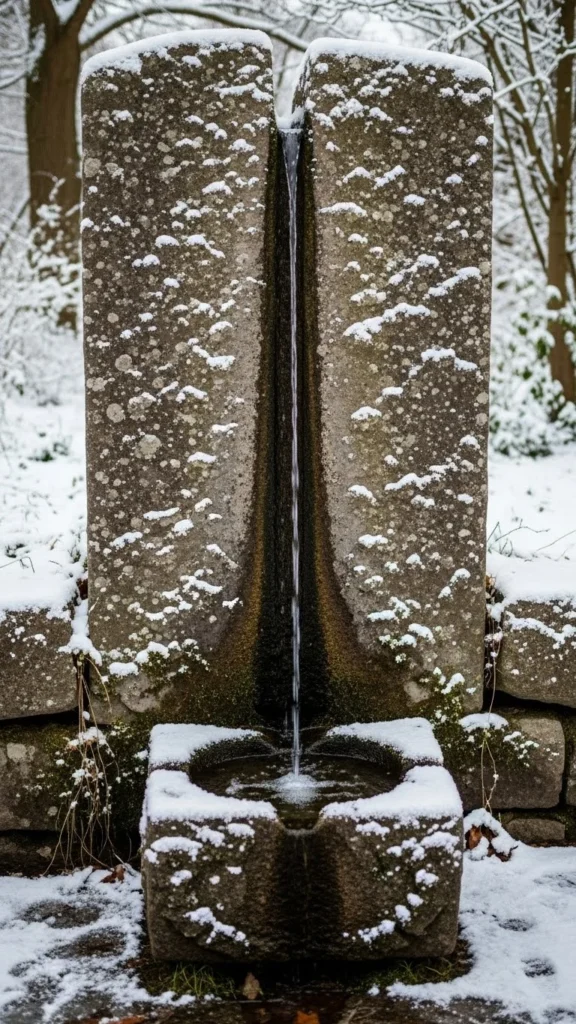
Vertical slabs stay visually strong when water stops. Ice traces carved lines.
Carve a simple groove or attach a narrow stone ledge.
This adds height and interest without complex mechanics.
14. Low Garden Pond With Stone Edge
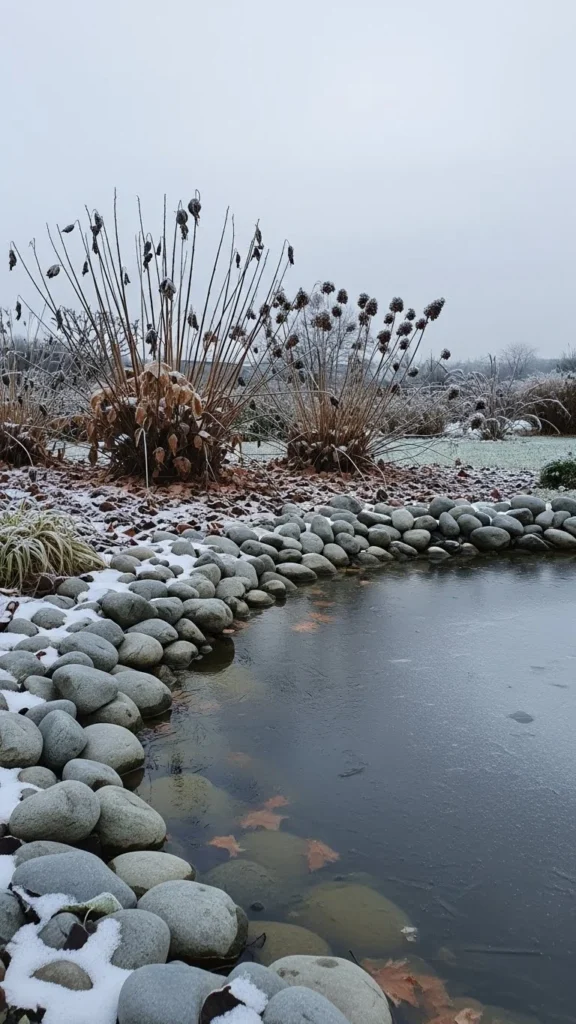
Small ponds can stay attractive when managed for winter. Ice adds pattern.
Lower water slightly and remove pumps. Stone edges keep shape visible.
Keep it simple and clear of clutter.
15. Cast Stone Urn With Water
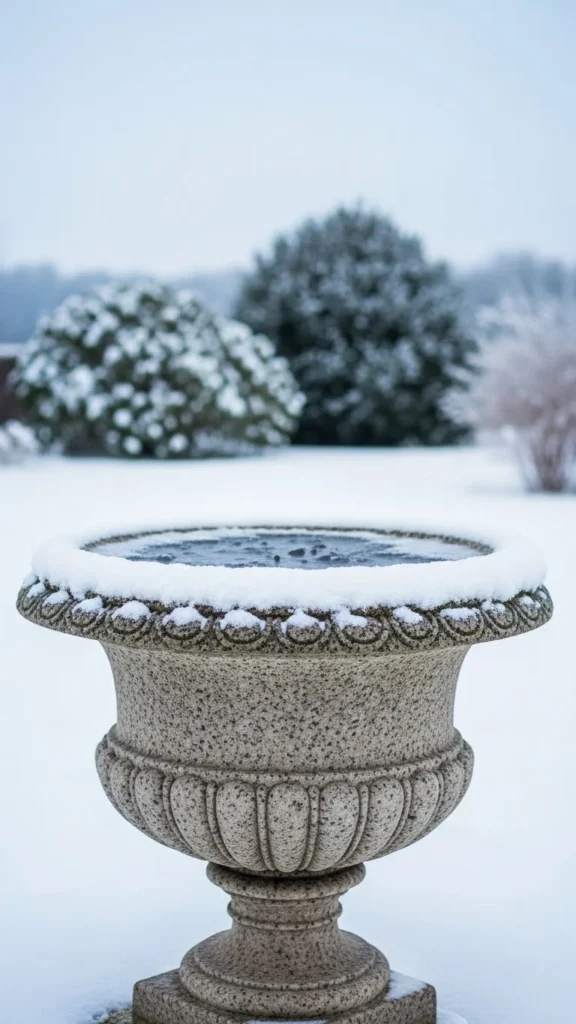
Cast stone urns handle cold better than thin pottery.
Use as a water feature by filling partially. Place on a solid base.
Even frozen, the form reads decorative.
16. Reclaimed Stone Sink Basin
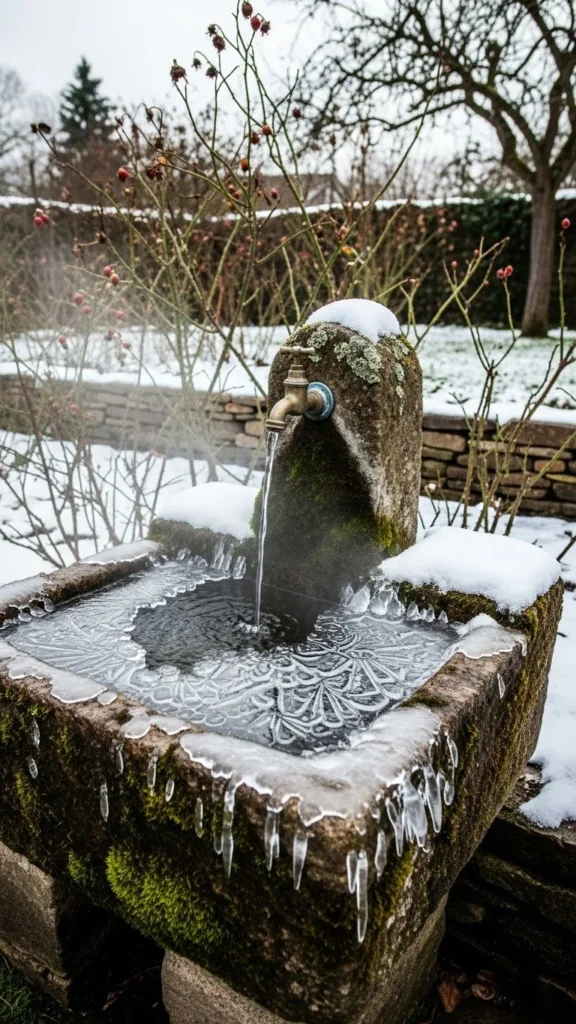
Old stone sinks make great basins. Thick walls resist cracking.
Seal lightly. Keep water shallow.
This works well in cottage-style gardens.
17. Concrete Sphere With Water Hollow
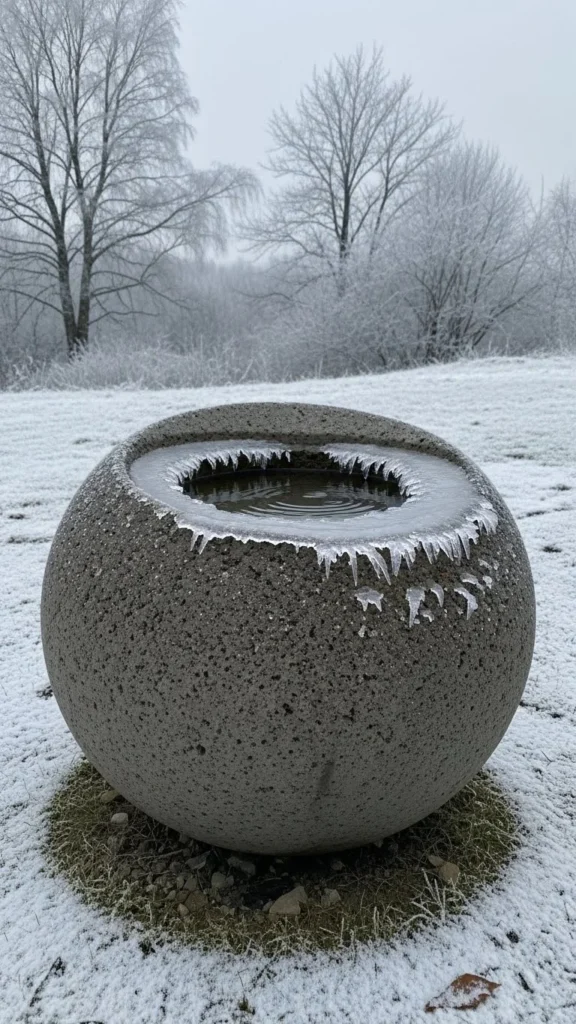
Concrete spheres act as sculpture year-round. Water hollows catch ice patterns.
DIY molds are available. Reinforce well.
Place where light hits from the side for shadow play.
18. Stone Channel Along Garden Path
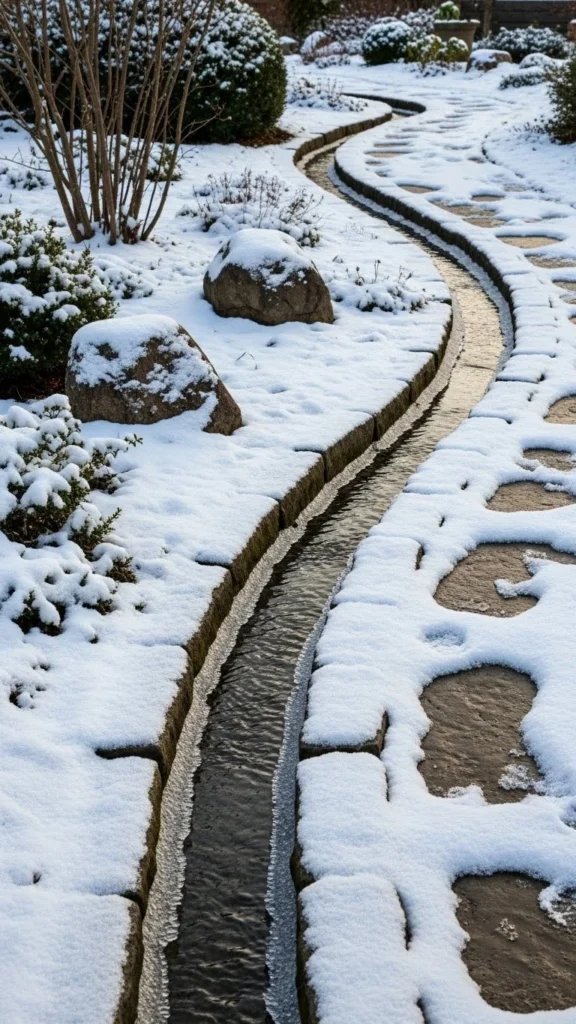
Linear channels stay interesting when frozen.
Build using stone pavers with a shallow dip.
This guides the eye even without flow.
19. Boulder Cluster With Shared Basin
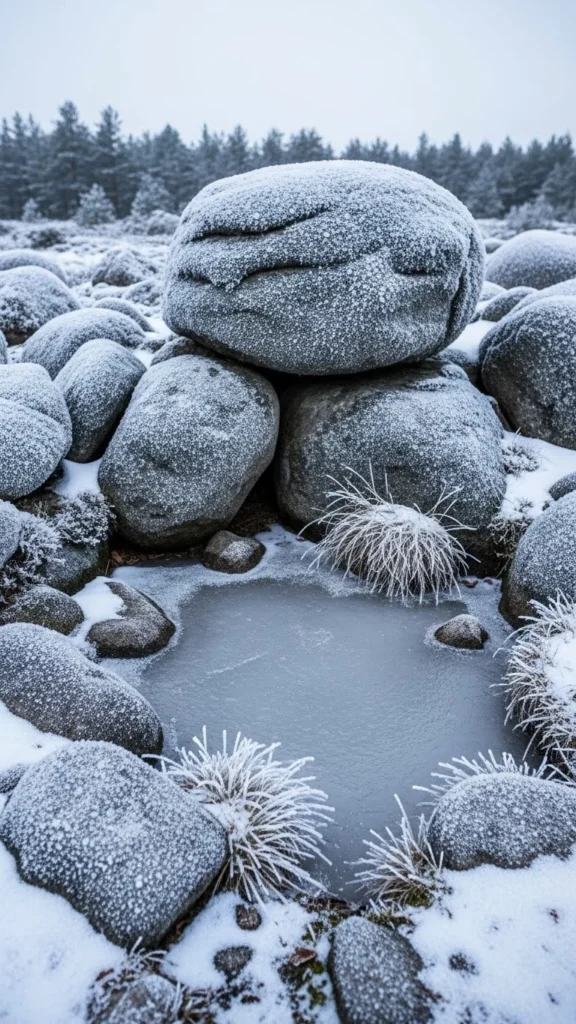
Grouped stones protect the basin from wind. Ice forms gently.
Use local stone to save cost.
This feels natural and low effort.
20. Elevated Stone Pedestal Bowl
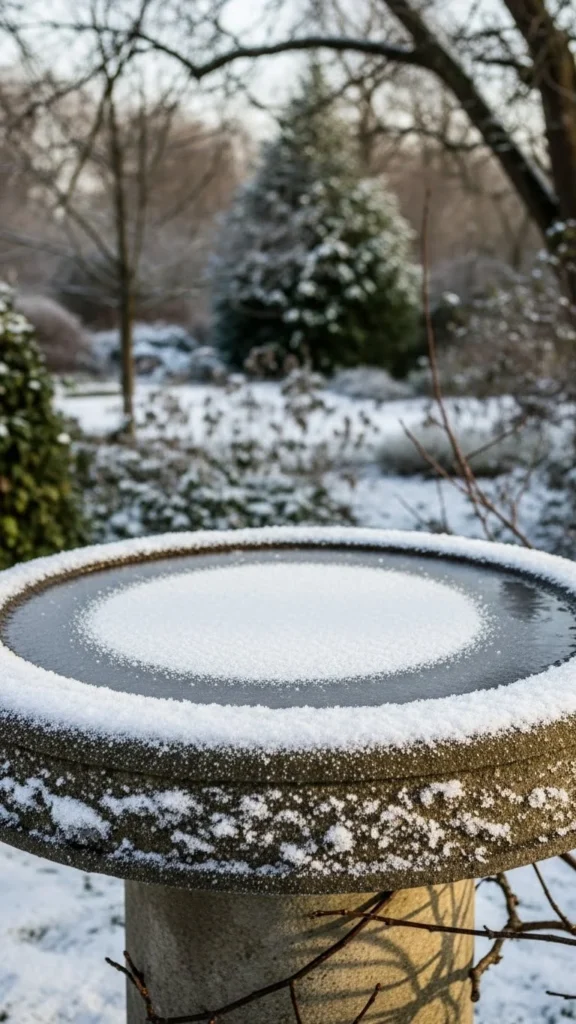
Elevation keeps the feature visible above snow.
Pedestal bowls are easy to maintain.
Keep water levels controlled.
21. Rectangular Stone Trough Fountain
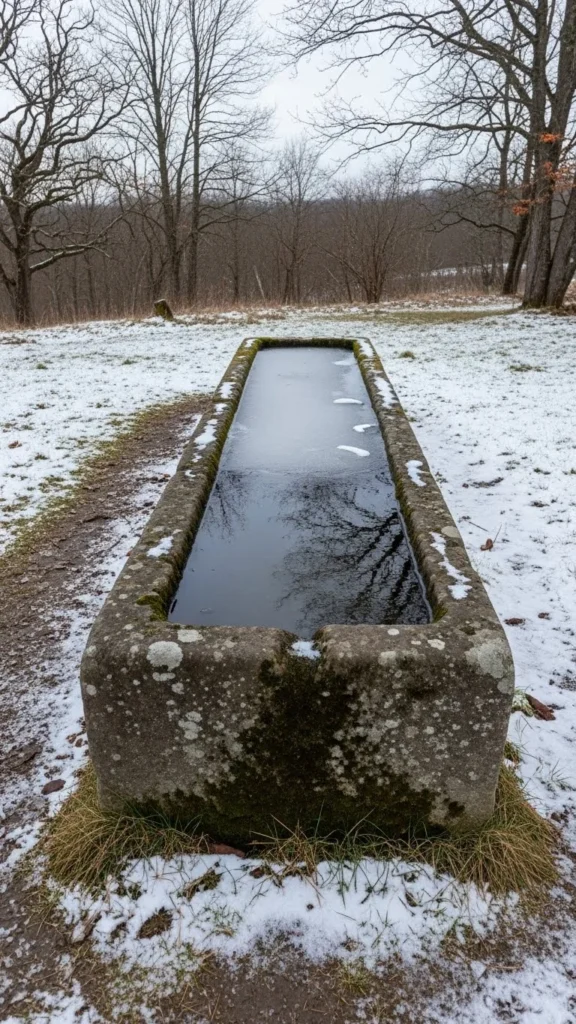
Long forms add structure. Ice emphasizes length.
Reclaimed troughs work well.
Place parallel to paths.
22. Minimal Concrete Block With Basin
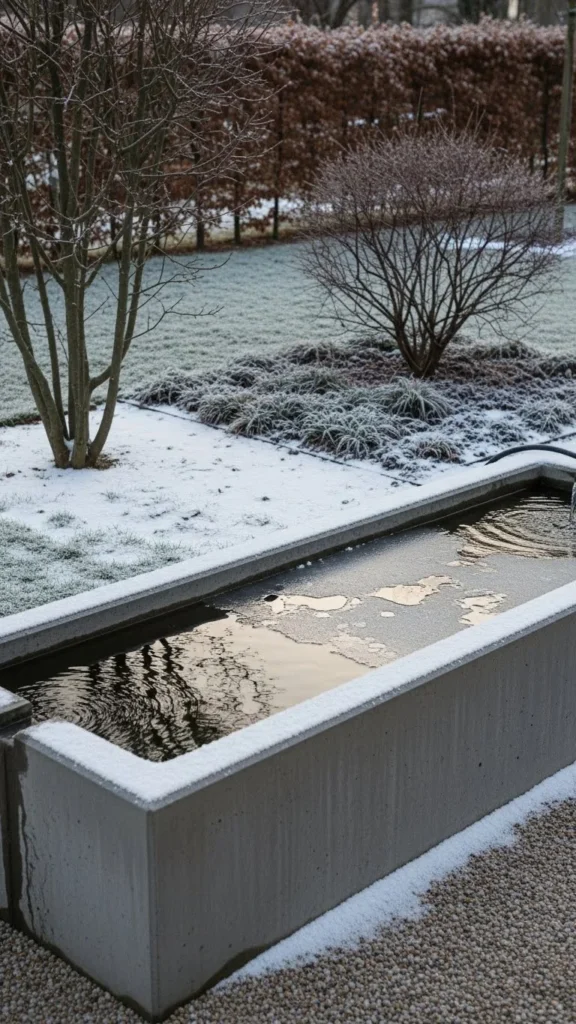
Block forms feel modern. Ice adds texture.
DIY pours keep costs low.
Seal well and keep water shallow.
23. Natural Spring Stone Catch
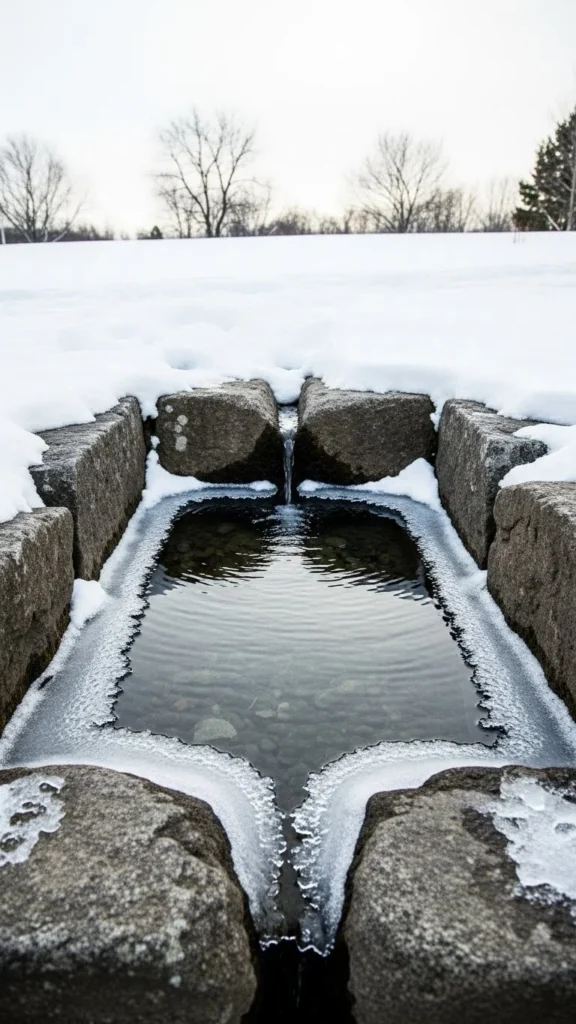
Where meltwater flows, a stone catch adds interest.
Shape stone to guide water.
No moving parts needed.
24. Garden Wall Water Niche
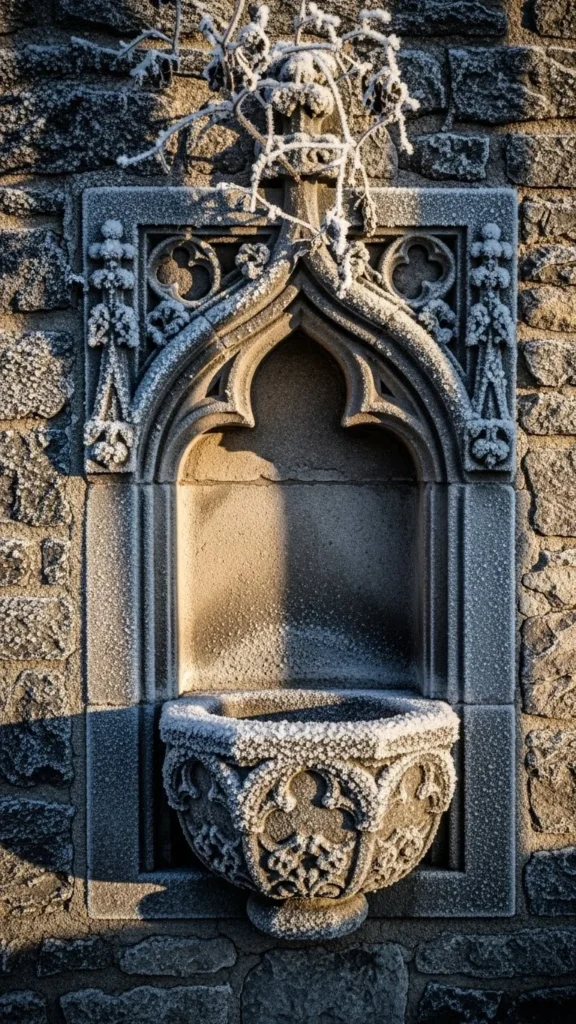
Wall niches protect basins from wind.
Carve or install a stone shelf.
Ice stays contained and decorative.
25. Low Concrete Dish Near Entry
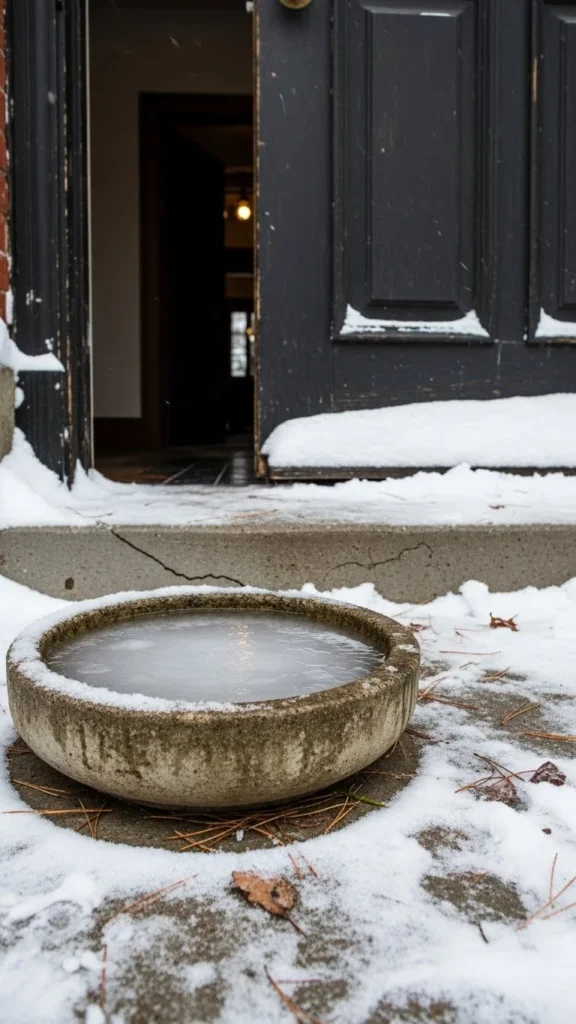
Near entrances, simple water features add calm.
Use thick concrete.
Keep clear of foot traffic.
26. Stone Bird Bath Styled for Winter
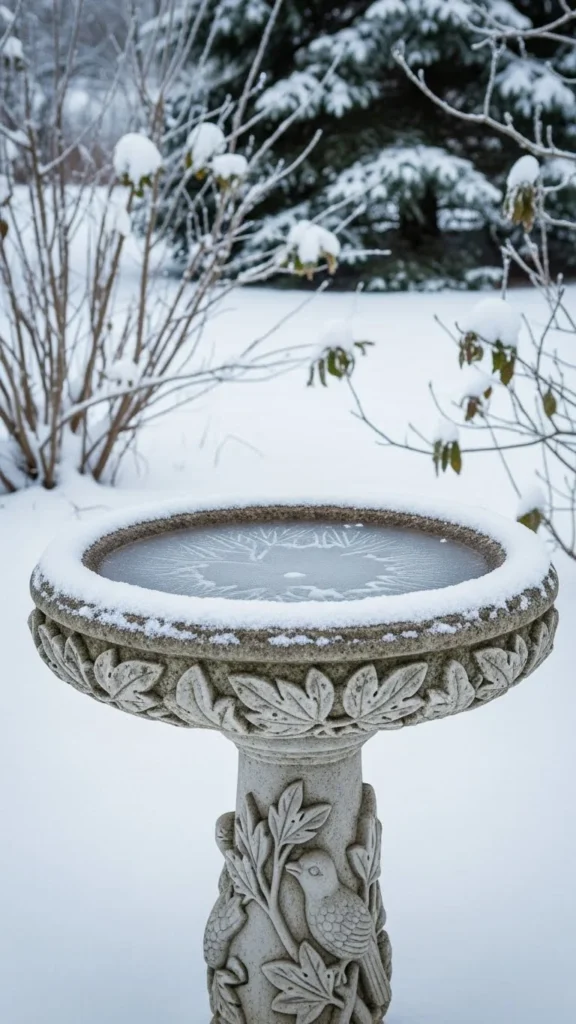
Stone bird baths double as winter features.
Lower water depth. Skip heaters if not needed.
The form stays useful and decorative.
Conclusion
Cold weather brings its own kind of beauty to outdoor spaces. With the right materials and simple planning, water features can remain visually strong all season. Stone, concrete, metal, and thoughtful placement make a big difference. Choose designs that rely on form and texture rather than motion. Small adjustments like lowering water levels or turning off pumps help protect your setup. Try one idea or combine a few to keep your garden interesting through winter days and quiet mornings.
Leave a Reply